
Strategies for Volatile Solids Reduction in Wastewater Treatment
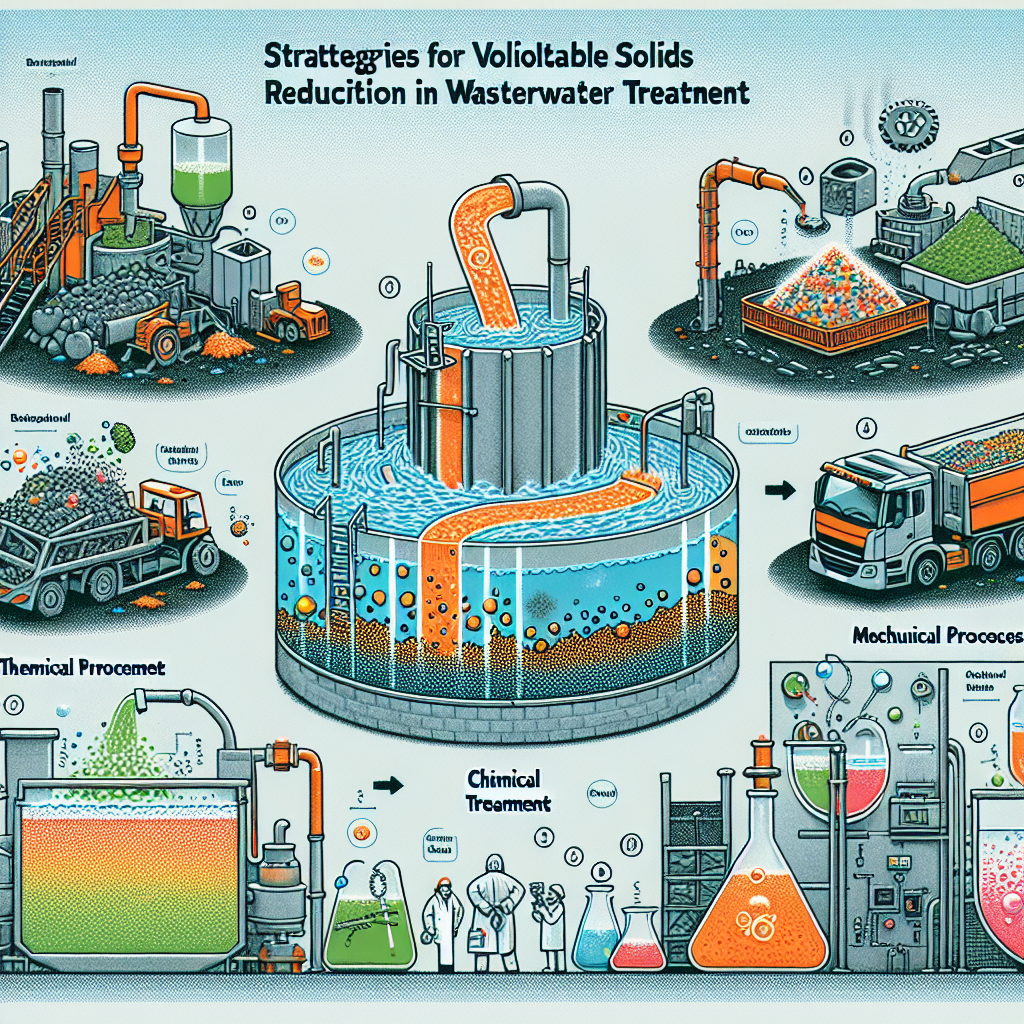
Strategies for Volatile Solids Reduction in Wastewater Treatment
Understanding Volatile Solids in Wastewater
Volatile solids (VS) are a critical component of wastewater, representing the organic matter that can be decomposed by microorganisms. They play a significant role in the efficiency and effectiveness of treatment processes. Effective volatile solids reduction is essential for optimizing resource recovery and minimizing environmental impact.
Definition and significance of volatile solids
Volatile solids primarily consist of organic materials, which are often the target for reduction in treatment facilities. The significance lies in their contribution to biochemical oxygen demand (BOD), which directly affects the treatment process's overall performance. High levels of volatile solids can lead to increased operational costs due to the need for more extensive treatment measures.
Role of volatile solids in treatment processes
In biological treatment systems, such as activated sludge processes, volatile solids serve as a food source for microorganisms. These microbes metabolize the organic material, leading to reduced BOD and improved effluent quality. However, an excessive concentration of volatile solids can inhibit microbial activity and result in poor treatment outcomes.
Impact of volatile solids on effluent quality
The concentration of volatile solids directly correlates with effluent quality. High levels can result in elevated nutrient loads, leading to eutrophication in receiving waters. Consequently, plants must balance the reduction of volatile solids with maintaining adequate microbial populations for effective treatment.
- Best suited for facilities focused on resource recovery.
- Critical for municipalities facing stringent discharge regulations.
Effective management of volatile solids is paramount for sustainable wastewater treatment.
One common workflow involves monitoring VS concentrations before and after biological processes to assess performance. If a facility finds that VS levels remain high post-treatment, it may need to adjust operational parameters or implement additional technologies such as anaerobic digestion.
Many teams overestimate the ability of traditional aerobic processes to handle high VS concentrations without supplementary measures. This often leads to underperformance and increased operational costs due to necessary adjustments later on.
Advanced Biological Treatment Techniques
Advanced biological treatment techniques are critical for achieving effective volatile solids reduction in wastewater treatment. These methods, particularly anaerobic digestion and aerobic processes, can significantly enhance the degradation of organic matter, leading to improved treatment efficiency.
Application of anaerobic digestion for volatile solids reduction
Anaerobic digestion is best suited for facilities aiming to maximize resource recovery from organic waste. This process utilizes microorganisms in an oxygen-free environment to decompose volatile solids, producing biogas that can be harnessed for energy. However, a significant limitation is the need for a stable feedstock composition; fluctuations in organic loading can inhibit microbial performance and biogas production.
For instance, a municipal plant might implement anaerobic digestion by first pre-treating sludge to enhance its biodegradability. By monitoring the biogas yield and volatile solids reduction rates, operators can adjust the retention time and feed composition to optimize performance.
Anaerobic digestion effectively reduces up to 50% of volatile solids in well-managed systems.
A common misconception is that anaerobic digestion alone can handle all types of wastewater sludge without supplementary treatments. Many teams overestimate its capabilities, leading to inadequate VS reduction if not paired with proper pre-treatment or co-digestion strategies.
Integration of aerobic processes and their efficiencies
Aerobic processes are particularly effective in facilities focused on high-load organic waste streams. These systems rely on oxygen-rich environments where microorganisms metabolize volatile solids efficiently. While they provide rapid treatment times and robust reductions in BOD, they also incur higher operational costs due to energy consumption for aeration.
Best for scenarios include urban wastewater treatment plants with consistent influent characteristics. In practice, operators often enhance aerobic systems by implementing fine bubble diffusers that improve oxygen transfer efficiency and reduce energy costs associated with aeration.
- 'Best suited for urban areas with stable waste characteristics.
- 'Effective when integrated with nutrient removal processes.
A frequent error is underestimating the impact of dissolved oxygen levels on microbial activity; many facilities fail to monitor these levels adequately, leading to suboptimal treatment outcomes.
Utilization of microbial fuel cells for enhanced degradation
Microbial fuel cells (MFCs) represent an innovative approach that combines wastewater treatment with energy generation. They utilize bacteria to oxidize organic matter while simultaneously producing electricity. This method fits best when facilities seek dual benefits from their treatment processes—reducing volatile solids while generating renewable energy.
However, MFCs are still largely experimental and may require significant capital investment and technical expertise for implementation. Their scalability remains a concern; many pilot projects have not yet demonstrated consistent performance at full scale.
MFCs can potentially reduce volatile solids by up to 60% under optimal conditions.
Teams often overestimate the immediate applicability of MFC technology without understanding site-specific conditions that influence performance. Misalignment between expected outcomes and actual results can lead to disillusionment with this promising technology.
Chemical Methods for Volatile Solids Reduction
Chemical methods can provide effective means for volatile solids reduction in wastewater treatment, particularly when biological processes are insufficient. These techniques are best suited for facilities that require rapid treatment and immediate results, especially those facing stringent regulatory requirements.
Use of coagulants and flocculants to enhance settling
Coagulants and flocculants play a crucial role in improving the settling of suspended solids, thereby facilitating the reduction of volatile solids. By aggregating fine particles into larger flocs, these chemicals help streamline the separation process during sedimentation. However, this approach has limitations; excessive use can lead to residual chemicals in the effluent, which may necessitate additional treatment steps to meet discharge standards.
In practice, a facility might apply a polymer-based flocculant to a secondary clarifier where high levels of suspended solids persist. By optimizing dosages based on real-time monitoring of turbidity levels, operators can enhance settling efficiency and achieve better volatile solids reduction without compromising effluent quality.
Improper dosage of coagulants can lead to ineffective treatment and increased operational costs.
A common misconception is that chemical addition alone will solve issues related to high volatile solids concentrations. Many teams overestimate the effectiveness of these agents without considering the need for proper monitoring and adjustment based on influent characteristics.
Oxidation techniques and their effectiveness
Oxidation techniques, such as chemical oxidation using agents like hydrogen peroxide or ozone, can significantly reduce volatile solids by breaking down organic matter. These methods are particularly effective in treating industrial wastewater with high concentrations of organic pollutants. However, they come with substantial operational costs and require careful handling due to potential hazards associated with strong oxidizing agents.
For example, an industrial facility may employ ozonation as part of its pre-treatment process. By continuously monitoring oxidation-reduction potential (ORP) levels during ozonation, operators can optimize dosage rates to achieve targeted reductions in volatile solids while minimizing chemical consumption.
Overreliance on oxidation techniques without proper integration into existing processes can lead to inefficiencies and increased costs.
A frequent error is underestimating the importance of post-oxidation treatment stages. Facilities often neglect subsequent processes such as filtration or sedimentation necessary for removing residual oxidants and by-products from treated water.
Impact of pH adjustment on solids reduction
Adjusting pH levels is another viable chemical method for enhancing volatile solids reduction. Optimal pH levels can improve microbial activity during biological treatment stages or enhance the effectiveness of coagulation processes. However, excessive adjustments may lead to operational challenges or instability in treatment performance.
For instance, a wastewater treatment plant might find that lowering pH improves the efficacy of coagulants used in sedimentation tanks. By conducting regular pH monitoring and adjusting dosing accordingly based on influent characteristics, operators can maintain optimal conditions that favor both solid removal and microbial health.
Neglecting pH control can result in suboptimal performance across multiple treatment stages.
Many facilities miscalculate the impact of pH fluctuations on overall treatment efficacy; they often fail to incorporate continuous monitoring systems necessary for maintaining stable conditions throughout the process.
Physical Processes to Enhance Solids Reduction
Physical processes are essential for enhancing volatile solids reduction in wastewater treatment, particularly when biological methods alone are insufficient. Techniques such as filtration, thermal treatment, and ultrasonic treatment can significantly improve the efficiency of solids removal.
Filtration and membrane technologies in solid removal
Filtration technologies, including microfiltration and ultrafiltration membranes, are best suited for facilities dealing with high concentrations of suspended solids. These systems effectively separate volatile solids from liquid streams, producing a cleaner effluent. However, they require regular maintenance and can be prone to fouling, which may necessitate frequent cleaning or replacement.
- Ideal for plants with consistent influent characteristics.
- Effective for concentrating solids prior to further treatment.
In practice, a municipal facility might implement a microfiltration system post-secondary clarifier to capture remaining solids before discharge. Regular monitoring of membrane integrity and flux rates is crucial to ensure optimal performance and prevent operational downtime.
Membrane fouling can lead to significant operational costs if not managed properly.
A common misconception is that filtration alone will resolve all issues related to high volatile solids concentrations. Many teams overestimate the capabilities of these systems without understanding the need for pretreatment steps like coagulation or flocculation to enhance performance.
Thermal treatment options and their applications
Thermal treatment methods, such as incineration and pyrolysis, are effective for reducing volatile solids while simultaneously generating energy. These approaches fit best in scenarios where waste volume reduction is a priority alongside energy recovery. However, they entail high capital costs and require stringent emission controls due to potential air quality impacts.
- Suitable for facilities with limited land availability.
- Can convert waste into usable energy products.
For instance, an industrial plant may utilize pyrolysis to treat organic sludge by heating it in an oxygen-free environment. This process not only reduces the volume of waste but also produces biochar that can be repurposed as soil amendment or carbon sequestration material.
Thermal treatments produce residual ash that requires careful disposal or management.
Many facilities misjudge the emissions control requirements associated with thermal treatments; they often fail to implement adequate monitoring systems necessary for compliance with environmental regulations.
Ultrasonic treatment for disintegration of solids
Ultrasonic treatment represents an innovative approach that utilizes high-frequency sound waves to disintegrate solids in wastewater streams. This method is particularly effective for enhancing biodegradability in anaerobic digestion processes. However, it requires specialized equipment and may have limited scalability due to high energy consumption.
- Best suited for facilities seeking advanced pre-treatment options.
- Effective at increasing biogas yield during anaerobic digestion.
Optimization of Operational Parameters
Operational parameters such as temperature, retention time, and dissolved oxygen levels are critical for optimizing volatile solids reduction in wastewater treatment. These factors directly influence microbial activity and the overall efficiency of treatment processes.
Influence of temperature and retention time on reduction rates
Temperature plays a pivotal role in the metabolic rates of microorganisms involved in the degradation of volatile solids. Higher temperatures generally enhance microbial activity, leading to increased reduction rates. However, this is contingent on maintaining optimal retention times; excessively short retention can prevent adequate decomposition, while overly long durations may lead to diminishing returns due to substrate depletion.
For example, a facility operating at an elevated temperature of around 35°C may find that a 15-day retention time allows for optimal volatile solids reduction, achieving up to 60% removal. Conversely, if the same plant reduces retention time to just five days without adjusting temperature, it may see only marginal improvements in VS reduction.
Monitoring and controlling dissolved oxygen levels
Dissolved oxygen (DO) levels are crucial for aerobic processes that target volatile solids reduction. Maintaining appropriate DO concentrations ensures that microorganisms remain active and effective in breaking down organic material. However, many facilities miscalculate the necessary DO levels; they often set targets based on outdated benchmarks rather than real-time monitoring data.
Optimal DO levels typically range from 2 to 4 mg/L for effective treatment.
In practice, a plant might implement an automated monitoring system that adjusts aeration rates based on real-time DO readings. This proactive approach not only improves volatile solids reduction but also reduces energy costs associated with over-aeration.
Impact of hydraulic loading rates on treatment efficiency
Hydraulic loading rates significantly affect treatment efficiency by influencing the residence time of wastewater within treatment units. High hydraulic loading can lead to short-circuiting and inadequate contact time between wastewater and microorganisms, ultimately reducing volatile solids removal.
Emerging Technologies in Volatile Solids Management
Emerging technologies offer innovative avenues for volatile solids reduction, particularly in the context of resource recovery and sustainability. Biochar production from wastewater sludge, bioprocessing innovations, and nanotechnology applications are at the forefront of these advancements.
Exploration of biochar production from wastewater sludge
Biochar production is especially suited for facilities aiming to enhance carbon sequestration while managing volatile solids. This process involves pyrolyzing organic sludge at high temperatures, resulting in a stable carbon product that can improve soil health. However, a significant limitation is the energy input required for pyrolysis; if not sourced sustainably, this could negate some environmental benefits.
In practice, a municipal facility may integrate biochar production by diverting a portion of its sludge to a pyrolysis unit. By monitoring the quality and yield of biochar produced, operators can assess its marketability as a soil amendment while simultaneously reducing the volume of waste sent to landfills.
Biochar can sequester carbon for hundreds of years while improving soil fertility.
A common misconception is that biochar production will solely solve issues related to high volatile solids concentrations. Many teams overrate its effectiveness without considering the need for pre-treatment processes to optimize feedstock quality.
Innovations in bioprocessing techniques
'Innovative bioprocessing techniques are best suited for facilities looking to enhance microbial activity and solids reduction efficiency. Techniques such as advanced anaerobic digestion and co-digestion with organic waste streams have shown promise in maximizing volatile solids degradation. However, these methods require careful management of feedstock variability; inconsistent compositions can disrupt microbial communities and hinder performance.
'For instance, an urban wastewater treatment plant might implement co-digestion by mixing food waste with sewage sludge. By continuously monitoring biogas production and volatile solids reduction rates, operators can adjust feed ratios to optimize overall treatment efficiency.
'Co-digestion can increase biogas yields by up to 30% compared to traditional anaerobic digestion alone.
'A frequent error is assuming that any organic waste can be seamlessly integrated into existing digestion systems without prior assessment or adjustments. Teams often underestimate the importance of understanding how different substrates interact within the microbial ecosystem.
'Potential use of nanotechnology in solids reduction
Nanotechnology represents a cutting-edge approach best suited for advanced treatment facilities exploring novel solutions for solid reduction. Its potential lies in creating nanoparticles that enhance microbial activity or facilitate targeted delivery of treatment agents. However, scalability remains a challenge; many nanotech applications are still experimental and may not yet be viable for widespread use.
In practice, research institutions may collaborate with wastewater treatment plants to test nanoparticle formulations aimed at improving degradation rates of volatile solids. By closely monitoring performance metrics such as VS reduction and microbial health during trials, stakeholders can evaluate feasibility before broader implementation.
Successful integration of nanotechnology could revolutionize traditional approaches to solids management.
Many teams misjudge the timeline required for developing and implementing nanotech solutions; they often expect rapid results without recognizing the extensive research and testing phases needed before practical application.
Regulatory Considerations and Compliance Challenges
Regulatory frameworks governing volatile solids reduction are increasingly stringent, particularly for municipalities facing environmental scrutiny. Compliance with these regulations is essential not only for operational legitimacy but also for safeguarding public health and the environment.
Overview of regulatory frameworks affecting solids management
Municipalities must navigate a complex landscape of federal, state, and local regulations that dictate allowable discharge limits for volatile solids. The Clean Water Act (CWA) sets baseline standards, but states often impose stricter criteria based on regional water quality objectives. Facilities must stay abreast of these regulations to avoid penalties and potential legal actions.
Challenges municipalities face in meeting discharge limits
One primary challenge is the variability in influent characteristics, which can complicate the treatment process. Municipalities often struggle to meet discharge limits during peak flow events or when unexpected contaminants enter the system. This inconsistency can lead to non-compliance, resulting in fines or mandated operational changes.
Best for scenarios involve municipalities with stable influent quality and adequate resources for monitoring and treatment adjustments. However, limited budgets often restrict their ability to invest in advanced treatment technologies or comprehensive monitoring systems, exacerbating compliance issues.
Over 30% of municipalities report challenges in consistently meeting volatile solids discharge limits.
'Best practices for documentation and reporting compliance
'Effective documentation practices are crucial for demonstrating compliance with regulatory requirements. Municipalities should implement rigorous data collection protocols to track volatile solids levels throughout the treatment process. This includes not only routine sampling but also integrating real-time monitoring technologies that provide continuous feedback on performance metrics.
A common workflow example involves using automated data logging systems that capture influent and effluent quality metrics at regular intervals. By analyzing this data against established benchmarks, operators can quickly identify trends and adjust operational parameters proactively.
Many facilities overestimate their ability to manage compliance through manual reporting processes alone. This often leads to gaps in data accuracy and timeliness that can jeopardize compliance efforts.
Case Studies: Successful Implementation Strategies
Municipal case studies highlight various successful strategies for volatile solids reduction, particularly in large-scale treatment facilities. For instance, a city wastewater treatment plant in California implemented a combination of anaerobic digestion and advanced aerobic processes, achieving a notable reduction of volatile solids by over 60%. This approach is best suited for municipalities aiming to enhance resource recovery while adhering to stringent discharge regulations.
Lessons learned from pilot projects on volatile solids reduction
Pilot projects serve as critical testing grounds for innovative technologies aimed at volatile solids reduction. One project in the Midwest utilized an integrated system combining anaerobic digestion with ultrasonic treatment. While the initial results indicated promising reductions, operators learned that energy consumption significantly increased due to the high operational demands of ultrasonic systems. This highlights the importance of balancing energy efficiency with treatment efficacy.
- Pilot projects should include comprehensive monitoring to assess both performance and energy costs.
- Integration of multiple technologies can yield better results but requires careful management to avoid inefficiencies.
Comparative analysis of outcomes across different treatment facilities
A comparative analysis reveals that facilities employing advanced biological treatments consistently outperform those relying solely on traditional methods. For example, a facility utilizing co-digestion with food waste achieved volatile solids reductions exceeding 70%, compared to only 40% in a facility using standard aerobic processes. However, such advanced methods necessitate careful feedstock management; inconsistent organic waste streams can disrupt microbial activity and hinder performance.
Advanced biological treatments can improve volatile solids reduction rates by up to 30% compared to traditional methods.
Many teams mistakenly believe that simply adopting new technologies will automatically lead to improved outcomes without understanding site-specific conditions. Proper evaluation and adaptation are critical for achieving the desired results in volatile solids management.