
Top OEMs for Peristaltic Pumps in Water & Wastewater Applications
Introduction
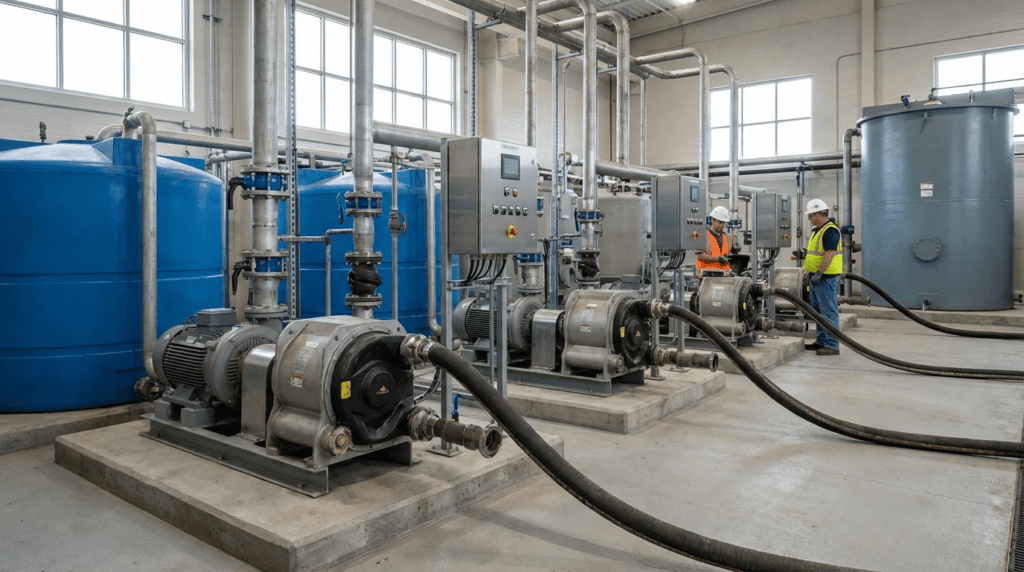
In the complex hydraulic landscape of municipal and industrial water and wastewater treatment, the peristaltic pump—often referred to as a hose pump or tube pump—occupies a critical niche. Unlike centrifugal pumps that rely on kinetic energy, or other positive displacement pumps that utilize rotors, gears, or pistons, the peristaltic pump operates on the principle of peristalsis. This biological-mimicking mechanism involves the alternating compression and relaxation of a flexible hose or tube, creating a vacuum that draws fluid in and positive pressure that pushes it out.
For consulting engineers and plant operators, the peristaltic pump is frequently the “problem solver” of the facility. It is specified where other pump types fail due to three primary fluid characteristics: high solids content (sludge), high abrasiveness (lime slurry), or the need for precise chemical metering (sodium hypochlorite, ferric chloride, and polymers). Because the fluid only contacts the hose and the connectors, the pump offers essentially zero potential for cross-contamination and boasts seal-less operation, eliminating one of the most common failure points in rotating equipment.
However, the simplicity of the operating principle belies the complexity of the engineering required to manufacture a reliable unit. The hose is the heart of the pump; its fatigue life, chemical resistance, and restitution capabilities define the pump’s lifecycle cost. The compression mechanism—whether shoe (sliding) or roller (rolling)—dictates the lubrication requirements and energy efficiency.
Selecting the right Original Equipment Manufacturer (OEM) is not merely a matter of price point. It is a strategic decision regarding hose longevity, maintenance intervals, spare parts availability, and engineering support. A poorly specified peristaltic pump can become a maintenance nightmare with frequent hose ruptures and messy lubricant spills, whereas a correctly specified unit from a reputable OEM can run for thousands of hours untouched in the harshest environments.
This article provides a technical, unbiased evaluation of the top OEMs for peristaltic pumps in the water and wastewater sector. It focuses on engineering specifications, operational realities, and lifecycle considerations to assist decision-makers in writing robust specifications and selecting equipment that ensures plant reliability.
How to Select This Pump Type
Proper selection of a peristaltic pump requires a departure from standard centrifugal pump sizing methods. The “best efficiency point” (BEP) concept does not apply in the same way. Instead, engineers must balance flow velocity, occlusion, and hose life. The following criteria are essential for specification and selection.
1. Hydraulic Performance and Sizing
Displacement Per Revolution: Peristaltic pumps are fixed-displacement machines. Flow is determined by the internal volume of the hose and the rotational speed (RPM) of the rotor. Unlike centrifugal pumps, flow is linear with speed and relatively independent of discharge pressure.
Speed limitations: This is the most critical sizing factor. While a manufacturer may list a maximum speed (e.g., 90 RPM), operating a pump continuously at maximum speed will drastically shorten hose life due to fatigue and heat generation. For continuous duty (24/7) applications in wastewater, it is standard engineering practice to size the pump to operate at 30% to 50% of its maximum rated speed. This oversizing increases upfront capital cost but significantly reduces operational expenditure (OpEx) by extending hose change intervals.
2. Solids Handling and Abrasive Service
Peristaltic pumps are inherently capable of handling solids. The limiting factor is usually the particle size relative to the hose diameter. A general rule of thumb is that soft solids can be up to 25% of the hose ID, while hard, abrasive solids should be limited to 10-15% of the hose ID.
For abrasive slurries like lime or activated carbon, the peristaltic pump excels because the abrasion velocity is low. There are no internal valves or impellers to wear out. The hose wears due to fatigue (compression cycles) rather than abrasion, provided the speed is kept low.
3. Materials of Construction: The Hose
The hose is the primary wear part. Selection involves two layers: the inner liner (chemical compatibility) and the reinforcement layer (pressure capability/restitution).
- Natural Rubber (NR): Excellent abrasion resistance. Ideal for sludge, mud, and lime slurries. Poor resistance to oils and hydrocarbons.
- EPDM: Excellent chemical resistance for acids and alkalis. Ideal for corrosive chemicals but typically has lower mechanical life than Natural Rubber.
- Nitrile (NBR): Required if the fluid contains oils, fats, or grease (FOG), common in wastewater scum pumping.
- CSM (Hypalon): Used for highly oxidizing chemicals like sodium hypochlorite.
4. Compression Technology: Shoe vs. Roller
Shoe (Sliding) Design: Shoes slide over the hose, compressing it. This design typically allows for higher operating pressures (up to 16 bar or more). However, the sliding friction generates significant heat, necessitating a casing filled with lubricating fluid (glycerin or silicone-based) to dissipate heat and reduce friction.
Roller Design: Rollers rotate against the hose. This reduces friction significantly, lowering power consumption and starting torque. Roller pumps often do not require a lubricant bath, relying only on a small amount of grease. This makes hose changes cleaner and faster but may limit maximum discharge pressures compared to shoe designs.
5. Suction Lift and Dry Running
Peristaltic pumps offer superior suction lift capabilities, often achieving up to 9.5 meters (approx. 30 feet) of water. They can run dry indefinitely without damage, as there are no mechanical seals or fluid-lubricated bearings. This makes them ideal for tank emptying, sump clearing, or applications where fluid flow may be intermittent.
6. Pulsation
The flow from a peristaltic pump is pulsatile. Each time the shoe/roller leaves the hose, there is a brief drop in flow and pressure, followed by a surge. In long discharge lines, this can cause “water hammer” and vibration. Engineers must evaluate the need for pulsation dampeners on the discharge side, especially for higher flow rates or rigid piping systems.
Comparison Table: Top Peristaltic Pump OEMs
The following table outlines the key characteristics of the leading OEMs in the peristaltic pump market relevant to water and wastewater applications. Note that “Hose Life” is subjective and highly dependent on correct sizing and application.
| OEM | Primary Compression Tech | Key W&WW Applications | Notable Strengths | Engineering Considerations |
|---|---|---|---|---|
| Watson-Marlow (Bredel/Qdos) | Shoe (Bredel); Roller/Tube (Qdos) | Chemical metering, heavy sludge, lime slurry | Market leader, direct-coupled design eliminates alignment issues, high metering accuracy (Qdos). | Bredel units use a lubricant bath requiring management. Qdos units are limited to lower flows/pressures. |
| Verderflex | Shoe & Roller options | Filter press feed, thickener underflow, dosing | Robust industrial build, advanced hose texture for heat dissipation, versatile “Dura” compact footprint series. | Lubricant bath required for high-pressure shoe units. Specification must match the correct series to the duty. |
| ProMinent | Roller & Shoe | Chemical dosing (hypo, polymer), disinfection | Exceptional integration with controllers/sensors, skid capabilities, high precision in low-flow ranges. | Primary focus is chemical metering; less frequent in ultra-large sludge transfer compared to others. |
| Ragazzini | Roller | Sludge transfer, shear-sensitive polymers, food waste | “Roller” technology eliminates lubricant bath (clean maintenance), early leak detection, lower energy consumption. | Pressure capabilities may be lower than heavy-duty shoe pumps. |
| Albin (Ingersoll Rand) | Shoe | General wastewater, scum, sludge, chemical transfer | Rugged design, competitive sizing, part of the Ingersoll Rand portfolio offering broad support networks. | Standard shoe design requires lube maintenance. |
Top OEM Manufacturers
The following section provides a detailed engineering analysis of the five locked OEMs for the Peristaltic Pump category. These manufacturers represent the global standard for reliability in municipal and industrial water treatment.
Watson-Marlow Fluid Technology Solutions
Watson-Marlow is arguably the most recognized name in the peristaltic market, largely due to their dual-brand strategy covering both heavy industrial transfer (Bredel) and precision chemical metering (Watson-Marlow/Qdos).
Technology and Design
Bredel (Hose Pumps): The Bredel line utilizes a heavy-duty sliding shoe design. A key engineering feature is the direct-coupled technology, which combines the bearing housing of the pump with the gearbox. This eliminates the need for a separate coupling, reducing the overall footprint and removing the risk of coupling misalignment. The pump casing is filled with lubricant to dissipate the heat generated by the shoes.
Qdos (Chemical Metering): For chemical dosing applications (e.g., sodium hypochlorite, ferric), the Qdos line replaces traditional diaphragm pumps. It uses a “ReNu” pumphead—a sealed, disposable cartridge containing the tube. When the tube wears out, the operator replaces the entire head in seconds without tools, preventing chemical contact.
Application Fit
Engineers typically specify Bredel for high-solids sludge transfer and lime slurry feeds where abrasion resistance is paramount. The Qdos line is specified for the tertiary treatment and disinfection stages where flow accuracy and safety are critical.
Verderflex (Verder Group)
Verderflex produces a wide range of peristaltic pumps, distinguished by their robust construction and the specific engineering of their hoses. They offer both the VF series (traditional flange-mounted) and the Dura series (compact, close-coupled).
Technology and Design
The Verderflex hose design is a significant differentiator. They utilize a textured surface on the hose exterior to aid in lubricant distribution and heat dissipation, which is critical for extending hose life in high-pressure applications. The Dura series is particularly popular in municipal plants due to its vertical motor mounting, which significantly reduces the skid footprint—a valuable trait in crowded pump rooms.
Application Fit
Verderflex is a strong contender for filter press feed applications. The linear flow-to-speed relationship allows for easy control of the feed rate as the press pressure builds. Their pumps are also widely used for dosing lime milk and activated carbon slurries, where the combination of compact footprint (Dura) and high abrasion resistance is required.
ProMinent
While ProMinent is globally renowned for solenoid diaphragm metering pumps, their peristaltic offering (DulcoFlex) is engineered specifically for the water treatment chemical market. Their focus is heavily weighted toward process integration and control logic.
Technology and Design
ProMinent offers both low-pressure (roller) and high-pressure (shoe) versions. However, their primary strength lies in the “smart” capabilities of the pump drive. Their units often come with integrated digital controllers that allow for precise batching, flow monitoring, and connectivity to SCADA systems via Profibus, Modbus, or PROFINET.
Application Fit
ProMinent is the preferred OEM for complex chemical feed systems. If a municipality requires a skid-mounted system that includes the pump, calibration columns, back pressure valves, and a local control panel that integrates seamlessly with the main plant PLC, ProMinent is often the specification of choice. They are less frequently seen in raw sludge transfer but are dominant in the chemical building.
Ragazzini
Ragazzini (Roth) distinguishes itself through a firm commitment to “Roller” technology. While many competitors use shoes for high-pressure applications, Ragazzini engineers their roller system to handle significant pressures without the need for a lubricant bath.
Technology and Design
The absence of a lubricant bath is a major operational advantage. In a shoe pump, a hose rupture results in the process fluid mixing with gallons of glycerin, creating a messy, hazardous cleanup. In a Ragazzini roller pump, the casing is dry (save for a small amount of grease). A leak detector immediately stops the pump, and the hose can be changed without draining a casing. Furthermore, the rolling action generates less friction than sliding shoes, often resulting in lower energy consumption.
Application Fit
Ragazzini is often specified for shear-sensitive fluids. The roller compression is generally gentler than the sliding shoe, making it ideal for pumping flocculants or polymers where preserving the polymer chain is essential for process efficiency. The “clean” maintenance aspect also makes them popular in facilities with strict environmental or safety protocols regarding lubricant disposal.
Albin (Ingersoll Rand)
Albin Pump, now part of the Ingersoll Rand group, focuses on heavy-duty industrial designs. Their acquisition by a major industrial conglomerate has expanded their distribution and support network, making them a more accessible option for municipal bids.
Technology and Design
Albin’s ALH series utilizes the sliding shoe design for high-pressure capabilities. Their engineering emphasizes maximizing the hose life through optimized shoe geometry and shim adjustments. They offer a wide range of hose materials and are known for providing pumps that can be retrofitted into spaces previously occupied by other brands.
Application Fit
Albin is a strong fit for general wastewater duties, including scum pumping, thickener underflow, and dewatering applications. Their design is straightforward and rugged, appealing to maintenance departments that prioritize familiarity and durability. The Ingersoll Rand backing provides assurance regarding long-term parts availability.
Application Fit Guidance
To ensure the longevity of the equipment, engineers must match the OEM strengths to the specific process application within the treatment plant.
Municipal Wastewater
- Sludge Transfer (WAS/RAS): Requires pumps capable of handling 3-6% solids continuously. Watson-Marlow (Bredel) and Verderflex are industry standards here due to their heavy-duty bearings and hose architecture.
- Scum and Grease: These fluids often contain debris and high fat content. Nitrile (NBR) hoses are mandatory. Albin and Verderflex offer robust solutions for these messy applications.
- Polymer Dosing: This is a shear-sensitive application. Ragazzini is a top choice due to the roller design reducing shear. ProMinent is also excellent for the control precision required to optimize polymer usage.
Industrial Wastewater
- Lime Slurry: Extremely abrasive. This application destroys centrifugal pump seals and progressive cavity stators. Peristaltic pumps are the best technology choice. The pump should be run at very low speeds (< 30 RPM). Watson-Marlow and Verderflex excel here.
- pH Adjustment (Acids/Caustics): Chemical compatibility is key. EPDM hoses are generally used. ProMinent and Watson-Marlow (Qdos) are preferred for their metering accuracy and safety features (leak containment).
Headworks and Grit
While grit pumps are typically vortex or recessed impeller centrifugal pumps, peristaltic pumps are occasionally used for grit slurry transfer if suction lift is required. However, the sharp nature of grit can cut rubber hoses. If specified, natural rubber with thick walls is required, and OEMs like Bredel or Albin are best suited for this abuse.
Engineer & Operator Considerations
Beyond the catalog specifications, real-world operation reveals specific challenges that must be addressed during the design and procurement phase.
Maintenance Access and Safety
The “Mess” Factor: Consulting engineers must recognize the difference between shoe and roller pumps regarding maintenance. If a shoe pump is specified (e.g., Bredel, Verderflex VF), the design must include a drain valve on the pump casing and a designated container or pit to catch the lubricant during hose changes. Failure to design for this results in unsafe, slippery floors in the pump room.
Lifting Gear: The front cover of a large peristaltic pump is heavy. Maintenance supervisors should ensure that davit cranes or overhead rails are positioned directly above pumps larger than 50mm (2 inches) to facilitate cover removal and rotor maintenance.
Spare Parts Strategy
Hose Shelf Life: Hoses are rubber products and degrade over time, even on the shelf (ozone/UV damage). Plants should not overstock hoses. A “just-in-time” strategy or storing hoses in their original UV-protective packaging in a cool, dark room is essential.
Lubricant: For shoe pumps, the lubricant is a consumable. It must be topped up and replaced. Operators often forget to order the specific food-grade glycerin or silicone blend required by the OEM. Using standard hydraulic oil is a catastrophic error that will destroy the hose and pump seals.
Common Specification Mistakes
- Running too Fast: Specifying a smaller pump running at high RPM to save CapEx is the most common error. This results in rapid hose failure (thermal fatigue). Always specify a larger pump running slower.
- Ignoring Suction Conditions: While peristaltic pumps have great suction lift, high viscosity fluids on the suction side can cause the hose to fail to “restitute” (bounce back to round) fast enough, leading to cavitation and reduced flow. Suction lines should be large diameter and short.
- Over-Shimming: On shoe pumps, increasing the compression (shimming) increases pressure capability but drastically reduces hose life. Operators should only shim to the minimum required to prevent backflow (slip).
Conclusion
The peristaltic pump is a vital asset in water and wastewater treatment, offering solutions for fluids that are abrasive, corrosive, or viscous. When selecting an OEM, the decision should be driven by the specific nature of the application rather than brand loyalty or initial price.
For heavy sludge and high-pressure abrasive slurries, the shoe-based designs from Watson-Marlow (Bredel) and Verderflex offer the ruggedness required for long-term survival. For chemical metering where precision and integration are paramount, ProMinent and the Watson-Marlow Qdos line are superior choices. For applications involving shear-sensitive polymers or where clean maintenance is a priority, the roller technology from Ragazzini provides distinct operational advantages. Albin serves as a robust, industrial-grade alternative backed by a major support network.
Ultimately, the successful deployment of a peristaltic pump relies on a partnership between the engineer and the OEM to ensure the pump is sized conservatively. A focus on low rotational speeds, correct hose material selection, and accessible maintenance design will ensure the lowest total cost of ownership over the life of the plant.