
Top 10 Belt Filter Presses Manufacturers for Water and Wastewater
Introduction
In the realm of municipal and industrial wastewater treatment, sludge management typically accounts for 30% to 50% of a plant’s total operating costs. The efficacy of the dewatering process is the linchpin of this economic equation. While centrifuges and screw presses have gained market share in recent decades, the belt filter press (BFP) remains a dominant technology due to its lower energy consumption, visibility of operation, and ease of maintenance. However, engineers frequently underestimate the complexity involved in specifying these systems. A poorly selected press can lead to wet cake (increasing hauling costs), excessive polymer consumption (inflating OPEX), or premature bearing failure.
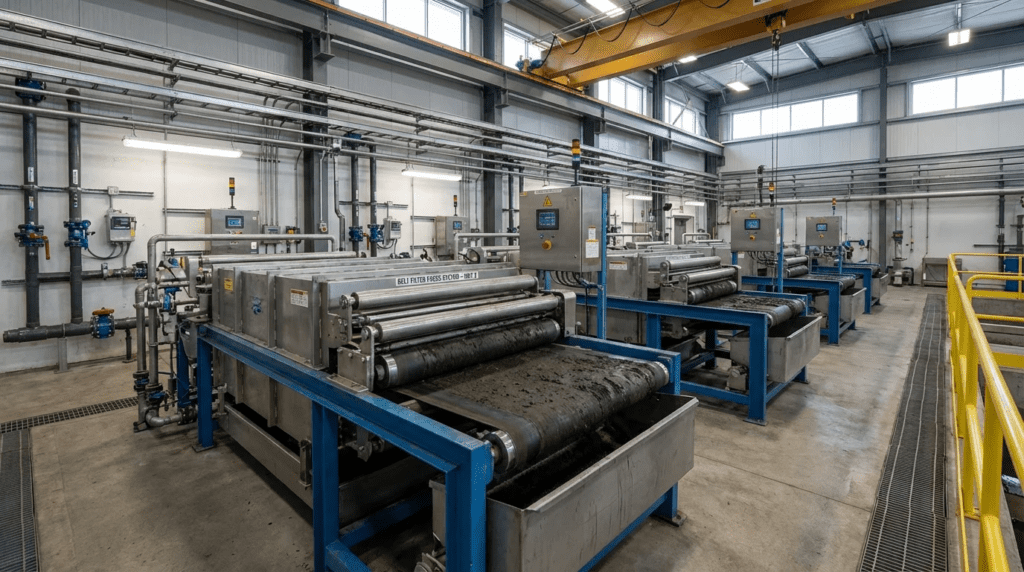
When evaluating the Top 10 Belt Filter Presses Manufacturers for Water and Wastewater, engineers must look beyond the brochure and analyze frame rigidity, roller deflection, bearing L-10 life, and filtration area. This equipment is utilized in applications ranging from primary municipal sludge and waste activated sludge (WAS) to alum sludge in water treatment plants (WTP) and complex industrial slurries. The operating environment is invariably harsh—wet, corrosive, and often hazardous.
This article provides a rigorous, specification-safe guide for consulting engineers and utility decision-makers. It moves beyond marketing rhetoric to focus on the engineering physics, material science, and operational realities that define long-term success. By the end of this guide, you will understand how to differentiate between the Top 10 Belt Filter Presses Manufacturers for Water and Wastewater based on technical merit and application fit.
How to Select / Specify Top 10 Belt Filter Presses Manufacturers for Water and Wastewater
Selecting the right dewatering equipment requires a multidimensional approach that balances capital constraints with long-term operational viability. When writing specifications for the Top 10 Belt Filter Presses Manufacturers for Water and Wastewater, the following engineering criteria must be defined with precision to avoid change orders and performance deficiencies.
Duty Conditions & Operating Envelope
The first step in specification is defining the process envelope. Unlike pumps which operate on a clear system curve, belt presses operate on a performance curve heavily influenced by sludge characteristics.
- Solids Loading Rate (SLR): Typically expressed as pounds of dry solids per hour per meter of belt width (lbs DS/hr/m). Standard ranges for municipal biosolids are 600–1,500 lbs/hr/m, depending on the feed concentration (1% to 4%).
- Hydraulic Loading Rate (HLR): Expressed as gallons per minute per meter (gpm/m). If the feed solids are low (<1.5%), the HLR becomes the limiting factor because the gravity zone must shed free water fast enough to prevent hydraulic washout.
- Feed Variability: Engineers must specify the range of feed solids. A press sized for 3% feed may fail hydraulically if the feed drops to 1% during upset conditions.
- Operating Schedule: Continuous (24/7) operations require heavier duty bearings and automatic washwater systems compared to intermittent (8-hour shift) operations.
Materials & Compatibility
The corrosive nature of wastewater sludge and the wet operating environment dictate material selection.
- Structural Frame: The industry standard is hot-dipped galvanized steel (HDG) for general wastewater, or 304/316 Stainless Steel for corrosive industrial applications or plants requiring higher aesthetic/hygiene standards.
- Roller Coating: Drive rollers should be rubber-coated (Buna-N or EPDM) to ensure traction. Drainage rollers are typically nylon-coated or epoxy-painted. In high-pH applications (lime stabilization), specific coating compatibility must be verified.
- Deflection Limits: The frame must be rigid. Specification should limit frame deflection to less than 1/360 of the span under maximum tension to prevent belt tracking issues.
Hydraulics & Process Performance
Performance guarantees are critical in the bidding process.
- Cake Dryness: Typical municipal anaerobically digested sludge should achieve 18-25% dry solids. Alum sludge may achieve 15-20%.
- Capture Rate: The percentage of solids retained in the cake versus lost to the filtrate. A minimum capture rate of 95% is standard; falling below this recycles excessive solids load to the plant headworks.
- Active Filtration Area: This is a more accurate metric than just “belt width.” It accounts for the length of the gravity zone and the wrap angle around pressure rollers.
Installation Environment & Constructability
BFPs have large footprints compared to centrifuges.
- Vertical vs. Horizontal: Some manufacturers offer “stacked” or vertical designs to save floor space, though this can complicate maintenance access.
- Washwater Drainage: Significant volumes of filtrate and washwater are generated. Floors must be sloped (1/4 inch per foot minimum) with trench drains sized for the full hydraulic flow plus washwater.
- Ventilation: While BFPs are open systems, they release aerosols and odors. Source capture ventilation hoods above the gravity zone are recommended for operator safety and corrosion control of surrounding equipment.
Reliability, Redundancy & Failure Modes
The most common failure mode in belt presses is bearing failure due to contamination or fatigue.
- Bearing Life: Specify an L-10 bearing life of at least 100,000 hours. Bearings should be double-row spherical roller type, mounted in split pillow blocks for ease of replacement.
- Corrosion Protection: Bearings must be isolated from the sludge. Triple labyrinth seals and purge grease fittings are mandatory.
- Redundancy: For critical municipal plants, an N+1 redundancy philosophy is standard. If peak flow requires two presses, a third should be installed as standby.
Controls & Automation Interfaces
Modern dewatering requires integration into plant SCADA.
- Belt Speed Control: VFDs are required for the main drive to adjust belt speed based on cake thickness.
- Polymer Pacing: The control loop should pace the polymer feed pump based on the sludge feed flow meter, with a ratio trim accessible to the operator.
- Alarms: Critical interlocks include low washwater pressure (to prevent belt blinding), belt misalignment (to prevent belt destruction), and emergency pull cords.
Maintainability, Safety & Access
A press that is hard to clean will not perform well.
- Washbox Access: Spray bars must be accessible via “rodding out” mechanisms or quick-release clamps without tools. Self-cleaning brush systems inside the spray header are highly recommended.
- Catwalks: For large presses (2m+ width), integrated catwalks with handrails are necessary for operators to observe the gravity zone and wedge zone safely.
- Nip Points: BFPs have inherent nip hazards. All moving parts must be guarded according to OSHA/ISO standards, but guards must be mesh to allow visibility.
Lifecycle Cost Drivers
While the CAPEX of a BFP is often lower than a centrifuge, the OPEX can be significant.
- Polymer Consumption: This is the single largest operational cost. A difference of 2 lbs active polymer per dry ton can amount to tens of thousands of dollars annually.
- Belt Replacement: Belts are consumables, lasting 2,000 to 4,000 hours. The design must facilitate belt changes without requiring major disassembly of the frame (e.g., cantilevered frame design or removable frame spacer blocks).
- Water Usage: BFPs use high volumes of washwater (30-60 gpm per meter). Using plant effluent (W3 water) instead of potable water is a critical cost-saving design feature.
Comparison Tables: Top 10 Belt Filter Presses Manufacturers for Water and Wastewater
The following tables provide an objective comparison of equipment options. The first table focuses on the manufacturers often cited in engineering specifications, highlighting their primary engineering focus. The second table assists in determining if a belt press is the correct technology compared to alternatives.
| Manufacturer | Engineering Strengths & Design Philosophy | Typical Applications | Key Considerations / Limitations | Maintenance Profile |
|---|---|---|---|---|
| Andritz | Heavy-duty industrial design; modular frames; advanced high-pressure zones. Global support network. | Large municipal WWTPs; Mining; Pulp & Paper. | High CAPEX; generally over-designed for small, simple applications. | Standardized parts; high reliability. |
| Komline-Sanderson | Robust American manufacturing; long history in municipal sector. Known for “Kompress” series. | Municipal biosolids; Water treatment alum sludge. | Heavy footprint; traditional design (less modular than some European competitors). | Excellent parts availability in North America. |
| BDP Industries | Specializes in high-performance dewatering; pioneered independent gravity zones. US-based. | Biosolids requiring high cake solids; retrofit projects. | Focus is strictly dewatering/composting; less “generalist” than global conglomerates. | Designed for ease of access; open frame architecture. |
| Alfa Laval | High-tech integration; focus on automation and total system efficiency. | Industrial and Municipal wastewater requiring high automation. | Premium pricing; often favors centrifuges in their own portfolio, so verify BFP fit. | Requires proprietary parts for some components. |
| Bellmer | European engineering; high hydraulic capacity; TurboDrain gravity thickening integration. | Paper mills; Municipal WWTPs with high flow/low solids. | Metric fasteners/components (consideration for some US plants). | Very low maintenance intervals reported. |
| Phoenix Process Equipment | Extremely rugged designs derived from mining/aggregate heritage. High structural safety factors. | Aggregates; Mining; Municipalities with grit/abrasion issues. | Can be excessively heavy for standard municipal slabs; industrial finish. | Built for abuse; long bearing life. |
| Charter Machine Company | US-based; specialized in municipal biosolids. Flexible custom fabrication. | Small to mid-sized Municipal WWTPs. | Smaller global footprint compared to Andritz/Alfa Laval. | Simple, mechanic-friendly designs. |
| Huber Technology | Stainless steel focus; hygienic design; enclosed options for odor control. | Plants with strict odor requirements or corrosive environments. | Typically lighter duty than mining-grade presses; higher upfront cost for SS. | Clean design; enclosed systems take longer to access. |
| Bright Technologies | Specializes in skid-mounted and mobile dewatering units. Compact designs. | Contract dewatering; small plants; mobile applications. | Capacity limitations for very large centralized facilities. | Designed for quick field repairs. |
| Klein | German engineering; known for high-pressure zones and extensive roller configurations. | Industrial sludge; complex rheology sludge. | Import lead times for specific spares (if not stocked locally). | High mechanical complexity but high performance. |
| Parameter | Belt Filter Press (BFP) | Centrifuge (Scroll Decanter) | Screw Press |
|---|---|---|---|
| Best Fit Application | General municipal biosolids, Alum sludge, Fibrous industrial waste. | Waste Activated Sludge (WAS) without primary; Space-constrained plants; High grease content. | Small to medium plants; Low speed requirements; Highly abrasive sludges. |
| Cake Solids Performance | Good (18-25%) | Excellent (20-30%) | Moderate to Good (18-24%) |
| Energy Consumption | Low (Hydraulic motors + slow speed) | High (High speed rotation) | Very Low (Slow rotation) |
| Noise & Vibration | Low noise / Low vibration | High noise / Potential for vibration | Silent / No vibration |
| Maintenance Skill Required | Moderate (Belt tracking, bearing grease) | High (Balancing, scroll repair, gearbox) | Low (Slow moving parts, minimal wear) |
| Odor Potential | High (Open system typically) | Low (Enclosed system) | Low (Enclosed system) |
Engineer & Operator Field Notes
Successful implementation of a dewatering system extends beyond the purchase order. The following field notes are compiled from commissioning experiences and long-term operational data regarding the Top 10 Belt Filter Presses Manufacturers for Water and Wastewater.
Commissioning & Acceptance Testing
The Factory Acceptance Test (FAT) is limited for BFPs since they cannot be tested with real sludge. The Site Acceptance Test (SAT) is where performance is proven.
- Hydraulic Throughput Test: Run the press at maximum hydraulic capacity with water only. Verify belt tracking stays centered and washwater coverage is 100%.
- Solids Loading Test: Must be conducted over a 4-8 hour continuous run. Samples of feed, cake, and filtrate should be taken every 30 minutes.
- Polymer Optimization: Do not accept the machine with the polymer pump running at 100%. The system should meet performance guarantees at 70-80% of dosing capacity to allow for future sludge degradation.
A common failure in BFP commissioning is low washwater pressure. BFPs typically require 80–100 psi at the nozzle. Plant water systems often only provide 40–60 psi. Always specify a dedicated washwater booster pump skid located adjacent to the press to ensure belts are cleaned effectively.
Common Specification Mistakes
Engineers often copy-paste specifications, leading to critical errors.
- Ignoring Sludge Conditioning: The BFP is only as good as the flocculation. Specifying a “static mixer” is often insufficient. Dynamic flocculation tanks with variable speed mixers allow operators to control mixing energy (G-value) to build a robust floc before it hits the gravity zone.
- Undersizing the Filtrate Drain: The volume of water leaving the gravity zone is massive. If the drain pan piping is undersized, foam and filtrate will back up, flooding the floor and potentially wetting the dry cake.
- Material Mismatch: Specifying 304SS for a plant with high chlorides or ferric chloride usage. In these cases, 316L SS or epoxy-coated carbon steel is mandatory.
O&M Burden & Strategy
Maintenance strategy for BFPs focuses on three areas: Belts, Bearings, and Washwater.
- Daily: Check belt tracking and washwater spray pattern. Clean spray nozzles (use hand-wheel brushes).
- Weekly: Grease bearings (unless auto-lube is provided). Inspect doctor blades (scrapers) for wear and proper contact pressure.
- Quarterly: Check belt seam condition. Worn seams can zipper-fail, causing catastrophic downtime. Check roller alignment.
- Annually: Inspect roller coatings for cuts or delamination.
Operators often over-tension belts thinking it will produce drier cake. This yields diminishing returns on dryness but exponentially decreases bearing and belt life. Operate at the lowest tension required to prevent slippage and achieve target dryness.
Troubleshooting Guide
Symptom: Sludge squeezing out from the sides of the belt in the wedge zone.
- Cause: Pressure rising too fast or sludge is not fully flocculated.
- Fix: Increase polymer dose, increase mixing energy, or decrease belt speed to allow more time in the gravity zone.
Symptom: Belts blinding (not draining).
- Cause: Washwater pressure low or nozzles clogged.
- Fix: Check booster pump. If using plant effluent, check the upstream strainer (should be 1/8″ perforation or finer).
Design Details / Calculations
Proper sizing ensures the selected equipment from the Top 10 Belt Filter Presses Manufacturers for Water and Wastewater can handle peak loads.
Sizing Logic & Methodology
Do not rely solely on hydraulic flow (gpm). You must calculate the Solids Loading Rate.
Formula:
$$SLR = frac{Q times C times 8.34}{W}$$
Where:
- $$SLR$$ = Solids Loading Rate (lbs/hr/m)
- $$Q$$ = Sludge Flow (gpm)
- $$C$$ = Sludge Concentration (%)
- $$8.34$$ = Conversion factor (lbs/gal)
- $$W$$ = Belt Width (meters)
Example:
A plant has 150 gpm of anaerobically digested sludge at 2.5% solids.
Solids Load = (150 × 2.5 × 8.34) = 3,127 lbs/hr.
If the max design loading for the selected press is 1,500 lbs/hr/meter:
Required Width = 3,127 / 1,500 = 2.08 meters.
Selection: You need a 2.5-meter press or two 1.5-meter presses (providing redundancy). A standard 2.0-meter press would be undersized at peak loading.
Specification Checklist
Ensure these items appear in Division 46 (Mechanical) specifications:
- Belt Tracking System: Pneumatic or hydraulic proportional tracking sensors (paddles or non-contact) that adjust steering rollers.
- Doctor Blades: High-density polyethylene (HDPE) or UHMW blades, adjustable tension.
- Bearings: L-10 life > 100,000 hours. Seals: Triple labyrinth.
- Safety: Emergency stop pull cords running the full length of the machine on both sides.
- Documentation: O&M manuals must include specific curves for polymer dosage vs. capture rate.
Standards & Compliance
- NEMA 4X: All local control panels and junction boxes must be NEMA 4X (corrosion resistant) due to the washdown environment.
- ABMA: Bearing selection should follow American Bearing Manufacturers Association standards.
- AGMA: Gear reducers for the drive system should meet American Gear Manufacturers Association service factor 1.5 minimum.
Frequently Asked Questions (FAQ)
What is the difference between a 2-belt and a 3-belt filter press?
A standard 2-belt press performs gravity drainage and pressure dewatering on the same loop. A 3-belt press (often called an independent gravity zone press) has a separate top belt dedicated entirely to gravity drainage before the sludge drops onto the wedge zone. The 3-belt design allows for significantly higher hydraulic loading rates and is ideal for dilute sludges (feed solids < 1.5%) because it removes free water more effectively before pressure is applied.
How do you select the correct belt porosity?
Belt selection is a trade-off between capture rate and drainage speed. Belts are rated by air permeability (CFM). A high CFM belt drains water fast but may allow solids to pass through (poor capture). A low CFM belt captures fine solids but may blind easily. For municipal sludge, a medium porosity belt (300-400 CFM) with a satin or twill weave is typical. Spiral link belts are more durable and have better seamless joints but are more expensive.
What is the typical lifecycle of a belt filter press?
A well-maintained belt filter press frame and rollers can last 20 to 25 years. However, the components are consumable. Belts typically last 2,000–4,000 hours. Bearings may last 5–10 years depending on seal integrity. Rubber coating on drive rollers may need recovering every 7–10 years. In terms of “Top 10 Belt Filter Presses Manufacturers for Water and Wastewater,” the longevity is often dictated by the frame coating quality (galvanized vs. painted).
Why is polymer required for belt filter presses?
Belt presses rely on free water draining rapidly through the belt fabric. Wastewater sludge naturally holds water in a colloidal structure. Polymer (polyelectrolyte) neutralizes the negative charge of the sludge particles, causing them to flocculate (clump together). This releases the bound water and creates large enough flocs to sit on top of the belt weave rather than passing through it. Without polymer, sludge would simply blind the belt or pass through as filtrate.
How does a belt filter press compare to a screw press in cost?
Generally, a belt filter press has a lower capital cost (CAPEX) than a screw press or centrifuge of equivalent capacity. However, the belt press often has higher operational costs (OPEX) due to washwater requirements, frequent belt replacements, and higher operator attention. The screw press consumes less energy and requires less operator intervention but is more expensive to purchase and has a larger footprint per unit of capacity.
What is the typical cake dryness for municipal biosolids?
For anaerobically digested municipal sludge, a belt filter press typically achieves 18% to 22% total solids (TS). With lime stabilization or specific high-pressure configurations, this can reach 25%+. If the plant requires >25% solids for incineration or specific landfill requirements, a centrifuge or plate-and-frame press might be the necessary technology despite the higher energy cost.
Conclusion
KEY TAKEAWAYS
- Sizing is Critical: Do not size based on hydraulic flow alone; calculate the Solids Loading Rate (lbs/hr/m) and verify against manufacturer curves.
- Material Matters: Choose 304/316 Stainless Steel for corrosive environments, but hot-dipped galvanized is the industry standard for general municipal duty.
- Support Systems: A BFP specification is incomplete without a dedicated washwater booster pump and a dynamic sludge conditioning (mixing) tank.
- Automation: Ensure polymer pacing is automated based on feed flow to control the single highest OPEX variable.
- Maintainability: Prioritize manufacturers that use standard split-pillow block bearings and offer easy access for belt changes.
Selecting equipment from the Top 10 Belt Filter Presses Manufacturers for Water and Wastewater is not merely an exercise in brand preference; it is a rigorous engineering task involving fluid dynamics, mechanical design, and chemical process integration. The market offers a range of options, from heavy-duty industrial models designed by Andritz and Komline-Sanderson to specialized, compact units from Charter or Bright Technologies.
For the consulting engineer and plant manager, the goal is to match the machine’s “personality” (robustness, automation level, complexity) with the plant’s operational capabilities. A highly complex, fully automated press is wasted in a facility without a skilled instrumentation technician, while a basic manual press will frustrate operators at a high-volume regional plant.
By focusing on the fundamentals—frame rigidity, bearing protection, effective flocculation, and washwater reliability—engineers can specify a dewatering system that delivers consistent cake dryness and manageable lifecycle costs for decades.