
JWC Environmental vs HUBER Grit Equipment: Comparison & Best Fit
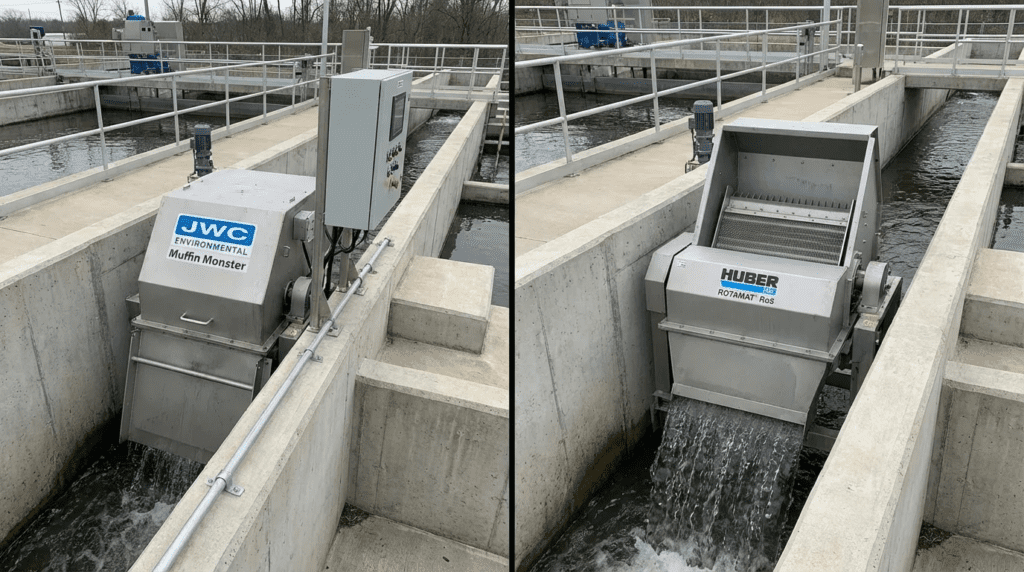
INTRODUCTION
Grit accumulation remains one of the most pervasive and costly “silent failures” in municipal wastewater treatment. While headworks screens provide visible capture, grit often bypasses preliminary treatment, settling in aeration basins, reducing digester capacity by up to 30%, and causing premature abrasion failure in downstream pumps. For consulting engineers and plant directors, the selection of grit removal technology is not merely a matter of hydraulic capacity; it is a critical calculation of lifecycle protection for the entire plant. A frequent evaluation point in modern headworks design involves analyzing JWC Environmental vs HUBER Grit Equipment: Comparison & Best Fit to determine which philosophy aligns with specific facility constraints.
This technology is deployed at the preliminary treatment stage, immediately following or integrated with coarse screening. Applications range from small municipal packaged plants to large-scale urban facilities dealing with combined sewer overflow (CSO) events. The stakes for proper selection are high: poor specification leads to “putrescible grit”—organic-laden solids that increase disposal costs and odor complaints—or excessive carryover that scours piping and impellers. A miscalculation in specific gravity targets or hydraulic loading rates can result in equipment that functions nominally but fails to protect downstream assets.
This article provides an engineer-focused analysis of these two distinct equipment manufacturers. It moves beyond catalog features to examine the engineering principles, material standards, and operational realities that differentiate their approaches. By understanding the nuances of JWC Environmental vs HUBER Grit Equipment: Comparison & Best Fit, specifiers can make data-driven decisions regarding capture efficiency, organic separation, and total cost of ownership.
HOW TO SELECT / SPECIFY
Selecting the correct grit removal system requires a multidimensional analysis of process variables. Engineers must look past nominal flow rates to understand how equipment behaves under peak wet weather flow (PWWF) versus average dry weather flow (ADWF), and how the physical characteristics of the grit change between these regimes.
Duty Conditions & Operating Envelope
The primary driver for specification is the definition of “grit.” While standard design often targets 65-mesh (0.21 mm) sand with a specific gravity (SG) of 2.65, real-world influent contains varied materials including eggshells, coffee grounds, and road asphalt. When evaluating JWC Environmental vs HUBER Grit Equipment: Comparison & Best Fit, engineers must specify the target removal efficiency (e.g., 95% removal of grit >200 micron).
Flow variability is equally critical. Vortex systems and aerated chambers rely on specific hydraulic retention times (HRT). If the turn-down ratio is high, velocity may drop below the critical settling velocity in the channels, causing grit to settle before reaching the removal equipment. Conversely, PWWF events can wash out captured grit if the surface overflow rate (SOR) exceeds design parameters.
Materials & Compatibility
Material selection often delineates the philosophy of the manufacturer. HUBER is renowned for its exclusive use of stainless steel (typically 304L or 316L) which offers superior corrosion resistance in the aggressive headworks environment where hydrogen sulfide (H2S) is prevalent. This impacts the structural longevity and requires no coating maintenance.
JWC Environmental, while offering stainless steel options, may also utilize distinct construction methods or coated carbon steel components in certain legacy or acquisition-line products, though their modern lines increasingly favor stainless steel. Engineers must specify passivation requirements for all stainless steel to prevent rouging and pitting. For components in direct contact with grit, such as screw flights and pump volutes, abrasion resistance is paramount. Look for AR (Abrasion Resistant) steel liners or Hardox® wear elements in high-velocity zones.
Hydraulics & Process Performance
Process performance hinges on the separation of organics from mineral grit. High organic content in grit dumpster leads to higher disposal fees and significant odor issues. Advanced grit washing systems (often associated with HUBER’s Ro6 or JWC’s newer separation technologies) utilize fluidizing water and an updraft functionality to wash organics back into the flow stream.
Hydraulic profiles (HGL) must be calculated to ensure the headworks does not back up the influent sewer. Vortex grit chambers induce a specific headloss to generate the necessary centrifugal forces. Engineers must evaluate the headloss curves provided by the manufacturers to ensure compatibility with upstream hydraulics.
Installation Environment & Constructability
Space constraints often dictate the technology choice. HUBER’s equipment is frequently characterized by a compact, enclosed “machine” footprint, often combining screening and grit removal in a single unit (e.g., ROTAMAT® Complete Plant). This is advantageous for retrofits in tight buildings.
JWC Environmental’s solutions, particularly when integrating their grinding technology, may offer different footprint geometries. The installation environment also dictates electrical classifications; headworks are typically Class 1, Division 1 or 2 environments due to methane and H2S. Motors and instrumentation must be explosion-proof (XP) or intrinsically safe (IS).
Reliability, Redundancy & Failure Modes
Grit systems are abrasive environments by definition. Common failure modes include wear on screw auger flights, failure of bottom bearings (if present), and clogging of airlift pumps. Engineers should prioritize “shaftless” screw designs for grit transport to eliminate the bottom bearing, a notorious failure point in submerged grit service.
Redundancy is critical. A single grit train failure during a storm event can inundate a plant with tons of sand. Designers should specify N+1 redundancy for pumps and consider parallel grit channels. MTBF (Mean Time Between Failure) data should be requested for the drive assemblies and wear liners.
Controls & Automation Interfaces
Modern grit systems require sophisticated control to optimize organic separation. Continuous operation is rarely efficient; intermittent operation based on timers or influent flow pacing is standard. When analyzing JWC Environmental vs HUBER Grit Equipment: Comparison & Best Fit, evaluate the proprietary control algorithms offered.
Integration with plant SCADA via Ethernet/IP or Modbus is mandatory. Key data points include torque monitoring (to detect jamming), run status, and fault alarms. Some advanced washing units use turbidity sensors or torque feedback to adjust the washing cycle intensity.
Maintainability, Safety & Access
Operator safety is paramount. Enclosed systems reduce aerosol exposure but must have accessible hatches for inspection. The weight of replacement parts (e.g., screw liners, gearboxes) must be considered; lifting davits or crane rails should be included in the design if components exceed 50 lbs.
Lockout/Tagout (LOTO) locations must be within line-of-sight of the equipment. Maintenance intervals for greasing and liner checks should align with plant staffing capabilities. Systems requiring daily manual washdowns due to poor self-cleaning characteristics will likely be neglected, leading to failure.
Lifecycle Cost Drivers
While CAPEX is the initial hurdle, OPEX drives the 20-year cost. Energy consumption is generally low for grit motors, but disposal costs are significant. A system that produces “clean” grit ( < 10% volatile solids) versus "dirty" grit ( > 30% volatile solids) can save tens of thousands of dollars annually in landfill tipping fees and hauling costs. Engineers must conduct a Total Cost of Ownership (TCO) analysis that factors in disposal volume reduction.
COMPARISON TABLES
The following tables provide a direct technical comparison to assist engineers in distinguishing between the two manufacturer philosophies. Table 1 focuses on the specific equipment attributes relevant to JWC Environmental vs HUBER Grit Equipment: Comparison & Best Fit, while Table 2 outlines the application suitability based on plant constraints.
| Feature / Attribute | JWC Environmental (Grit Systems) | HUBER Technology (Grit Systems) | Engineering Considerations |
|---|---|---|---|
| Core Philosophy | Robustness, integration with grinding (Muffin Monster legacy), effective separation. | Precision manufacturing, all-stainless steel construction, high-efficiency organic separation. | JWC often favors rugged, heavy-duty designs; HUBER favors precision engineering and corrosion resistance. |
| Primary Materials | Stainless steel and coated carbon steel options depending on product line. | Exclusively Stainless Steel (304L/316L), acid pickled and passivated. | Stainless steel (HUBER standard) offers lower lifecycle maintenance but higher initial material cost. |
| Grit Washing Technology | Cyclone separators and screw classifiers (e.g., Grit Monster, SpiraGrit). | Coanda Effect washers (Ro6), Fluidized bed classifiers. | Washing/classifying technology determines the organic content of the final output. |
| Combination Units | Available (Screening + Grit). Strong focus on protecting downstream from ragging. | ROTAMAT® Ro5 Complete Plant (Screening + Grit + Grease). | Combination units save footprint but couple the failure modes of screens and grit systems. |
| Wear Mitigation | Emphasis on heavy-duty augers and readily replaceable liners. | Emphasis on shaftless spirals and wear bars in stainless troughs. | Check liner thickness and material hardness (Brinell scale) specs. |
| Target Applications | Retrofits, pump stations requiring protection, headworks with heavy ragging. | New builds, plants with strict odor/organic disposal limits, MBR protection. | Application fit depends on whether “clean grit” or “grit protection” is the priority. |
| Scenario | Best Fit Characteristics | Key Decision Factor | Relative Complexity |
|---|---|---|---|
| Small Plant (< 1 MGD) | Packaged Headworks (Combo Units) | Footprint and single-source responsibility. | Low |
| High Organic Loading | Advanced Grit Washing (Fluidized Bed) | Ability to reduce Volatile Solids < 5% to lower disposal costs. | High |
| Combined Sewer (CSO) | Vortex or Detritus Tanks with Robust Removal | Handling massive fluctuations in hydraulic and solids loading. | Medium-High |
| Aggressive Corrosive Environment | Full Stainless Steel Construction | Elimination of coating failures and rust. | Low |
| Limited Operator Staffing | Automated Washing & Dewatering | Self-cleaning cycles and minimal manual intervention. | Medium |
ENGINEER & OPERATOR FIELD NOTES
Successful implementation extends beyond the specification sheet. The following observations stem from real-world installation, operation, and maintenance experiences with grit handling systems.
Commissioning & Acceptance Testing
Commissioning grit equipment is notoriously difficult because “clean water” testing does not replicate the settling behavior of grit. A critical check during the Factory Acceptance Test (FAT) is the verification of screw run-out and clearance. For shaftless spirals, the spiral should sit flat on the wear liner.
Site Acceptance Testing (SAT) requires specific attention to the “seeding” of the system. Contractors often hesitate to introduce sand into a new basin, but verifying the torque response of the drive unit under load is essential before handover. Verify that the current draw on the motor aligns with the manufacturer’s curve when the unit is processing solids, not just spinning in water.
Operators often bump motors to check rotation. On grit screws, ensure the unit is not “packed” with settled grit before this bump. Starting a buried screw against a compacted load is the #1 cause of shaft shearing or gearbox failure during startup. Always perform a manual torque check (turn by hand if possible) after long shutdowns.
Common Specification Mistakes
One of the most frequent errors in specifying JWC Environmental vs HUBER Grit Equipment: Comparison & Best Fit involves undefined “Grit.” Specifying “95% removal of grit” is legally insufficient. The specification must define grit particle size (e.g., 212 microns / 65 mesh) and specific gravity (e.g., 2.65). Without this, a manufacturer can claim compliance by removing large stones while bypassing the fine sand that destroys pumps.
Another mistake is neglecting the water requirement for washing. Grit washers require wash water (often plant non-potable water, NPW) at specific pressures and flows to fluidize the bed. If the NPW system is undersized, the grit washer will fail to separate organics, resulting in a smelly, soupy discharge.
O&M Burden & Strategy
Operational strategies differ between classifying and washing. Classifiers (separation by gravity) generally require less operator attention but produce “dirtier” grit. Washers (separation by hydro-dynamic forces) require tuning of the wash water and organic return valves.
Routine Maintenance:
- Weekly: Inspect discharge chutes for bridging. Check gearbox oil levels.
- Monthly: Check tension on drive belts/chains. Grease bearings (if not sealed).
- Annually: Measure wear liner thickness. For shaftless screws, measure the spiral diameter to check for outer edge wear.
Troubleshooting Guide
Symptom: Wet, sloppy output.
Root Cause: Often due to high organic content holding water (sponge effect) or worn screw flights allowing water to slip back down. Check wash water settings first, then check screw clearance.
Symptom: Excessive Odor.
Root Cause: Putrescible material is settling with the grit. Increase aeration in the grit chamber (to float organics) or increase the wash water fluidization rate in the classifier.
DESIGN DETAILS / CALCULATIONS
To accurately compare JWC Environmental vs HUBER Grit Equipment: Comparison & Best Fit, engineers must validate the sizing logic provided by the vendors.
Sizing Logic & Methodology
The fundamental design parameter for any gravity settling device is the Surface Overflow Rate (SOR). It represents the velocity of the water rising upwards versus the settling velocity of the particle falling downwards.
Formula: SOR = Q / A
Where Q is flow rate (gpd or m3/h) and A is the surface area (ft2 or m2).
For a 100-mesh particle (0.15 mm) with SG 2.65, the settling velocity is approximately 0.05 ft/s. The SOR must be designed such that the upward velocity is significantly less than this settling velocity. Manufacturers like HUBER and JWC utilize proprietary enhancements (lamella plates, Coanda trays) to increase the effective surface area, allowing higher hydraulic loadings in smaller footprints.
Specification Checklist
When preparing the bid package, ensure the following are explicitly detailed:
- Design Peak Flow (MGD): The absolute hydraulic maximum.
- Grit Loading Rate (ft³/MGD): The volume of grit expected. Older specs often underestimate this. Modern combined systems can see 10-30 ft³/MGD during flushes.
- Capture Efficiency: Specifically tied to particle size and specific gravity.
- Organic Content Limit: E.g., “Discharged grit shall contain less than 15% volatile solids.”
- Material Origin: “AISI 304 or 316 Stainless Steel, fully passivated.”
Standards & Compliance
Equipment should adhere to Ten States Standards regarding redundancy and channel velocity control (typically maintaining 1 fps to settle grit but scour organics). Electrical components must meet NFPA 820 standards for fire protection in wastewater facilities. For stainless steel fabrication, reference AWS D1.6 structural welding codes.
FREQUENTLY ASKED QUESTIONS
What is the difference between a grit classifier and a grit washer?
A grit classifier separates solids from water using gravity and a slow-moving screw, typically producing grit with 20-50% organic content. A grit washer adds a fluidization step (upward water flow) and agitation to separate light organics from the heavy mineral grit before dewatering. Grit washers produce much cleaner grit (<10% organics) which reduces odors and disposal costs.
How does JWC Environmental vs HUBER Grit Equipment: Comparison & Best Fit affect lifecycle costs?
HUBER equipment typically has a higher initial capital cost due to stainless steel construction and advanced washing features, but offers lower long-term maintenance (no painting/coating) and lower disposal fees due to drier, cleaner grit. JWC systems may offer lower initial capital expenditure and robust solutions for retrofits, but long-term costs depend heavily on the specific model selected and the efficiency of organic separation.
Why is specific gravity (SG) important in grit specifications?
Specific gravity defines the density of the particle relative to water. Sand (SG 2.65) settles predictably. However, “grit” also includes snail shells, coffee grounds, and seeds (SG 1.1 – 1.5). If a system is only designed for SG 2.65, it will wash out lighter grit particles, which then settle in the digester. Specifying removal at lower SG (e.g., 1.6) requires larger basins or more advanced separation technology.
Can these systems be retrofitted into existing concrete channels?
Yes. JWC Environmental often specializes in drop-in solutions or packaged systems that can sit on existing pads. HUBER also offers channel-mounted equipment. The challenge in retrofits is usually hydraulic profile matching—ensuring the new equipment doesn’t cause backup (headloss) that floods upstream sewers.
What is the typical lifespan of grit removal equipment?
With proper maintenance, the structural components (tanks, hoppers) of stainless steel systems (like HUBER) can last 20-25 years. Wetted moving parts (screws, liners, pumps) typically have a 5-10 year service life before major refurbishment is required. Carbon steel components in corrosive headworks environments may require re-coating every 5-7 years to maintain structural integrity.
Does 95% removal efficiency mean I will capture all the grit?
No. 95% removal refers to a specific particle size (e.g., >200 microns). A system can meet this spec and still pass 100% of particles smaller than 200 microns. Since fine grit is highly abrasive to membrane systems and high-speed pump seals, engineers must decide if they need to target finer particles (100 or 150 microns), which requires larger or more specialized equipment.
CONCLUSION
KEY TAKEAWAYS
- Define “Grit” Precisely: Specification must include particle size (Mesh) and Specific Gravity (SG). “95% removal” is meaningless without these parameters.
- Material Philosophy: HUBER focuses on all-stainless steel construction for corrosion resistance; JWC offers robust solutions often integrating their grinding heritage.
- Organics Matter: High organic content in grit increases disposal costs and odors. If landfill fees are high, prioritize “Washing” over simple “Classifying.”
- Hydraulics are Critical: Ensure the headloss of the grit system fits within the hydraulic profile of the plant to prevent upstream flooding.
- Maintenance Access: Grit requires maintenance. Ensure liners, screws, and bearings are accessible without requiring confined space entry if possible.
The decision between JWC Environmental vs HUBER Grit Equipment: Comparison & Best Fit is rarely a question of which manufacturer is “better,” but rather which engineering philosophy aligns with the facility’s constraints. HUBER Technology generally represents the premium, high-efficiency, all-stainless approach ideal for new plants with strict disposal requirements and high corrosive potential. JWC Environmental offers robust, proven solutions that are often highly adaptable for retrofits and facilities seeking rugged reliability, particularly where grinding is also required.
Engineers should approach this selection by first defining the “Problem Grit” (size and composition) and the “Disposal Constraint” (cost and odor tolerance). By prioritizing the process definition—Surface Overflow Rates, Organic Retention, and Hydraulic Loading—over brand loyalty, the utility ensures a system that protects downstream assets for decades. The most expensive grit system is not the one with the highest capital cost, but the one that allows abrasive sand to pass through to the bioreactors and sludge pumps.