
Designing and Operating Efficient Effluent Treatment Plants
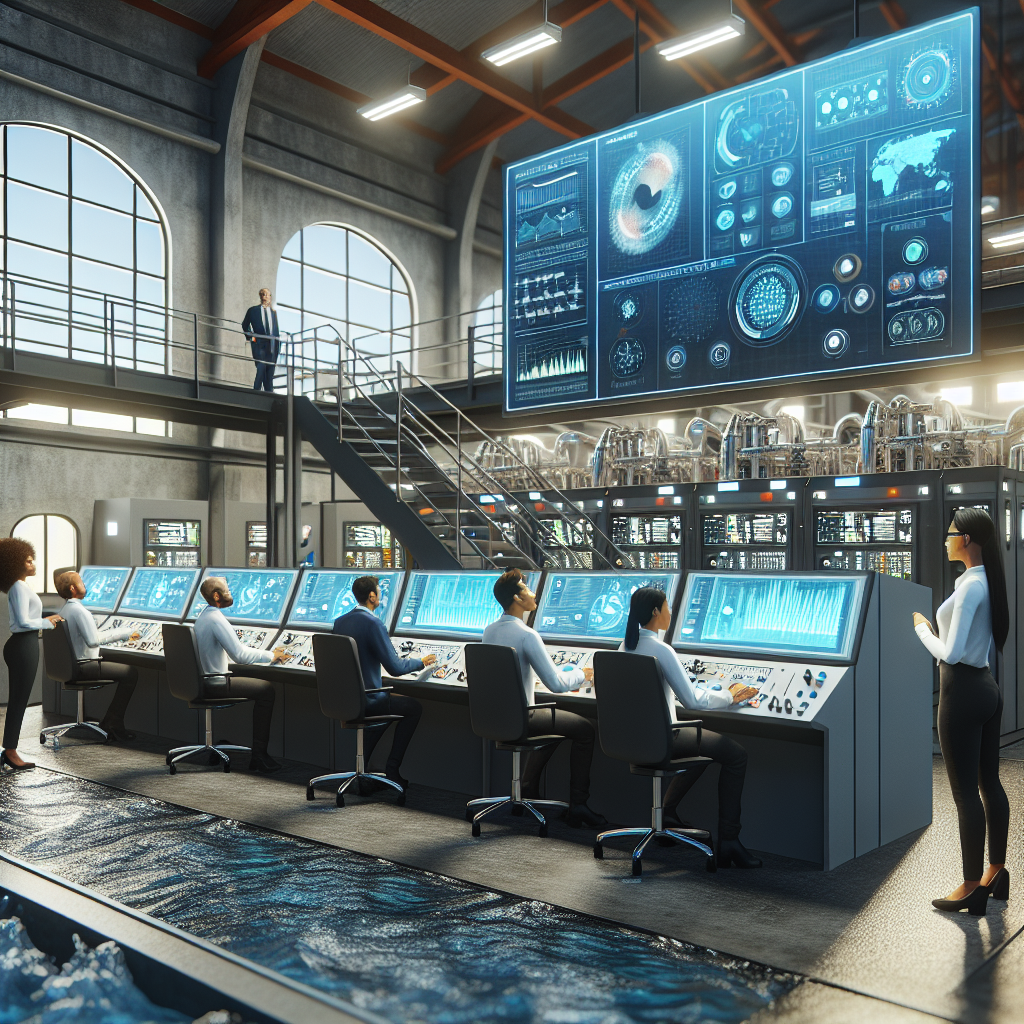
Designing and Operating Efficient Effluent Treatment Plants
Introduction
An effluent treatment plant is judged on two things that are easy to state and difficult to deliver simultaneously:
does the discharge meet permit, and does it do so at a cost the utility or industrial owner can sustain year after
year. Plants that satisfy the first condition while failing the second tend to accumulate deferred maintenance,
operate blowers and pumps outside their efficiency envelope, and eventually face a capital request that could have
been avoided. Plants that chase the second at the expense of the first end up in enforcement. Efficient design and
operation is the discipline of holding both conditions at once across a thirty-year asset life.
This subcategory sits within the broader field of
effluent treatment
plants, where questions of process selection, unit sizing, and treatment train configuration are addressed in
depth. The material below narrows to the intersection of design decisions and operating consequences — the
choices made on paper that determine what an operator will be able to do, and unable to do, once the plant is
commissioned. Regulatory framing, technology selection, energy optimization, scalability, maintenance strategy,
resource recovery, stakeholder relations, and data management are each treated as a design input rather than an
operations afterthought.
Subcategory Overview: Efficient Design and Operation
Effluent treatment plant design divides into a small number of decision families, each with its own literature and
its own failure modes. The sections that follow work through them in sequence.
Integrated Design and Operation Guidance
The most consequential design decisions are the ones that constrain future operation. Selecting a treatment train
with no bypass around a unit process means that process can never be taken offline for maintenance without a permit
exception. Sizing on average day flow rather than peak wet-weather flow means the operator will spend the plant’s
life managing hydraulic surcharge. Specifying a control system without local manual override means a communications
failure becomes a treatment failure. Detailed guidance on
designing and operating
efficient effluent treatment plants works through these coupled decisions in sequence, pairing each design
parameter with the operating consequence it produces.
Practically, this means the design team should include operations input at three defined points: at preliminary
design when the treatment train is still fluid, at sixty percent design when equipment access, redundancy, and
isolation are still adjustable, and at final review when instrumentation locations and sampling points are set.
Reviews that occur only at ninety-five percent design capture almost nothing, because by then the drawings are too
expensive to change. Plants built with operator input at all three gates consistently report lower unplanned
downtime and fewer first-year change orders than those where operations first saw the design at bid.
Regulatory Framework and Compliance in Effluent Treatment
Navigating the labyrinth of regulations surrounding effluent treatment plants can feel like trying to find a needle in a haystack—if that haystack were also on fire. With stringent environmental standards and compliance requirements, every wastewater treatment operator must be on their toes.
Did you know that over 80% of the world's wastewater is released into the environment without adequate treatment? This alarming statistic from the UN emphasizes the crucial role that well-regulated effluent treatment plants play in protecting our ecosystems. Without proper compliance, not only do we risk legal repercussions, but we also jeopardize public health and environmental integrity.
Understanding Key Regulations
In the U.S., the Clean Water Act (CWA) stands as the cornerstone of water quality regulation. It establishes the framework for regulating discharges of pollutants into waters and sets water quality standards for all contaminants. Compliance isn't just a box to check; it’s an ongoing commitment. Each effluent treatment plant must obtain a National Pollutant Discharge Elimination System (NPDES) permit, which outlines specific discharge limits and monitoring requirements tailored to local conditions.
On top of federal regulations, states often impose their own rules, which can vary widely. This patchwork can complicate compliance efforts, especially for multi-state operations. For instance, a plant operating in California might face stricter nutrient limits compared to one in Texas, where regulations may be more lenient.
Common Compliance Pitfalls
One major pitfall is neglecting regular monitoring and reporting. Failing to keep accurate records can lead to costly fines or even plant shutdowns. For example, a municipal plant in Ohio recently faced hefty penalties after it was discovered they hadn't reported exceedances in their discharge limits for several months—an oversight that could have been avoided with diligent tracking.
Key Takeaway: Regular monitoring not only ensures compliance but also promotes operational efficiency. It’s worth investing time and resources into robust data management systems.
But what about biosolids? you might ask. Well, these byproducts from effluent treatment are subject to their own set of regulations under the EPA's Part 503 Rule. Improper handling or disposal of biosolids can lead to significant legal troubles and public backlash. In fact, biosolids are often recycled as fertilizers or soil amendments—so ensuring their safety is paramount!
Future-Proofing Your Effluent Treatment Plant
Compliance requirements do not hold still. Nutrient limits tighten, contaminants that were unregulated at the time
of design enter permits, and biosolids pathways that were routine become restricted. A plant designed only against
the permit in force on the day of the bid opening is already dated by commissioning. Future-proofing means building
in the physical and hydraulic headroom to add a treatment stage later — spare tankage, an oversized hydraulic
profile, conduit and electrical capacity, and site layout that does not require demolition to expand.
The cost of this headroom during original construction is typically a small fraction of what the same capacity
costs as a retrofit, where work must proceed around a plant that cannot stop treating. Practical measures include
sizing yard piping and the plant hydraulic grade line for a future stage, leaving a designated pad with utilities
stubbed, specifying electrical gear with spare breaker positions, and documenting the design assumptions so a future
engineer understands what was reserved and why. Permit renewal cycles are a useful planning horizon: a plant should
be able to answer, at each renewal, what it would do if the next permit added a parameter.
Innovative Technologies for Enhanced Treatment Processes
Imagine a wastewater treatment facility in a bustling city, grappling with the challenge of treating an ever-increasing volume of effluent while facing budget constraints. This is not just a hypothetical scenario; it’s the reality for many municipalities. Enter innovative technologies that are revolutionizing the landscape of effluent treatment plants.
Smart Sensors and IoT Integration
Gone are the days when operators had to rely solely on manual checks to monitor treatment processes. With smart sensors and IoT (Internet of Things) integration, facilities can now gather real-time data on water quality, flow rates, and equipment performance. For instance, a mid-sized plant in Florida implemented smart sensors that alerted operators to fluctuations in pH levels within seconds. This proactive approach allowed them to make immediate adjustments, ensuring compliance with discharge standards while optimizing chemical usage.
Real-time data collection not only enhances compliance but also boosts operational efficiency.
Advanced Treatment Technologies
Let’s talk about advanced treatment technologies like membrane bioreactors (MBRs) and moving bed biofilm reactors (MBBRs). These systems combine biological treatment with membrane filtration, resulting in higher quality effluent that meets stringent discharge standards. A notable case is a treatment plant in California that switched to MBR technology. The upgrade not only improved effluent quality but also reduced the footprint of their facility by over 30%, allowing for future expansion without the need for additional land.
- Membrane Bioreactors (MBRs): Combine biological treatment with membrane filtration.
- Moving Bed Biofilm Reactors (MBBRs): Enhance nitrification and denitrification processes.
- Electrocoagulation: Uses electric current to remove contaminants efficiently.
Automation and AI in Operations
Set it and forget it might sound appealing, but when it comes to effluent treatment plants, automation powered by AI takes this concept to a whole new level. Picture an AI system analyzing historical data trends and predicting maintenance needs before they become critical issues. A wastewater facility in New York adopted AI-driven predictive analytics that reduced unexpected downtime by 25%. This means less time worrying about equipment failures and more time focusing on improving overall plant performance.
As we look toward the future, these innovative technologies are not just trends—they're necessities for any modern effluent treatment plant aiming for efficiency and sustainability.
Optimizing Energy Efficiency in Plant Operations
Energy inefficiency in effluent treatment plants can feel like trying to fill a bathtub with the drain wide open—no matter how much you pour in, it just keeps slipping away. In fact, studies show that wastewater treatment plants account for approximately 3% of the total energy consumption in the U.S. That’s a staggering amount when you consider the potential for savings!
Let’s take a closer look at a real-world example: a mid-sized municipal effluent treatment plant in Michigan was struggling with skyrocketing energy bills due to outdated pumping systems and inefficient aeration processes. After conducting an energy audit, they discovered that nearly 50% of their energy consumption was tied up in these two areas alone.
Conducting an Energy Audit
The first step toward optimizing energy efficiency is conducting a thorough energy audit. This isn’t just a one-time check-up; it’s more like an annual physical for your plant. Bring in professionals who specialize in this area to identify where your energy is leaking out faster than you can pump it in.
- Assess all major components: pumps, blowers, and motors.
- Analyze operational schedules and peak usage times.
- Identify any outdated equipment that could be replaced with more efficient models.
Upgrading Equipment
If it ain't broke, don't fix it might be a popular saying, but when it comes to pumps and aerators, ignoring inefficiencies can lead to financial drain. For instance, by upgrading from traditional centrifugal pumps to variable frequency drive (VFD) pumps, the Michigan plant reduced its energy consumption by over 30%. VFDs adjust motor speed based on demand rather than running at full capacity all the time.
Key Takeaway: Upgrading equipment not only improves efficiency but also enhances reliability and reduces maintenance costs.
Implementing Process Optimization
Work smarter, not harder applies here too! Optimizing operational processes can significantly reduce energy usage. For example, implementing advanced control systems that optimize aeration based on real-time data can lead to substantial savings. A facility in Texas integrated online monitoring tools that adjusted aeration rates based on actual oxygen demand rather than fixed schedules.
Design Considerations for Scalability and Flexibility
Imagine a bustling city with an effluent treatment plant (ETP) that was designed to handle a specific volume of wastewater. Fast forward a few years, and the population has skyrocketed, leaving the plant struggling to keep up. This scenario is all too common, and it highlights the critical need for scalability and flexibility in ETP design.
According to the Water Environment Federation, nearly 50% of wastewater treatment plants were built over 40 years ago, often without considering future growth. This oversight can lead to costly retrofits or even regulatory violations as demand outstrips capacity. Therefore, designing for scalability isn’t just smart—it’s essential.
Modular Design: The Key to Future-Proofing
One of the most effective strategies for ensuring scalability is adopting a modular design approach. Think of it like building with LEGO blocks: you can start small and add more pieces as needed. Modular systems allow for easy expansion without major overhauls or disruptions to existing operations.
For instance, a mid-sized municipal plant in Oregon implemented a modular bioreactor system that enabled them to increase capacity by 30% within a year. This flexibility meant they could respond swiftly to population growth without incurring exorbitant costs or lengthy construction delays.
Key Takeaway: Modular designs not only facilitate expansion but also enhance operational efficiency by minimizing downtime during upgrades.
Flexible Treatment Processes
Another crucial aspect of scalability is incorporating flexible treatment processes that can adapt to varying influent quality and quantity. For example, using advanced technologies like moving bed biofilm reactors (MBBRs) allows plants to adjust their treatment capabilities based on real-time data regarding flow rates and contaminant levels.
Set it and forget it might sound appealing for some operations, but when it comes to wastewater treatment, flexibility is vital. A facility in New Jersey adopted an adaptive control system that optimized aeration rates based on actual oxygen demand rather than fixed schedules, leading to improved efficiency during peak load times.
- Real-time monitoring systems for immediate adjustments.
- Plug-and-play components that allow easy upgrades.
- Smart technology integration for predictive maintenance.
Collaborative Planning with Stakeholders
Effective communication with stakeholders—municipalities, environmental agencies, and community members—is critical when designing scalable ETPs. Engaging these groups early on can provide valuable insights into future needs and regulatory requirements.
For example, a city in California held community workshops before launching their new effluent treatment project. By gathering input from residents about their growth projections and environmental concerns, they were able to design an ETP that met both current demands and future expansion needs effectively.
Key Takeaway: Involving stakeholders ensures your design aligns with community expectations while preparing for future challenges.
Maintenance Strategies to Ensure Operational Reliability
Picture this: a bustling effluent treatment plant in a metropolitan area faces an unexpected shutdown due to equipment failure. The result? A costly loss of productivity and a potential environmental disaster. In fact, studies show that nearly 30% of treatment plant downtime is attributed to inadequate maintenance practices. Ouch!
The Importance of Proactive Maintenance
Proactive maintenance is the unsung hero in the world of effluent treatment plants. It’s about anticipating problems before they escalate into full-blown catastrophes. For instance, a wastewater facility in Michigan implemented a predictive maintenance strategy, using data analytics to forecast equipment failures. This approach reduced their downtime by an impressive 40%. Why wait for something to break when you can fix it before it becomes a headache?
- Regular inspections and monitoring of critical components.
- Implementing condition-based maintenance using real-time data.
- Training staff on the importance of timely repairs.
Creating a Maintenance Schedule
Every successful effluent treatment plant needs a solid maintenance schedule—think of it as your plant’s workout routine. Just like you wouldn’t skip leg day, don’t skip those regular checks! A well-structured schedule includes daily, weekly, and monthly tasks tailored to your facility's specific needs.
- Daily: Check pump operations and flow rates.
- Weekly: Inspect aeration systems and clean filters.
- Monthly: Conduct comprehensive equipment assessments.
Key Takeaway: A structured maintenance schedule not only extends the lifespan of your equipment but also ensures consistent operational efficiency.
Just-In-Time Maintenance Approach
Just-in-time maintenance is all about timing—similar to how you would plan your grocery shopping just before running out of essentials. This strategy focuses on performing maintenance tasks right when they are needed, avoiding unnecessary downtime while ensuring that everything runs smoothly.
For example, if sensors indicate that a pump is showing signs of wear, addressing it immediately prevents sudden breakdowns down the line. In contrast, waiting until it fails could lead to costly repairs and operational disruptions.
Ultimately, ensuring operational reliability at your effluent treatment plant hinges on effective maintenance strategies. Think ahead, schedule wisely, and don't let unexpected failures catch you off guard! What will you implement next?
Water Reuse and Resource Recovery from Effluents
Imagine a world where wastewater isn’t just a problem to be disposed of, but a valuable resource waiting to be tapped. This isn't science fiction; it’s the reality for many forward-thinking effluent treatment plants (ETPs) today. With global water scarcity on the rise, the shift towards water reuse and resource recovery is not just smart—it's essential.
In fact, according to the Water Environment Federation, over 50% of treated wastewater can be reused for irrigation, industrial processes, and even potable applications. Yet, despite this potential, many ETPs still operate under outdated paradigms that treat effluent as waste rather than a resource.
The Case for Water Reuse
Let's break it down: water reuse can significantly alleviate pressure on freshwater sources. Consider a bustling city facing drought conditions; if its ETP could reclaim and reuse even a fraction of its treated water, it could reduce reliance on municipal supplies and bolster local ecosystems. A notable example is the Orange County Water District in California, which has successfully implemented a groundwater replenishment system that purifies treated wastewater for potable use. This innovative approach has transformed how the community views wastewater management.
Key Takeaway: Embracing water reuse not only conserves resources but also enhances community resilience against climate variability.
Resource Recovery Opportunities
Beyond just water, effluent treatment plants have the potential to recover valuable resources like nutrients and energy. For instance, anaerobic digestion processes can convert organic matter into biogas—a renewable energy source that can power plant operations or be sold back to the grid. This dual benefit not only offsets operational costs but also contributes to sustainability goals.
- Nutrient recovery systems can extract nitrogen and phosphorus from wastewater for use in fertilizers.
- Biogas production through anaerobic digestion reduces greenhouse gas emissions while generating energy.
- Advanced treatment technologies enable recovery of metals like copper and zinc from industrial effluents.
Wastewater is no longer just waste; it’s an opportunity, says Dr. Jane Smith, an expert in sustainable water management. This mindset shift is critical as municipalities strive to meet both environmental standards and community needs.
'The Road Ahead: Challenges & Innovations
But it's not all smooth sailing, you might say. There are challenges ahead—like public perception around reclaimed water safety or the initial capital investments required for advanced recovery systems. However, as technology evolves and more success stories emerge, these barriers are becoming less daunting.
As we move forward into an era where sustainability is paramount, embracing innovative solutions in effluent treatment plants will be crucial. The future lies in transforming perceptions of wastewater from burden to bounty—an opportunity waiting to be seized!
Stakeholder Engagement in Plant Design and Operation
Imagine a community meeting where residents express their concerns about the smell emanating from a nearby effluent treatment plant. Sound familiar? Engaging stakeholders early on can prevent such scenarios from spiraling into public relations nightmares.
A staggering 70% of wastewater treatment projects face delays due to inadequate stakeholder engagement, according to the Water Environment Federation. This statistic underscores the importance of involving everyone—from local residents to environmental agencies—in the planning and operational phases of effluent treatment plants.
Why Stakeholder Engagement Matters
Communities are not just passive recipients of wastewater management; they are active participants who hold valuable insights. Engaging them can lead to better design choices that reflect local needs, ultimately enhancing compliance and operational efficiency. For instance, a plant in Oregon incorporated community feedback into its design, resulting in a facility that not only met regulatory standards but also gained public support.
Strategies for Effective Engagement
- Conduct regular community workshops to gather input and address concerns.
- Establish a dedicated stakeholder liaison to facilitate communication.
- Utilize surveys and feedback forms to gauge public sentiment on proposed projects.
Transparency is key, says an engineer from a leading wastewater management firm. Sharing project timelines, expected outcomes, and even potential challenges helps build trust with the community. When stakeholders feel informed and involved, they are more likely to support initiatives—even those that may initially seem controversial.
'Engagement is not just about informing; it's about listening.'
The Ripple Effect of Stakeholder Engagement
The Ripple Effect describes how proactive engagement can create waves of positive outcomes. For example, when a municipal plant in California engaged local farmers during its design phase, it learned about specific irrigation needs that influenced water reuse strategies. This collaboration led to enhanced resource recovery initiatives that not only benefited the plant's operations but also supported local agriculture.
Data Management Systems for Efficient Plant Operation
Imagine this: a bustling effluent treatment plant, drowning in data but struggling to make sense of it all. According to a recent study, up to 90% of operational data collected in wastewater treatment facilities goes unanalyzed. That’s like having a treasure chest full of gold but only using it to prop open doors!
In the world of effluent treatment plants, effective data management systems are not just nice-to-haves; they’re essential lifelines. These systems allow operators to track performance metrics, monitor compliance with environmental regulations, and optimize resource use—all while minimizing human error. Think of them as the brain behind the brawn, ensuring every pump and valve is working harmoniously.
Key Features of Effective Data Management Systems
So what makes a data management system truly effective? Here are some must-have features that can transform your plant operations:
- Real-time monitoring: Capture live data on flow rates, chemical dosages, and effluent quality.
- Automated reporting: Generate compliance reports without the tedious manual input.
- Predictive analytics: Use historical data to forecast maintenance needs and prevent equipment failures.
- User-friendly dashboards: Visualize complex data in an intuitive format for quick decision-making.
Important Takeaway: Investing in a robust data management system can lead to significant cost savings by improving operational efficiency and reducing downtime.
Real-World Application: A Case Study
Let’s take a look at a real-world example: A municipal effluent treatment plant in Texas implemented an advanced data management system that integrated IoT sensors throughout its operations. Within six months, they reported a 25% reduction in energy costs due to optimized pump scheduling based on real-time flow data.
But that’s not all: The system also enabled them to identify inefficiencies in chemical usage—leading to savings of over $50,000 annually! This plant went from reactive maintenance practices to predictive strategies, significantly enhancing their operational reliability.
The Bottom Line: Data is Your Friend
As you explore options for upgrading your systems or implementing new technologies, remember: investing in robust data management isn’t just about keeping up; it’s about staying ahead!
Comparing Design and Operating Strategies
The strategies described throughout this article are not mutually exclusive, but they compete for the same capital
and staff attention. The table below summarizes where each delivers the most value and what it costs to pursue.
Figures are indicative; site conditions, existing asset condition, and permit stringency shift the ranking.
| Strategy | Primary Benefit | Best-Fit Applications | Limitations | Relative Cost | Maintenance Profile |
|---|---|---|---|---|---|
| Instrumentation and IoT monitoring | Real-time visibility into process upsets before they become violations | Plants with variable influent or limited staffing coverage | Sensors require calibration discipline; data volume can outrun analysis capacity | Low to moderate | Ongoing calibration and drift checks |
| Advanced biological treatment (MBR, MBBR) | Higher effluent quality within a smaller footprint | Constrained sites, tightening nutrient limits, reuse-driven quality targets | Higher energy demand; membrane fouling and replacement cost | High | Intensive — cleaning cycles, membrane integrity monitoring |
| Energy optimization (VFDs, aeration control) | Direct reduction in the largest controllable operating cost | Any plant with fixed-speed blowers or pumps and no dissolved oxygen control | Requires reliable instrumentation; savings depend on load variability | Moderate | Low once tuned; control loops need periodic review |
| Modular and scalable design | Capacity added incrementally without shutting down existing trains | Growing service areas and phased capital programs | Higher unit cost per train; requires site reserved from the outset | Moderate | Comparable to conventional per unit |
| Predictive and condition-based maintenance | Fewer unplanned outages and longer asset life | Plants with critical non-redundant equipment | Requires historical data and staff able to interpret it | Low to moderate | Shifts effort from reactive repair to scheduled intervention |
| Water reuse and resource recovery | Offsets operating cost and reduces discharge volume | Water-scarce regions, plants with agricultural or industrial reuse customers | Capital intensive; depends on public acceptance and an off-taker | High | Adds a treatment train and its own compliance regime |
Selection & Specification Framework
Deciding which of these strategies to pursue, and in what order, is the core planning question. The sequence below
reflects how the decision usually resolves in practice.
Step 1: Confirm the Load and Permit Basis
Every downstream decision depends on an accurate design basis. Confirm current and projected influent flow,
organic load, nutrient load, and peak wet-weather condition using at least twelve months of plant data rather than
the values carried forward from the last master plan. Confirm the permit trajectory as well — the limits at
next renewal matter more than the limits today. A design basis built on stale data is the most common origin of
capacity problems that appear within five years of construction.
Step 2: Establish Why the Plant Exists in Its Regulatory Context
Efficiency arguments land differently with governing boards and ratepayers than with engineers, and the case for
investment is easier to make when the underlying purpose is clearly articulated. A grounded explanation of
the importance of effluent
treatment — receiving water protection, public health, downstream users, and the regulatory obligations
that follow from each — gives technical recommendations a foundation that survives budget scrutiny. Projects
justified only on payback period tend to lose to projects justified on obligation plus payback.
Step 3: Sequence by Cost of Delay, Not by Payback Alone
Rank candidate projects by what deferral costs, not simply by return on investment. Energy optimization typically
ranks first because it requires modest capital, pays back within two to four years in most plants, and the savings
foregone during delay are unrecoverable. Instrumentation and condition monitoring rank next because they generate
the data all later decisions depend on. Capacity expansion and advanced treatment rank later unless a permit
deadline or capacity constraint forces the order. Resource recovery generally belongs last, after the plant’s core
processes are stable and instrumented.
Step 4: Test Every Option Against Operating Capacity
A strategy the staff cannot sustain is not a strategy. Membrane systems demand cleaning discipline and integrity
testing; advanced control loops require someone who can recognize when a loop is hunting; predictive maintenance
requires data interpretation that many plants do not staff for. Where the required capability does not exist, the
options are to build it through training, buy it through a service contract, or select a less demanding alternative.
Selecting the demanding option and hoping capability follows is the failure mode this step exists to prevent.
Field Notes
Commissioning Considerations
Biological plants do not demonstrate performance on the day the contractor finishes. Seeding and acclimation of
the biomass typically requires four to eight weeks before nitrification stabilizes, longer in cold weather, and
acceptance testing scheduled before that window closes will fail for reasons unrelated to construction quality.
Build the acclimation period into the schedule explicitly and define interim discharge arrangements with the
regulator in advance. Verify instrument calibration against laboratory reference samples rather than accepting
factory calibration.
Pro Tip
Before specifying any energy project, log blower and pump operation for a full month at fifteen-minute intervals
and plot the actual duty points against the equipment curves. Plants routinely discover that units are running well
off their best efficiency point for most of the day, which changes the answer from replace the equipment to change
how it is controlled — often at a fraction of the cost. The logging exercise is inexpensive and frequently
redirects the entire capital request.
Common Specification Mistakes
Recurring errors show up across projects regardless of plant size. Specifying variable frequency drives without
also specifying the dissolved oxygen control strategy they are supposed to serve produces drives that run at a fixed
speed indefinitely. Omitting isolation valves and bypass provisions around unit processes creates equipment that
cannot be maintained without a permit exception. Writing acceptance criteria around effluent quality alone, with no
energy or chemical consumption limit, gives the utility no recourse when a system meets permit while consuming far
more power than the design predicted. And specifying instrumentation without specifying calibration access,
maintenance intervals, and spare parts availability produces sensors that are abandoned within two years.
Common Mistake
Treating the SCADA and data system as an electrical scope item to be resolved during construction. Instrumentation
locations, sampling points, tag naming conventions, historian configuration, and reporting requirements are process
design decisions, and deferring them to the electrical contractor produces a system that logs what was convenient to
wire rather than what operations needs to see. The result is a plant that generates substantial data and answers few
questions — the situation described earlier in which the large majority of collected operational data is never
analyzed.
Operations and Maintenance Across Strategies
Maintenance burden differs sharply by strategy and should be evaluated before selection rather than discovered
after. Conventional activated sludge concentrates effort in process control and mechanical upkeep of blowers,
pumps, and clarifier drives. Membrane systems add cleaning cycles, integrity testing, and eventual module
replacement on a defined schedule. Instrumentation-heavy plants shift effort toward calibration and sensor
maintenance, work that is easy to defer and produces silent degradation in control quality when it is. Resource
recovery adds a separate process with its own compliance and safety requirements.
Design Details & Standards
Applicable Standards and Reference Documents
Design should be documented against recognized reference standards rather than internal convention. In the United
States, discharge obligations flow from the Clean Water Act and the facility’s
NPDES permit, with biosolids managed under 40 CFR Part 503. Facility design in
most states is reviewed against Ten States Standards (the Recommended Standards for Wastewater
Facilities) or an equivalent state design manual. Equipment and materials commonly reference AWWA
standards for valves, piping, and pumping; ANSI/HI standards for pump performance and acceptance
testing; NFPA 820 for electrical area classification in wastewater facilities; and
ISA practices for instrumentation and control documentation. Where reuse is contemplated, state
reclaimed water criteria govern and frequently exceed discharge requirements.
Key Parameters That Differ by Approach
A small number of parameters carry most of the design consequence. Hydraulic retention time and solids retention
time determine biological performance and sludge production; conventional activated sludge typically operates at
solids retention times in the approximate range of 5–15 days for nitrification, while membrane bioreactors
commonly run longer and at substantially higher mixed liquor concentrations. Organic loading rate governs tankage
volume. Aeration efficiency, expressed in pounds of oxygen delivered per horsepower-hour, is the single parameter
most directly tied to operating cost, since aeration commonly accounts for roughly half of total plant energy use.
Peaking factor determines whether the hydraulic profile survives wet weather. Each of these should appear as a
stated design requirement in the specification, not as a value inferred from vendor submittals.
Specification Checklist
- Design basis confirmed against at least twelve months of actual plant flow and load data
- Permit trajectory assessed through the next renewal cycle, not just current limits
- Peak wet-weather flow and hydraulic profile verified through the full treatment train
- Redundancy and isolation defined for every unit process, with bypass provisions documented
- Aeration control strategy specified alongside any variable frequency drive procurement
- Energy and chemical consumption limits included in acceptance criteria, not effluent quality alone
- Instrumentation locations, calibration access, and spare parts availability specified
- SCADA tag conventions, historian configuration, and reporting requirements defined during design
- Biomass acclimation period built into the commissioning and acceptance schedule
- Physical, hydraulic, and electrical headroom reserved for a future treatment stage
- Operations staff review completed at preliminary, sixty percent, and final design
Frequently Asked Questions
What separates an efficient effluent treatment plant from a compliant one?
Compliance is a threshold; efficiency is a cost position. A compliant plant meets its permit. An efficient plant
meets the same permit while consuming less energy per unit treated, producing less sludge for disposal, requiring
fewer operator hours, and reaching the end of its design life without an unplanned capital intervention. The
practical difference usually shows up in three places: whether aeration is controlled to actual oxygen demand,
whether maintenance is scheduled or reactive, and whether the plant has enough instrumentation to know which of its
processes is currently the constraint.
Where should a plant with limited capital start?
Start with measurement, then energy. An operational audit and a month of interval logging on the largest motors
cost comparatively little and frequently identify control changes that reduce energy consumption without capital
replacement. Aeration is normally the largest single load and the most common source of avoidable spend. Once
energy is addressed and the data exists to support further decisions, capacity and advanced treatment projects can
be prioritized against actual constraints rather than assumptions.
How much energy should aeration account for?
Aeration typically represents somewhere in the range of 45–60 percent of total plant electricity use in a
conventional activated sludge facility, with pumping making up much of the remainder. A plant substantially above
that band usually has fixed-speed blowers, no dissolved oxygen control, or diffusers past their service life.
Comparing measured aeration energy against this range is a fast diagnostic that requires only utility bills and a
motor inventory.
How should a plant approach water reuse for the first time?
Secure the off-taker before designing the treatment. Reuse projects fail more often on demand than on technology
— a plant that builds reclaimed water capacity without a contracted agricultural, industrial, or municipal
irrigation customer ends up operating an expensive process to produce water it discharges anyway. Confirm the
required quality against state reclaimed water criteria for the intended end use, since those criteria frequently
exceed discharge limits, and begin community engagement early rather than after design is complete.
Key Takeaways
- Design decisions set operating limits permanently — redundancy, isolation, and hydraulic
headroom omitted from the drawings cannot be recovered cheaply once the plant is built. - Energy optimization is almost always the first move — aeration typically accounts for
roughly half of plant electricity use and responds to control changes before it requires equipment replacement. - Instrumentation generates the data every later decision depends on — but only if
calibration, access, and maintenance are specified alongside the sensors themselves. - Match strategy to actual staff capability — membrane systems, advanced control, and
predictive maintenance all fail quietly when the required skills are assumed rather than confirmed. - Build in headroom for the next permit — reserving tankage, hydraulic profile, and
electrical capacity during original construction costs a fraction of the equivalent retrofit. - Involve operations at three design gates — preliminary, sixty percent, and final review,
not at ninety-five percent when changes are too expensive to make. - Secure the customer before building reuse capacity — reuse projects fail on demand far
more often than on treatment performance.
Conclusion
Efficient effluent treatment is not a single technology purchase. It is the accumulated result of a defensible
design basis, honest assessment of operating capability, disciplined maintenance, and enough instrumentation to know
what the plant is actually doing. Each of the areas covered here — regulatory framing, treatment technology,
energy, scalability, maintenance, resource recovery, stakeholder relations, and data management — contributes,
and none of them substitutes for the others.
For most facilities the practical sequence is consistent: confirm the design basis against real data, address
energy and control before capital replacement, and reserve capacity for the next permit.