
Complete Guide to Water Distillation: Methods, Benefits and Applications
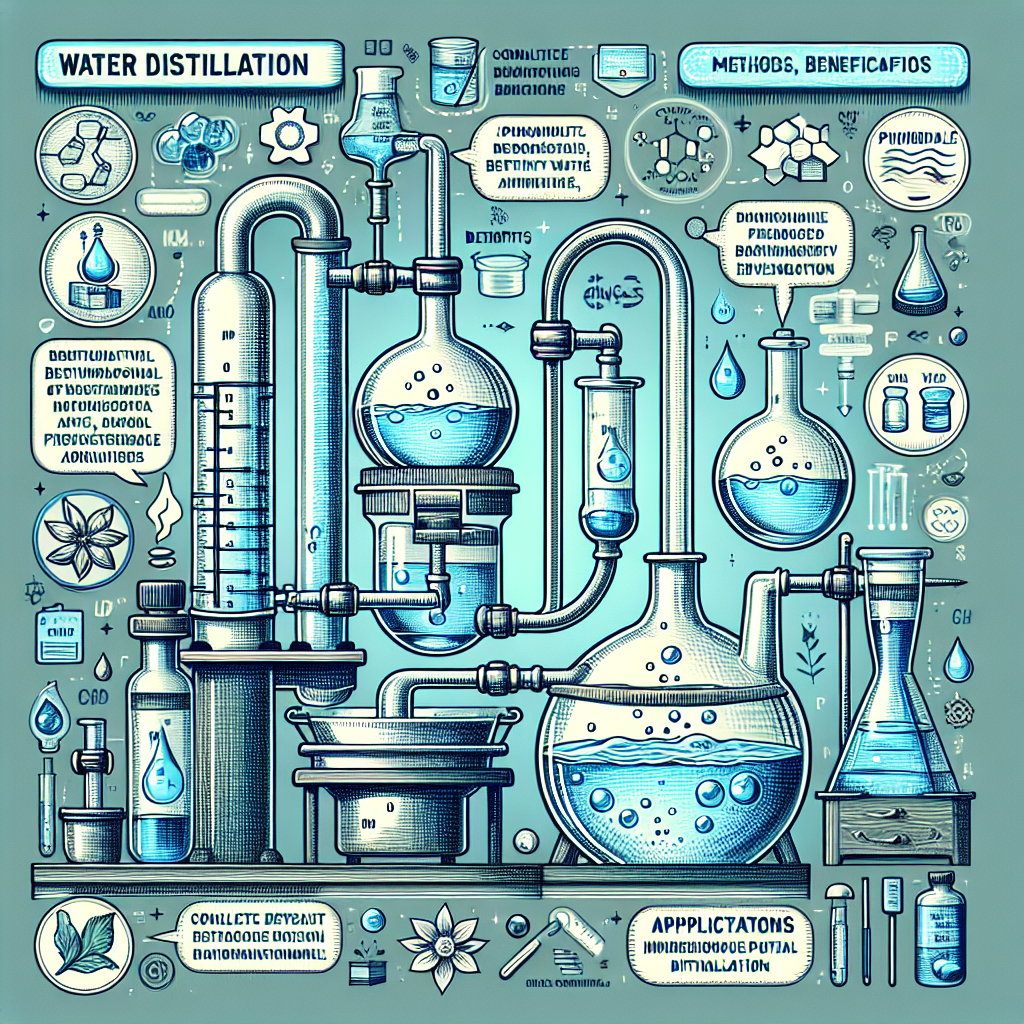
Complete Guide to Water Distillation: Methods, Benefits and Applications
Introduction
Welcome to the Complete Guide to Water Distillation! If you’ve ever wondered about the distillation of water, you’re in the right place. This guide is designed to unravel the mysteries behind this fascinating water purification process, exploring not just how it works, but also why it matters.
Imagine a world where you could transform ordinary tap water into a pristine elixir, free from impurities and contaminants. Well, that’s exactly what the water distillation method does! From its humble beginnings to its modern-day applications in both homes and industries, distillation has become a cornerstone of effective water treatment.
In this guide, we’ll dive deep into the various methods of distilled water production, comparing it with other purification techniques like reverse osmosis vs distillation. We’ll highlight the numerous advantages of water distillation spoiler alert: it’s not just about being fancy! Plus, we’ll cover practical tips for those interested in making distilled water at home or understanding industrial processes.
So whether you’re an engineer looking for efficient solutions, a wastewater treatment operator seeking innovative methods, or simply someone curious about how to ensure clean drinking water, stick around. We promise you’ll walk away with valuable insights into the world of distilled water!
In engineering terms, distillation is a thermal separation process and belongs to the same technology family as Desalination. Both work by phase change rather than by physical straining or membrane rejection, both are governed by the same latent heat penalty, and both are evaluated on the same metric — energy consumed per unit of product water. Understanding that shared basis explains why distillation performs so well on contaminants that defeat filtration, and why its energy cost has always been the constraint on wider deployment.
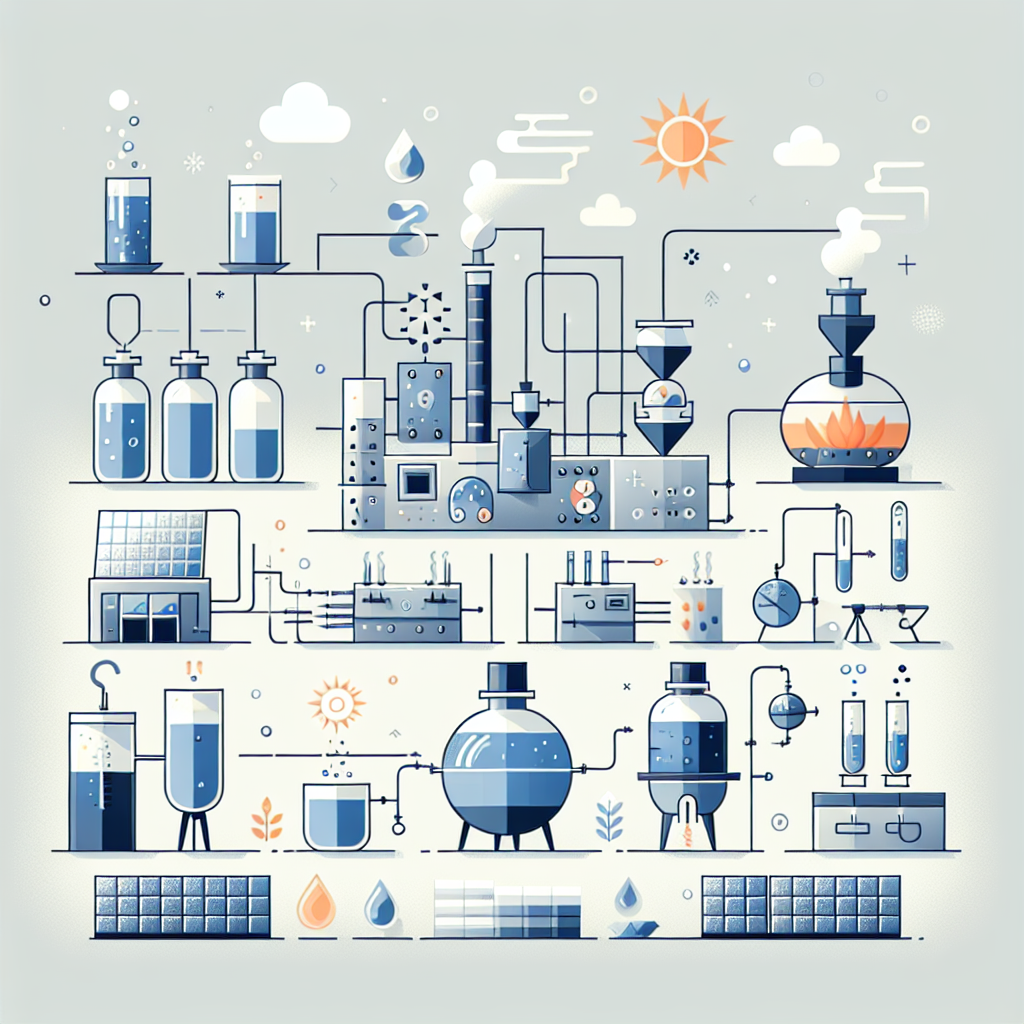
Understanding the Distillation of Water
The distillation of water is like giving your H2O a luxurious spa treatment. This process involves heating water to its boiling point, allowing it to evaporate, and then cooling it down to collect the purified liquid. Essentially, it’s a fancy way to separate water from impurities, making it one of the most effective water purification processes out there.
Definition and Overview
At its core, the distillation of water is a water distillation method that capitalizes on the differences in boiling points between water and contaminants. When you boil water, all those pesky impurities like salts, heavy metals, and microorganisms are left behind. The steam rises and is then condensed back into liquid form, resulting in what we call distilled water.
History of Water Distillation
The roots of this technique can be traced back to ancient civilizations. The earliest recorded use dates back over 2000 years ago when Greeks and Romans employed simple distillation techniques for various applications including medicinal purposes. Fast forward to today, and we see the evolution of this method into both home setups with a home water distiller and large-scale operations in industrial settings.
Did You Know? Modern advancements have made the efficiency of water distillers skyrocket! Today’s systems can produce laboratory-grade distilled water that meets stringent quality standards.
The Science Behind It
The magic happens during two key phases: boiling and condensation. During the boiling process in distillation, impurities remain in the original container while vapor rises. This vapor is then cooled often using coils or condensers to transform back into liquid form. This simple yet effective mechanism ensures that what you end up with is free from most contaminants.
Common Applications
- Bottled Distilled Water: Often seen as a premium choice for drinking due to its purity.
- Laboratory-Grade Distilled Water: Essential for experiments where even minor contamination can skew results.
- Medical Use: Used in various medical devices such as CPAP machines to prevent mineral build-up.
- Culinary Uses: Chefs often prefer distilled water for cooking as it allows flavors to shine without interference from minerals.
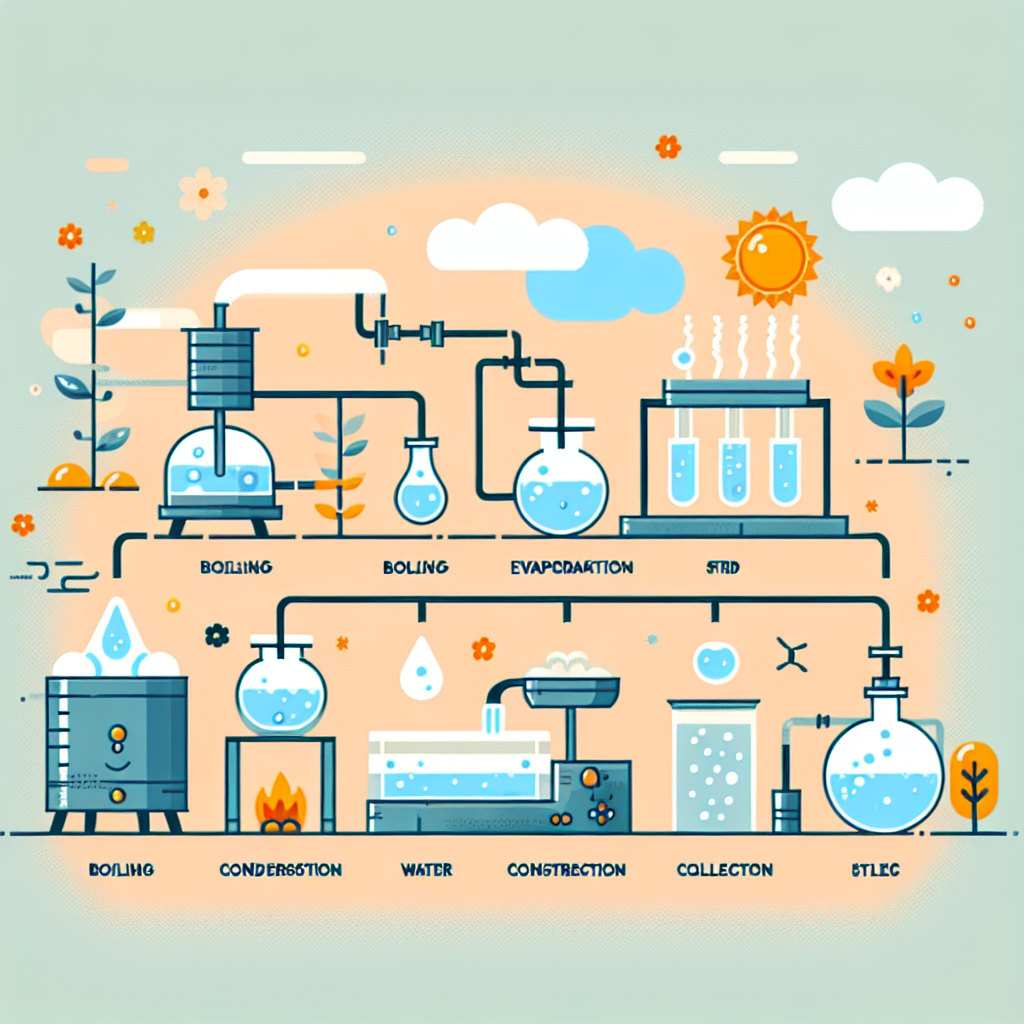
This method may sound straightforward but don’t underestimate its power! The advantages of water distillation extend beyond just removing impurities; it’s also an eco-friendly way to purify drinking water without relying on harsh chemicals. So whether you’re considering a home setup or looking into industrial applications, understanding how to distill water can open up a world of possibilities for cleaner hydration.
If you’re curious about how this compares with other methods like reverse osmosis or filtration systems stay tuned! We’ll dive deeper into those comparisons in upcoming sections!
Water Purification Process: An Overview
When it comes to ensuring the safety of our drinking water, understanding the water purification process is crucial. Among various methods, the distillation of water stands out as a reliable technique for producing clean and safe water.
The global market size for water purification systems was valued at USD 71.45 billion in 2022, indicating a growing awareness and demand for effective water treatment solutions.
Types of Water Purification Methods
Water purification methods can be broadly classified into several categories:
- Physical Methods: Includes filtration and sedimentation.
- Chemical Methods: Involves the use of chlorine, ozone, or other chemicals to disinfect water.
- Biosorption: Utilizes natural materials to remove contaminants.
- Distillation: A method that involves boiling water to produce steam and then condensing it back into liquid form, effectively removing impurities.
Comparison with Other Methods (Filtration, Reverse Osmosis)
The choice of purification method can significantly impact both efficiency and effectiveness. Here’s how distillation stacks up against other popular techniques:
| Method | Efficiency | Cost | Removal of Impurities |
|---|---|---|---|
| Distillation | High | $ (Higher initial investment) | 99%+ |
| Filtration | Moderate | $ (Lower initial cost) | 70%-90% |
| Reverse Osmosis | High | $ (Moderate initial investment) | 95%-99% |
The table above highlights that while distillation may require a higher upfront cost and energy consumption, its ability to remove contaminants makes it an excellent choice for producing high-quality distilled water. Moreover, understanding these differences can help municipalities and engineers select the most appropriate method for their specific needs.
No matter which method you choose, being informed about the options available in the water purification process is essential. As we dive deeper into the specifics of the distillation of water in upcoming sections, you’ll see why it’s often favored for applications requiring purity like laboratory-grade distilled water or medical uses!
Water Distillation Method Explained
The distillation of water is like a magic trick for purifying H2O. It’s a simple yet effective water purification process that involves boiling water and then collecting the steam, which leaves impurities behind. Think of it as the ultimate separation act!
Boiling Process in Distillation
The adventure begins with the boiling process in distillation. When you heat water, it reaches its boiling point, transforming into steam. This steam is not just hot air it’s your ticket to pure water! As the water boils, contaminants such as salts, minerals, and bacteria are left behind in the boiling chamber.
Condensation in Water Distillation
Next up is condensation in water distillation. After the steam escapes, it travels through a cooling system where it condenses back into liquid form. Voilà! You’ve got distilled water! This step is crucial because it ensures that any remaining impurities are left behind while you collect clean, distilled water.
Types of Water Distillation Techniques
There are several techniques for distilled water production, each with its unique flair:
- Steam Distillation of Water: Commonly used in industrial settings, this method employs steam to extract essential oils and purify large quantities of water.
- Solar Water Distillation: An eco-friendly approach that uses sunlight to heat water and create steam perfect for those sunny days when you want to harness nature’s power!
- Industrial Water Distillation Processes: These are large-scale operations designed for high efficiency and output, often utilizing advanced technology to maximize purity and minimize costs.
Did You Know? The efficiency of water distillers can vary significantly based on the method used. For instance, solar distillers may take longer but are incredibly eco-friendly!
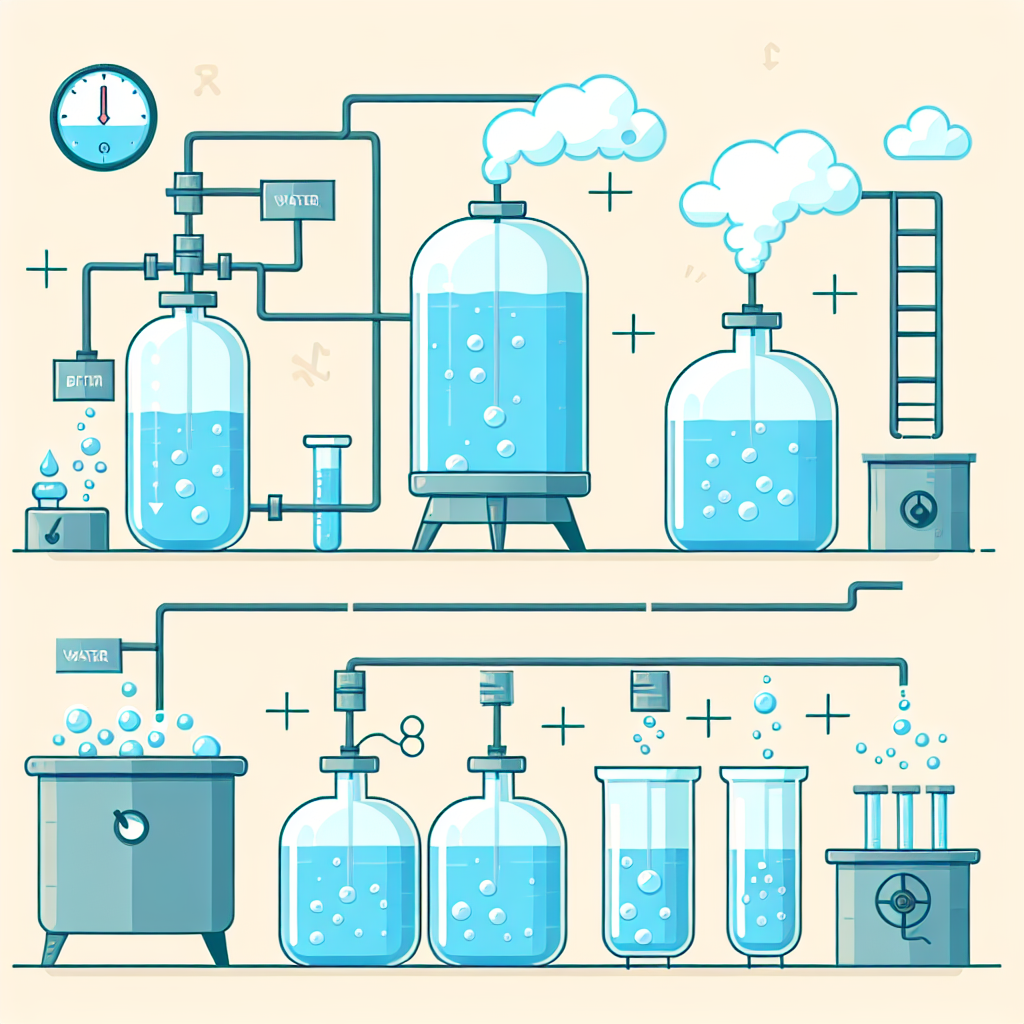
The beauty of these methods lies in their versatility. Whether you’re looking at home setups or large-scale industrial applications, understanding how to distill water opens up a world of possibilities for clean drinking options.
Ultimately, the choice between methods like reverse osmosis vs distillation often comes down to specific needs cost considerations, efficiency levels, and even personal preference play significant roles.
The distillation process is one of the oldest forms of purification known to humankind.
Advantages of Water Distillation
When it comes to the distillation of water, the benefits are as clear as a freshly distilled glass! Let’s dive into some of the standout advantages that make this method a go-to for both home and industrial applications.
Removal of Impurities from Water
The primary goal of any water purification process is to eliminate contaminants, and water distillation does this like a champ. By boiling water and then condensing the steam back into liquid form, distillation effectively separates impurities such as:
- Heavy metals (like lead and mercury)
- Bacteria and viruses
- Chlorine and other volatile chemicals
- Minerals that may affect taste or cause scale buildup in appliances
This makes distilled water an excellent choice for those seeking pure hydration or for applications requiring laboratory-grade quality.
Chemical-Free Purification Method
One of the best parts about the water distillation method? It’s a chemical-free purification approach! Unlike some methods that use filters which may leach chemicals over time or involve added substances, distillation relies solely on heat. This means you get pure H2O without any unwanted extras. It’s like making your own clean slate no additives, just good old-fashioned science!
Efficiency of Water Distillers and Cost Considerations
Now let’s talk turkey or rather, costs. While investing in a home water distiller might seem pricey upfront, consider it an investment in your health and peace of mind. The efficiency of modern distillers has improved dramatically, meaning you can produce distilled water at home without breaking the bank.
Key Takeaway: A typical home distiller can produce about 1 gallon of distilled water in 4-6 hours. If you’re consuming bottled distilled water frequently, your home setup could pay for itself in just a few months!
A Versatile Solution for Various Needs
The versatility of distilled water is another feather in its cap. Whether you’re using it for:
- Your morning coffee (hello, flavor!)
- Aquariums needing pristine conditions
- Sensitive lab experiments requiring purity
- Beverage production where taste matters (think craft brewing!)
The efficiency of industrial water distillation processes can yield large quantities of distilled water while maintaining low operational costs.
The bottom line? The advantages of water distillation go beyond mere purification; they touch on health, efficiency, and versatility. So whether you’re considering a home setup or looking into industrial applications, understanding these benefits will help you make informed decisions about your hydration needs.
Benefits of Distilled Water in Various Applications
Distilled water is more than just a fancy term for H2O; it’s a superstar in various fields! From medical settings to industrial applications, the benefits of distilled water are as vast as a summer sky. Let’s dive into the refreshing world of distilled water and explore its many uses.
1. Medical Use of Distilled Water
In the medical field, distilled water is like that dependable friend who always shows up when you need them. It’s used in:
- Sterilization: Essential for cleaning surgical instruments and laboratory equipment, ensuring no impurities interfere with procedures.
- IV Solutions: Many intravenous solutions use distilled water as a base to avoid any unwanted contaminants.
- Medical Devices: Humidifiers and CPAP machines benefit from distilled water to prevent mineral buildup and ensure patient safety.
2. Bottled Distilled Water Brands Comparison
If you’re in the market for bottled distilled water, it’s crucial to know what brands deliver quality. Here’s a quick comparison:
| Brand | Source | Price per Liter | Notes |
|---|---|---|---|
| Aquafina | Purified using reverse osmosis | .89 | Crisp taste, widely available |
| Smartwater | Vapor-distilled with electrolytes added | .20 | Smooth flavor, premium branding |
| DASANI | Purified with minerals added for taste | .99 | A popular choice but not true distilled water! |
3. Uses of Distilled Water in Industry and Laboratories
The industrial world loves distilled water! Its purity makes it an ideal choice for various applications:
- Chemical Reactions: In laboratories, it ensures that reactions are not affected by impurities.
- Cooling Systems: Used in cooling towers to prevent scaling and corrosion.
- Manufacturing Processes: Essential in producing electronics where even tiny impurities can lead to defects.
If you’re considering incorporating distilled water into your operations or daily life, now’s the time! Explore options like investing in a home water distiller or checking out local bottled brands.
Makeshift Home Solutions: How to Distill Water at Home?
- Making Distilled Water at Home: Step-by-Step Guide
- Maintenance of a Home Distiller Machine
Making Distilled Water at Home: Step-by-Step Guide
The stovetop method requires no special equipment. Part-fill a large pot, invert a heat-resistant lid over it, and set a smaller collection bowl inside the pot so that it floats or rests clear of the water surface. Bring the water to a gentle simmer rather than a hard boil — violent boiling carries droplets of unevaporated water upward, and any droplet that reaches the collection vessel brings its dissolved solids with it, defeating the whole exercise. Place ice on top of the inverted lid to establish the temperature difference that drives condensation, and let the condensate run down the lid’s inner surface into the collection bowl. Expect roughly a cup of product per hour on a domestic burner, at an energy cost far above what a purpose-built appliance achieves.
A countertop distiller automates the same physics with a sealed boiling chamber, a fan-cooled condenser coil, and a collection carafe. Typical output is one gallon in four to six hours at approximately 3 kWh per gallon — a figure worth stating plainly, because it is roughly an order of magnitude more energy per litre than reverse osmosis consumes for the same volume. Most units include a small activated carbon post-filter, which removes the volatile organic compounds that co-distil with water and are not eliminated by the phase change alone. That post-filter is not optional if the feed water contains solvents or trihalomethanes.
Maintenance of a Home Distiller Machine
Everything the feed water contained stays in the boiling chamber, so scale is not a fault condition but the expected outcome of correct operation. Descale on a schedule rather than on appearance — every 10 to 20 cycles on hard water, monthly on soft — using citric acid or a proprietary descaler, and never a chlorine-based cleaner, which will attack the stainless chamber. Scale build-up insulates the heating element, which raises energy consumption and shortens element life well before any visible symptom appears.
Replace the carbon post-filter at the manufacturer’s stated interval, typically every two months of regular use, and note that an exhausted carbon filter can release accumulated organics back into the product. Inspect the condenser fan and coil for dust obstruction, since reduced condenser airflow lowers yield and raises cycle time. Store product water in glass or HDPE rather than soft plastic: distilled water is aggressive toward some plastics and will leach plasticiser compounds more readily than mineralised water does.
Drinking Distilled Water: Safety and Considerations
- Drinking Distilled vs Purified Water
- Disadvantages of Drinking Distilled Water Regularly
Drinking Distilled vs Purified Water
The two terms are not interchangeable, and the distinction is regulatory rather than marketing. “Purified water” is a defined category that a product can reach by distillation, reverse osmosis, deionisation, or a combination, provided total dissolved solids fall below 10 mg/L. “Distilled water” identifies the specific process used and is therefore a subset of purified water. This is why a bottled product can be labelled purified without being distilled, and why source descriptions on labels are worth reading rather than assuming.
In practice the difference at the tap is small. Distillation removes essentially all dissolved solids, heavy metals, and microorganisms, and also handles most contaminants by phase change alone; reverse osmosis achieves comparable removal for the great majority of drinking water contaminants at roughly a tenth of the energy cost. Distillation’s remaining technical advantage is against contaminants that membranes reject poorly and that resist adsorption, and against microbial contamination, since the process is inherently thermal. Its remaining disadvantage is that low-boiling volatile organic compounds can co-distil and follow the water over, which is why a carbon post-filter is a genuine requirement rather than a manufacturer’s upsell.
Disadvantages of Drinking Distilled Water Regularly
Three considerations deserve honest treatment. First, mineral content: distillation removes calcium and magnesium along with everything else, and while drinking water is a minor contributor to mineral intake for anyone eating a normal diet, the World Health Organization has published guidance on demineralised water noting that the position differs where diet is already marginal. Anyone with a specific medical reason to manage electrolyte intake should raise it with a clinician rather than resolve it from a water treatment article.
Second, taste. The flat character many people notice in distilled water is a direct consequence of the absent mineral content, and it is why several bottled vapour-distilled products add electrolytes back after treatment. Third, corrosivity: demineralised water has essentially no buffering capacity and is more aggressive toward metallic plumbing than mineralised water, which is a material consideration for any whole-house application and a reason distillation is normally deployed at point of use rather than point of entry. In a treatment plant context the same property is why distillate is remineralised or blended before entering distribution.
Distillation Focus Areas
Distillation divides into several distinct areas of practice, each treated in dedicated depth elsewhere on this site. The subsections below map that territory and indicate where each subject is developed further.
Product Water Purity and Verification
Purity is the reason distillation is chosen, and it is also the thing most frequently asserted without measurement. Distillate from a well-operated system typically reaches 0.5 to 2.0 microsiemens per centimetre of conductivity, corresponding to total dissolved solids well under 1 mg/L, against a municipal tap water baseline commonly in the 150 to 500 mg/L range. Our companion discussion of distillation water purity works through what those numbers mean in practice, which contaminant classes distillation genuinely eliminates and which co-distil and follow the product over, and how conductivity, resistivity, and total organic carbon measurements are used to verify performance rather than assume it. The distinction between contaminants removed by phase change and contaminants that require a downstream carbon polish is the practical heart of that discussion.
System Formats: Home Through Industrial Scale
The same thermodynamics operate across a range of equipment spanning four or five orders of magnitude in output. Countertop appliances produce a gallon in hours; laboratory stills produce litres per hour to feed analytical instruments; industrial multiple-effect and vapour-compression plants produce thousands of cubic metres per day. Our dedicated coverage of water distillation systems compares those formats on capacity, energy per unit product, footprint, and maintenance burden, and addresses the selection questions that arise at the boundaries — when a laboratory outgrows a benchtop still, when a facility should move from single-effect to multiple-effect operation, and where the economic crossover against membrane treatment actually falls for a given energy price.
Distillation in Treatment Facility Applications
Municipal and industrial treatment plants deploy distillation in specific niches rather than as a general-purpose process, and the niches are defined by what other technologies cannot do. Our discussion of water distillation technology in treatment facilities covers those applications: zero liquid discharge trains where distillation concentrates a reject stream that membranes have already taken as far as osmotic pressure allows; produced water and landfill leachate treatment where organic and dissolved solids loading would foul membranes rapidly; boiler feedwater and steam generation service; and ultrapure water production for semiconductor, pharmaceutical, and power generation duty where a membrane alone cannot reach the specification.
Comparison of Water Distillation Technologies
The earlier comparison places distillation against filtration and reverse osmosis. This table compares the distillation methods against each other, which is the decision most engineers and specifiers actually face. Energy figures are approximate and expressed as thermal or electrical energy per cubic metre of product; verify against vendor data for any specific duty, since configuration and heat recovery arrangements move these numbers substantially.
| Method | Typical Scale | Approximate Energy Demand | Best-Fit Application | Principal Limitations |
|---|---|---|---|---|
| Single-effect / simple distillation | Litres to tens of litres per day | Very high — approximately 700–800 kWh per m3 | Home appliances, laboratory benchtop stills | No heat recovery; energy cost dominates; scale management |
| Multiple-effect distillation (MED) | Thousands of m3 per day | Moderate thermal — falls with effect count | Large thermal desalination plants, waste-heat-rich sites | High capital; large footprint; needs a steam source |
| Multi-stage flash (MSF) | Very large, thousands of m3 per day | High thermal plus pumping load | Very large plants co-located with power generation | Highest energy of the industrial routes; scaling control critical |
| Mechanical vapour compression (MVC) | Tens to thousands of m3 per day | Electrical only — roughly 7–15 kWh per m3 | Sites with electricity but no steam; ZLD and brine concentration | Compressor maintenance; sensitive to fouling |
| Solar distillation (solar still) | Litres per m2 per day | Effectively zero purchased energy | Off-grid, remote, and emergency supply | Very low output per unit area; weather dependent; large land area |
| Membrane distillation | Pilot to small commercial | Low-grade heat, modest electrical | Waste heat utilisation; high-salinity brine concentration | Membrane wetting and fouling; commercial maturity still developing |
Selection and Specification Framework
Choosing a distillation route follows a stable sequence. The first two steps eliminate most of the field, and skipping them is what produces installations that work but cannot be afforded to run.
Step One: Establish Whether Distillation Is the Right Family at All
Distillation earns its energy penalty in three situations: when the required product purity exceeds what a membrane alone can deliver, when the feed is so contaminated that a membrane would foul unacceptably, or when the site has genuinely free waste heat. Outside those cases, reverse osmosis will usually deliver comparable drinking water quality at roughly a tenth of the energy. Positioning distillation correctly within the broader thermal-versus-membrane choice is the subject of our coverage of desalination fundamentals, which sets out how phase-change and membrane processes are properly compared on a common basis and where the crossover sits.
Step Two: Match the Method to the Available Energy Source
The energy form available at the site, not the energy quantity, usually decides the method. A facility with low-pressure steam from cogeneration or a process heat source should evaluate multiple-effect distillation, where each successive effect reuses the latent heat released in the one before. A facility with electricity but no steam should evaluate mechanical vapour compression instead, which recovers latent heat by compressing the vapour rather than by cascading it. The comparative economics and configuration detail for that route are developed in our coverage of thermal desalination, which addresses effect counts, top brine temperature limits, and the heat recovery arrangements that determine whether a thermal plant is competitive.
Step Three: Design Against Scaling From the Outset
Scaling is the governing operational problem in every thermal process, because concentrating the feed is precisely what the process does. Calcium carbonate, calcium sulphate, and magnesium hydroxide all approach saturation as concentration rises, and top brine temperature is limited principally by the sulphate scaling threshold — conventionally around 110 to 120 degrees C for MSF without additive treatment. Establish the feed water saturation indices, set the concentration factor and top temperature against them, and specify antiscalant dosing, acid dosing, or seed slurry recirculation accordingly. Retrofitting a scale control strategy onto a plant designed without one is expensive and rarely fully successful.
Step Four: Compare on Energy Cost Over the Asset Life
Distillation is an energy purchase spread over twenty years, so the lifecycle comparison is dominated by the energy price assumption and should be tested against it. Build the comparison on capital, energy at the site’s actual blended rate, chemicals, membrane or tube replacement reserves, and labour, then present-worth over the design life and re-run at plus and minus 40 percent energy price. Where the ranking flips inside that band, the decision is really a bet on energy prices and should be stated as one. Newer approaches that alter this calculation — membrane distillation, humidification-dehumidification, and forward osmosis hybrids — are surveyed in our coverage of emerging desalination technologies, several of which are specifically aimed at exploiting low-grade heat that conventional distillation cannot use.
Field Notes
Commissioning and Start-Up
Commission against the actual feed water, not against softened or clean water, because scaling behaviour is the whole question and clean-water testing reveals nothing about it. Record baseline energy consumption per unit of product at commissioning, along with heat transfer coefficient and product conductivity at a known feed temperature and concentration factor; these three numbers form the reference set against which every subsequent performance complaint is judged, and they are almost never captured when they should be. On multiple-effect plants, verify the temperature profile across all effects rather than only the endpoints, since a single underperforming effect is invisible in an overall energy figure.
Pro Tip: Trend product conductivity and specific energy consumption together on the same axis. Conductivity alone can look stable while energy consumption climbs, which is the signature of scale insulating the heat transfer surface — the product stays pure because the process is still working, just increasingly expensively. Catching that divergence early is the difference between a descaling cycle and a tube bundle replacement.
Common Specification Mistakes
Four recur. Specifying a distillation system on capital cost when energy will dominate the twenty-year total. Omitting the carbon post-filter on a feed containing volatile organics, on the assumption that the phase change removes everything. Setting top brine temperature without checking the feed’s sulphate saturation index, which produces a plant that scales aggressively at its design point. And writing a performance guarantee that names product purity but not the feed water composition, temperature, and concentration factor at which it applies — a guarantee that cannot be tested against a defined condition cannot be enforced.
Common Mistake: Treating distillate as a finished product without conditioning it. Demineralised water has essentially no alkalinity or buffering capacity and is aggressive toward copper, galvanised steel, and cement-lined pipe. Any distillate entering a distribution system, a building plumbing loop, or a boiler circuit needs remineralisation, pH adjustment, or blending specified as part of the treatment train — not discovered after the first corrosion failure.
Operations and Maintenance Comparison
Maintenance burden tracks mechanical complexity. Simple and single-effect stills need little beyond descaling and element replacement. Multiple-effect plants require tube bundle inspection, demister pad cleaning, vacuum system maintenance, and periodic chemical cleaning, with the effect count driving the labour. Multi-stage flash adds brine recirculation pump and heat rejection section duty. Mechanical vapour compression concentrates the burden in the compressor, which is the highest-value single component and the one whose failure stops production entirely — the argument for a spare rotating assembly is strongest here. Solar stills are mechanically trivial but demand regular glazing cleaning, and output falls measurably with surface soiling.
Design Details and Standards
Key Design Parameters
- Top brine temperature: conventionally limited to approximately 110–120 degrees C in MSF without additive treatment, set by the calcium sulphate scaling threshold.
- Performance ratio: mass of distillate produced per unit mass of steam supplied — the governing efficiency metric for thermal plants; rises with effect count.
- Gained output ratio: the dimensionless equivalent used for comparing configurations independently of steam conditions.
- Concentration factor: set against feed saturation indices, not against a desired recovery figure.
- Product conductivity: typically 0.5–2.0 microsiemens per centimetre from a well-operated system; laboratory Type I water requires a downstream polishing loop to reach 0.055.
- Specific energy consumption: approximately 7–15 kWh per m3 electrical for MVC; simple single-effect distillation without recovery approaches the latent heat of vaporisation itself, near 700 kWh per m3.
- Materials: titanium, copper-nickel alloys, or duplex stainless for brine-wetted surfaces depending on temperature and chloride concentration.
Applicable Standards and References
Product water quality for laboratory use is defined by ASTM D1193 and by ISO 3696, which establish the reagent water grades that distillation systems are specified against. Purified water and water for injection for pharmaceutical service fall under the relevant United States Pharmacopeia monographs, with distillation explicitly recognised as a production method. Drinking water produced or blended from distillate remains subject to the Safe Drinking Water Act and the applicable National Primary Drinking Water Regulations, and bottled product labelling as purified or distilled water follows the FDA standard of identity. Boiler feedwater quality should follow ASME guidance for the relevant pressure class. Pressure-containing components fall under the ASME Boiler and Pressure Vessel Code, and heat exchanger design and tolerances under the applicable TEMA standards. Point-of-use appliances making contaminant reduction claims should hold certification against the relevant NSF/ANSI standard for the claim in question.
Specification Checklist
- Full feed water analysis including calcium, magnesium, sulphate, silica, alkalinity, chloride, and total dissolved solids, with saturation indices calculated.
- Required product quality stated as conductivity or resistivity plus total organic carbon, referenced to a named standard grade.
- Design capacity stated with the turndown range and the minimum stable operating point.
- Available energy source characterised: steam pressure and quantity, or electrical capacity, or both.
- Top brine temperature and concentration factor set against feed saturation indices, with the limiting species named.
- Scale control strategy specified: antiscalant, acid dosing, or seed recirculation, with chemical storage and feed equipment included.
- Performance ratio or specific energy consumption guaranteed at a named feed condition.
- Materials schedule for all brine-wetted surfaces with the temperature and chloride basis stated.
- Downstream conditioning defined: carbon polish for volatile organics, remineralisation or blending for corrosivity.
- Concentrate or brine disposal route identified, permitted, and priced.
- Non-condensable gas venting and vacuum system scope defined for sub-atmospheric configurations.
- Performance guarantee naming feed composition, feed temperature, concentration factor, and test duration.
Frequently Asked Questions
Is distilled water better than reverse osmosis water for drinking?
For most drinking water applications the two are effectively equivalent in quality, and reverse osmosis achieves it at roughly a tenth of the energy cost. Distillation retains a genuine advantage in two areas: it is inherently effective against microbial contamination because it is a thermal process, and it handles certain contaminants that membranes reject poorly. Its weakness is that low-boiling volatile organic compounds can co-distil and carry over with the product, which is why a carbon post-filter belongs in the specification rather than being treated as optional.
How much energy does water distillation actually use?
Simple distillation without heat recovery approaches the latent heat of vaporisation itself — on the order of 700 kWh per cubic metre, or roughly 3 kWh for a single gallon in a countertop appliance. Industrial configurations recover that latent heat: multiple-effect plants reuse it across successive effects, and mechanical vapour compression recovers it by compressing the vapour, bringing consumption to approximately 7 to 15 kWh per cubic metre. That difference of nearly two orders of magnitude between the simplest and the most efficient configuration is the single most important fact about distillation economics.
Why does distillation not remove all contaminants?
Because separation depends on a difference in boiling point, and some contaminants do not have one large enough. Compounds that boil at or below water’s boiling point — many volatile organic compounds, some solvents, certain trihalomethanes — evaporate alongside the water and condense with it. Distillation is excellent against dissolved solids, heavy metals, salts, and microorganisms, which are non-volatile and stay behind. It is unreliable against volatiles, which is precisely the gap a downstream activated carbon stage fills.
What causes scaling in a distillation system and how is it controlled?
Concentrating the feed is what the process does, so dissolved species approach saturation by design. Calcium carbonate, calcium sulphate, and magnesium hydroxide are the usual culprits, and calcium sulphate is what limits top brine temperature in most industrial configurations. Control comes from limiting top temperature, limiting concentration factor, acid or antiscalant dosing, and in some designs deliberate seed slurry recirculation that gives the scale somewhere to form other than the heat transfer surface. All of these are design decisions, not operating adjustments.
Can distillation treat wastewater or high-salinity brine?
Yes, and this is where it is most competitive against alternatives. Membranes are limited by osmotic pressure and by fouling, so once a reverse osmosis train has concentrated a stream as far as it can go, thermal processes take over. Mechanical vapour compression and membrane distillation are both used in zero liquid discharge trains for exactly this duty, along with produced water, landfill leachate, and industrial brine concentration. Feed characterisation and fouling management matter more here than in clean-feed service.
Does distilled water need to be conditioned before use?
In most system applications, yes. Demineralised water has essentially no alkalinity or buffering capacity and is aggressive toward copper, galvanised steel, and cement-lined pipe. Distillate entering a distribution system or building plumbing loop is normally remineralised, pH-adjusted, or blended with a mineralised stream. For point-of-use drinking or laboratory service the corrosivity question does not arise in the same way, though storage in glass or HDPE rather than soft plastic is still preferable.
Key Takeaways
- Distillation is a thermal separation process, not a filter — it belongs to the same technology family as thermal desalination and is judged on the same metric, energy per unit of product water.
- Energy is the whole argument — simple distillation approaches 700 kWh per cubic metre, while mechanical vapour compression reaches roughly 7 to 15, so the configuration matters far more than the principle.
- Reverse osmosis wins most drinking water duty — distillation earns its energy penalty only where purity exceeds membrane capability, where fouling would defeat a membrane, or where waste heat is genuinely free.
- Volatiles co-distil — compounds boiling at or below water follow the product over, which makes an activated carbon post-filter a requirement rather than an accessory.
- Scaling is designed against, not managed later — top brine temperature and concentration factor must be set from the feed’s saturation indices, with calcium sulphate usually the limiting species.
- Distillate needs conditioning — unbuffered demineralised water is corrosive to common plumbing materials and normally requires remineralisation or blending before distribution.
- The strongest modern case is brine concentration — where membranes hit their osmotic limit, thermal processes take over, which is why distillation is central to zero liquid discharge rather than to municipal drinking water.
Conclusion
Water distillation is the oldest purification technology still in serious industrial use, and it remains in use for a specific reason: phase change separates water from contaminants that no membrane or filter can fully exclude. That capability comes at an energy cost which has always defined where the technology belongs. Understanding that trade-off — rather than treating distillation as simply the most thorough option available — is what allows an engineer, operator, or household to place it correctly.
For drinking water at domestic or municipal scale, reverse osmosis will usually be the more economical answer. For laboratory-grade and pharmaceutical water, for boiler feed and ultrapure service, for produced water and leachate, and for the concentrated brines at the end of a zero liquid discharge train, distillation is frequently the only workable answer. The decision sequence set out above — establish whether the thermal family is right, match the method to the available energy form, design against scaling from the start, and compare on lifecycle energy rather than capital — will resolve most cases without a pilot.
Whichever route applies, specify against measured feed water, state guarantees at named conditions, and plan the downstream conditioning and concentrate disposal before the equipment arrives. Those three habits account for most of the difference between distillation installations that meet expectations and those that quietly cost more every year than anyone forecast.