Water Distillation: From Industrial Scale to Home Systems

Water Distillation: From Industrial Scale to Home Systems
Introduction
Distillation is one of the oldest and most thorough methods of water purification, and it operates across a remarkable range of scales — from industrial plants producing pharmaceutical-grade water and desalinating seawater, to countertop units making a gallon or two a day in a kitchen. The principle is the same at every scale: evaporate the water, leave contaminants behind, and condense the vapor as purified water. What changes with scale is how efficiently the energy is used.
This article covers how distillation works, the methods used in industry, home distillation equipment and methods, the uses and limitations of distilled water, and how to decide whether distillation is the right choice. For a broader overview of distillation methods and applications, see our complete guide to water distillation.
Understanding Distilled Water
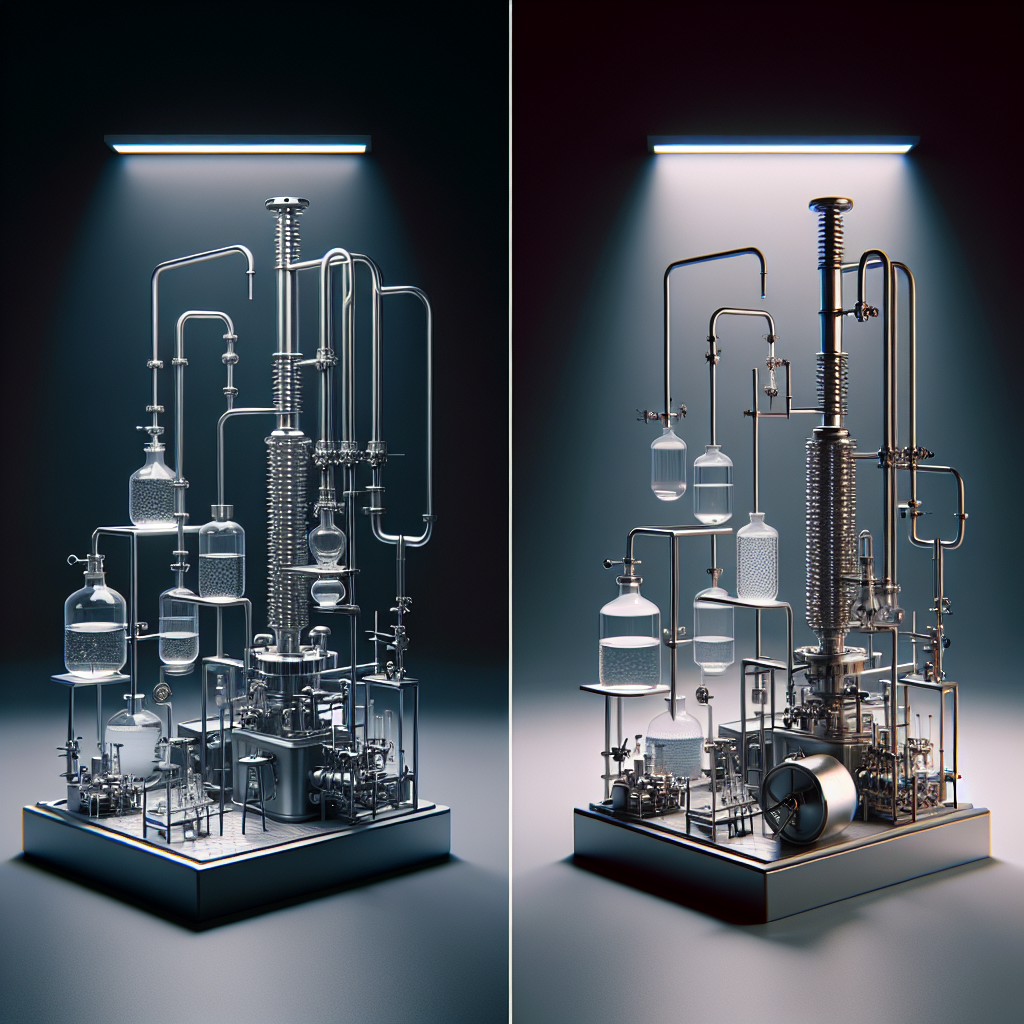
- Definition: Distilled water is water that has been evaporated and condensed, separating it from dissolved and suspended substances that do not evaporate with it.
- What distillation removes: Dissolved salts and minerals, heavy metals, nitrate, fluoride, and microorganisms remain behind in the boiling chamber.
- What it may not remove: Volatile organic compounds — some solvents and chlorination byproducts such as chloroform — boil at or below the temperature of water and can carry over with the vapor unless the system includes a vent and a carbon post-filter.
Key Takeaway: Distillation removes non-volatile contaminants consistently and thoroughly. Volatile organics require additional measures.
The Distillation Process Explained
Steps in the Distillation Process
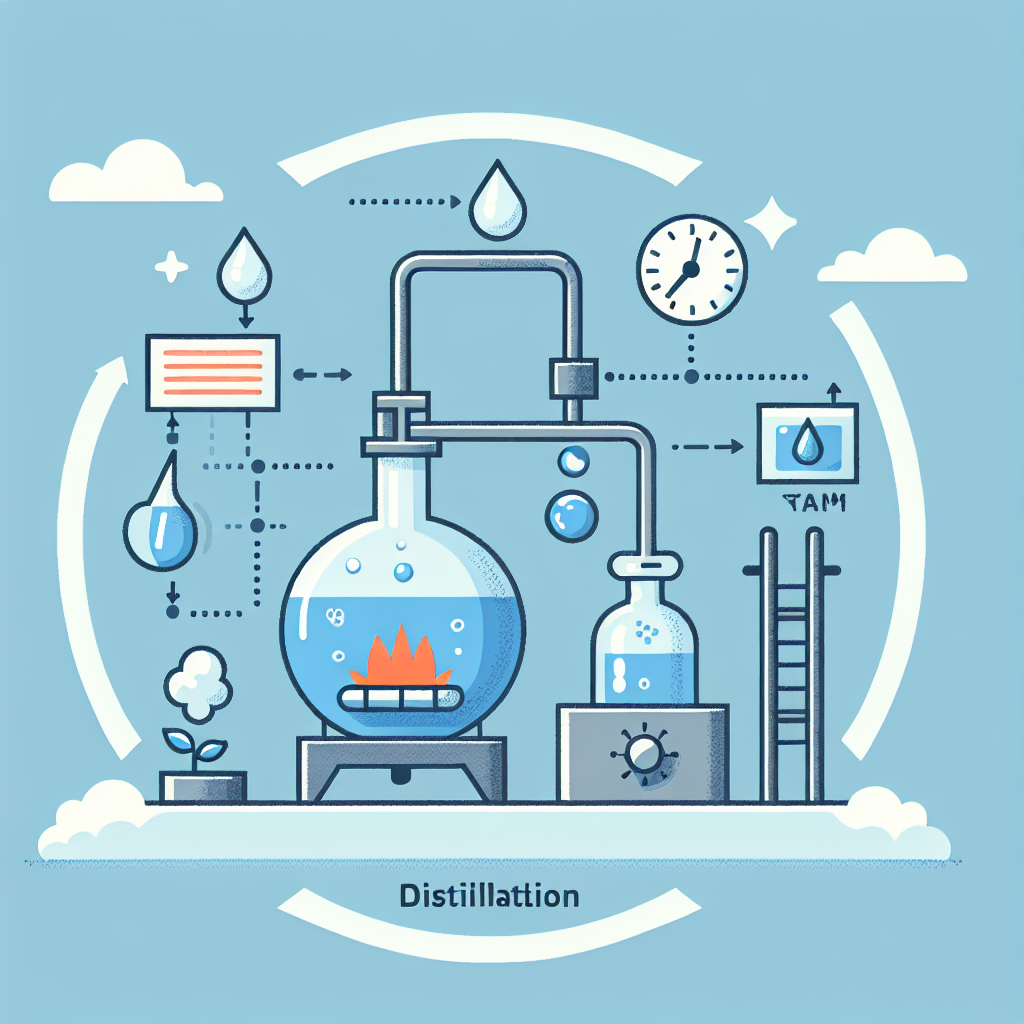
- Heating: Water is heated in a boiling chamber until it reaches its boiling point.
- Vaporization: Water turns to steam, leaving non-volatile contaminants such as minerals, salts, and metals behind.
- Condensation: The steam passes through a condenser, where it is cooled and returns to liquid.
- Collection: The condensate is collected in a clean container as distilled water. In well-designed units, the first portion — where volatile compounds concentrate — is vented or discarded.
The Science Behind It
When water is heated, its molecules gain enough energy to overcome the hydrogen bonds holding them together as a liquid, and escape as vapor. Dissolved salts and metals have boiling points far higher than water and remain in solution, becoming more concentrated as the water leaves. The separation works because of this large difference in volatility — which is also why compounds with volatility similar to water are not separated effectively.
Distillation Methods Used for Water
- Simple Distillation: Boiling and condensing in a single stage. Used by laboratory stills and home countertop distillers. Effective but energy-intensive.
- Multiple-Effect Distillation: Industrial systems in which the heat released as steam condenses in one stage is used to evaporate water in the next, at progressively lower pressure. Much more energy-efficient.
- Multi-Stage Flash Distillation: Heated seawater is passed through a series of chambers at decreasing pressure, where a portion “flashes” to vapor in each. Widely used for large-scale seawater desalination, particularly in the Middle East.
- Vapor Compression Distillation: Vapor is mechanically compressed to raise its temperature and then used to heat the incoming water, recycling most of the energy. Used for pharmaceutical water, industrial brine concentration, and some mid-scale systems.
Methods such as fractional, steam, and azeotropic distillation separate mixtures of different liquids — in petroleum refining, essential oil extraction, and chemical manufacturing — and are not used to purify drinking water. The engineering details of water distillation equipment are covered further in our discussion of water distillation technology.
Industrial Scale Distillation Systems
Overview
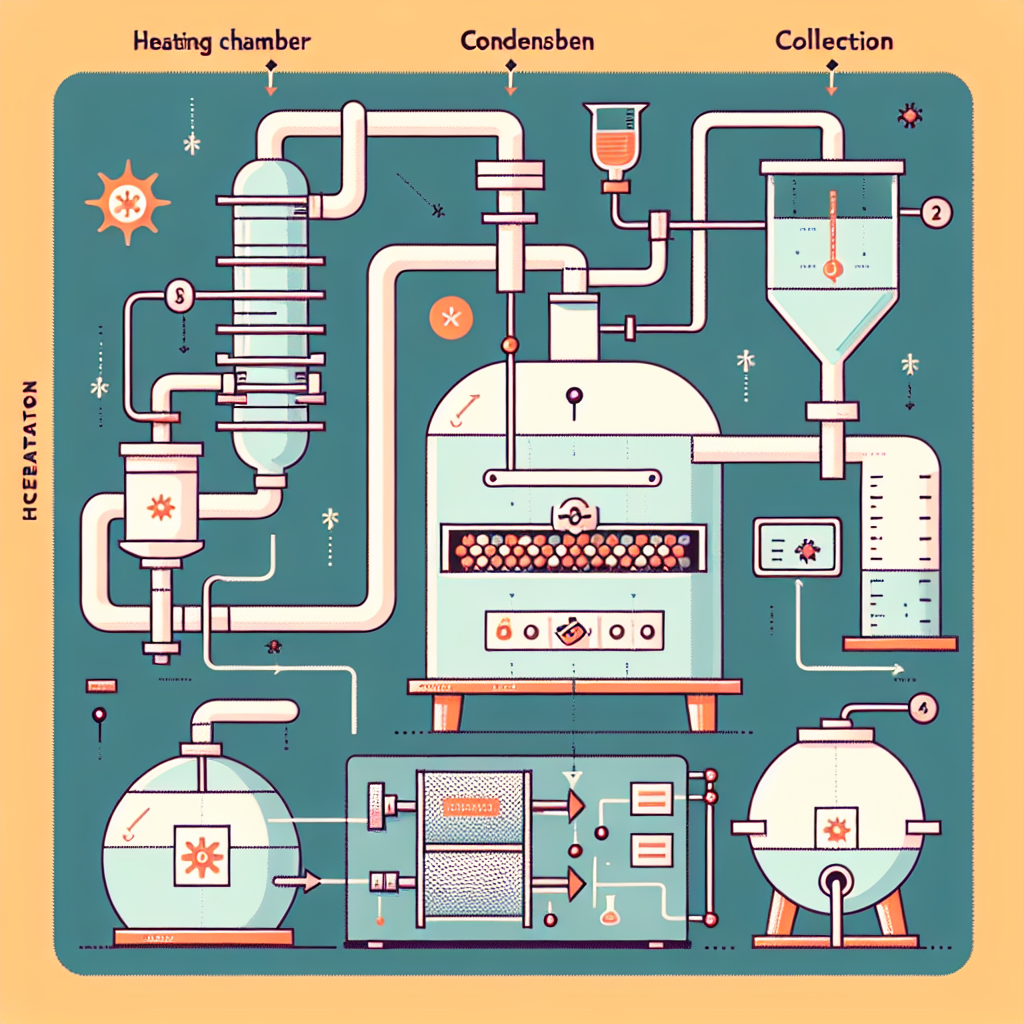
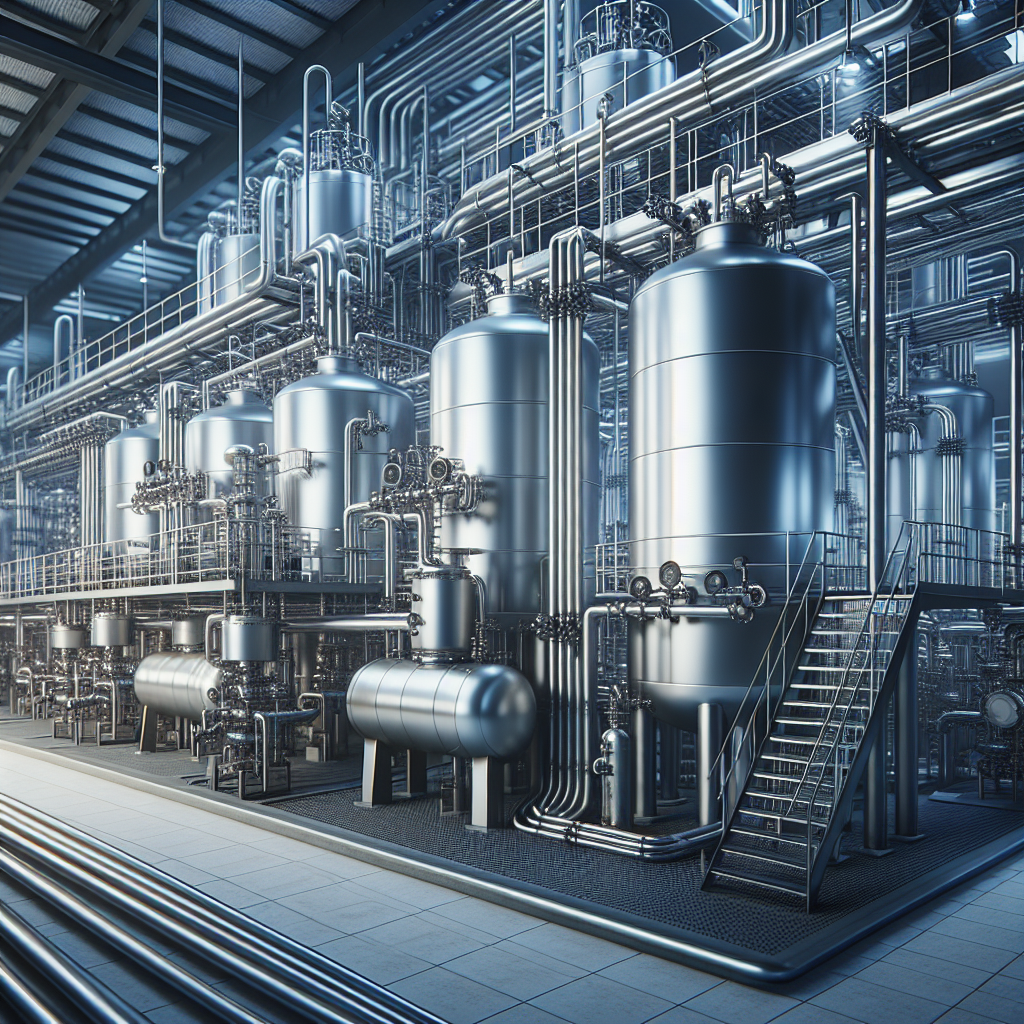
Industrial distillation systems are engineered around energy efficiency. Because evaporating water requires a great deal of energy, industrial designs recover and reuse the heat of condensation through multiple effects or vapor compression, reducing energy per unit of water by a large factor compared with single-stage distillation.
Seawater Desalination
Thermal desalination by multi-stage flash and multiple-effect distillation has supplied drinking water in arid regions for decades, often co-located with power plants to use waste heat. Reverse osmosis has since become the dominant desalination technology for new plants in most regions because of its lower energy demand, but thermal plants remain significant, particularly where low-cost heat is available.
Pharmaceutical Water
Pharmaceutical manufacturing is one of the most important applications for distillation. Water for Injection — water used in injectable medicines — has traditionally been produced by distillation, typically using multiple-effect or vapor compression stills, because distillation reliably removes bacterial endotoxins as well as dissolved contaminants.
Electronics and Other Industries
Semiconductor manufacturing requires ultrapure water, but this is usually produced by reverse osmosis followed by electrodeionization, ion exchange polishing, and further treatment rather than by distillation. Distillation is used in some other industrial processes where its robustness against varying feed water quality is an advantage.
Energy and Environmental Considerations
Energy is the dominant operating cost of distillation at any scale, and its carbon footprint depends on the energy source. Industrial plants also generate a concentrated brine or blowdown stream that must be managed.
Home Distillation Systems and Methods
How to Distill Water at Home
Small quantities of distilled water can be made with ordinary kitchen equipment:
- Gather Your Supplies: A large pot with a lid, a heat-resistant bowl that fits inside the pot, ice, and a heat source.
- Add Water: Fill the pot partway with tap water.
- Place the Bowl: Set the bowl inside the pot, on a rack or floating, to collect the condensate.
- Invert the Lid: Place the lid upside down so condensation runs to the center and drips into the bowl.
- Add Ice: Put ice on top of the lid to speed condensation.
- Heat Gently: Bring the water to a simmer and keep watch. Allow everything to cool before handling to avoid steam burns.
Solar Stills
A simple solar still — a container in a shallow pit covered with clear plastic sheeting weighted at the center — uses sunlight to evaporate water, which condenses on the underside of the plastic and drips into the container. It produces only small volumes, but it is useful in emergencies and remote locations.
A Common Misconception
Running water through a coffee maker, kettle, or similar appliance does not distill it. These appliances heat water, but they do not evaporate it and collect the condensate separately; dissolved minerals and contaminants remain in the water. Only processes that evaporate water and condense the vapor into a separate container produce distilled water.
Countertop Distillers
For regular use, an electric countertop distiller is the practical choice. Typical units produce a few gallons per day. When choosing one, look for:
- A volatile gas vent that releases volatile compounds before they condense.
- An activated carbon post-filter to capture volatile organics that carry over.
- Stainless steel or glass components in contact with the water.
- Ease of cleaning, since minerals removed from the water accumulate as scale in the boiling chamber and must be removed regularly.
How the purity of home-distilled water compares with other options is examined in our discussion of distillation water purity.
Benefits and Uses of Distilled Water
Drinking Distilled Water
- Low in contaminants: Distillation removes minerals, metals, nitrate, microorganisms, and most other non-volatile contaminants.
- No additives: No chemicals are added during treatment.
- Consistent quality: Output is largely independent of variation in the source water for non-volatile contaminants.
Claims that distilled water “detoxifies” the body are not supported by evidence; the kidneys regulate the body’s water and mineral balance regardless of the water’s mineral content.
Practical Uses
- Humidifiers and CPAP machines: Prevents mineral buildup and the white dust that minerals produce in ultrasonic humidifiers.
- Steam irons: Prevents scale deposits.
- Infant formula: Some parents use distilled or other low-fluoride water to reduce the risk of dental fluorosis in infants fed mainly with formula. Pediatric guidance should be followed.
- Laboratory and medical uses: Where mineral-free water is required.
- Lead-acid batteries and car cooling systems: Prevents mineral deposits.
- Aquariums: Distilled or RO water is used as a base, but it must be remineralized before use — fish cannot live in pure distilled water, which lacks the minerals and buffering they need. It is commonly used for top-off, to replace evaporated water without adding minerals.
Distilled, Purified, and Spring Water
| Type | Description | Key Differences |
|---|---|---|
| Distilled Water | Purified by evaporation and condensation. | Very low in minerals and dissolved solids. |
| Purified Water | Treated by distillation, reverse osmosis, deionization, or combinations. | Distilled water is one type of purified water; some brands add minerals back for taste. |
| Spring Water | Sourced from an underground formation that flows naturally to the surface. | Contains naturally occurring minerals; quality depends on the source and treatment. |
The Safety and Quality of Distilled Water
Is Distilled Water Safe to Drink?
Yes. Distilled water is safe to drink and is among the purest water available. People who drink it regularly obtain the minerals they need from food, which supplies far more calcium and magnesium than drinking water typically does.
Considerations for Regular Drinking
- Minerals: Distilled water lacks the calcium and magnesium present in many other waters. For people with a normal diet this is generally a minor issue.
- Heavy exercise: People losing large amounts of electrolytes through sweat need to replace them through food or electrolyte drinks, whatever water they drink.
- Taste: Many find distilled water flat because minerals contribute much of water’s taste.
- Storage: Mineral-free water tends to dissolve materials it contacts, so store it in glass or food-grade plastic.
Buying Distilled Water
Bottled distilled water is widely available in supermarkets and pharmacies, typically in gallon containers. Check the label carefully: water labeled “purified” may have been produced by reverse osmosis or deionization rather than distillation, and some purified waters have minerals added back for taste. For applications that specifically require distilled water, such as CPAP machines, buy water labeled “distilled.”
Distillation and Other Purification Technologies
Distillation and Reverse Osmosis
Reverse osmosis removes most of the same contaminants as distillation, using far less energy, and has become the dominant technology for both home purification and seawater desalination. Distillation retains advantages in consistency, tolerance of poor feed water, and removal of microorganisms and endotoxins, which is why it remains the standard for pharmaceutical Water for Injection.
Laboratory-Grade Water
Laboratories classify water by purity grades. Single distillation produces water suitable for many general laboratory uses; the highest grades typically require additional treatment such as deionization, further distillation, or polishing.
Innovations
Development in distillation focuses on reducing energy demand: improved heat recovery, vapor compression at smaller scales, membrane distillation, and use of solar and waste heat.
Conclusion
Distillation delivers consistent, high-purity water at every scale, from pharmaceutical plants to kitchen countertops. Its strengths are thorough removal of non-volatile contaminants and robustness against variable source water. Its limitations are energy demand, slow production at home scale, and the need for venting and carbon filtration to address volatile organics.
At industrial scale, heat recovery makes distillation practical for pharmaceutical water and thermal desalination. At home, a countertop distiller with a vent and carbon post-filter produces reliable distilled water for drinking and household uses, at the cost of electricity and regular descaling. For most households whose main goal is contaminant removal, reverse osmosis achieves similar results more efficiently; where mineral-free water is specifically required, distillation remains the standard.