
The Authoritative Technical Resource for Engineers and Industry Professionals
FACILITY BASIC INFORMATION
- Plant Name: San Jose Creek Water Reclamation Plant (SJCWRP)
- Location: Whittier / Unincorporated Los Angeles County, California
- Operating Authority: Los Angeles County Sanitation Districts (LACSD) – District No. 2
- Design Capacity: 100 MGD (Combined East and West Facilities)
- Current Average Flow: ~55-60 MGD
- Population Served: Approx. 1.0 million residents
- Service Area: San Gabriel Valley, including cities of Arcadia, Baldwin Park, Industry, La Puente, Monrovia, Rosemead, Sierra Madre, South El Monte, West Covina, and Whittier.
- Receiving Water Body: San Gabriel River (lined and unlined portions), Rio Hondo, and Groundwater Recharge Basins.
- NPDES Permit Number: CA0053911 (Order No. R4-2015-0070)
- Year Commissioned: 1971
TARGET AUDIENCE
- Municipal consulting engineers evaluating tertiary filtration and NDN processes.
- Wastewater treatment plant operators and managers interested in split-facility logistics.
- Environmental regulators monitoring groundwater recharge compliance.
- Engineering firms pursuing Title 22 recycled water projects.
- Academic researchers studying indirect potable reuse (IPR) via spreading grounds.

1. INTRODUCTION
The San Jose Creek Water Reclamation Plant (SJCWRP) serves as the backbone of the water recycling infrastructure for the Los Angeles County Sanitation Districts (LACSD). Located at the intersection of the 605 and 60 freeways, this 100-MGD design capacity facility is technically two independent plants—San Jose Creek East and San Jose Creek West—operating under a single permit and management structure. As the largest water reclamation plant in the LACSD system, SJCWRP plays a pivotal role in Southern California’s water independence strategy.
Commissioned in 1971, the facility was designed not merely for disposal, but as a resource recovery center. It produces high-quality, Title 22 tertiary-treated effluent primarily used for groundwater replenishment in the Montebello Forebay, which supplies drinking water to the Central Basin aquifer. Following extensive upgrades to its biological treatment trains for Nitrogen/Denitrification (NDN) compliance, the plant stands as a model for large-scale inland wastewater processing and indirect potable reuse in arid environments.
2. FACILITY OVERVIEW
A. Service Area & Configuration
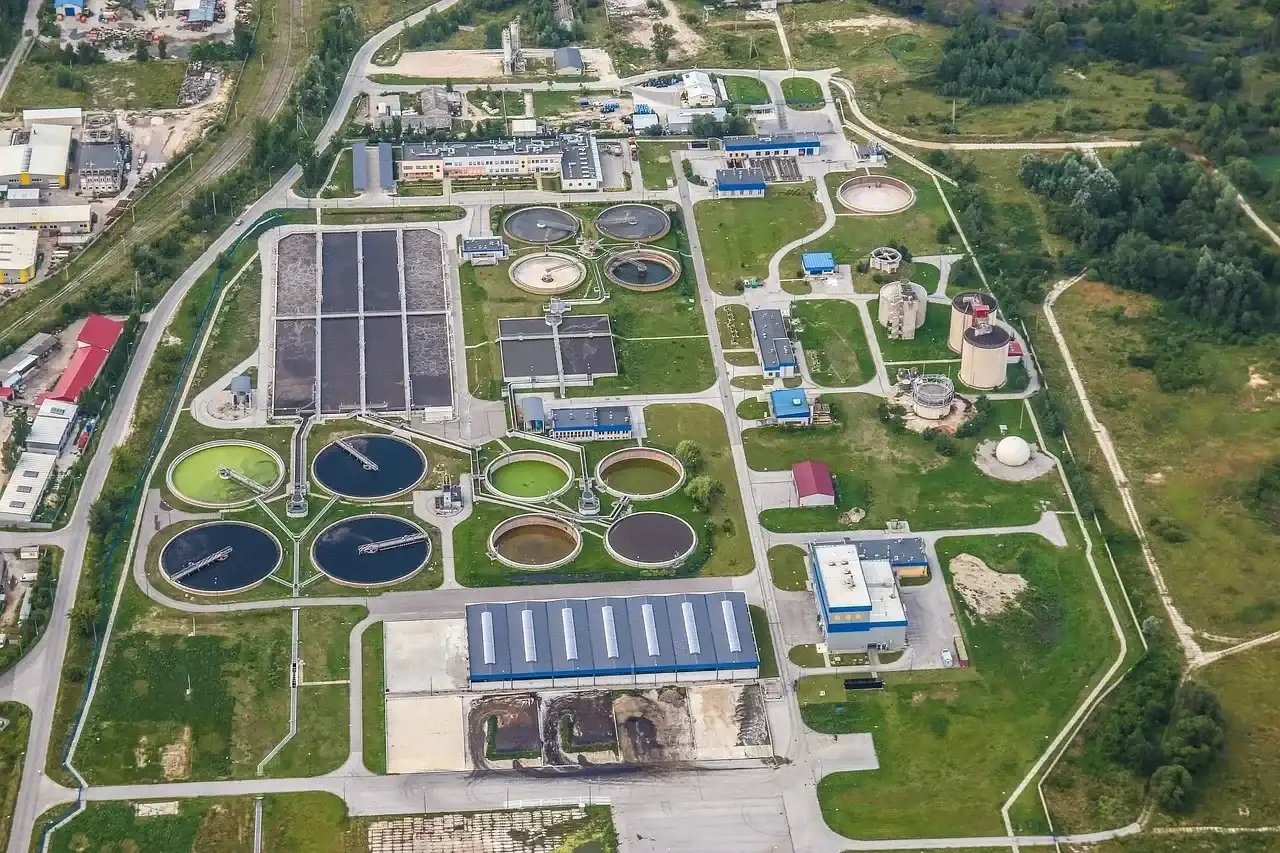
The facility serves a substantial portion of the San Gabriel Valley, handling wastewater from a highly urbanized mixed-use area comprising residential, commercial, and light industrial zones. Uniquely, the plant is physically bisected by the San Gabriel River Freeway (I-605), necessitating a dual-plant configuration:
- San Jose Creek East: Located east of the I-605, with a design capacity of approx. 62.5 MGD.
- San Jose Creek West: Located west of the I-605, with a design capacity of approx. 37.5 MGD.
The collection system relies on major trunk sewers including the San Jose Creek Trunk Sewer. Flow can be hydraulically balanced between the two sides to optimize treatment efficiency.
B. Operational Capacity
While designed for 100 MGD, current average daily flows hover between 55 and 65 MGD due to successful water conservation efforts in the service area. The plant handles diurnal peaks effectively through recent infrastructure upgrades in flow equalization. The hydraulic capacity allows for peak wet weather flows significantly higher than the average, ensuring system resilience during storm events common to the region’s Mediterranean climate.
C. Discharge & Reuse
The SJCWRP is a zero-discharge-to-ocean facility during dry weather; its effluent is too valuable to waste. The treated water is discharged into the San Gabriel River, unlined flood control channels, or Rio Hondo, where it percolates into the groundwater table. Additionally, a dedicated recycled water distribution system pumps effluent to hundreds of sites for landscape irrigation, industrial process water, and dust control.
3. TREATMENT PROCESS
The San Jose Creek WRP employs a sophisticated tertiary treatment train designed to meet California Title 22 standards for unrestricted reuse. The process is identical at both East and West facilities, ensuring uniform effluent quality.
A. Preliminary Treatment
Raw wastewater enters the headworks where it passes through mechanically cleaned bar screens to remove large debris, rags, and plastics. Following screening, the flow enters aerated grit chambers where velocity is reduced to allow inorganic solids (sand, gravel, eggshells) to settle while keeping organic matter in suspension. The removed grit and screenings are dewatered and hauled to a landfill. Odor control at the headworks is achieved via chemical scrubbers and covered channels.
B. Primary Treatment
Flow proceeds to rectangular primary sedimentation tanks. Here, the hydraulic retention time allows approximately 60-70% of Suspended Solids (SS) and 30-40% of Biochemical Oxygen Demand (BOD) to settle as primary sludge. Floating grease and oil are skimmed from the surface.
Engineering Note: Unlike many facilities that process solids on-site, SJCWRP returns primary sludge and skimmings to the Joint Outfall trunk sewer, where it flows by gravity to the Joint Water Pollution Control Plant (JWPCP) in Carson for digestion and solids processing.
C. Secondary Treatment (Activated Sludge with NDN)
The biological treatment stage utilizes a plug-flow activated sludge process configured for Nitrification and Denitrification (NDN). This is a critical operational parameter to meet the stringent nitrogen limits of the Los Angeles Region Basin Plan.
- Aeration Basins: The basins are equipped with fine-bubble diffusers to maximize oxygen transfer efficiency. Anoxic zones are incorporated at the head of the basins (or via step-feed configurations) to facilitate denitrification, converting nitrate to nitrogen gas.
- Secondary Clarifiers: Mixed liquor flows to rectangular secondary clarifiers where biological floc settles. Return Activated Sludge (RAS) is pumped back to the aeration basins to maintain Mean Cell Residence Time (MCRT), typically managed between 8 to 12 days depending on seasonal temperature. Waste Activated Sludge (WAS) is returned to the trunk sewer for downstream processing at JWPCP.
D. Tertiary Treatment
To meet Title 22 standards, secondary effluent undergoes deep-bed gravity filtration. The plant utilizes dual-media filters consisting of anthracite coal and sand. Alum and polymer are added upstream of the filters as coagulants/flocculants to enhance the capture of remaining suspended solids and turbidity. This stage consistently produces effluent with turbidity below 2 NTU.
E. Disinfection
Disinfection is achieved using sodium hypochlorite (chlorination).
- Chlorine Contact: The filtered water enters chlorine contact tanks designed with serpentine baffling to ensure a minimum modal contact time (typically 90 minutes) for virus inactivation.
- Dechlorination: For effluent discharged to the San Gabriel River, sodium bisulfite is added to neutralize residual chlorine, preventing toxicity to aquatic life.
- Reuse: Water diverted for the recycled water distribution system maintains a chlorine residual to prevent biological regrowth in the distribution piping.
F. Solids Handling Strategy
A distinct engineering feature of SJCWRP is the absence of on-site solids processing (digesters, dewatering). All primary sludge, WAS, and skimmings are returned to the Joint Outfall System (JOS). This “satellite plant” configuration reduces the footprint of the facility, minimizes local odor potential, and centralizes solids handling at the massive JWPCP facility in Carson, which has energy recovery infrastructure.
4. INFRASTRUCTURE & FACILITIES
A. Physical Plant
The site covers approximately 80 acres, split by the I-605 freeway. The East and West plants are connected via utility galleries and piping under the freeway. The architecture is utilitarian, typical of 1970s public works, but extensively landscaped to provide a visual buffer for the adjacent Whittier Narrows Recreation Area.
B. Energy Systems
While the plant does not generate power from biogas (due to the lack of digesters), it focuses on energy efficiency. High-efficiency turbo blowers and VFDs on major pumps are standard. The facility participates in demand response programs to reduce grid load during peak hours.
C. Odor Control
Given the facility’s location near residential zones and recreational parks, odor control is paramount. Primary tanks are covered. Foul air is extracted and treated through a combination of packed tower wet scrubbers (using caustic and bleach) and activated carbon polishers.
5. RECENT UPGRADES & MAJOR PROJECTS
Flow Equalization Facilities Project (Completed ~2015-2016)
- Project Scope: Construction of 12 million gallons of flow equalization storage (steel tanks) and associated pump stations.
- Project Drivers: To shave diurnal flow peaks, allowing the treatment process to operate at a steady state. This optimizes filtration performance and maximizes the volume of water that can be produced for reuse, rather than bypassing tertiary treatment during peak hours.
- Budget: Approx. $60 Million.
- Technical Highlight: The equalization system allows the plant to store excess influent during morning and evening peaks and process it during low-flow night hours.
Process Plant Upgrades (Continuous)
The LACSD maintains a robust Capital Improvement Program (CIP). Recent smaller-scale projects at SJCWRP have included:
- Aeration System Upgrades: Replacement of coarse bubble diffusers with high-efficiency fine bubble membranes and replacement of multi-stage centrifugal blowers with air-bearing turbo blowers.
- Electrical Distribution Renewal: Replacement of aging switchgear and transformers to ensure reliability.
Future: Pure Water Southern California (Regional Recycled Water Program)
While physically located at the JWPCP, the SJCWRP is part of the integrated planning for the Pure Water Southern California program (a partnership with Metropolitan Water District). Future phases may involve linking SJCWRP effluent to advanced purification trains to further reduce salinity and chemical contaminants for direct potable reuse applications.
6. REGULATORY COMPLIANCE & ENVIRONMENTAL PERFORMANCE
A. Permit Requirements
The facility operates under NPDES Permit No. CA0053911. Key effluent limits reflect the sensitive nature of the receiving waters (inland freshwater):
- BOD5: 20 mg/L (Monthly Average)
- TSS: 15 mg/L (Monthly Average)
- Ammonia-Nitrogen: Variable based on pH/Temp, typically < 2.0 mg/L
- Total Nitrogen: < 10 mg/L (to protect groundwater aquifers)
- Turbidity: < 2 NTU (24-hour average) for Title 22 compliance
B. Compliance History
SJCWRP maintains an exemplary compliance record, consistently receiving Platinum and Gold awards from the National Association of Clean Water Agencies (NACWA) for consecutive years without permit violations. The facility is a benchmark for NDN process stability.
C. Environmental Stewardship
The plant is the primary source of flow for the San Gabriel River during dry months, sustaining the riparian habitat. Furthermore, the infiltration of treated effluent is critical for preventing seawater intrusion in the coastal aquifers by maintaining hydraulic head in the basin.
7. OPERATIONAL EXCELLENCE
Staffing: The plant is staffed 24/7/365. It requires State Water Resources Control Board (SWRCB) Grade V certified operators for Chief Plant Operator positions due to the complexity of the tertiary and NDN systems. The staff includes operators, mechanics, electricians, and instrument technicians.
Automation: A centralized SCADA system monitors thousands of I/O points. Operators utilize real-time ammonia and nitrate analyzers to automatically adjust aeration rates and internal recycle pump speeds, optimizing denitrification while minimizing energy consumption.
8. CHALLENGES & FUTURE PLANNING
A. Salinity and Chloride Management
A significant challenge for SJCWRP is the “salt balance.” As residents use self-regenerating water softeners, brine is discharged to the sewer, raising the chloride levels in the wastewater. High chlorides can impact the beneficial use of recycled water for agriculture (specifically avocado and strawberry crops) and groundwater limits. LACSD has implemented legislation and public outreach to remove automatic salt-discharging softeners in the service area.
B. PFAS/PFOA Emerging Contaminants
As with all facilities discharging to groundwater recharge basins, Polyfluoroalkyl substances (PFAS) are a major regulatory focus. While conventional tertiary treatment does not remove PFAS, the District is actively monitoring legislative limits and evaluating potential future technological requirements (such as GAC or RO) should limits become stricter.
C. Aging Infrastructure
With the plant over 50 years old, concrete rehabilitation and mechanical replacement of clarifier drives and flights are ongoing priorities in the asset management plan.
10. TECHNICAL SPECIFICATIONS SUMMARY
| Parameter | Specification |
|---|---|
| Facility Type | Advanced Secondary (NDN) + Tertiary Filtration |
| Design Capacity | 100 MGD (East + West Plants) |
| Average Daily Flow | ~55-60 MGD |
| Peak Hydraulic Capacity | ~150+ MGD |
| Secondary Process | Activated Sludge with Nitrification/Denitrification |
| Tertiary Treatment | Dual-media (Anthracite/Sand) Gravity Filtration |
| Nutrient Removal | Yes (Nitrogen via biological Anoxic Zones) |
| Disinfection | Sodium Hypochlorite / Dechlorination with Sodium Bisulfite |
| Biosolids Handling | None on-site. Returned to sewer for processing at JWPCP. |
| Recycled Water Standard | California Title 22 (Unrestricted Reuse) |
| Population Served | ~1,000,000 |
| Operating Authority | Los Angeles County Sanitation Districts (LACSD) |
| Receiving Water | San Gabriel River, Rio Hondo, Groundwater Basins |
11. RELATED FACILITIES
- Joint Water Pollution Control Plant (JWPCP): The 400 MGD facility in Carson that processes the solids generated by San Jose Creek WRP.
- Pomona Water Reclamation Plant: A similar tertiary facility located upstream in the LACSD system.
- Whittier Narrows Water Reclamation Plant: A smaller 15 MGD facility located nearby, also discharging to the Montebello Forebay.
12. FAQ SECTION
Technical/Professional Questions
- 1. Why does San Jose Creek WRP not have anaerobic digesters?
- SJCWRP functions as a “satellite” reclamation plant. To minimize footprint and odor issues in the populated area, and to leverage economies of scale, all solids are returned to the trunk sewer and processed at the centralized JWPCP facility in Carson.
- 2. What is the specific configuration of the NDN process?
- The plant utilizes anoxic zones at the inlet of the aeration basins (and step-feed capabilities) to utilize influent carbon for denitrification, reducing nitrate levels to meet groundwater protection standards.
- 3. How are the East and West plants hydraulically connected?
- They are connected via large diameter piping galleries running beneath the I-605 freeway. Operators can divert influent flow between the two plants to balance loading or facilitate maintenance.
- 4. Does the plant use Reverse Osmosis (RO)?
- Currently, the main treatment train does not use RO. It uses tertiary filtration. RO is generally reserved for direct potable reuse projects or specific industrial applications, though future regional projects may incorporate membrane technologies.
Public Interest Questions
- 5. Is the water leaving the plant safe to drink?
- While the water meets “drinking water standards” for many parameters and is clean enough for unrestricted body contact, it is not plumbed directly to tap. It is used to recharge groundwater aquifers, where it undergoes natural soil filtration for months or years before being pumped up as drinking water.
- 6. Can I tour the facility?
- Yes, LACSD offers tours for schools, professional groups, and the public. These must be scheduled in advance through the Districts’ Public Information Office.
- 7. What happens to the water during heavy rainstorms?
- The plant has excess hydraulic capacity and flow equalization tanks to handle storm surges. If flows exceed treatment capacity (rare), excess diluted wastewater remains in the sewer system to be treated at the downstream JWPCP.