
Metropolitan Water Reclamation District Stickney Water Reclamation Plant Chicago
FACILITY BASIC INFORMATION
Plant Name: Stickney Water Reclamation Plant
Location: Cicero/Stickney, Cook County, Illinois
Operating Authority: Metropolitan Water Reclamation District of Greater Chicago (MWRD)
Design Capacity: 1,200 MGD (Average) / 1,440 MGD (Max)
Current Average Flow: ~700 MGD
Population Served: 2.3 Million residents
Service Area: 260 square miles (Central Chicago + 43 suburban municipalities)
Receiving Water Body: Chicago Sanitary and Ship Canal
NPDES Permit Number: IL0028053

Year Commissioned: 1930 (West Side), 1939 (Southwest Side) – Merged 1949
1. INTRODUCTION
The Stickney Water Reclamation Plant (WRP) stands as a monumental achievement in civil and environmental engineering, widely recognized as one of the largest wastewater treatment facilities in the world by volume. Located southwest of downtown Chicago, this facility serves as the flagship plant for the Metropolitan Water Reclamation District of Greater Chicago (MWRD). With a design capacity of 1.2 billion gallons per day (BGD) and a peak hydraulic capacity of 1.44 BGD, Stickney processes the waste of approximately 2.3 million people across a 260-square-mile service area.
Originally constructed as two separate facilities—the West Side plant (commissioned in 1930) and the Southwest plant (commissioned in 1939)—the unified complex now covers 413 acres. It is not only a hub for massive hydraulic throughput but also a center for innovation in resource recovery. The facility recently commissioned the world’s largest phosphorus recovery facility and operates a sophisticated train of biological nutrient removal processes. For engineering professionals, Stickney represents the ultimate case study in scaling activated sludge processes and managing biosolids operations within a dense urban corridor.
2. FACILITY OVERVIEW
A. Service Area & Coverage
The Stickney WRP serves the central portion of the MWRD’s jurisdiction. This includes the central business district of Chicago (the Loop), the majority of the city’s neighborhoods, and 43 surrounding suburban municipalities. The service area is characterized by dense urbanization with a mix of residential, commercial, and heavy industrial inputs. The collection system feeding Stickney is primarily a combined sewer system (CSS), meaning the plant must manage significant flow variability during wet weather events.
B. Operational Capacity
The hydraulic scale of Stickney is its defining characteristic.
- Design Average Flow: 1,200 MGD
- Maximum Design Flow: 1,440 MGD
- Average Daily Flow: Approximately 650-750 MGD
The facility operates in conjunction with the Mainstream Pumping Station, part of the Tunnel and Reservoir Plan (TARP/Deep Tunnel), which helps mitigate combined sewer overflows (CSOs) by storing excess flow in deep rock tunnels and the McCook Reservoir before pumping it to Stickney for treatment.
C. Discharge & Compliance
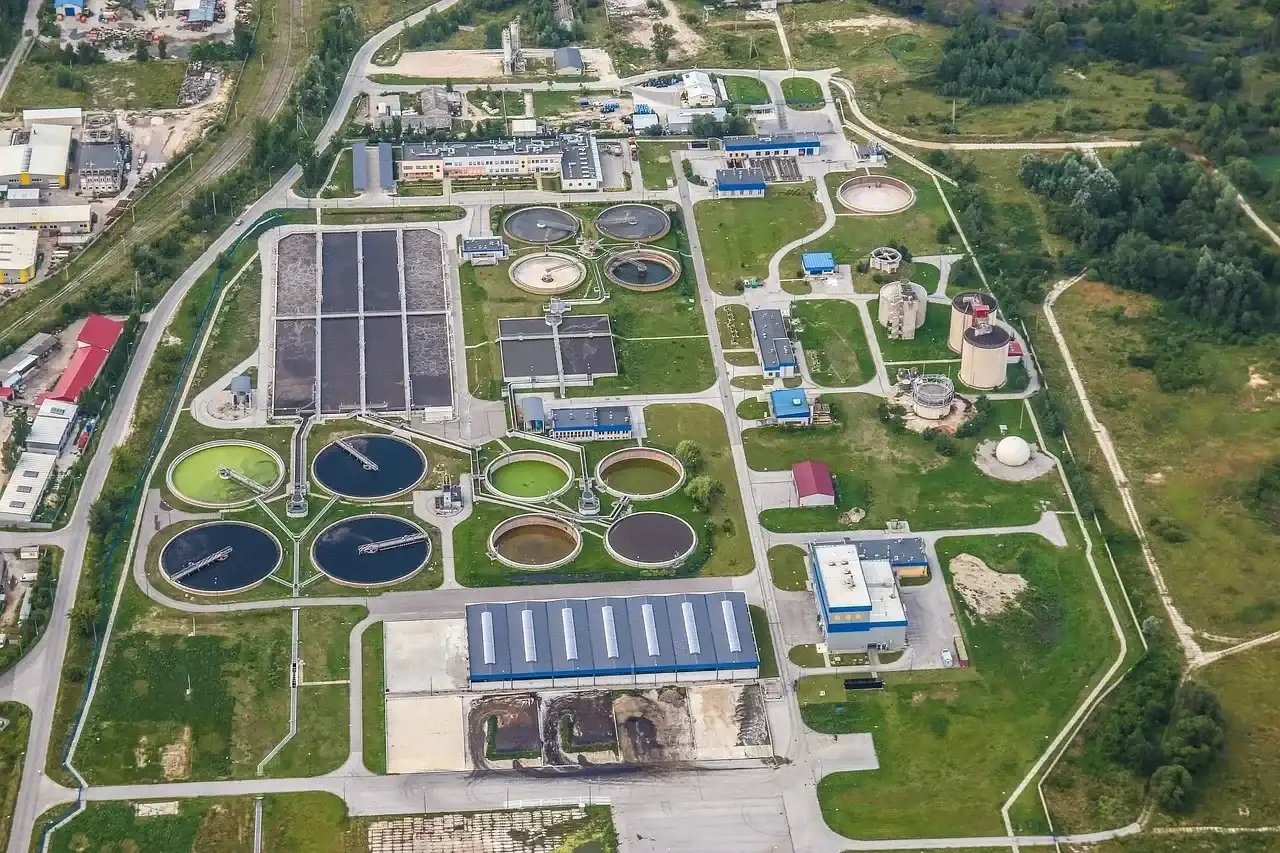
Treated effluent is discharged into the Chicago Sanitary and Ship Canal, a man-made waterway that connects the Great Lakes basin to the Mississippi River system. This unique hydrological position places Stickney under intense regulatory scrutiny regarding nutrient loading (contributing to Gulf of Mexico hypoxia) and disinfection standards for recreational waterway usage. The plant operates under a stringent NPDES permit issued by the Illinois EPA, with recent modifications requiring disinfection and phosphorus reduction.
3. TREATMENT PROCESS
The Stickney WRP utilizes a conventional activated sludge process that has been modified for Biological Nutrient Removal (BNR). The treatment train is massive, consisting of distinct batteries that operate in parallel.
A. PRELIMINARY TREATMENT
Raw wastewater enters the plant via the intercepting sewer system and the TARP Mainstream Pumping Station.
- Screening: Coarse bar screens remove large debris (rags, wood, plastics) to protect downstream pumps.
- Grit Removal: Aerated grit chambers reduce the velocity of the influent, allowing heavy inorganic materials (sand, gravel, coffee grounds) to settle while keeping organic solids in suspension.
- Skimming: Preliminary tanks also facilitate the removal of fats, oils, and grease (FOG).
B. PRIMARY TREATMENT
Stickney operates an extensive array of circular primary settling tanks (clarifiers).
- Configuration: Over 100 primary settling tanks are available across the West and Southwest portions of the plant.
- Mechanism: Settleable solids drop to the bottom as primary sludge, while scum is skimmed from the surface.
- Efficiency: These units typically remove 50-60% of Total Suspended Solids (TSS) and 30-40% of Biochemical Oxygen Demand (BOD).
C. SECONDARY TREATMENT
The biological heart of Stickney is the activated sludge process, divided into four massive batteries (A, B, C, and D).
- Aeration Basins: The plant utilizes a plug-flow configuration. Recent operational changes include the implementation of Enhanced Biological Phosphorus Removal (EBPR). By creating anaerobic zones at the front of the aeration tanks, phosphorus-accumulating organisms (PAOs) are selected, which uptake high levels of phosphorus in the subsequent aerobic zones.
- Clarification: Mixed liquor flows to secondary clarifiers (circular) where biological floc settles.
- Return Activated Sludge (RAS): Settled biomass is returned to the head of the aeration tanks to maintain the microbial population.
D. TERTIARY/ADVANCED TREATMENT
While Stickney does not utilize sand filtration, its “tertiary” aspect is defined by its advanced nutrient recovery.
- Nutrient Recovery: A portion of the centrate (liquid stream from dewatering digested sludge) is rich in phosphorus and ammonia. This stream is treated in the Ostara® Nutrient Recovery Facility (Pearl® process). This system precipitates phosphorus and nitrogen into high-purity fertilizer pellets (struvite) composed of magnesium ammonium phosphate, marketed as Crystal Green®.
E. DISINFECTION
Historically, MWRD plants did not disinfect due to the industrial nature of the canal. However, regulatory changes in 2015 mandated disinfection to protect recreational users.
- Method: Chlorination followed by Dechlorination.
- Process: Sodium hypochlorite is applied to the effluent for disinfection. After sufficient contact time, sodium bisulfite is added to remove residual chlorine before discharge to the canal to protect aquatic life.
F. SOLIDS HANDLING
Stickney acts as the central biosolids processing hub for the MWRD. Solids from other plants (North Side and Calumet) are often conveyed here via inter-plant pipelines.
- Digestion: The plant operates a massive battery of mesophilic anaerobic digesters. These digesters stabilize the sludge, reduce volatile solids, and generate biogas.
- Dewatering: Digested sludge is dewatered using high-capacity centrifuges.
- Biosolids Management: The resulting “cake” is utilized for land application (farmland fertilizer), composted for municipal use, or placed in solids drying areas. The MWRD has successfully marketed its biosolids under the “EQ Compost” label.
4. INFRASTRUCTURE & FACILITIES
A. Physical Plant
The 413-acre site is an industrial city unto itself. It includes its own railway network (Stickney Works) for moving solids and equipment. The architecture reflects the utilitarian industrial style of the 1930s, with robust brick masonry structures housing the pump stations and blower buildings. The site also houses the MWRD’s central analytical laboratories, which process hundreds of thousands of samples annually.
B. Energy Systems
Energy neutrality is a core goal for Stickney.
- Biogas Utilization: The anaerobic digesters produce millions of cubic feet of biogas daily. This gas is cleaned and used in on-site boilers to generate steam for heating the digesters and buildings.
- Heat Recovery: Waste heat is captured from processes to improve thermal efficiency.
5. RECENT UPGRADES & MAJOR PROJECTS
Stickney is in a state of continuous modernization to address aging infrastructure and evolving water quality standards.
NUTRIENT RECOVERY FACILITY (OSTARA) – $31 Million (Completed 2016)
- Project Scope: Installation of the world’s largest nutrient recovery facility using the Ostara Pearl® process.
- Drivers: Need to reduce phosphorus loads in the effluent and resolve issues with struvite buildup in plant pipes and valves.
- Funding: Primarily local MWRD capital funds. MWRD recovers costs through the sale of the fertilizer product.
- Technical Highlights: The facility treats high-strength centrate return streams. It employs three massive fluidized bed reactors.
- Results: Recovers up to 85% of phosphorus and 15% of nitrogen from the recycle stream. Produces up to 10,000 tons of Crystal Green® fertilizer annually. Significantly reduces nutrient load returning to the head of the plant.
DISINFECTION FACILITY – $56 Million (Completed 2016)
- Project Scope: Construction of two chlorine contact chambers and dechlorination facilities.
- Drivers: Compliance with new NPDES permit requirements to reduce fecal coliform bacteria for recreational waterway use (CAWS).
- Technical Highlights: Includes massive chemical storage tanks for sodium hypochlorite and sodium bisulfite. Designed to treat the full wet-weather flow of the plant.
- Results: Brought the facility into compliance with recreational water quality standards.
BATTERY A FINAL SETTLING TANKS REHABILITATION – (Ongoing/Recent)
- Project Scope: Rehabilitation of concrete structures, replacement of clarifier mechanisms, and modernization of RAS/WAS pumping systems in Battery A.
- Drivers: Aging infrastructure (original 1930s/40s construction) nearing end of useful life.
- Estimated Budget: Multi-million dollar recurring capital maintenance.
6. REGULATORY COMPLIANCE & ENVIRONMENTAL PERFORMANCE
A. Permit Requirements
Stickney operates under NPDES Permit IL0028053. Key parameters include:
- CBOD5: Strict monthly average limits (typically < 10-15 mg/L).
- Suspended Solids: Monthly average limits (typically < 12-15 mg/L).
- Phosphorus: A schedule of compliance was introduced to meet a 0.5 mg/L annual geometric mean limit by 2030, driven by the Illinois Nutrient Loss Reduction Strategy.
- Fecal Coliform: Seasonal limits apply (March-November) for disinfection.
C. Environmental Stewardship
MWRD and Stickney have pioneered the beneficial reuse of biosolids. The District’s biosolids program diverts over 100,000 dry tons of solids annually from landfills, repurposing them for agricultural soil amendment and golf course fertilization.
7. OPERATIONAL EXCELLENCE
A. Staffing
The facility is staffed 24/7 by a team of several hundred employees, including stationary engineers, treatment plant operators (requiring IEPA Class 1 certification for lead roles), tradespeople (electricians, steamfitters), and laboratory analysts. The sheer size of the plant requires a highly compartmentalized yet integrated workforce.
C. Technology & Innovation
Stickney serves as a test bed for the industry. The plant utilizes advanced SCADA for real-time monitoring of dissolved oxygen (DO) profiles to optimize aeration usage—the single largest energy consumer. The District is also experimenting with “Sidestream Enhanced Biological Phosphorus Removal” (S2EBPR) to further stabilize phosphorus uptake.
8. CHALLENGES & FUTURE PLANNING
A. Current Challenges
Combined Sewer Overflows (CSOs): Despite the TARP system, extreme weather events can still overwhelm the hydraulic capacity of the system. Managing wet weather flows while maintaining biological stability is a constant operational challenge.
Nutrient Limits: Meeting increasingly strict phosphorus limits requires precise control of the biological process and chemical polishing, driving up operational costs.
B. Future Planning
The MWRD’s Strategic Plan emphasizes complete energy neutrality and resource recovery. Future projects at Stickney will likely focus on:
- Enhanced biogas conditioning to produce Renewable Natural Gas (RNG) for pipeline injection or vehicle fuel.
- continued rehabilitation of the Imhoff tanks (where still structurally relevant) or their conversion.
- Further integration of AI/Machine Learning for aeration control to reduce electrical demand.
10. TECHNICAL SPECIFICATIONS SUMMARY
| Parameter | Specification |
|---|---|
| Facility Type | Advanced Secondary Activated Sludge with BNR |
| Design Capacity (Average) | 1,200 MGD |
| Peak Hydraulic Capacity | 1,440 MGD |
| Treatment Process | Screening, Grit Removal, Primary Clarification, Activated Sludge (EBPR), Secondary Clarification, Chlorination/Dechlorination |
| Nutrient Removal | Yes – Biological Phosphorus Removal + Ostara Nutrient Recovery |
| Disinfection | Chlorination / Dechlorination (Sodium Hypochlorite / Bisulfite) |
| Biosolids Processing | Anaerobic Digestion, Centrifuge Dewatering, Air Drying/Composting |
| Phosphorus Recovery | Ostara Pearl® Process (Struvite crystallization) |
| Service Area | 260 Square Miles |
| Population Served | ~2.3 Million |
| Receiving Water | Chicago Sanitary and Ship Canal |
| Operating Authority | MWRD of Greater Chicago |
| Total Site Area | 413 Acres |
11. RELATED FACILITIES
TARP Mainstream Pumping Station: Located adjacent to the Stickney WRP, this is one of the world’s largest underground pumping stations. It pumps wastewater from the “Deep Tunnel” system up approximately 300 feet to the treatment plant.
McCook Reservoir: A massive inline reservoir that holds combined sewage during storms to prevent overflows, releasing it slowly to Stickney for treatment once capacity is available.
12. FAQ SECTION
Technical Questions
1. Is Stickney truly the largest wastewater plant in the world?
It is widely considered the largest by treatment capacity and volume, fluctuating for the title with the Jean-R. Marcotte facility in Montreal (which provides less advanced treatment) and the Gabal el Asfar plant in Egypt.
2. How does Stickney handle phosphorus removal?
It uses a combination of Enhanced Biological Phosphorus Removal (EBPR) in the aeration tanks and the Ostara nutrient recovery facility to treat side-streams.
3. Does the plant generate its own power?
Partially. The plant captures biogas from anaerobic digesters to fire boilers for process heat. It is moving toward greater energy neutrality but relies on the grid for major electrical loads like aeration blowers.
4. What is the hydraulic retention time (HRT)?
While variable based on flow, the average HRT through the activated sludge process is typically 6-8 hours.
Public Interest Questions
5. Can the public tour the Stickney WRP?
Yes, the MWRD offers scheduled tours for the public, schools, and professional groups. These must be arranged in advance through the MWRD Office of Public Affairs.
6. Does the plant smell?
While wastewater treatment inherently involves odors, Stickney employs extensive odor control technologies, including cover systems and biofilters, particularly around the headworks and solids handling areas, to minimize impact on neighboring communities.
7. Is the water released safe to drink?
No. The effluent is treated to “secondary” standards suitable for release into the environment and for industrial/recreational use, but it is not potable (drinking) water. It requires further processing at a water purification facility to be potable.