
Sewer System Upgrades Boost Urban Infrastructure
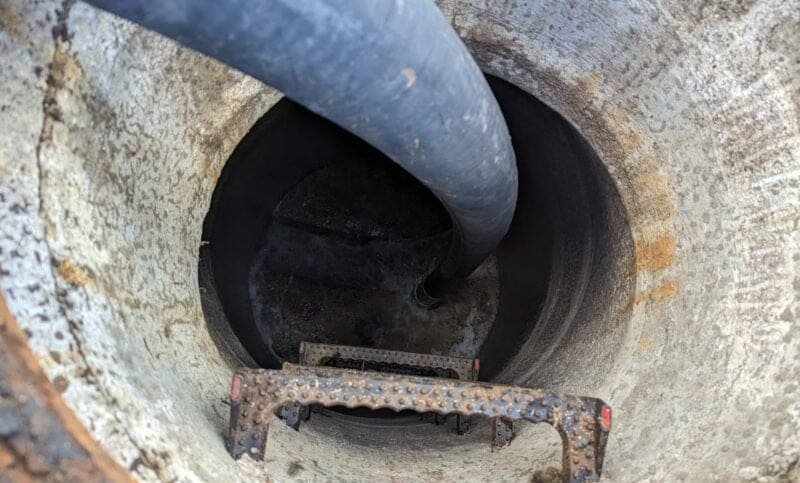
Sewer systems are vital infrastructure that keep our cities clean and healthy. They carry wastewater from homes and businesses to treatment plants, protecting public health and the environment. A well-designed sewer system can handle large volumes of water and prevent sewage backups and overflows. As the most visible component of broader collection & conveyance infrastructure, sewer systems form the network through which every drop of municipal wastewater reaches treatment — making their sizing, materials, and condition central to the reliability of the entire wastewater service.
These systems come in different types, including sanitary sewers for wastewater and combined sewers that handle both wastewater and stormwater. Engineers use complex formulas to design sewers that can efficiently move water and prevent buildup of solids. Pipe size, slope, and material all play key roles in a sewer’s performance.
Modern sewer systems use advanced technologies to monitor flow and detect issues before they become problems. Regular maintenance keeps sewers running smoothly. While often out of sight, these systems are essential for urban living and require ongoing investment to meet growing population needs.
Key Takeaways
- Sewer systems protect public health by safely transporting wastewater.
- Design factors like pipe size and slope are crucial for sewer efficiency.
- Regular maintenance and new technologies help prevent sewer issues.
Fundamentals of Sewer Systems
Sewer systems play a vital role in managing wastewater and protecting public health. These complex networks of pipes and facilities collect, transport, and treat sewage from homes and businesses.
Basic Concepts and Functions
A sewer system moves wastewater from its source to a treatment plant. It uses gravity flow where possible, with pumping stations to lift sewage when needed. The main job is to safely remove waste and prevent disease.
Sewers also handle stormwater in some areas. This helps stop flooding and water pollution. The pipes are sized to carry peak flows during heavy rain.
Sanitary sewer design aims for minimum flow speeds of 2 feet per second. This keeps solids moving and stops buildup in the pipes.
Types of Sewer Systems
There are three main types of sewer systems:
- Sanitary sewers: Carry only household and industrial wastewater.
- Storm sewers: Handle only rainwater and surface runoff.
- Combined sewers: Collect both wastewater and stormwater in one pipe.
Sanitary sewers are most common in newer areas. They keep sewage separate from rain, making treatment easier.
Combined sewers can overflow in heavy rain. This sends untreated waste into rivers and lakes. Many cities are working to split these systems.
Components of a Sewer System
A sewer system has several key parts:
- Lateral pipes: Connect buildings to the main sewer line.
- Main lines: Larger pipes that collect waste from many laterals.
- Manholes: Allow access for inspection and cleaning.
- Lift stations: Pump sewage uphill when needed.
- Treatment plants: Clean the wastewater before release.
Sewer pipe sizes vary. Home laterals are often 6 inches wide. Main lines can be 8 inches or larger.
Manholes are placed at pipe junctions and turns. They help workers find and fix problems in the system.
Treatment plants use physical, chemical, and biological processes to clean the water. The treated water can then safely return to the environment.
Sewer System Technologies
Modern sewer systems use different technologies to manage wastewater effectively. These systems help transport and treat sewage from homes and buildings to protect public health and the environment.
Grinder Pump Systems
Grinder pump systems are used in areas where gravity-fed sewers aren’t practical. They work by grinding sewage into a slurry before pumping it to the main sewer line.
A grinder pump is installed in a tank near the home. When wastewater fills the tank, the pump turns on automatically. It grinds solids and pumps the mixture through small-diameter pipes.
This system is useful for: • Homes below the main sewer line • Areas with challenging terrain • Reducing pipe size and installation costs
Maintenance is key for grinder pumps. Homeowners should avoid flushing non-biodegradable items to prevent clogs and damage.
Aerobic Treatment Systems
Aerobic treatment systems use oxygen to break down sewage. They’re often used in rural areas without access to municipal sewers.
These systems have three main parts:
- A trash tank for solids
- An aeration chamber where bacteria digest waste
- A settling tank for final treatment
Oxygen is pumped into the aeration chamber. This helps good bacteria grow and break down waste faster than in traditional septic systems.
Aerobic systems produce cleaner effluent. This makes them suitable for areas with high water tables or poor soil conditions. They need regular maintenance and power to run the air pump.
Subcategory Overview: Sewer Systems and Related Infrastructure
Sewer systems exist within a wider ecosystem of collection systems infrastructure — pipes, manholes, lift stations, overflow controls, and monitoring equipment — that together move wastewater from source to treatment. The H3 sections below cover specific resources that address particular angles of sewer system practice: a major urban modernization case study, the combined sewer overflow challenge that defines many older systems, and the lift stations that enable sewer service in flat or hilly terrain.
Chicago Sewer System Modernization
The detailed case study of the Chicago sewer system modernization examines one of the largest and oldest combined sewer systems in North America and the ongoing program — including the Deep Tunnel and Reservoir Plan (TARP) — to bring it into the 21st century. Chicago’s system spans more than 4,000 miles of sewers serving 5+ million people across the city and surrounding communities, with much of the original infrastructure dating to the late 1800s. The 2025 modernization plans address several intersecting challenges: combined sewer overflow control under EPA consent decree, climate-driven storm intensification, aging infrastructure renewal, and equitable service delivery across neighborhoods with widely varying historical investment. The Chicago experience offers a useful template for other large legacy sewer systems facing similar pressures — including New York, Boston, Philadelphia, and Pittsburgh — where the sewer system itself has become a major capital and operations focus alongside the treatment plants it feeds.
Combined Sewer Overflow: A Defining Challenge for Older Sewer Systems
The challenge of combined sewer overflow (CSO) defines sewer system management in roughly 700 U.S. communities with combined sewers built before sanitary and storm flows were routinely separated. During heavy rainfall, combined sewers carry far more flow than the treatment plant or interceptor sewers can handle; the excess discharges directly to receiving waters through engineered overflow points, releasing a dilute mixture of stormwater and untreated sewage. EPA Long-Term Control Plans (LTCPs) under consent decrees with affected utilities have driven billions of dollars in capital investment — including storage tunnels, treatment-and-discharge facilities, real-time control of in-system storage, sewer separation projects, and green infrastructure to reduce stormwater entering the system. CSO management is among the highest-leverage activities in modern sewer system practice, with direct impacts on receiving water quality, recreational use, and regulatory compliance.
Sewer System Lift Stations
Where gravity flow alone cannot deliver wastewater to treatment, sewer system lift stations raise sewage from low points in the collection network to higher points where gravity flow can resume. Lift stations are essential in flat terrain (where deeper-and-deeper gravity sewers eventually become impractical), in hilly terrain with intermediate low points, and in coastal areas where sea level constrains gravity sewer depth. Modern lift stations typically include redundant submersible pumps, wet wells sized for adequate cycle time, level sensors and SCADA integration, emergency standby power, and forcemains delivering the pumped flow to the next gravity reach. Lift stations are also among the highest-maintenance points in sewer systems — submersible pumps wear, electrical equipment fails, and ragging from disposable wipes increasingly causes operational problems. A well-designed sewer system minimizes the number of lift stations through careful elevation planning, but most real-world systems include dozens to hundreds of these facilities.
Selection & Specification Framework
Sewer system specification involves balancing capital cost, hydraulic capacity, long-term operational needs, and integration with treatment plant capacity. The decisions made at design time persist for 50–100 years or more, making conservative sizing and material selection critical.
Decision Hierarchy for Sewer System Design
- Determine system type: Sanitary-only (the standard for new development), storm-only (separate from sanitary), or combined (now rare in new construction but the existing infrastructure in many older cities).
- Quantify design flows: Average daily flow, maximum daily flow, peak hourly flow, and (for stormwater) design storm intensity. Include 50-year buildout projections to avoid premature capacity exhaustion.
- Select pipe material: PVC for most residential and small-diameter applications, ductile iron for high-pressure or impact-prone areas, reinforced concrete for large-diameter trunks, HDPE for trenchless installations and corrosive environments.
- Set hydraulic criteria: Minimum velocity 2 ft/s at design flow for self-cleansing; maximum velocity 10–15 ft/s to prevent abrasion; slope per Manning’s equation with diameter-specific minimum slopes.
- Plan access: Manholes at all pipe junctions, direction changes, slope changes, and at intervals of 300–400 ft on straight runs for cleaning access.
- Specify lift stations: Required wherever gravity flow becomes infeasible; provide redundant pumps, standby power, and SCADA monitoring.
How System Size and Community Characteristics Influence the Choice
Small systems serving rural communities or low-density developments often rely on small-diameter pressure or vacuum sewers with grinder pumps at each property — capital cost is low but operational complexity is distributed across customers. Mid-sized systems use conventional gravity sewers with occasional lift stations and standard pipe materials. Large urban systems require complex hydraulic modeling, multi-pipe trunk lines, regional lift stations, and sophisticated overflow management. Community characteristics matter: coastal cities face saltwater intrusion and tide-driven backwater; cold-climate cities face frost heave; industrial communities face high-strength or corrosive influent. Operator skill matters because sophisticated systems (real-time control of in-system storage, intelligent overflow management, SCADA-based asset management) require trained staff to deliver their full value.
Comparison: Sewer System Types and Configurations
| System Type / Configuration | Typical Application | Hydraulic Approach | Pipe Diameter Range | Maintenance Profile | Key Advantage |
|---|---|---|---|---|---|
| Sanitary Gravity Sewer | Most new urban/suburban development | Gravity flow | 8–96 inches | Moderate — periodic cleaning | Reliable, well-understood |
| Storm Sewer (Separate) | Stormwater management in separated systems | Gravity flow | 12–144 inches | Lower — cleaning + inlet maintenance | No sewage in stormwater |
| Combined Sewer | Legacy infrastructure in older cities | Gravity flow | 12 inches – 20+ feet (trunks) | Higher — overflow management, cleaning | Single pipe network (legacy) |
| Pressure Sewer (Grinder Pump) | Low-density development, difficult terrain | Pumped (grinder at each property) | 2–6 inches | Higher — distributed grinder maintenance | Small-diameter pipe, shallow burial |
| Vacuum Sewer | Flat terrain, high water table, sensitive environments | Vacuum-driven | 4–10 inches | Higher — central vacuum station | Shallow installation; low infiltration |
| Force Main | Downstream of lift stations | Pumped (continuous flow) | 4–48 inches | Higher — corrosion, surge management | Crosses elevation differences |
| Interceptor / Trunk Sewer | Major collector lines to treatment plants | Gravity (with lift stations) | 24 inches – 20+ feet | Moderate — specialized cleaning equipment | High capacity; serves multiple sub-basins |
| Storage Tunnel (CSO Control) | Combined sewer overflow management | Inflow during storms, drainage to plant after | 10–35 ft diameter | Lower — passive operation | Reduces CSO discharges |
| PVC Pipe Material | Most residential and small-diameter mains | — | 4–36 inches | Lower — corrosion resistant | Lower capital cost |
| Ductile Iron Pipe | High-pressure, impact-prone, or industrial | — | 4–64 inches | Moderate — corrosion mitigation | Strength and impact resistance |
| Reinforced Concrete Pipe (RCP) | Large-diameter trunks and interceptors | — | 12 inches – 12+ feet | Moderate — joint inspection | Cost-effective at large diameters |
| HDPE Pipe | Trenchless installation, corrosive environments | — | 4–96 inches | Lower — corrosion resistant | Flexibility, long joint-free runs |
Installation and Costs
Installing a sewer system involves careful planning and significant expenses. The process requires evaluating costs and following proper installation procedures to ensure a functional and compliant system.
Evaluating Sewer System Costs
Sewer system costs vary depending on factors such as property size, soil type, and local regulations. A typical residential sewer connection can range from $5,000 to $20,000.
This price includes permits, materials, and labor. Homeowners may face additional expenses for:
- Decommissioning existing septic systems
- Landscaping restoration
- Potential road repairs
Some municipalities offer financing options or grants to help offset costs. It’s important to get multiple quotes from licensed contractors to compare prices and services.
Installation Procedures
Sewer installation begins with obtaining necessary permits from local authorities. The process typically involves:
- Site evaluation and planning
- Excavation and trenching
- Pipe laying and connection to the main sewer line
- Backfilling and surface restoration
Professionals use specialized equipment to ensure proper slope and alignment of pipes. They must adhere to local building codes and health regulations throughout the installation.
Regular inspections occur at key stages to verify compliance. After completion, final testing ensures the system functions correctly before approval for use.
Operation and Maintenance
Proper operation and maintenance are key to keeping sewer systems running smoothly. Regular inspections and prompt issue resolution help prevent costly breakdowns and environmental problems.
Routine Inspection and Maintenance
Sewer system inspection is crucial for identifying potential issues early. Operators should check pipelines, manholes, and pumping stations regularly.
Inspections often use cameras to spot cracks, blockages, or tree root intrusions. Cleaning pipes with high-pressure water jets removes buildup and debris.
Pumps and valves need regular lubrication and testing. Operators must also monitor flow rates and pressure levels to ensure optimal performance.
Record-keeping is essential. Detailed logs help track maintenance history and identify recurring problems.
Troubleshooting Common Issues
Blockages are a frequent problem in sewer systems. They can be caused by grease buildup, tree roots, or foreign objects. Operators use specialized tools to clear these obstructions.
Leaks and breaks in pipes require quick action. Temporary repairs may involve patching or lining damaged sections. Severe cases might need pipe replacement.
Pump failures can lead to backups. Operators should check for electrical issues, worn impellers, or clogged intakes.
Odor complaints often stem from improper venting or chemical imbalances. Adjusting airflow or adding deodorizing agents can help address these issues.
Field Notes: Practical Sewer System Operations
Commissioning Considerations
Commissioning a new sewer system requires more than confirming that flow reaches the treatment plant. Each pipe segment should be air-tested or vacuum-tested for leakage before backfilling, with documented test results retained in the asset record. Mandrel testing of PVC pipe confirms the pipe has not deformed beyond allowable limits during installation and backfill. Manhole-to-manhole CCTV inspection of all new pipe creates a baseline video record against which future condition assessments can be compared. Lift stations require commissioning of all pump-control logic — automatic alternation, high-level alarms, emergency power transfer — under simulated peak flow conditions. Hydraulic testing of the full system at maximum design flow reveals problems that won’t show up during low-flow startup conditions.
Pro Tip: During commissioning, document baseline CCTV video, infiltration test results, and lift station performance curves. These baselines become the reference for tracking deterioration over the 50–100 year life of the infrastructure — and they are invaluable when assessing damage claims, planning rehabilitation, or evaluating capacity for new development.
Common Specification Mistakes
Three errors recur in sewer system specifications. First, designers size pipes for current flows without adequate provision for projected buildout — a sewer sized for present demand becomes capacity-constrained within 10–15 years of service. Second, slope minimums are pushed to absolute minimums to save excavation depth; flat sewers are chronic problem segments, prone to grease and grit accumulation that requires frequent cleaning. Third, infiltration and inflow (I&I) controls are deprioritized during construction — but I&I added in the first year of service typically remains in the system for its entire life, consuming hydraulic capacity that should serve sanitary flows.
Common Mistake: Specifying lift stations without adequate redundancy. A single-pump lift station with no backup is a guaranteed source of overflows; even small lift stations should have N+1 pump redundancy and either standby power or storage volume adequate to handle outages until power is restored.
Operations & Maintenance Practice
Day-to-day sewer system management revolves around three measurement categories: flow monitoring (continuous flow meters at strategic points reveal capacity utilization and I&I patterns), condition assessment (CCTV inspection on a 5–10 year rotation captures deterioration before it causes failure), and lift station performance (pump runtime, flow per cycle, energy use indicate wear). Proactive cleaning of grease-prone segments and root-prone segments prevents most blockage events; reactive cleaning after a blockage is many times more expensive than preventive cleaning. Infiltration and inflow reduction — manhole rehabilitation, lateral connection sealing, pipe lining of leaky segments — is among the highest-ROI capital activities at utilities with aging infrastructure.
Troubleshooting Sewer System Upsets
The classic symptoms of sewer system problems are basement backups, manhole overflows, and unexpected peaks at the treatment plant. Diagnosis follows a checklist: (1) verify the affected location with field crew, (2) check upstream for recent service interruptions or rainfall, (3) review SCADA data for lift station and flow meter trends, (4) deploy CCTV to inspect the affected pipe segment, (5) check for evidence of grease, roots, or foreign material at blockage point. Persistent sewer problems despite operational fixes usually indicate one of: hydraulic capacity exceeded (need for upsizing or relief sewer), chronic structural deterioration (need for rehabilitation or replacement), excessive I&I (need for systematic infiltration reduction), or fundamental design issues (flat segments, sharp bends, undersized manholes) that require redesign.
Design Details & Standards
Sizing Methodology Overview
The standard sewer sizing workflow begins with design flow calculation: average daily flow from population and per-capita generation rates, peak hourly flow using peaking factors that decline with system size (typically 4.0 for very small communities to 1.8–2.5 for large regional systems), and infiltration/inflow allowance based on system age and condition. Calculate pipe diameter from Manning’s equation using design peak flow and minimum slope. Verify minimum velocity of 2 ft/s at design flow for self-cleansing; verify maximum velocity below 10–15 ft/s to prevent abrasion. Check the hydraulic profile through the entire trunk system to ensure no segment surcharges under peak flow conditions, and verify adequate freeboard at all manholes and overflow points.
Key Parameters That Differ by System Type
Different sewer system types have different governing parameters. Sanitary gravity sewers are governed by Manning’s-equation hydraulics, minimum slope, and minimum velocity. Combined sewers add storm design (typically 5-, 10-, or 25-year design storms) and CSO control requirements. Pressure sewers are governed by pump curves, headloss, and force main hydraulics. Vacuum sewers are governed by vacuum station capacity, valve spacing, and lift limits. Force mains are governed by hydraulic gradeline, surge analysis (water hammer), and air management at high points.
Applicable Standards
Several standards govern sewer system design and operation. The Recommended Standards for Wastewater Facilities (Ten States Standards), published by the Great Lakes–Upper Mississippi River Board, sets minimum design criteria for sewer pipe materials, slopes, velocities, and manhole spacing. State design standards — many of which adopt or modify Ten States — provide the regulatory floor for new and expanded systems. ASCE/WEF Manual of Practice FD-5 (Gravity Sanitary Sewer Design and Construction) and Metcalf & Eddy’s Wastewater Engineering are the standard engineering references. ASTM standards govern pipe materials and testing methods. EPA’s NPDES program, sanitary sewer overflow (SSO) regulations, and combined sewer overflow (CSO) policy set the federal regulatory framework. OSHA 29 CFR 1910 and confined-space entry rules govern operator safety.
Specification Checklist
- System type defined: sanitary, storm, combined, pressure, or vacuum
- Design flows calculated: present and 50-year buildout
- Peaking factors derived from local data where available
- I&I allowance specified based on system age and condition
- Pipe sizing verified at minimum velocity (2 ft/s) and maximum velocity (10–15 ft/s)
- Slope minimums met for all pipe diameters
- Pipe materials selected for application: PVC, DI, RCP, or HDPE
- Manhole spacing within 300–400 ft maximum on straight runs
- Manholes at all junctions, direction changes, and slope changes
- Lift stations with N+1 pump redundancy and backup power
- Force main surge analysis complete
- Hydraulic profile plotted at peak flow with adequate freeboard
- CSO management plan documented (combined systems only)
- Construction testing specified: air, vacuum, mandrel, CCTV baseline
- SCADA integration for lift stations, flow meters, and overflow monitors
Environmental Impact and Regulations
Sewer systems play a crucial role in public health and environmental protection. They must meet strict standards to prevent pollution and ensure sustainable water management. Proper design and maintenance are key to minimizing negative impacts on ecosystems and communities.
Compliance with Municipal Standards
Municipal sewer systems must adhere to regulations set by local and federal authorities. These rules cover aspects like pipe materials, treatment processes, and discharge limits.
Regular inspections check for leaks, overflows, and other issues. Systems found non-compliant face fines and mandatory upgrades.
Many municipalities use advanced monitoring technology. This helps detect problems early and ensures continuous compliance.
Proper record-keeping is essential. It allows authorities to track system performance and plan improvements.
Sustainability and Sewer Systems
Modern sewer designs aim to reduce environmental impact. They incorporate features like green infrastructure to manage stormwater naturally.
Energy-efficient pumps and treatment processes help lower carbon footprints. Some facilities even generate power from wastewater, offsetting their energy use.
Water reuse programs are becoming more common. They treat wastewater to high standards for non-potable uses, conserving freshwater resources.
Sewer systems also play a role in public health monitoring. Wastewater analysis can detect disease outbreaks early, helping communities respond quickly to health threats.
Key Takeaways
- Sewer systems are the network through which all wastewater reaches treatment — their sizing, materials, and condition govern the reliability of the entire wastewater service over 50–100 year asset lives.
- System type drives design approach — sanitary gravity sewers dominate new construction, combined sewers persist in older cities with CSO challenges, and pressure or vacuum sewers serve low-density or constrained-terrain applications.
- Self-cleansing velocity of 2 ft/s is the foundational design criterion — below this, solids accumulate and chronic cleaning becomes necessary; above it, the sewer essentially maintains itself.
- Combined sewer overflow management is the defining challenge for legacy systems — EPA-driven LTCP investment has reshaped sewer system practice in roughly 700 U.S. communities through storage tunnels, real-time control, and green infrastructure.
- Lift stations are the highest-maintenance points — submersible pump wear, ragging, and electrical reliability concerns make lift stations the focus of disproportionate operational attention; redundancy and standby power are non-negotiable.
Frequently Asked Questions
How does a home sewer system work?
A home sewer system collects wastewater from sinks, toilets, and other drains. This water flows through pipes to a main sewer line. The main line then carries the wastewater to a treatment plant or septic system.
Gravity often moves the water through the pipes. In some cases, pumps may be needed to move water uphill or over long distances.
What are the three types of sewer systems?
The three main types of sewer systems are:
Sanitary sewers: These carry household and industrial wastewater.
Storm sewers: These collect rainwater and runoff.
Combined sewers: These handle both wastewater and stormwater in a single pipe system.
Each type has its own benefits and challenges for managing water flow.
What is the difference between sewer and sewage?
A sewer is the pipe system that carries wastewater. Sewage is the actual wastewater that flows through these pipes.
Sewers are part of the infrastructure. Sewage is what the infrastructure manages and treats.
What is the purpose of a sewerage system?
A sewerage system protects public health and the environment. It safely removes wastewater from homes and businesses.
These systems transport wastewater to treatment plants. There, harmful substances are removed before the water is released back into the environment.
What is the difference between a sewer and a sanitary sewer?
A sewer is a general term for any pipe that carries wastewater. A sanitary sewer specifically handles domestic and industrial wastewater.
Sanitary sewers do not carry stormwater. They focus on transporting sewage to treatment facilities.
How should residential sewer systems be maintained?
Regular maintenance keeps residential sewer systems working well. Homeowners should avoid flushing non-biodegradable items.
Septic systems need regular inspections and pumping. Homeowners should also be aware of any tree roots that might damage pipes.
Proper care prevents backups and extends the life of the system.