
Sludge Treatment & Biosolids Management: Thickening, Digestion & Dewatering
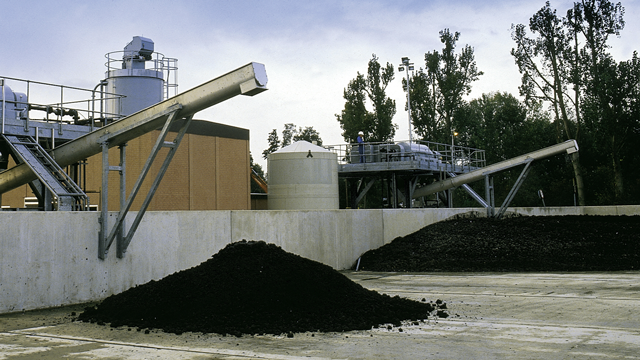
Sludge Treatment in Wastewater Management
Sludge treatment is integral to wastewater management and crucial for protecting public health and the environment. As communities and industries generate wastewater, treating this water to remove contaminants before it is returned to the environment is essential.
The sludge produced during treatment contains organic matter, pathogens, chemicals, and heavy metals. Proper treatment, disposal, or reuse of sludge is vital for environmental safety and resource recovery.
Solids handling routinely consumes a third to a half of a treatment plant’s operating budget while occupying a fraction of its footprint, and it is the part of the plant most likely to constrain what the liquid train can accomplish. This guide serves as the master reference for the full solids processing sequence, from the first concentration step through stabilization, water removal, thermal processing, energy recovery, and the equipment that moves material between them. The Subcategory Overview below maps each stage to its dedicated resource.
Key Takeaways
- Sludge treatment protects public health and the environment.
- The process includes primary and secondary treatment, digestion, dewatering, and disposal or reuse.
- Strict regulatory compliance is required to manage treated sludge safely.
Overview of Sludge Treatment in Wastewater
Sludge treatment is a critical component of the wastewater treatment process, focusing on managing the byproduct generated during water purification.
Importance of Sludge Treatment
Sludge treatment reduces environmental and health risks by stabilizing biosolids and neutralizing harmful pathogens and chemicals. Proper treatment minimizes risks while improving handling, transport, and disposal.
Critical Principles of Sludge Management
-
Safe handling and disposal
Ensures protection of human health and regulatory compliance. -
Volume reduction
Reduces disposal costs and improves processing efficiency. -
Stabilization
Reduces odors and decomposes organic matter, often via anaerobic digestion. -
Dewatering
Removes excess water using sand beds, centrifuges, or filter presses.
Subcategory Overview: The Solids Processing Sequence
Unlike most areas of treatment practice, solids handling follows a fixed order. Material is concentrated, stabilized, dewatered, and in some plants dried, with each step reducing volume and changing the character of what the next step receives. Energy recovery attaches to the stabilization step, and handling equipment spans the whole sequence. The subsections below follow that order.
The Solids Processing Train
Each stage removes water or destroys organic matter, and the performance of each is set by what the previous stage delivered.
Thickening
Thickening is the first concentration step, raising solids content from the 0.5 to 1 percent typical of waste activated sludge or the 3 to 5 percent of primary sludge to a combined 4 to 8 percent before stabilization. Gravity thickeners work well on primary sludge but poorly on biological solids; dissolved air flotation, gravity belt thickeners, and rotary drum thickeners handle waste activated sludge far better, generally with polymer conditioning. The volume reduction here is the largest of any single step in the train, because removing water at low solids content eliminates far more volume per pound removed than removing it later. Undersized thickening propagates through everything downstream, since digesters sized for thickened feed cannot achieve their design retention time on dilute sludge.
Digestion
Digestion stabilizes organic matter biologically, reducing volatile solids, destroying pathogens, and eliminating the odor and vector attraction that make raw sludge unmanageable. Anaerobic digestion operates without oxygen at mesophilic temperatures near 35 degrees Celsius with 15 to 30 day retention, typically destroying 45 to 60 percent of volatile solids while producing recoverable biogas. Aerobic digestion requires no heating and less operator attention but consumes aeration energy and yields no gas, which makes it the practical choice mainly at smaller facilities. Volatile acid to alkalinity ratio, temperature stability, and loading rate are the parameters that determine whether an anaerobic digester runs reliably or upsets.
Dewatering
Dewatering converts a pumpable slurry into a stackable cake, typically taking digested sludge from 2 to 4 percent solids to 18 to 30 percent depending on technology and conditioning. Centrifuges produce the driest cake from the smallest footprint at the highest energy cost; belt filter presses use less energy but require more operator attention and produce wetter cake; screw presses have gained ground for their low speed and low maintenance; plate and frame presses achieve the highest cake solids where batch operation is acceptable. Polymer conditioning governs performance more than machine selection does, and dose optimization is among the highest-return operator activities in the plant. Because haul cost scales with wet weight, every point of cake solids gained is money saved indefinitely.
Drying and Thermal Processing
Drying and thermal processing covers the routes that apply heat to what dewatering leaves behind. Thermal drying evaporates residual moisture to reach 90 percent or higher solids, producing a stable, storable pellet or granule suitable for beneficial use and cutting haul volume dramatically, at a substantial energy cost per pound of water removed. Beyond drying, the thermal family includes incineration, which destroys organics entirely and reduces solids to ash; thermal hydrolysis, applied ahead of digestion to improve volatile solids destruction and dewaterability; and emerging pyrolysis and gasification routes attracting attention for their potential to destroy contaminants that survive biological treatment. All thermal routes carry air emissions obligations and energy costs that must be weighed against the disposal alternative they replace.
Recovery and Handling
Two disciplines cut across the sequence: capturing value from what digestion produces, and moving material between every stage.
Biogas and Energy Recovery
Biogas and energy recovery turns the product of anaerobic digestion into usable energy rather than a flared waste stream. Raw digester gas typically contains 60 to 70 percent methane with a heating value near 600 Btu per cubic foot, and end uses range from simple boiler firing for digester heating through combined heat and power generation to upgrading for pipeline injection or vehicle fuel. Gas conditioning is what determines which of those is feasible, since hydrogen sulfide, siloxanes, and moisture will destroy engines and upgrading equipment if not removed. Co-digestion of high-strength organic waste such as fats, oils, and grease can substantially increase gas production and has become a meaningful revenue source at facilities with digester capacity to spare.
Sludge Handling and Management
Sludge handling and management covers the conveyance, storage, pumping, and odor control that connect every stage of the train, and it is where most solids-side operating problems actually originate. Progressive cavity and rotary lobe pumps move thickened sludge; screw conveyors, belt conveyors, and pneumatic systems move cake; storage silos and cake bins buffer between processing and hauling. Material characteristics change dramatically across the train, so equipment suited to a 2 percent slurry is entirely wrong for a 25 percent cake, and transition points are where plugging and bridging occur. Because this equipment is specialized and its failure halts the whole solids train, supplier service coverage, parts availability, and demonstrated experience with comparable material deserve real weight alongside first cost.
Primary Sludge Treatment
Primary sludge treatment is the first stage of solids management, where settleable solids are separated from liquid wastewater.
Primary Settling Tanks
Primary clarifiers use gravity to allow particulate matter to settle while clarified effluent flows to secondary treatment.
- Flow rate: Controlled to minimize turbulence
- Design: Rectangular or circular configurations
Benefits of Primary Sludge Removal
- Volume reduction: 30–40%
- Organic matter capture: 25–35%
Collected primary sludge is typically thickened to increase solids concentration and reduce handling costs.
Withdrawal frequency matters more here than operators often expect. Primary sludge turns septic within hours at warm temperatures, releasing hydrogen sulfide and dissolving organic matter back into the flow, which returns as an additional load on the biological process. Frequent short pumping cycles that keep the blanket shallow generally outperform infrequent long ones, even though the latter produce a thicker sludge.
Secondary Sludge Treatment
Secondary sludge treatment focuses on removing biological solids generated during biological wastewater treatment.
Activated Sludge Process
- Aeration: Promotes microbial digestion of organic matter
- Settling: Biomass separates in secondary clarifiers
- Waste sludge removal: Excess activated sludge is withdrawn
- Return sludge: Maintains active biomass concentration
Secondary Clarifiers
Secondary clarifiers allow biological solids to settle, separating treated effluent from excess biomass.
- Settling: Biomass separates by gravity
- Decanting: Clarified water exits the system
Waste activated sludge presents a very different handling problem from primary sludge. It leaves the clarifier at 0.5 to 1 percent solids, roughly a quarter the concentration of primary sludge, so it carries several times the volume per pound of dry solids. Its cellular structure also binds water far more tightly, which is why it thickens and dewaters poorly without conditioning and why gravity thickening, which works on primary sludge, performs badly on it. Sludge age influences this directly: older, more mineralized sludge generally dewaters better than young sludge from a low solids retention time process.
Sludge Production / Solids Calculator
Estimate dry solids production and rough polymer demand from flow and TSS assumptions.
Dry Solids Mass: – lb/day
Dry Solids Production: – dry tons/day
Estimated Polymer Use: – – – lb/day
Sludge Digestion
Sludge digestion stabilizes organic matter through microbial decomposition. The two primary digestion methods are aerobic and anaerobic digestion.
Aerobic digestion requires oxygen and is energy-intensive but produces a less odorous product.
Anaerobic digestion occurs without oxygen and produces biogas, offering renewable energy recovery. Typical digestion periods range from
15 to 60 days at
68–131°F.
Benefits of Sludge Digestion
- Volume reduction
- Pathogen destruction
- Biogas and nutrient recovery
Digestion Process Control
Anaerobic digestion depends on a partnership between acid-forming and methane-forming organisms that grow at very different rates, and process failures almost always trace to that imbalance. Acid formers work quickly and tolerate disturbance; methane formers grow slowly, work within a narrow pH band around 6.8 to 7.2, and recover slowly once inhibited. When loading rises faster than the methanogens can keep pace, volatile acids accumulate, alkalinity is consumed buffering them, pH falls, and the methanogens are further inhibited in a cycle that is difficult to reverse.
The volatile acid to alkalinity ratio is therefore the most useful single indicator of digester health, generally held below about 0.3 in stable operation. It responds days before pH does, because alkalinity absorbs the acid production until buffering capacity is exhausted, at which point pH falls suddenly. Temperature stability matters as much as temperature itself; methanogens tolerate a wide operating range but respond poorly to rapid change, and swings beyond roughly one degree Celsius per day are worth investigating. Ammonia released from protein degradation, hydrogen sulfide from sulfate reduction, and metals from industrial contributors are the common inhibitors.
Digestion Configurations
Single-stage mesophilic digestion remains the most widely applied configuration and the reference against which alternatives are compared. Two-stage arrangements separate active digestion from storage and gas collection. Temperature-phased digestion places a short thermophilic stage ahead of a mesophilic stage to improve pathogen destruction and volatile solids reduction. Thermal hydrolysis pretreatment applies heat and pressure to rupture cell walls before digestion, raising volatile solids destruction, allowing higher feed solids concentration, and substantially improving downstream dewaterability, at the cost of a significant capital and energy commitment.
Sludge Dewatering
Sludge dewatering reduces water content to minimize volume and disposal costs.
Common Dewatering Methods
- Centrifugation
- Belt filter presses
- Filter presses
- Drying beds
Key Considerations
- Initial solids concentration
- Chemical conditioning requirements
- Operational and energy costs
Conditioning and Cake Solids
Polymer conditioning governs dewatering performance more than the choice of machine does. High molecular weight cationic polymers bridge the negatively charged sludge particles into larger, stronger flocs that release water under mechanical force, and correct makedown matters as much as correct dose. Polymer must be wetted without clumping and given adequate aging time, commonly 30 to 60 minutes, for the chains to uncoil and become active. Underdosing leaves fine solids that escape into the filtrate or centrate and return to the head of the plant; overdosing restabilizes the suspension, wastes an expensive chemical, and can actually reduce cake solids.
Filtrate and centrate quality deserve attention alongside cake solids because that stream returns to the liquid train. A dewatering operation capturing 92 percent of solids sends the remaining 8 percent back to the aeration basin, adding load that the plant then treats a second time. Recycle streams from dewatering also carry high ammonia concentrations from digestion, and at plants with nutrient limits that sidestream can represent 15 to 25 percent of the total nitrogen load on the biological process even though it is a small fraction of the flow.
Selection and Specification Framework
Solids handling is sized from a mass balance rather than from flow, and each stage is specified against what the previous stage delivers. The sequence below reflects that.
Step 1: Build the Solids Mass Balance First
Nothing in the solids train can be sized without knowing how much dry solids the plant produces and where it comes from. Primary sludge production follows from influent TSS and primary capture efficiency; waste activated sludge follows from BOD removed across secondary treatment and the observed yield coefficient, which varies with solids retention time. The two streams have very different concentrations and dewatering characteristics, so the balance must track them separately before combining. Everything downstream, from thickener sizing to haul contract volume, derives from this calculation.
Step 2: Work the Numbers
A worked example carries a 5.0 MGD plant through the full train.
Plant: 5.0 MGD, 200 mg/L influent TSS, 200 mg/L influent BOD. Primary clarifiers capture 60 percent of TSS and remove 33 percent of BOD. Secondary yield 0.6 lb TSS per lb BOD removed.
Loads: TSS load is 5.0 × 200 × 8.34 ≈ 8,340 lb/day; BOD load is the same at 8,340 lb/day.
Primary sludge: 8,340 × 0.60 ≈ 5,004 lb/day dry solids. At 4 percent solids, that is 5,004 ÷ (0.04 × 8.34) ≈ 15,000 gallons per day.
Waste activated sludge: BOD reaching secondary is 8,340 × 0.67 ≈ 5,588 lb/day; at 0.6 yield, WAS is ≈ 3,353 lb/day dry solids. At 0.8 percent solids, that is ≈ 50,250 gallons per day — more than three times the primary volume for two thirds the mass.
Combined: ≈ 8,357 lb/day, or 4.18 dry tons per day, in about 65,250 gallons per day.
Thickening to 5 percent: 8,357 ÷ (0.05 × 8.34) ≈ 20,040 gallons per day, a 69 percent volume reduction with no mass removed at all.
Digestion: At 75 percent volatile solids and 55 percent VS destruction, 6,268 lb/day VS in and ≈ 3,447 lb/day destroyed. At roughly 15 ft³ biogas per lb VS destroyed, gas production is ≈ 51,700 ft³/day, or about 32,600 ft³/day of methane — roughly 31 MMBtu per day of recoverable energy. Remaining solids: ≈ 4,910 lb/day.
Dewatering at 22 percent cake: 4,910 ÷ 0.22 ≈ 22,320 lb/day wet, or 11.2 wet tons per day. At $60 per wet ton hauled and disposed, that is about $670/day, or roughly $244,000 per year.
Dewatering at 28 percent cake: the same dry solids becomes 17,530 lb/day, or 8.8 wet tons per day — about $526/day, or $192,000 per year. Six points of cake solids is worth roughly $52,000 annually at this plant, recurring indefinitely.
That last comparison is the most useful result in the calculation. Cake solids is the parameter with the largest recurring financial consequence anywhere in the solids train, and it is influenced by polymer optimization and machine selection far more than by anything in the liquid train.
Step 3: Match Thickening to the Sludge Type
Thickening technology should be selected against the stream it will actually receive. Gravity thickeners perform acceptably on primary sludge, which settles and compacts readily, and poorly on waste activated sludge, which does neither. Dissolved air flotation, gravity belt thickeners, and rotary drum thickeners all handle biological solids well, generally with polymer. Where the plant blends the two streams before thickening, the blend behaves more like the biological component than the primary component, so equipment should be selected on that basis rather than on the mass-weighted average.
Step 4: Choose Stabilization Against Energy and Staffing
Anaerobic digestion returns energy but demands close process control, heating, gas handling, and safety systems that a small utility may not be able to staff. Aerobic digestion is simpler and cheaper to build but consumes aeration energy continuously and yields nothing back. The break-even point depends on plant size, energy cost, and available operator expertise, and the honest question is not which process is superior but which one the facility can actually run well over twenty years.
Step 5: Confirm the Disposal Pathway Before Anything Else Is Final
The end use determines the required stabilization level, which determines the process, which determines the equipment. Land application requires meeting pathogen and vector attraction reduction requirements and, increasingly, contaminant criteria that vary by state. Landfill disposal requires meeting the receiving facility’s acceptance criteria, typically including a paint filter test the cake must pass. Incineration and thermal routes carry air permitting obligations. A solids train designed without a confirmed outlet is a project that treats successfully and then cannot dispose of what it produced.
Solids Processing Technology Comparison
| Technology | Stage | Typical Output Solids | Best-Fit Sludge | Polymer Demand | Key Limitation |
|---|---|---|---|---|---|
| Gravity thickener | Thickening | 4-8% | Primary sludge | None to low | Poor on waste activated sludge, septicity |
| Dissolved air flotation | Thickening | 3-5% | Waste activated sludge | Moderate | Recycle pumping and saturator energy |
| Gravity belt thickener | Thickening | 4-7% | Waste activated sludge, blends | Moderate | Belt wear, wash water demand |
| Rotary drum thickener | Thickening | 4-7% | Waste activated sludge | Moderate | Enclosed, limited visual monitoring |
| Centrifuge | Dewatering | 20-30% | Digested and undigested sludge | High | Energy, noise, wear on scroll and bowl |
| Belt filter press | Dewatering | 15-22% | Digested sludge | Moderate to high | Open equipment, odor, wash water |
| Screw press | Dewatering | 16-25% | Digested sludge, small plants | Moderate | Lower throughput per unit |
| Plate and frame press | Dewatering | 30-45% | Where highest cake solids required | High, often with lime or ferric | Batch operation, labor intensive |
| Drying beds | Dewatering | Variable, weather dependent | Small plants, favorable climate | None | Land area, seasonal, labor to remove |
| Thermal dryer | Drying | 90%+ | Dewatered cake for beneficial use | Not applicable | High energy per lb water evaporated |
| Pathway | What It Achieves | Governing Requirement | Principal Constraint |
|---|---|---|---|
| Anaerobic digestion | VS reduction, pathogen reduction, biogas | Retention time, temperature, VA/alkalinity | Process control burden, gas safety systems |
| Aerobic digestion | VS reduction, pathogen reduction | Retention time and temperature product | Continuous aeration energy, no gas return |
| Composting | Stabilization, pathogen reduction, product value | Time at temperature, turning frequency | Land area, bulking agent supply, odor |
| Lime stabilization | Rapid pathogen and vector control | pH held above 12 for a defined period | Adds mass, chemical cost, no VS reduction |
| Land application | Beneficial reuse, nutrient value | Pathogen and vector attraction reduction, pollutant limits | Site availability, seasonal windows, acceptance |
| Landfill | Disposal | Facility acceptance criteria, paint filter test | Tipping fee, haul distance, wet weight |
| Incineration | Volume reduction to ash, energy recovery | Air emissions permitting | Capital and operating cost, ash disposal |
Sludge Disposal and Management
Land Application
Stabilized biosolids can be applied to land to improve soil fertility, subject to strict monitoring.
Application rates are set agronomically, typically by the nitrogen requirement of the crop, so that nutrients are taken up rather than leached to groundwater. The regulatory framework distinguishes between classes of biosolids based on the degree of pathogen reduction achieved, with the more thoroughly treated class subject to fewer site restrictions on crop type, public access, and grazing. Storage capacity is a practical requirement rather than an option, since application windows close during wet weather, frozen ground, and active growing periods, and a facility without storage has no outlet during those periods.
Landfill Disposal
Used when sludge contains high pollutant levels unsuitable for land application.
Landfill acceptance generally requires the cake to pass a paint filter liquids test, which makes dewatering performance a compliance requirement rather than only an economic one. Because tipping fees and haul costs are charged on wet weight, the disposal cost scales directly with cake moisture, and the difference between a well-optimized and a poorly optimized dewatering operation is visible on every invoice.
Incineration
Reduces sludge volume significantly and may recover energy under controlled conditions.
Fluidized bed and multiple hearth furnaces are the conventional configurations, both requiring air emissions control and permitting. Autogenous combustion, where the sludge burns without supplemental fuel, depends on achieving sufficient cake solids and volatile content, which links furnace economics directly back to dewatering performance upstream.
Composting
Produces a humus-like material suitable for soil amendment.
Aerated static pile, windrow, and in-vessel configurations differ in footprint, control, and odor containment. All require a carbon-rich bulking agent such as wood chips or yard waste, and securing a reliable bulking supply is often the practical constraint. Pathogen reduction is achieved by holding the pile above a specified temperature for a defined period, which requires monitoring and documentation rather than merely allowing the pile to heat.
Sludge Treatment Technologies
Innovative Dewatering Methods
Technologies such as thermal drying and advanced centrifugation improve solids reduction and transport efficiency.
Enhanced Digestion Techniques
Methods such as temperature-phased digestion and co-digestion improve biogas yield and sludge stabilization.
Emerging Contaminant Considerations
Biosolids management is under active regulatory development because conventional treatment does not destroy several classes of persistent contaminants, PFAS most prominently. These compounds partition preferentially to solids, so concentrations in biosolids are typically far higher than in the liquid effluent, and neither anaerobic digestion nor conventional thermal drying degrades them. Several states have introduced or are developing limits affecting land application, and acceptance policies at landfills and application sites have been tightening.
The practical consequence for a utility is that a disposal pathway secure today may not be secure over the life of a solids facility, which argues for retaining flexibility rather than committing entirely to a single outlet. Source control through pretreatment enforcement is the only intervention that reduces the load at origin. Because requirements in this area continue to change at both federal and state level, current obligations should be confirmed with the primary regulatory agency rather than taken from any published summary.
Odor Control and Site Considerations
Solids handling generates the great majority of a treatment plant’s odor complaints, and odor is the issue most likely to constrain what a facility can do with its site. Design attention here protects the utility’s relationship with its neighbors as directly as any treatment decision.
Where Odor Originates
Odor in the solids area is a septicity problem before it is a ventilation problem. Hydrogen sulfide forms when sulfate-reducing bacteria work in the absence of oxygen and nitrate, which describes conditions in a primary sludge hopper, a thickener blanket held too long, a full storage tank, and any line where material sits stagnant. Reduced sulfur compounds and organic nitrogen compounds from protein degradation add to the mixture. Because human detection thresholds for hydrogen sulfide sit in the low parts per billion, far below any health-based limit, the target is set by community response rather than by regulation.
The practical implication is that residence time control does more for odor than treatment of the resulting air. Frequent short withdrawal cycles from primary clarifiers, thickener blankets kept shallow, storage sized for the real interruption rather than for maximum accumulation, and lines flushed rather than left standing all reduce generation at source. Chemical addition with nitrate salts or iron salts to the liquid phase suppresses sulfide formation directly and is often cheaper than scrubbing the air afterward.
Containment and Treatment of Foul Air
Where generation cannot be eliminated, the sequence is containment, collection, and treatment. Covering open tanks and enclosing conveyors and dewatering equipment concentrates the odor into a manageable air volume; without containment, the air volume requiring treatment becomes impractically large. Collected foul air is then treated by biofilter, chemical scrubber, or activated carbon depending on concentration, variability, and available space. Biofilters handle steady, moderate loadings economically but need media replacement and moisture control. Chemical scrubbers handle high and variable concentrations reliably at higher operating cost. Carbon suits polishing duty and intermittent low loadings.
Site Layout and Access
Several layout decisions in the solids area are difficult and expensive to reverse. Truck access and turning radius for haul vehicles determine whether loading is efficient or a daily obstruction, and cake load-out should sit where trucks can reach it without crossing the plant. Prevailing wind direction relative to the nearest sensitive receptor should inform where open or odor-generating processes are placed. Equipment removal paths matter as much as installation paths, since a centrifuge or dewatering unit will be pulled for major service several times over its life and a layout that requires dismantling a wall to do so will be regretted. Adequate space for a second haul container, so that loading continues while a full one awaits pickup, is a small allowance that prevents a recurring operational problem.
Field Notes
The observations below recur across solids handling facilities regardless of the technologies installed.
Commissioning Considerations
Anaerobic digesters require the longest and most careful startup of anything in a treatment plant. Seeding from an operating digester and feeding at a fraction of design loading while volatile acids, alkalinity, pH, and gas production are tracked daily is the reliable approach, and reaching stable operation commonly takes six to twelve weeks. Attempting to shorten that by loading aggressively is the most common cause of a digester that never stabilizes. Dewatering equipment should be commissioned with polymer optimization as a scheduled activity rather than left to be sorted out later, since the dose established in the first weeks often persists for years by default. Gas safety systems, including flame arrestors, pressure relief, and gas detection, must be tested before any gas is produced rather than after.
Common Specification Mistakes
Several errors appear repeatedly. Thickening is undersized or omitted, so digesters receive dilute feed and cannot achieve design retention time at design flow. Sludge storage is minimized, leaving no buffer between processing and hauling and no capacity to hold material through a closed land application window. Dewatering is sized on average production without accounting for the fact that most facilities run it on a weekday shift rather than continuously, which requires roughly a third more capacity than the daily average suggests. Recycle streams from thickening and dewatering are omitted from the liquid train mass balance, so the aeration basin receives an ammonia load nobody designed for. Conveyance is specified for one material condition even though cake and slurry behave completely differently at the transitions.
Pro Tip
Run a polymer optimization trial at least annually, and after any change in sludge age, digester performance, or polymer supplier. Dose is typically set once at commissioning and then left alone, while the sludge it was optimized for changes continuously with season, industrial contributions, and process adjustments upstream. A trial costs a few days of operator attention and routinely finds either that dose can be reduced at equal cake solids, saving chemical directly, or that a different dose raises cake solids by several points, saving haul cost indefinitely. On the 5.0 MGD example above, six points of cake solids was worth roughly $52,000 per year. Few activities in a treatment plant return that much for that little effort.
Operations and Maintenance Across the Train
Maintenance demand differs sharply across the solids train. Gravity thickeners require little beyond mechanism upkeep and blanket monitoring, though septicity control demands attention in warm weather. Anaerobic digesters concentrate effort on heating systems, mixing equipment, gas handling, and grit accumulation that progressively steals working volume and eventually requires cleaning. Centrifuges are the most maintenance-intensive item in most plants, with scroll and bowl wear driven directly by grit content in the feed. Belt presses demand daily operator attention for belt tracking, spray nozzle cleaning, and washwater management. Conveyance equipment fails most often at transitions where material character changes, and those points deserve inspection access designed in from the start.
Troubleshooting by Symptom
Most solids problems resolve to a short list. Falling digester gas production with stable feed indicates either declining volatile solids destruction or a feed concentration change, and checking VS in and VS out separates them. Rising volatile acid to alkalinity ratio precedes a pH excursion by days and should be treated as the actionable signal rather than waiting for pH to move. Declining cake solids at constant polymer dose usually means the sludge has changed rather than the machine, most often through a shift in sludge age or a digestion upset. Poor filtrate or centrate quality points to polymer underdose or a machine adjustment issue, and it matters because those solids return to the head of the plant. Odor complaints in the solids area almost always trace to septicity from inadequate withdrawal or storage rather than to the treatment process itself.
Common Mistake
Designing the solids train as an afterthought to the liquid train, then discovering the two are coupled in both directions. Solids handling receives what the liquid train produces, so a decision to operate at longer sludge age changes both the quantity and the dewaterability of what arrives. Recycle streams flow the other way: filtrate, centrate, and thickener overflow return to the head of the plant carrying solids the dewatering equipment failed to capture and, from digestion, an ammonia load that at a nutrient-limited facility can represent 15 to 25 percent of total nitrogen even though it is a small fraction of the flow. A plant that models the liquid train without the sidestream return, or sizes solids equipment without knowing the intended sludge age, has modeled something other than the facility it is building.
Design Details and Standards
Sizing Methodology Overview
Solids facility sizing proceeds from a mass balance, not from flow. Establish primary sludge production from influent TSS and capture efficiency, and waste activated sludge production from BOD removed and the yield coefficient at the design sludge age. Carry both streams separately at their respective concentrations, since volume rather than mass governs tank and pump sizing. Thickener sizing follows from solids loading rate for gravity units or hydraulic and solids loading for mechanical units. Digester volume follows from volatile solids loading rate and required retention time at the minimum operating temperature. Dewatering capacity follows from daily solids production divided by the intended operating hours per week, not by 24 hours per day. Storage follows from the longest expected interruption in the disposal outlet.
Key Parameters by Stage
The governing parameters differ at each stage. Thickening is characterized by solids loading rate, hydraulic loading rate, polymer dose, and capture efficiency. Anaerobic digestion is characterized by volatile solids loading rate, hydraulic retention time, temperature, volatile acid to alkalinity ratio, and volatile solids destruction. Dewatering is characterized by solids throughput, polymer dose per dry ton, cake solids, and capture efficiency. Thermal drying is characterized by water evaporation rate and energy input per pound of water removed. Applying a parameter from one stage to another, or comparing technologies on cake solids without also comparing capture efficiency and polymer demand, produces misleading conclusions.
Applicable Standards and References
Biosolids use and disposal in the United States are governed by 40 CFR Part 503, which establishes pollutant limits, pathogen reduction requirements defining Class A and Class B biosolids, vector attraction reduction requirements, and monitoring, recordkeeping, and reporting obligations. Incineration of sewage sludge falls under 40 CFR Part 503 Subpart E together with Clean Air Act requirements, and landfill disposal under 40 CFR Part 258. Design practice draws on the Recommended Standards for Wastewater Facilities, commonly the Ten States Standards, and on the Water Environment Federation Manual of Practice series, particularly the design and operation manuals covering solids processing and the dedicated guidance on anaerobic digestion. Analytical methods follow Standard Methods for the Examination of Water and Wastewater and 40 CFR Part 136. Digester gas systems fall under NFPA 820 for hazardous location classification in wastewater facilities, together with NFPA 70. Equipment standards from ANSI, ASME, and ASTM govern mechanical components. Because state requirements frequently exceed the federal baseline and biosolids regulation is under active development, current obligations should be confirmed with the primary regulatory agency.
Specification Checklist
- Build a solids mass balance tracking primary and secondary streams separately at their design concentrations.
- State the design sludge age explicitly, since it drives both quantity and dewaterability of waste activated sludge.
- Confirm the disposal pathway in writing before finalizing stabilization and dewatering selections.
- Determine the required biosolids class from the intended end use and select stabilization accordingly.
- Size thickening against the stream it will receive, not against a mass-weighted blend average.
- Size digesters on volatile solids loading rate and retention time at minimum operating temperature.
- Size dewatering on intended operating hours per week rather than on a 24-hour daily average.
- Include recycle streams from thickening, digestion, and dewatering in the liquid train mass balance, with ammonia quantified.
- Provide sludge storage sized for the longest expected interruption in the disposal outlet.
- Specify polymer systems with makedown, aging time, and dose control appropriate to the equipment served.
- Specify conveyance separately for slurry and cake conditions, with inspection access at every transition.
- Define gas handling, safety, and hazardous area classification for any anaerobic digestion installation.
- Define redundancy and firm capacity, including whether a dewatering outage forces a plant constraint.
- Develop a present worth comparison including polymer, energy, haul, tipping fees, and equipment replacement.
Regulations and Compliance
Sludge treatment is governed by strict environmental and public health regulations.
Local and Global Standards
In the U.S., sludge management is regulated under 40 CFR Part 503, covering pathogen reduction, pollutant limits, and operational requirements.
Environmental and Health Safety
- Pathogen control
- Heavy metal limitations
- Odor and vector attraction reduction
Frequently Asked Questions
What methods are employed to remove sludge from wastewater systems?
Wastewater systems rely on several methods to remove sludge, including gravity sedimentation, flotation, centrifugation, and filtration. These processes separate solids from the water, enabling further treatment or disposal of the sludge.
What constitutes an effective sludge treatment strategy?
An effective sludge treatment strategy reduces sludge volume, stabilizes organic materials, and sanitizes pathogens to minimize environmental impact. It often includes thickening, digestion, dewatering, and thermal processes to produce a manageable and safe end product.
Which sludge treatment process is most prevalent in waste management?
Anaerobic digestion is the most prevalent sludge treatment process in waste management, transforming organic matter in sludge into biogas, which can be used for energy and leaving a nutrient-rich material that can be safely disposed of or used as fertilizer.
Can you explain the stages of sludge treatment in primary wastewater treatment?
During primary wastewater treatment, sludge is predominantly processed through screening and sedimentation. Screenings remove large solids, whereas sedimentation allows sludge to settle, which is then scraped for further treatment.
What are the different technologies available for wastewater sludge management?
Technologies for wastewater sludge management include anaerobic digestion, aerobic digestion, composting, incineration, and advanced thermal processes like pyrolysis and gasification. Each technology is designed to stabilize the sludge and reduce potential hazards.
What examples illustrate the practical application of sludge treatment processes?
The practical application of sludge treatment processes can be seen in facilities that integrate anaerobic digestion to produce biogas or in regions with water scarcity, where treated sludge is used for land application to improve soil health and reduce the need for synthetic fertilizers.
Key Takeaways
- Solids handling follows a fixed sequence — concentrate, stabilize, dewater, and sometimes dry, with each stage’s performance set by what the previous one delivered.
- Size from a mass balance, not from flow — primary and waste activated sludge differ by a factor of four or more in concentration, so volume and mass must be tracked separately.
- Cake solids is the highest-value operating parameter — six points of cake solids was worth roughly $52,000 per year at the 5.0 MGD example plant, recurring indefinitely.
- Polymer optimization beats equipment replacement — conditioning governs dewatering performance more than machine selection does, and dose set once at commissioning drifts out of alignment as sludge changes.
- Volatile acid to alkalinity is the digester’s early warning — it moves days before pH does, which makes it actionable while pH is merely diagnostic after the fact.
- Recycle streams couple solids back to the liquid train — dewatering sidestreams can carry 15 to 25 percent of a plant’s total nitrogen load despite being a small fraction of the flow.
- Confirm the disposal outlet before designing the train — the end use sets the required stabilization class, and biosolids acceptance policies have been tightening rather than loosening.
Conclusion
Sludge treatment receives a fraction of the attention given to the liquid train and consumes a disproportionate share of the operating budget, which makes it the part of a treatment plant where careful design pays back most reliably. The sequence is fixed and the physics are unforgiving: water removed early is cheap to remove, water still present at the haul truck is expensive, and organic matter destroyed in a digester is organic matter nobody has to pay to transport.
The design order that reflects that reality starts with a mass balance and ends with a confirmed disposal outlet. Establish how much dry solids the plant produces and from which stream. Confirm where it will go and what stabilization class that outlet requires. Size thickening against the sludge it will actually receive, digestion against volatile solids loading at the coldest expected temperature, and dewatering against the hours the facility will really operate rather than a daily average. Then model the recycle streams back into the liquid train, because they are part of the plant whether or not the design acknowledged them.
Each subcategory linked above develops the detail behind those choices, whether the question is which thickening technology suits a given sludge, how a digester is controlled and what its warning signs look like, which dewatering machine and conditioning regime deliver the cake solids a haul contract rewards, what the thermal routes offer and cost, how biogas is conditioned for a chosen end use, or what the equipment moving material between stages must be specified to handle.