
Top 10 Ozone Systems Manufacturers for Water and Wastewater
Introduction to Ozone System Engineering
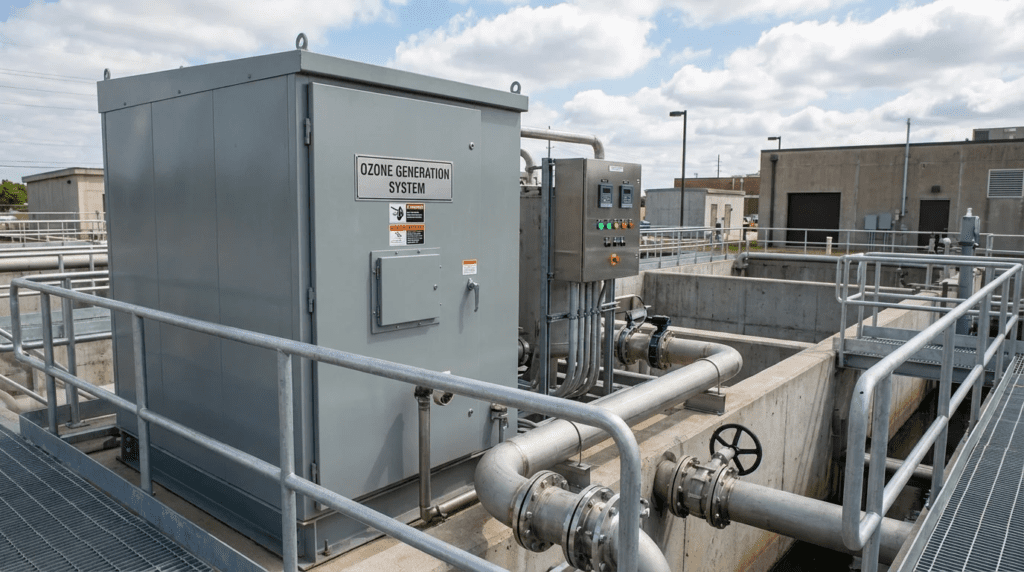
Ozone generation is one of the most chemically potent yet operationally complex technologies in the water treatment arsenal. Unlike UV or chlorination, ozone is generated on-site, requiring a sophisticated integration of power supply, gas preparation, cooling thermodynamics, and mass transfer mechanics. For municipal and industrial engineers, the challenge is rarely just buying a generator; it is specifying a cohesive process train that balances high concentration yields with energy efficiency. A common pitfall in system design is focusing solely on the capital cost of the generator vessel while ignoring the lifecycle implications of liquid oxygen (LOX) consumption, dielectric maintenance, and mass transfer efficiency.
When evaluating the Top 10 Ozone Systems Manufacturers for Water and Wastewater, engineers must look past the marketing brochures and interrogate the equipment’s thermal management and power supply architecture. These systems are critical for applications ranging from potable water disinfection and taste/odor control to micropollutant oxidation and sludge reduction in wastewater plants. In industrial settings, they are vital for pharmaceutical wastewater treatment and high-purity process water.
This article addresses the equipment side of the decision. The chemistry and process design that determine whether ozone is the right oxidant in the first place belong to ozonation as a treatment process, and both sit within the wider disinfection and advanced treatment landscape that governs how a facility meets its pathogen and micropollutant obligations. Engineers should settle the process question before the equipment question, because ozone demand, contact time, and required residual determine generator capacity, and no amount of vendor comparison can substitute for that groundwork.
The comparison most often made at the selection stage is against ultraviolet light. Both are on-site, chemical-free at the point of application, and both avoid the disinfection byproducts associated with chlorine, but they behave differently. Ozone provides a measurable residual and oxidizes taste, odor, color, and micropollutants; UV systems provide no residual and no oxidation but achieve high log reduction of chlorine-resistant protozoa at lower capital and operating cost. Facilities needing disinfection alone frequently land on UV; facilities needing oxidation alongside disinfection land on ozone.
The consequences of poor selection are severe: dielectric tubes can crack under thermal stress, power supply units (PSUs) can fail due to harmonic distortion, and inefficient injection systems can waste tons of oxygen annually. This article provides a specification-safe, technical breakdown of the Top 10 Ozone Systems Manufacturers for Water and Wastewater, guiding engineers through selection criteria, failure modes, and operational realities.
Subcategory Overview
Ozone systems research divides into two distinct paths: understanding the generation hardware itself, and understanding how that hardware is deployed and integrated in a working treatment train. The subsections below outline what each area covers and when it becomes the governing consideration.
Ozone Generator Fundamentals
Before any vendor comparison is meaningful, an engineer needs a working model of how the machine produces ozone, which is the ground covered by ozone generators as a subject in their own right. The physics is corona discharge: oxygen passes through a narrow gap between a high-voltage electrode and a ground electrode separated by a dielectric barrier, and the electrical discharge splits molecular oxygen so that the fragments recombine into ozone. Everything difficult about the technology follows from that description. The dielectric barrier is the primary wear component and the primary failure mode. Roughly 85 to 90 percent of the input power leaves as heat rather than ozone, which is why cooling water temperature has a direct and immediate effect on yield. Gap uniformity determines efficiency, which is why manufacturing precision differentiates one vessel from another far more than marketing claims do. Understanding generator architecture, dielectric materials, power supply frequency, and the relationship between concentration and specific power is the foundation for reading any manufacturer comparison critically.
Ozone Systems Applications
The generator is only one component of what engineers call the ozone island, and coverage of ozone generators in wastewater treatment addresses the applied end: where ozone is dosed in a treatment train, what it is being asked to accomplish, and how the gas actually gets into the water. This area encompasses the contacting hardware, including fine bubble diffusers and the ceramic diffuser stones that distribute gas in the contact basin, the geometry of multi-chamber contactors, and side-stream injection with venturi and degassing arrangements. It also covers the application-specific questions that determine dose: pre-oxidation for iron and manganese, taste and odor control, color removal, disinfection credit, micropollutant oxidation ahead of biological filtration, and bromate formation control in bromide-bearing source water. Two plants with identical generators can perform very differently based on contacting design alone, which is why this side of the subject deserves separate study from the hardware.
How to Select and Specify Ozone Systems
Selecting an ozone system requires a multi-disciplinary approach involving chemical, mechanical, and electrical engineering disciplines. The specification must define the boundary conditions of the “ozone island,” including feed gas preparation, generation, contacting, and destruction.
Duty Conditions & Operating Envelope
The operating envelope of an ozone system is defined by more than just maximum ozone production (lbs/day or kg/hr). Engineers must specify the required turndown ratio and the relationship between concentration and gas flow.
- Flow Pacing vs. Residual Control: Define whether the system will operate based on a compound loop (flow + residual) or simple flow pacing. High-frequency generators typically offer better turndown (100:1) compared to older medium-frequency designs, which is critical for handling diurnal flow variations in wastewater plants.
- Concentration Requirements: Modern systems typically produce ozone at concentrations between 10% and 14% by weight (wt%) when fed with LOX. Higher concentrations reduce gas volume, improving mass transfer efficiency and reducing contactor size, but may increase electrode stress.
- Gas Source: Specify whether the system will utilize Liquid Oxygen (LOX), On-site Oxygen Generation (VPSA/PSA), or Air Feed. LOX systems are standard for large municipal plants due to higher yields, while air feed is largely obsolete for new large-scale installations due to high energy costs and nitric acid formation concerns.
Materials & Compatibility
Ozone is an aggressive oxidant that degrades common elastomers and metals rapidly. Material selection is non-negotiable.
- Wetted Parts: All generator outlets, piping, and injection quills must be 316L Stainless Steel (minimum) or Titanium. Welds must be passivated to prevent corrosion initiation sites.
- Elastomers: Standard rubber (EPDM, Buna-N) will embrittle and fail within hours or days. Specifications must require PTFE (Teflon) or specific grades of FKM (Viton) rated for high-concentration ozone service.
- Civil Structures: Concrete contact tanks require specialized ozone-resistant coatings or linings. Ozone gas attacks the cement paste, leading to aggregate exposure. High-quality epoxy liners or integrated stainless steel baffles are recommended.
Hydraulics & Process Performance
The efficiency of the system is largely dictated by how effectively ozone gas is dissolved into the water stream.
- Gas-to-Liquid Ratio (G/L): A critical design parameter. Lower gas flow rates (resulting from high-concentration generators) allow for lower G/L ratios, which generally improves transfer efficiency.
- Mass Transfer Systems: Engineers must choose between fine bubble diffusers (passive, requires deep tanks for contact time) and side-stream injection (active, uses venturi injectors and degassing separators). Side-stream injection is preferred for retrofit applications with shallow tanks, offering transfer efficiencies exceeding 95%.
- Head Loss: Side-stream injection systems require booster pumps, adding to the hydraulic grade line (HGL) considerations and energy consumption calculations.
Oxidation Duty and AOP Configurations
A growing share of municipal ozone installations are not sized for disinfection at all. Where the objective is destruction of taste and odor compounds, pharmaceuticals, 1,4-dioxane, or other constituents resistant to ozone alone, the system is configured as an advanced oxidation process by adding hydrogen peroxide or UV to drive hydroxyl radical formation. This changes the specification materially. Peroxide dosing shifts the design point from ozone residual to applied ozone dose, since the radicals consume the residual almost immediately; contactor geometry moves toward rapid mixing rather than plug flow; and disinfection credit generally has to be earned elsewhere in the train. Engineers should establish whether the duty is disinfection, oxidation, or both before sizing the generator, because the three lead to different capacity and control requirements from the same nominal water quality target.
Installation Environment & Constructability
Ozone generators are sensitive to ambient conditions and require significant support infrastructure.
- Ambient Ozone Monitoring: Safety codes require ambient monitors interlocked with the HVAC system and generator power. Leaks must trigger immediate shutdown and high-rate ventilation.
- Cooling Water: High-concentration ozone generation is an exothermic process. Approximately 85-90% of the input power is converted to heat. Specifications must define the cooling water loop temperature (typically < 70°F / 20°C) and pressure. High cooling water temperatures directly degrade ozone yield.
- Space Requirements: Beyond the generator skid, allocate space for the LOX tank farm (with required setbacks), vaporizer array, nitrogen boost skids (if required), and destruct units.
Reliability, Redundancy & Failure Modes
The “N+1” redundancy philosophy is standard, but the implementation varies.
- Dielectric Technologies: The core failure mode is the dielectric barrier. Glass dielectrics offer high precision but can be fragile during maintenance. Ceramic dielectrics are robust but may have different thermal characteristics. Specifications should require a Mean Time Between Failure (MTBF) analysis for the electrode assemblies.
- PSU Redundancy: Some manufacturers offer modular PSUs where a single module failure reduces capacity rather than tripping the entire generator. This is a superior specification for critical disinfection applications.
- Moisture Intrusion: The quickest way to destroy a generator is dew point breakthrough in the feed gas. Redundant dew point monitors with voting logic are recommended to trip the system before nitric acid forms inside the vessel.
Lifecycle Cost Drivers
The purchase price is often only 20-30% of the 20-year total cost of ownership (TCO).
- Power Consumption: Measured in kWh per lb (or kg) of ozone produced. Look for values in the range of 3.5 to 5.0 kWh/lb for LOX-fed systems.
- Oxygen Costs: This is often the largest OPEX driver. A generator that produces 12% concentration versus 10% can save significant LOX costs over a decade.
- Maintenance Labor: Consider the labor hours required to clean or replace dielectrics. Horizontal vessel designs with easy access doors are preferable to vertical designs requiring cranes for tube bundle removal.
Comparison of Top 10 Ozone Systems Manufacturers for Water and Wastewater
The following tables provide an engineering comparison of the leading manufacturers in the global market. These assessments are based on equipment architecture, scalability, and typical application fit, rather than marketing claims. Table 1 focuses on the major OEMs often seen in municipal and large industrial specifications. Table 2 outlines the application suitability for different generator types.
| Manufacturer | Core Technology / Dielectric | Primary Strengths | Considerations & Limitations | Typical Application Scope |
|---|---|---|---|---|
| Veolia (Ozonia) | Glass & Ceramic Options (Intelligent Gap System) | Massive install base; high capacity single-vessel units; advanced PSU modulation. | Large footprint for biggest units; glass dielectrics require careful handling during maintenance. | Large Municipal WTP/WWTP |
| Xylem (Wedeco) | Effizon® evo 2 (Glass) | High efficiency electrodes; virtually maintenance-free electrode design (no cleaning required); compact PSU. | Proprietary parts dependency; higher initial CAPEX for premium technology. | Municipal & Industrial AOP |
| De Nora | Ceramic & Glass variants | Strong legacy (Capital Controls); robust vessel construction; flexible skid integration. | Technology evolution has been slower than some competitors; heavy focus on custom engineering. | Municipal Water |
| Metawater | Ceramic Dielectrics | Extremely durable ceramic dielectrics; high resistance to thermal shock; long electrode life (10+ years). | Lower ozone concentration peaks compared to some glass competitors; limited presence in some Western markets. | Wastewater Reuse & Municipal |
| Mitsubishi Electric | Glass-lined Steel | High reliability; uniform discharge gaps due to precision manufacturing; dense power output. | Very specific maintenance protocols; typically requires specialized support. | High-Purity Water & Municipal |
| Primozone | Aluminum Reactor / Anodized | Very high concentration (up to 20%); modular “server rack” design; inherent redundancy; small footprint. | Not a traditional ASME pressure vessel design (multiple small reactors); higher back-pressure requirements. | Industrial & Compact Municipal |
| Suez (Now Veolia) | Various (Legacy Ozonia) | Deep process integration knowledge; turnkey project capabilities. | Consolidated under Veolia; support channels for legacy Suez-specific non-Ozonia gear may vary. | Turnkey Projects |
| Chart Water (BlueInGreen) | Dissolved Ozone Injection | Focus on the dissolution method (CDOG); extremely high transfer efficiency; skid-mounted plug-and-play. | Primarily an integrator of generation + injection; excellent for side-stream applications but distinct from vessel OEMs. | Wastewater Force Mains & Industrial |
| Evoqua (Xylem) / Pacific Ozone | Air-cooled & Water-cooled | Specializes in integrated, skid-mounted industrial systems; user-friendly controls; rapid deployment. | Limited capacity for massive municipal infrastructure; lower concentration ranges than large LOX units. | Industrial Process & Food/Bev |
| Spartan Environmental | Sparkan Series | Integrated turnkey skids; robust American manufacturing; focuses on complete system responsibility. | Focuses on small to mid-range municipal and industrial; not typically competing for mega-plant infrastructure. | Small/Mid Municipal & Remediation |
| Application Scenario | Preferred Feed Gas | Key Constraint | Recommended System Topology | Critical Specification Parameter |
|---|---|---|---|---|
| Municipal Drinking Water (Taste/Odor) | LOX | OPEX (Oxygen Cost) | Large vessel, water-cooled, side-stream injection | Specific Power (< 4.0 kWh/lb) |
| Wastewater Reuse (Indirect Potable) | LOX | Bromate Formation & Pathogen Log Reduction | AOP (Ozone + Peroxide), multi-stage contactors | CT Value Validation & Dose Control |
| Industrial Process Water (Food/Bev) | Concentrated Oxygen | Footprint & Purity | Compact modular skids (e.g., Primozone type) | Stainless Steel sanitary finish & FDA compliance |
| Small Municipal / Remote Site | LOX or PSA | Operator Availability | Skid-mounted with remote telemetry | Automated cleaning & extended service intervals |
Engineer & Operator Field Notes
Successful ozone projects depend heavily on what happens after the purchase order is signed. Field experience highlights several areas where theoretical design clashes with operational reality.
Commissioning & Acceptance Testing
Commissioning an ozone system is hazardous and requires strict protocols. The Factory Acceptance Test (FAT) should verify power consumption and ozone concentration at full load, but the Site Acceptance Test (SAT) verifies the integration.
- Dew Point Verification: Before powering the dielectrics, the feed gas dew point must be verified below -60°C (-76°F). A common failure during commissioning is rushing this drying phase, leading to nitric acid formation immediately upon startup.
- Leak Testing: Do not rely solely on ambient monitors. Use “snoop” (liquid leak detector) on all fittings, but be aware that some soap solutions are incompatible with oxygen service standards. Use oxygen-safe leak detection fluids.
- Destruct Unit Performance: Verify that the off-gas destruct unit is functioning under maximum hydraulic flow conditions. High water levels in contactors can carry over moisture into the destruct catalyst (Manganese Dioxide/Copper Oxide), permanently deactivating it.
Pro Tip: Thermal Shock Prevention. Never introduce cooling water to a hot ozone generator vessel that has been running without flow. Conversely, ensure cooling water is flowing before energizing the dielectrics. Thermal shock is the leading cause of glass dielectric cracking.
Common Specification Mistakes
In analyzing the Top 10 Ozone Systems Manufacturers for Water and Wastewater, we see consistent errors in how engineers write specifications for these vendors.
- Ignored Turndown Requirements: Specifying a single design point often results in a system that cycles on/off violently during low flow conditions. Specify a required turndown (e.g., 10:1 or 20:1) and force manufacturers to demonstrate how they achieve it (e.g., PSU frequency modulation vs. shutting down banks of tubes).
- Materials Mismatch: Specifying 304SS for ozone piping is a critical error. 316L is the minimum standard. Furthermore, forgetting to specify “Oil Free and Cleaned for Oxygen Service” for LOX piping leads to fire hazards.
- Cooling Water Temperature Assumptions: Designing for average annual water temperature instead of peak summer temperature. If the cooling water hits 85°F, ozone production capacity can drop by 15-20% depending on the manufacturer, potentially violating permit limits during the season when disinfection is most critical.
- Guaranteeing Production Without Stating Conditions: An ozone output guarantee is meaningless unless the specification fixes the feed gas source and purity, the feed gas dew point, the cooling water temperature and flow, and the concentration at which output is measured. Vendors will otherwise define those conditions to suit the guarantee, and the shortfall only appears at site acceptance.
- Omitting the Destruct Unit From the Performance Basis: Off-gas destruction is frequently specified as a catalog item rather than as a performance requirement tied to maximum contactor off-gas flow and concentration. An undersized or poorly located destruct unit becomes the constraint on the whole system and is expensive to correct after installation.
Common Mistake: Sizing the generator from average water quality data. Ozone demand is driven by organic carbon, iron, manganese, and bromide, all of which move seasonally, and in surface water sources the annual peak can be two to three times the annual mean. A generator sized on the average will meet its guarantee in the FAT and fall short in the one month of the year when source water quality is worst. Bench-test the immediate ozone demand across at least a full seasonal cycle, size on the peak, and specify turndown adequate to run efficiently the rest of the year.
O&M Burden & Strategy
Maintenance strategies vary significantly between the top manufacturers.
- Dielectric Cleaning: Some manufacturers require annual removal and cleaning of glass tubes to remove dust or deposits. Others use a “polishing” electrical discharge or sealed designs that claim zero maintenance. Verify the labor hours associated with pulling 100+ dielectric tubes.
- Filter Replacement: Feed gas filters and cooling water strainers are the first line of defense. Clogged cooling strainers create hot spots in the vessel.
- PSU Capacitors: Inverter-based power supplies have electrolytic capacitors with defined lifespans (often 5-7 years). Plan for this capital replacement in the O&M budget.
Troubleshooting Guide
When the system trips, look for these common culprits:
- High Dew Point Alarm: Usually indicates a failure in the LOX vaporizer or a leak in the feed gas piping drawing in ambient air.
- Low Power Factor / PSU Fault: Often caused by a single dielectric tube failure. Advanced PSUs can isolate the fuse for that tube and keep running; older units may trip the whole vessel.
- High Ambient Ozone: Check the destruct unit blower and catalyst bed. If the catalyst is wet or “poisoned” by VOCs/chlorine, it will pass un-destroyed ozone to the vent.
Design Details and Calculations
Proper sizing goes beyond “flow x dose.” It requires an understanding of ozone demand and decay kinetics.
Sizing Logic & Methodology
To accurately size a system from one of the Top 10 Ozone Systems Manufacturers for Water and Wastewater, follow this logic:
- Determine Ozone Demand: Conduct bench-scale testing to determine the “immediate ozone demand” (IOD) of the water matrix. This is the ozone consumed instantly by organics, iron, and manganese.
- Calculate Decay Rate: Determine the decay constant (k) to ensure sufficient residual exists at the end of the contactor for disinfection credit (CT).
- Apply Safety Factor: A typical safety factor of 1.2 to 1.5 is applied to the peak dosage requirement to account for seasonal water quality degradation and equipment aging.
Equation for Ozone Capacity:
Where Dosage = Instant Demand + Decay + Required Residual.
Worked Sizing Example
Consider a 20 MGD surface water plant requiring ozone for taste and odor control with a disinfection credit. Bench testing establishes an immediate ozone demand of 1.2 mg/L in summer conditions. Maintaining a 0.4 mg/L residual across a ten-minute contact time, with a measured decay accounting for a further 0.6 mg/L, gives an applied dose of 2.2 mg/L.
Applying the equation, 20 MGD multiplied by 2.2 mg/L multiplied by 8.34 gives approximately 367 lb/day of dissolved ozone. Transfer efficiency of 92 percent raises the required generator output to about 399 lb/day. Applying a 1.3 safety factor for seasonal variation and dielectric aging gives roughly 519 lb/day, which would typically be met with two generators at 260 lb/day each in an N+1 arrangement, giving 780 lb/day installed capacity with one unit in standby.
Two points are worth drawing out. First, the transfer efficiency and safety factor together added about 40 percent to the raw process requirement, which is the margin most often compressed during value engineering and most often regretted. Second, the resulting turndown demand is severe: winter conditions at this plant might require 150 lb/day against 780 lb/day installed, a better than 5:1 turndown on a single operating unit. That figure belongs in the specification, not in a startup discovery.
Specification Checklist
A robust specification for high-performance ozone systems must include:
- Generator Performance: Guarantee ozone concentration (% wt) at a specific cooling water temperature.
- Power Quality: Requirement for Total Harmonic Distortion (THD) limits (typically < 5%) to protect the plant grid.
- Factory Testing: Mandatory witness testing of the full capacity and turndown capabilities.
- Oxygen Cleanliness: Strict adherence to CGA G-4.1 (Cleaning Equipment for Oxygen Service).
- Feed Gas Basis: Source, purity, dew point limit, and the trip logic that protects the vessel from moisture intrusion.
- Contacting and Transfer: Injection method, guaranteed transfer efficiency, and the basis on which it will be verified.
- Off-Gas Destruction: Capacity tied to maximum off-gas flow and concentration, with catalyst protection against moisture carryover.
Standards & Compliance
- AWWA B304: Standard for Liquid Oxygen for Ozone Generation.
- NFPA 55: Compressed Gases and Cryogenic Fluids Code (critical for LOX tank siting).
- OSHA: Limits for airborne ozone (0.1 ppm TWA).
- UL 508A: Standard for Industrial Control Panels.
- CGA G-4.1: Cleaning Equipment for Oxygen Service, governing preparation of all LOX-wetted piping and components.
- ASME Boiler and Pressure Vessel Code, Section VIII: Applies to conventional ozone generator vessels operating above 15 psig.
Frequently Asked Questions
What is the difference between glass and ceramic dielectrics?
Glass dielectrics generally offer very precise manufacturing tolerances and high electrical efficiency, but they can be fragile mechanically and sensitive to thermal shock. Ceramic dielectrics are mechanically robust and handle thermal stress well, making them durable, though some older designs had lower transfer efficiencies. Modern systems from top manufacturers have optimized both materials, so the choice often comes down to maintenance preference and replacement costs.
How does cooling water temperature affect ozone production?
Ozone generation efficiency is inversely proportional to temperature. As the temperature of the dielectric gap increases, the rate of ozone decomposition increases, reducing net yield. Most manufacturers rate their capacity at a cooling water temperature of 68°F (20°C) or 77°F (25°C). If your plant water reaches 85°F (29°C), you may need to oversize the generator by 10-15% or install a dedicated chiller loop.
Why is Liquid Oxygen (LOX) preferred over Air Feed for large systems?
LOX allows for ozone concentrations of 10-14% by weight, whereas air feed is typically limited to 2-3%. Higher concentration improves mass transfer efficiency, reduces the size of the contact basins, and significantly lowers the volume of off-gas that must be destroyed. Additionally, air feed systems require complex air preparation (compressors, dryers) that consume significant power and require high maintenance.
What is the typical lifespan of an ozone generator?
The stainless steel vessel can last 20-30 years. Dielectric tubes or plates typically have a lifespan of 5 to 15 years depending on operating conditions (temperature, duty cycles). Power Supply Units (PSUs) usually require capacitor refurbishment or replacement every 7-10 years. Proper maintenance of the air preparation/LOX system is the single biggest factor in extending life.
What safety systems are mandatory for ozone installations?
Mandatory safety systems include ambient ozone detectors (low level alarm at 0.1 ppm, high level trip at 0.3 ppm), oxygen leak detectors in the generation room, thermal flow switches on the destruct unit, and interlocks that shut down the generator if cooling water flow is lost or if the destruct unit fails. Emergency Stop (E-Stop) buttons must be accessible outside the generation room.
Should I choose ozone or UV for disinfection?
It depends on whether oxidation is part of the requirement. UV achieves high log reduction of chlorine-resistant protozoa at lower capital and operating cost, needs no chemical handling, and produces no byproducts of concern, but it provides no residual and does nothing for taste, odor, color, or micropollutants. Ozone costs more to install and operate and requires oxygen supply, cooling, and off-gas destruction, but it disinfects and oxidizes simultaneously and leaves a measurable residual for CT credit. Facilities needing disinfection alone usually select UV; facilities with taste and odor problems, color, iron and manganese, or micropollutant obligations usually select ozone, and some install both in series.
What is bromate and why does it constrain ozone dose?
Bromate is a regulated disinfection byproduct formed when ozone oxidizes naturally occurring bromide in source water. Because it is regulated at very low concentration in drinking water, bromide-bearing sources place a ceiling on how much ozone can be applied, which can conflict directly with the dose needed for disinfection credit or oxidation. Mitigation options include pH depression, ammonia addition, hydrogen peroxide addition to shift the reaction pathway, and staged dosing to limit peak ozone concentration. Any project on a bromide-bearing source should establish the bromate constraint before sizing the generator, since it may cap the achievable dose regardless of installed capacity.
Conclusion
Key Takeaways
- System Integration: Do not just buy a generator; specify a complete system including feed gas, cooling, injection, and destruction.
- Efficiency Matters: Focus on LOX efficiency and Specific Power (kWh/lb ozone). Small efficiency gains translate to massive OPEX savings over 20 years.
- Temperature is Critical: Accurately define your cooling water maximum temperature. Ignoring this leads to capacity shortfalls in summer.
- Materials: Enforce strict stainless steel (316L) and PTFE/Viton requirements. Ozone destroys standard rubber and carbon steel rapidly.
- Safety: Ambient monitoring and oxygen cleaning standards are non-negotiable life-safety requirements.
- Size on Peak, Specify Turndown: Ozone demand moves seasonally by a factor of two or more; size on the worst month and state the turndown ratio the system must deliver the rest of the year.
- Settle the Duty First: Disinfection, oxidation, and AOP configurations lead to different capacity, contactor geometry, and control requirements from the same nominal water quality target.
Selecting from the Top 10 Ozone Systems Manufacturers for Water and Wastewater is a strategic decision that impacts plant compliance and operating budgets for decades. The market is divided between massive municipal infrastructure providers like Veolia, Xylem, and De Nora, and agile, modular industrial specialists like Primozone and Evoqua. Engineers must align the technology—specifically the dielectric durability and power supply modularity—with the specific load profile of the plant.
For municipal applications, the trend is moving toward high-concentration, LOX-fed systems that minimize civil work and maximize mass transfer. In industrial sectors, modularity and footprint drive the decision. By focusing on the “How to Select” criteria outlined above—particularly thermal management and redundancy—engineers can mitigate the risks associated with this complex technology and deliver reliable, high-performance oxidation systems.