
Top 10 Valves – Construction Service Manufacturers for Water and Wastewater
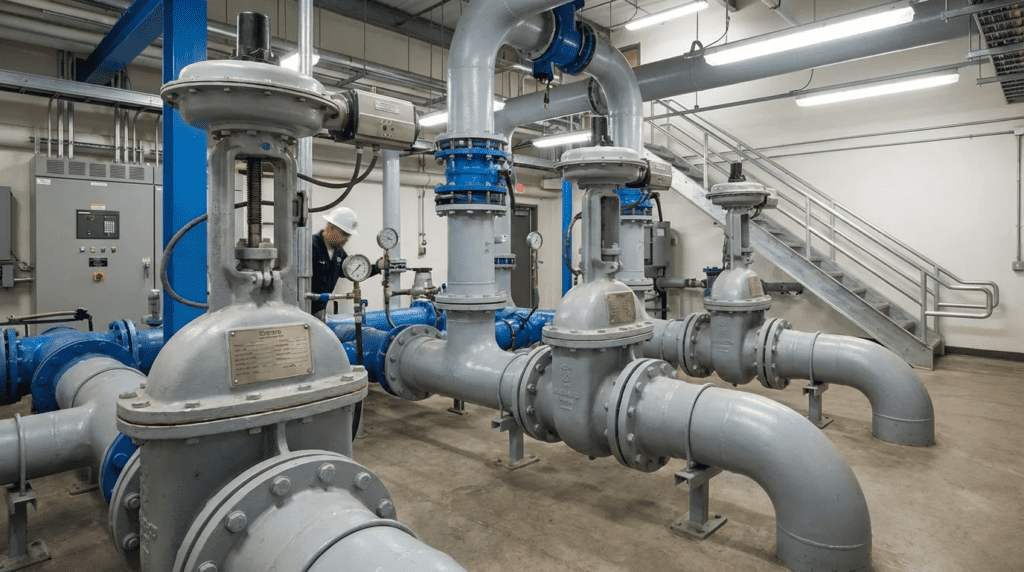
Introduction to Valve Specification in Municipal Infrastructure
In municipal water and wastewater infrastructure, valves typically represent a small share of the capital expenditure of a treatment plant or collection system. However, industry reliability experience suggests that valve failures, leakage, and actuation issues account for a disproportionate share of unscheduled maintenance expenditure over the lifecycle of a facility. For engineers tasked with specifying valves, the challenge is rarely a lack of options, but rather the paradox of choice and the pressure to value-engineer critical isolation and control points.
A common oversight in engineering design is treating valves as generic commodities rather than engineered mechanical devices. This leads to the line-size fallacy, where control valves are sized to match the pipe diameter rather than the hydraulic process conditions, resulting in poor control resolution, cavitation, and premature seat failure. Furthermore, the distinction between construction service grade valves, readily available for general contracting, and engineered service valves is often blurred in bid documents.
This article provides a technical framework for navigating the valve manufacturer landscape. It moves beyond catalog features to analyze hydraulic performance, material compatibility, and constructability. It is designed to assist consulting engineers and utility directors in writing defensible specifications that prioritize lifecycle reliability over the lowest initial bid price.
Editorial note on this article and its counterpart. This page and our “Top 10 Valves — Service Manufacturers” page cover the same subject with near-identical manufacturer lists. The distinction implied by the titles, “construction service” versus “service,” reflects a content taxonomy rather than a real difference in the valve market: there is no recognized industry category separating construction service valve manufacturers from service valve manufacturers. Readers should treat the two as one guide, and the pages are candidates for consolidation.
A note on the statistics: figures previously given here for valve share of capital cost and share of maintenance expenditure were unsourced, and conflicted with the figures given on our companion page. They have been replaced with qualitative statements. The underlying point holds — valves are a small fraction of plant capital cost and a disproportionate share of unscheduled maintenance — but engineers should not cite specific percentages from this page without a source.
This guide sits within our coverage of top valve manufacturers. See also our companion guide to valve service manufacturers, our comparison of Rotork Controls and VAG, and our profile of VAG valves.
How to Select and Specify: Beyond the Datasheet
Proper valve selection requires a holistic view of the hydraulic profile and the operating environment. The following criteria should form the backbone of the technical specification.
Duty Conditions & Operating Envelope
Defining the operating envelope is the first critical step. Engineers must distinguish between static pressure rating and dynamic capabilities.
- Flow Characteristics: Determine if the valve is for isolation (on/off) or modulation (throttling). Using a gate valve for throttling, for example, causes wire-drawing erosion on the seating surface.
- Velocity Constraints: Wastewater carrying grit requires specific velocity limits. Exceeding 8 to 10 ft/s through certain valve geometries can accelerate abrasion.
- Pressure Differentials: Calculate the maximum differential pressure across the valve in the closed position and during modulation. High differential pressure during opening can require significantly higher actuator torque than the running torque.
- Frequency of Operation: A valve cycled once per year has different wear characteristics than a filter effluent valve cycling 20 times a day.
Materials & Compatibility
Material selection must account for both chemical attack and galvanic corrosion.
- Body Materials: Ductile iron (ASTM A536) is the standard for modern municipal valves due to its strength-to-weight ratio compared to gray cast iron (ASTM A126).
- Trim & Seating: For wastewater, 316 stainless steel or nickel-welded seats are preferred to prevent pitting. In potable water, lead-free bronze or EPDM encapsulated gates are standard.
- Coatings: Specifications should mandate fusion bonded epoxy interior and exterior coatings in accordance with AWWA C550. Verification of holiday testing is a critical quality assurance step.
- Elastomers: Nitrile (NBR) is often preferred for wastewater containing hydrocarbons or oils, whereas EPDM is standard for potable water and general sewage.
Hydraulics & Process Performance
- Flow Coefficient: The flow coefficient determines the head loss across the valve. Engineers must ensure the valve does not introduce excessive head loss when fully open.
- Valve Authority: For control valves, the valve must have sufficient authority over the system curve. A valve that is too large will only control flow in the first 10% of travel, leading to hunting and instability.
- Cavitation Index: In high-pressure drop applications, calculate the cavitation index. If the operating point falls into the cavitation regime, anti-cavitation trim or air-admission strategies must be specified.
Installation Environment & Constructability
- Laying Length: Adhering to standard face-to-face dimensions ensures future replaceability.
- Orientation: Eccentric plug valves in horizontal lines must be installed with the plug shaft horizontal, and the plug rotating upwards to avoid grit accumulation in the bearings.
- Buried Service: Requires specific considerations for gearboxes (IP68 rating), extension stems, and valve boxes. Stainless steel extension stems are recommended to prevent corrosion failure that renders the valve inoperable.
Reliability, Redundancy & Failure Modes
- Failure Position: Pneumatic or hydraulic actuated valves should have a defined fail-safe position. Electric actuators generally fail in the last position unless equipped with battery backup or spring return.
- Sealing Redundancy: Double isolation and bleed capabilities may be required for safety-critical maintenance points.
- Cycle Testing: Look for manufacturers that provide cycle-test data verifying seat life under the governing AWWA standard.
Controls & Automation Interfaces
- Actuation Protocol: Hardwired I/O (4-20mA) remains common, but industrial protocols offer richer diagnostics, including torque profiles and cycle counts.
- Feedback: Positive position feedback is mandatory. Limit switches should be mechanical dry contacts for critical safety interlocks, even if digital feedback is used for monitoring.
Maintainability, Safety & Access
- Bonnet Access: Can the packing be adjusted or replaced without removing the valve from the line?
- Lifting Lugs: Valves larger than 6 inches should have integral casting lugs or tapped holes for lifting eyes to ensure safe rigging.
- Confined Space: Avoid placing control valves in vaults that require permitted confined space entry for routine adjustments.
Lifecycle Cost Drivers
- Energy Cost: High head-loss valves consume more pumping energy than full-port ball or gate valves.
- Spare Parts: Verify that the manufacturer guarantees parts availability for 20 years. Proprietary actuators with obsolete electronics are a common cause of premature full-valve replacement.
Industry Comparison Matrices
The following tables provide an engineering comparison of leading manufacturers and valve technologies. These are not rankings of quality, but rather an analysis of application fit based on typical municipal specifications.
| Manufacturer | Primary Engineering Strengths | Best-Fit Applications | Limitations / Considerations | Maintenance Profile |
|---|---|---|---|---|
| DeZURIK | Eccentric plug valves, high-performance butterfly, knife gates | Raw sewage, sludge, slurries, grit environments. | Heavyweight design requires robust support; higher cost than standard gate valves. | Low; packing adjustable under pressure. |
| Val-Matic | Check valves, air release valves, quarter-turn valves | Surge control, air management in force mains, pump discharge. | Specialized check valves have larger footprints than wafer styles. | Moderate; air valves require regular cleaning. |
| Cla-Val | Automatic hydraulic control valves | Pressure reducing, pressure sustaining, pump control, level control. | Requires clean control water for the pilot system; complex troubleshooting for untrained staff. | High; pilots and diaphragms require scheduled preventive maintenance. |
| AVK | Resilient seated gate valves, hydrants | Water distribution, buried service isolation. | Limited throttling capability; primarily for on/off isolation. | Very low; install-and-forget design logic. |
| Mueller Water Products | Butterfly (Henry Pratt), gate, distribution products | Large diameter transmission mains, plant isolation, distribution networks. | Broad catalog requires precise specification to avoid commodity-grade substitutions. | Low to moderate depending on actuation. |
| VAG | Severe service, plunger valves, large infrastructure valves | High-velocity discharge, bottom outlets, severe throttling. | High capital cost; long lead times for engineered or custom solutions. | Moderate; robust but complex mechanisms. |
| Red Valve | Pinch valves, duckbill check valves | Abrasive slurries, lime slurry, polymer feed, outfalls. | Sleeve lifespan dependent on temperature and chemical mix; high actuation force needed. | Sleeve replacement is the primary maintenance event. |
| Crispin | Air release and vacuum valves, butterfly | Pipeline air management, wastewater air release. | Air valves in wastewater require frequent backflushing accessories. | Moderate; focus on keeping floats clean. |
| Bray | Resilient and high-performance butterfly | HVAC, industrial water, aeration air headers. | Typically industrial focus; ensure compliance with AWWA C504 if required. | Low; often replaceable liner designs. |
| Victaulic | Grooved butterfly, check, and plug valves | Rapid construction, modular plants, retrofits. | Pressure ratings and gasket materials must be carefully matched to service; distinct from flanged specs. | Low; modular replacement. |
| Valve Technology | Flow Characteristics | Ideal Service | Engineering Constraints | Relative Cost |
|---|---|---|---|---|
| Gate Valve (Resilient Seat) | Linear; high capacity; no throttling. | Isolation in clean water or wastewater; buried service. | Cannot be used for throttling; debris can foul the bottom seat if not resilient. | Low – Medium |
| Eccentric Plug Valve | Rotary; high rangeability. | Sludge, raw sewage, grit, throttling capabilities. | Directional sealing preference; orientation matters for solids. | Medium – High |
| Butterfly Valve (AWWA C504) | Rotary; approximately equal percentage. | Large diameter isolation, aeration air, clean water. | Disc obstructs flow; potential for ragging in raw sewage. | Low (large sizes) |
| Ball Valve (Full Port) | Rotary; high recovery. | Chemical feed, isolation, high pressure. | Water hammer risk if closed too fast; expensive in large diameters. | High |
| Globe / Plunger Valve | Linear; excellent throttling. | Pressure reduction, flow control, pump start/stop. | High head loss; large physical size; cavitation risk. | Very High |
Engineer & Operator Field Notes
Successful implementation of valve technology relies on rigorous execution during the construction and commissioning phases. These notes reflect common issues encountered in the field.
Commissioning & Acceptance Testing
- Stroke Timing: Verify opening and closing times against the specification. For surge-critical applications, ensuring the valve does not close too quickly is vital to prevent water hammer.
- Limit Switch Hysteresis: Check that the closed signal triggers exactly when the valve seats. A signal that triggers at 98% closed can lead to wire-drawing damage on the seat.
- Seat Leakage Testing: Perform a hydrostatic pressure test. For AWWA C504 butterfly valves, this is typically bubble-tight at rated pressure.
- Current Draw Baseline: Record the amperage draw of electric actuators during the full stroke. This establishes a baseline for future predictive maintenance.
Common Specification Mistakes
- “Or Equal” Ambiguity: Specifying a high-performance eccentric plug valve but allowing a generic plug valve alternative often results in contractors supplying lower-grade valves unsuited for grit.
- Ignoring Actuator Torque Safety Factors: Specifications should require a minimum 1.5x safety factor on actuator torque over maximum valve seating torque. As valves age and scale builds up, torque requirements increase.
- Incorrect Coating Specs: Failing to specify holiday-free testing for interior coatings allows microscopic pinholes that eventually lead to tuberculation and seizure.
O&M Burden & Strategy
- The Exercise Mandate: Valves that sit static for years will seize. A quarterly or semi-annual exercising program is the single most effective maintenance activity.
- Air Valve Maintenance: Air release valves are frequently neglected until they leak. In wastewater applications, these require backflushing attachments and quarterly cleaning to remove grease from the float mechanism.
- Spare Parts Inventory: For critical process valves, stock a complete seal kit and, for electric actuators, a control board. Lead times for boards can be weeks or months.
Troubleshooting Guide
Symptom: Valve Chatter / Noise
Root Cause: Often indicates the valve is operating too close to the closed position, creating high velocity and turbulence, or the valve is oversized.
Solution: Verify the valve sizing for the actual flow. If oversized, install a smaller trim or restrict travel. Check for loose linkage.
Symptom: Failure to Seal (Leakage)
Root Cause: Debris in the seat or worn elastomers.
Solution: Flush the valve by cycling fully open and closed under flow. If leakage persists, check limit switch settings to ensure the actuator is driving the valve fully into the seat.
Design Details & Calculation Methodologies
Sizing Logic & Methodology
Sizing control valves is a calculated process, not a lookup table exercise. The required flow coefficient is a function of flow rate, specific gravity, and the pressure drop allocated across the valve.
Step-by-Step Approach:
- Calculate the required flow coefficient at minimum, normal, and maximum flow.
- Check Valve Opening Percentage: Select a valve where maximum flow occurs at approximately 80-90% open, leaving reserve capacity, and minimum flow occurs above 10-15% open, avoiding seat erosion.
- Check Authority: Ensure the valve pressure drop is at least 25-30% of the total system friction loss to maintain control authority.
Understanding the AWWA Class Designations
One point specifiers routinely get wrong: in AWWA C504, the numeric portion of the class designation is the pressure rating, while the letter suffix is a velocity rating. Class A valves are rated for a maximum of 8 ft/s in the piping section upstream of the valve; Class B valves are rated for 16 ft/s. A Class 150A and a Class 150B valve carry the same pressure rating but are not interchangeable in a high-velocity line.
The standard covers 3 in. through 72 in., with AWWA C516 picking up at 78 in. and larger. Not every class is offered across the full size range, and the available class and size combinations have changed between editions, so verify that the class being specified actually exists in the size required before it reaches the bid documents.
Specification Checklist
- Reference Standards: Cite specific AWWA standards, such as AWWA C517 for eccentric plug valves.
- Proof of Design: Require an affidavit of compliance stating the valve line has passed the proof-of-design testing required by the governing standard.
- Actuation Interface: Define the ISO 5211 mounting flange to ensure compatibility between valve and actuator.
- Shop Drawings: Require dimensional drawings, wiring diagrams, and torque calculations in the submittal package.
Standards & Compliance
- AWWA C500/C509/C515: Gate valves, metal seated and resilient seated.
- AWWA C504: Rubber-seated butterfly valves, 3 in. through 72 in.
- AWWA C516: Rubber-seated butterfly valves, 78 in. and larger.
- AWWA C517: Resilient-seated cast-iron eccentric plug valves.
- AWWA C512: Air-release, air/vacuum, and combination air valves.
- NSF/ANSI 61 & 372: Mandatory for all potable water contact components.
- Build America, Buy America: projects funded through the State Revolving Funds or WIFIA carry domestic sourcing requirements for iron and steel products, which includes valves. Verify compliance during submittal review rather than after delivery, since a non-compliant valve installed on a federally funded project is a change order at best.
- On cycle counts: proof-of-design cycle requirements are set by each AWWA standard and have changed between editions. Cite the current edition and require the affidavit rather than writing a cycle number into the specification from an older document.
Frequently Asked Questions
What is the difference between AWWA C509 and C515 gate valves?
Both standards cover resilient-seated gate valves. AWWA C509 applies to cast iron or ductile iron bodies with thicker wall sections. AWWA C515 applies strictly to ductile iron bodies with reduced wall thicknesses. While C515 valves are lighter and often less expensive, many engineers prefer C509 for its perceived robustness and additional corrosion allowance, although C515 is increasingly the industry standard for distribution systems.
When should I specify an eccentric plug valve over a butterfly valve in wastewater?
Eccentric plug valves are generally superior for raw sewage, sludge, and fluids containing grit or solids. The rotary motion moves the plug out of the flow path, creating a clear waterway, and the cam action pushes the plug into the seat without rubbing, reducing wear. Butterfly valves have a disc permanently in the flow stream which can collect fibrous material and are better suited for cleaner water or aeration air applications.
How do I determine the correct class for a valve specification?
Valve pressure classes refer to the working pressure and shutoff capability. Select the class based on the maximum potential line pressure, including static head and pump shutoff head. Note that flange drilling patterns change with pressure class; ensuring physical compatibility with the piping system is critical.
Why is valve exercising important for construction service warranties?
Many manufacturers will limit warranty coverage if a valve fails due to lack of use. Exercising breaks the torque set that develops when elastomers sit compressed against metal for long periods. It also clears sediment from the seat area and verifies that the actuator is functional.
What is the typical lifespan of a municipal isolation valve?
A well-specified and maintained municipal valve typically lasts 20 to 50 years. Resilient seats generally require replacement or refurbishment every 15 to 25 years depending on usage frequency and chemical exposure. Metal-seated valves in clean water service can exceed 50 years. However, electric actuators often have a shorter lifespan of 10 to 15 years due to electronics obsolescence.
Conclusion
KEY TAKEAWAYS
- Process dictates type: Never use a gate valve for throttling or a standard butterfly valve for raw sewage ragging environments.
- Sizing matters: Size control valves based on flow coefficient and process conditions, not pipe diameter.
- Safety Factors: Specify actuator torque safety factors of at least 1.5x to account for aging and scaling.
- Material verification: Ensure NSF-61 compliance for potable water and appropriate elastomer compatibility for wastewater chemistry.
- Testing: Mandate robust site acceptance testing including stroke timing, leakage verification, and limit switch setting.
Navigating the valve manufacturer landscape requires a disciplined engineering approach. The market offers a wide range of products, from commodity construction-grade valves suitable for general isolation to highly engineered control valves designed for severe cavitation and surge control.
For the municipal engineer, the goal is to balance capital constraints with long-term reliability. By focusing on detailed duty condition analysis, robust material specifications, and enforceability of testing standards, utilities can mitigate the risks of premature failure. Whether selecting DeZURIK for sludge, Val-Matic for surge checks, or Cla-Val for hydraulic control, the success of the installation depends less on the brand name and more on the accuracy of the application engineering and the rigor of the maintenance strategy implemented post-construction.