
Trickling Filter Systems: Traditional and Effective Wastewater Treatment
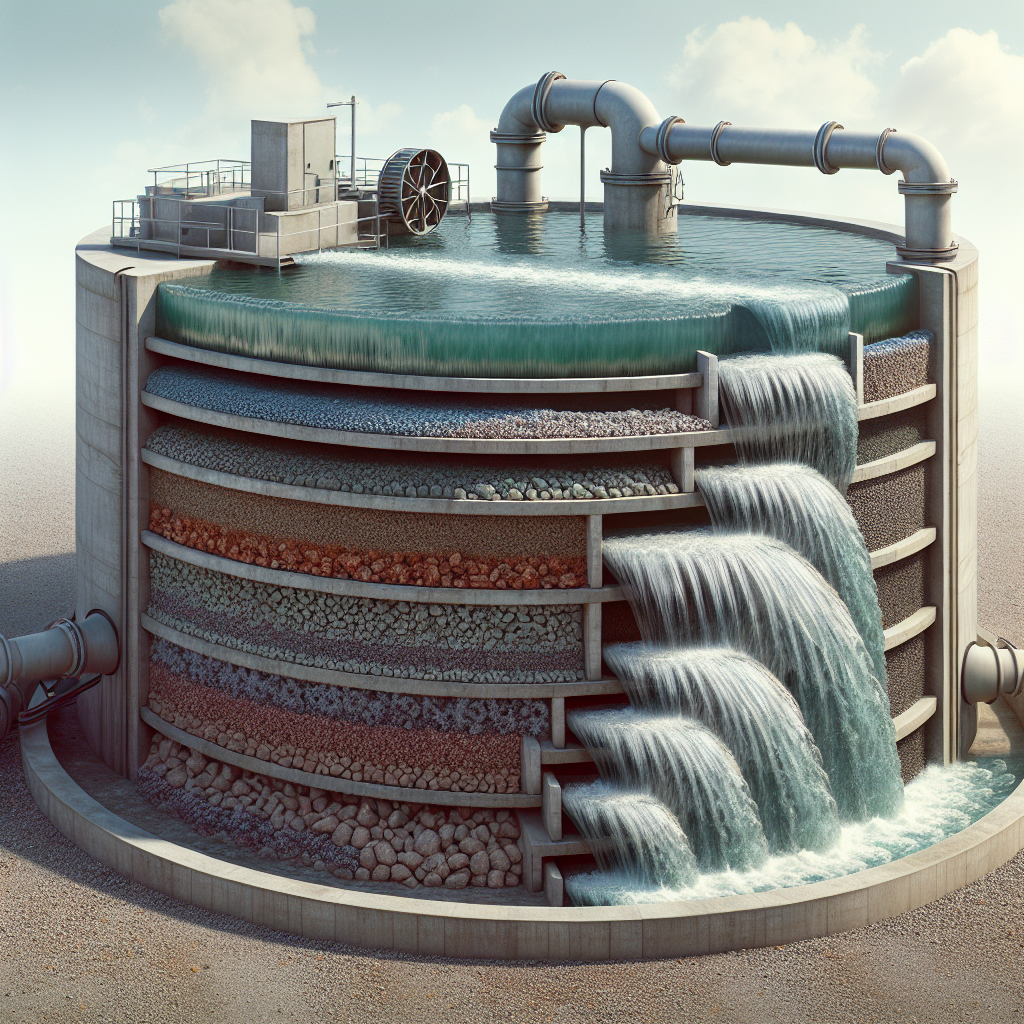
Trickling Filter Systems: Traditional and Effective Wastewater Treatment
Article Overview
Article Type: Informational
Primary Goal: Explain how trickling filter treatment works, when and why to specify it in modern wastewater treatment trains, provide actionable design and operational guidance, and show modernization and retrofit options for municipalities and plant engineers
Who is the reader: Municipal utilities, wastewater treatment plant design engineers, process engineers, wastewater operators, and equipment manufacturers evaluating or operating secondary biological treatment options for small to medium sized sewage treatment works or industrial waste streams. Readers are typically in procurement, design review, or operations planning stages and deciding between technologies or planning upgrades.
What they know: Readers will have working knowledge of wastewater treatment fundamentals and common unit processes such as primary clarification, activated sludge, and disinfection. They may not know the latest design ranges, media options, retrofit pathways, or detailed operational troubleshooting steps specific to trickling filters. They want practical design parameters, comparisons with other processes, and clear maintenance and monitoring checklists.
What are their challenges: Balancing capital and operating costs, limited energy budgets, footprint constraints at existing plants, managing seasonal performance and cold climate nitrification, dealing with clogging and odors, and selecting between retrofit or replacement when performance falls short. They require design guidance that ties to real supplier options and documented performance so they can justify decisions to regulators and council boards.
Why the brand is credible on the topic: Water and Wastewater provides technical coverage and practical guidance focused on engineering, operations, and procurement for municipal and industrial water systems. The site aggregates industry standards, design manuals, supplier case studies, and operator-level best practice guidance, making it a practical resource for practitioners. The brand frequently cites recognized references such as Metcalf and Eddy Wastewater Engineering, US EPA technology fact sheets, Water Environment Federation manuals, and equipment manufacturers including Evoqua, Veolia, SUEZ, Ovivo, and Xylem.
Tone of voice: Technical, pragmatic, and authoritative. Clear engineering language without marketing hyperbole. Prioritize actionable guidance, specific numerical design ranges where available, and decision criteria that engineers and operators can use in procurement and operations. Maintain a neutral vendor-agnostic stance while naming manufacturers and example projects when relevant.
Sources:
- Wastewater Engineering: Treatment and Resource Recovery, Metcalf and Eddy, 5th edition, McGraw Hill
- US Environmental Protection Agency Wastewater Technology Fact Sheet: Trickling Filters
- Water Environment Federation Manual of Practice and technical articles on biofilm processes
- International Water Association (IWA) technical reports on biofilm reactors and high-rate trickling filters
- ScienceDirect review articles on high-rate trickling filters and biofilm performance (search for review: high-rate trickling filters wastewater treatment)
Key findings:
- Trickling filter treatment remains relevant for small to medium plants because of low energy demand, simple operation, and robust BOD removal when sized and operated correctly according to canonical design manuals.
- Media choice and filter configuration strongly influence footprint and loading rates; plastic media increase surface area and allow higher organic surface loadings than traditional rock media.
- Common operational constraints are hydraulic short-circuiting, clogging from solids accumulation, seasonal nitrification loss in cold climates, and odor generation when hydraulics and recirculation are not properly controlled.
- Modernization pathways including replacing rock with engineered plastic media, adding or increasing recirculation, and coupling with downstream clarification and tertiary polishing can restore or improve plant performance at lower cost than full activated sludge replacement in many cases.
- Design guidance from Metcalf and Eddy, US EPA, and WEF should be used to derive specific loading rates and recirculation ratios; operational data and pilot testing are recommended when adopting high-rate variants or treating industrial wastewaters.
Key points:
- Explain the biofilm-based mechanism of trickling filter treatment and how media surface area, hydraulic loading, and recirculation control process performance.
- Provide concrete design guidance and approximate parameter ranges (surface organic loading, hydraulic loading, recirculation ratios, expected removal efficiencies) with citations to Metcalf and Eddy and US EPA.
- Detail operation and maintenance practices including monitoring parameters, common failure modes (clogging, channeling, odors), and stepwise troubleshooting actions an operator can follow.
- Show modern retrofit and upgrade options with real manufacturer names (Evoqua, Veolia, SUEZ, Ovivo, Xylem) and when to choose retrofit versus full process replacement.
- Include a practical decision checklist for municipalities and engineers to evaluate if trickling filter treatment is the right choice for a given plant and budget.
Anything to avoid:
- Avoid vague, unverified numeric claims without referencing design manuals or peer-reviewed sources.
- Do not use promotional or salesy language for any vendor; mention manufacturers in a neutral, factual way tied to product categories.
- Avoid elementary high level definitions of wastewater treatment processes that the target audience already knows.
- Do not recommend design values as absolute; present ranges and cite sources and note that pilot testing may be required for non-domestic wastewaters.
- Avoid prescriptive instructions that conflict with local regulations or standards without advising readers to consult regulatory guidance.
External links:
- https://www.epa.gov – search for Wastewater Technology Fact Sheet Trickling Filters
- https://www.mheducation.com – Wastewater Engineering Metcalf and Eddy 5th edition
- https://www.wef.org – Water Environment Federation resources and manuals
- https://www.iwa-network.org – International Water Association technical reports on biofilm systems
- https://www.sciencedirect.com – review articles on high-rate trickling filters and biofilm processes
Internal links:
- Problems Living Near A Water Treatment Plant – Water & Wastewater
- Essential Water Treatment Chemistry: A Complete Guide for Plant Operators – Water & Wastewater
- Recycle and Reuse of Wastewater: A Sustainable Solution for Water Conservation – Water & Wastewater
- Bend Wastewater Treatment Plant: A Vital Pillar for Sustainable Urban Water Management – Water & Wastewater
- How To Clean A Water Softener Brine Tank – Water & Wastewater
Content Brief
This article will position trickling filter treatment as a mature, low-energy fixed film option for secondary treatment, discuss its strengths and limitations, and provide engineers and operators with actionable design, operation, and retrofit guidance. Writing approach: adopt a technical yet practical voice, cite authoritative sources (Metcalf and Eddy, US EPA, WEF, IWA) when providing numbers, and integrate vendor-neutral commentary with examples of manufacturers where appropriate. Important considerations to emphasize: when trickling filters are the right choice versus activated sludge, how media choice alters footprint and loading capability, common operational failure modes and remedies, and stepwise retrofit strategies that preserve existing infrastructure and reduce lifecycle cost. Use figures and tables where possible in the final article to present design ranges, comparison matrices, and maintenance checklists. Avoid promotional language and sweeping categorical claims; recommend pilot testing and regulatory consultation for site-specific design.
How trickling filter treatment works and where it fits in a treatment train
- Mechanism of biofilm attachment, nutrient and oxygen transfer, and pathogen interactions in a trickling filter
- Typical placement in plant flowsheet: after primary clarification and before tertiary polishing or disinfection
- Comparison of performance role versus suspended growth systems such as conventional activated sludge and MBBR
Types of trickling filters and media options
- Conventional rock media filters and their historical use cases
- Plastic media filters: structured media, packed beds, and benefits in surface area and footprint (mention manufacturers such as Evoqua, Veolia, SUEZ, Ovivo, Xylem)
- High-rate trickling filters and intermittent or recirculating configurations; rotating biological contactors as a related fixed film option
- Media selection criteria: durability, surface area, hydraulic characteristics, headloss, and ease of replacement
Design parameters and sizing guidance for trickling filter treatment
- Key design variables to calculate: organic surface loading, hydraulic loading, hydraulic retention and contact times, recirculation ratio, filter depth, and required surface area
- Approximate design ranges and guidance with source attribution (refer to Metcalf and Eddy and US EPA for exact values). For example provide approximate surface organic loading ranges for conventional and high-rate filters and typical recirculation ratios
- Simple calculation examples and formulas operators use to size a filter for a given peak flow and influent BOD load; include an instruction to verify with local codes and pilot testing
- Hydraulic considerations: distribution system design, uniformity of spray nozzles, and channeling prevention
Operational strategy and maintenance for reliable performance
- Routine monitoring parameters: influent and effluent BOD, TSS, ammonia, pH, dissolved oxygen in the recirculation basin, and headloss through the media
- Common operational problems and remedies: clogging and media cleaning, channeling, odor control, and managing sloughing events
- Maintenance schedule examples: inspection frequency, distributor maintenance, backwashing or media replacement intervals, and sludge handling implications
- Operator-level troubleshooting flowchart: steps to take when effluent BOD or ammonia exceed permit levels
Performance expectations, limitations, and regulatory considerations
- Typical removal efficiencies for BOD, TSS, and potential for nitrification including seasonal variability; cite literature ranges and emphasize site variability
- Limitations when treating industrial wastewater streams with toxic compounds or high fats oils and grease and recommended pretreatment strategies
- Permit and discharge considerations including pathogen reduction, odor nuisance control, and regulatory reporting implications
Retrofit and modernization pathways with real-world supplier options
- Stepwise retrofit options: convert rock to engineered plastic media, increase recirculation, add tertiary clarifiers or tertiary filters, and integrate with biological nutrient removal if required
- Vendor and product examples to investigate: Evoqua plastic media trickling filter solutions, Veolia trickling filter refurbishment services, SUEZ engineered media, Ovivo distribution systems, and Xylem pump and distribution equipment
- Cost and downtime considerations for retrofits versus full replacement with activated sludge; provide decision criteria and return on investment factors
- Guidance for pilot trials and performance guarantees to negotiate with suppliers
Practical decision checklist and design handoff for engineers and procurement teams
- Checklist items: influent characteristics, flow variability, footprint, energy budget, operator skill level, odor sensitivity, and regulatory effluent targets
- Template handoff requirements for detailed design: influent load profile, site survey, hydraulic model outputs, distribution basin drawings, and proposed media specifications
- Suggested contract clauses and performance testing milestones for procurement (start-up, seasonal performance, and sloughing event responsibilities)
Frequently Asked Questions
What effluent BOD removal can I reasonably expect from a well designed trickling filter system treating domestic wastewater
A properly sized and operated trickling filter commonly achieves BOD removal in the range of 65 to 90 percent, but actual results depend on loading rates, media type, and downstream clarification.
When is it preferable to upgrade an existing trickling filter rather than replace it with activated sludge
Upgrading is often preferable when the existing structure and distribution systems are sound, energy budgets favor low-oxygen systems, and the plant needs moderate improvement in performance at lower capital cost than full activated sludge conversion.
How does plastic media change the design compared with rock media
Plastic media provide much higher specific surface area, lower headloss, and allow higher organic surface loadings and smaller footprints; they also simplify media replacement and reduce scour compared with rock.
What are the most common causes of clogging and how do I prevent them
Clogging is usually caused by excessive solids in the influent, inadequate primary clarification, or poor distributor performance; prevention includes improved screening, primary settling, well designed distributors, routine inspection, and occasional media cleaning or replacement.
Can trickling filters achieve nitrification in cold climates
Nitrification is possible but less reliable in cold climates; strategies to improve nitrification include increasing recirculation ratios, using deeper media with higher area, maintaining biomass through appropriate loading, and considering insulated or covered filters.
What monitoring should plant operators perform daily and monthly on trickling filter systems
Daily checks should include visual inspection of distribution system function and odor assessment; weekly to monthly monitoring should include influent and effluent BOD, TSS, ammonia, and headloss or flow distribution assessments.
Are there quick retrofit measures that can recover performance without major capital works
Yes. Increasing recirculation, repairing or rebalancing the distribution system, improving primary clarification, and targeted media cleaning can often restore performance at modest cost.