
Wastewater Treatment Companies
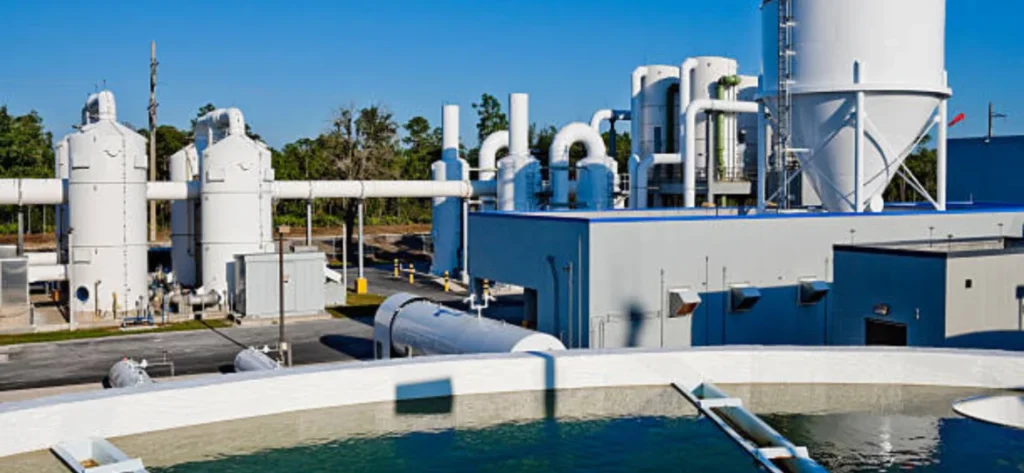
Introduction
Wastewater treatment is an indispensable part of modern urban and industrial infrastructure. It serves the vital function of purging pollutants from sewage and industrial effluents, thereby safeguarding the environment and public health. With growing concerns about water scarcity, environmental sustainability, and stringent regulatory requirements, wastewater treatment companies are under increasing pressure to innovate and evolve. This article delves into the intricate world of wastewater treatment companies, exploring their importance, the technologies they employ, regulatory challenges, and future trends within the industry.
Within the broader water management picture, the supplier landscape is more segmented than the phrase “wastewater treatment company” suggests. A firm that designs and builds treatment plants, one that manufactures blowers, one that supplies polymer under a recurring contract, and one that operates a municipal facility under a service agreement are all wastewater treatment companies, and they have almost nothing in common commercially. Understanding which segment a company occupies is the first step in evaluating it.
The Importance of Wastewater Treatment Companies
Environmental Protection
The fundamental objective of wastewater treatment companies is to protect ecosystems by removing contaminants from water before it is discharged back into the environment. Polluted water is detrimental to aquatic life, disrupts ecosystems, and can contaminate drinking water sources. By treating wastewater effectively, these companies help to maintain the delicate balance of our water-based ecosystems.
Public Health and Safety
Untreated or inadequately treated wastewater carries pathogens that pose significant health risks. Companies in this sector mitigate these risks by employing processes that eliminate harmful bacteria, viruses, and other pathogens, thus preventing waterborne diseases and ensuring the safety of communities.
Economic Impact
The activities of wastewater treatment companies have profound economic implications. They enable industries to comply with environmental regulations, avoid costly penalties, and minimize their ecological footprint. Additionally, clean water is essential for agriculture, fishing, and tourism—industries that are economic pillars in many regions worldwide.
Company and Supplier Directory Overview
The material beneath this hub covers company directories, the supplier categories that make up the market, individual firms, and the consolidation that continually reshapes the sector.
Company Directories and Rankings
Coverage of water and wastewater treatment companies surveys the firms active across both water and wastewater, while a companion assessment of top performing treatment companies ranks them against recent performance. Material on wastewater companies focuses specifically on firms leading in advanced treatment technology. Rankings of this kind are most useful read as a map of who is active in which segment rather than as a league table, since a firm that dominates municipal design-build and one that dominates industrial chemical supply are not competing for the same work and cannot meaningfully be ranked against each other.
Suppliers by Category
Several areas address specific supply categories. Coverage of package treatment plant suppliers addresses the firms providing pre-engineered treatment systems, a distinct market serving small communities, industrial sites, and developments where a factory-built plant is preferable to a designed-in-place one. Material on wastewater treatment chemical suppliers addresses the recurring-supply side of the business, with parallel coverage of wastewater treatment chemicals suppliers examining the same market. On the hardware side, the survey of leading water treatment equipment manufacturers covers the OEMs and their innovations. The commercial distinction between these categories is fundamental: equipment is a capital purchase made once, while chemicals are an operating expense negotiated repeatedly, and the supplier relationship differs accordingly.
Individual Company Profiles
Alongside the surveys, individual profiles examine specific firms in detail. Coverage of Velocity Water Solutions is one such profile, addressing the company’s focus and offering. Profiles of this kind are most useful for understanding what a firm actually specializes in, which is frequently narrower than its marketing suggests and is the single most relevant thing to establish before an approach.
Industry Consolidation
This sector consolidates continually, and two areas document specific transactions that illustrate the pattern. Coverage of the B&V acquisition of MJ Gleeson’s water business and of H2O Innovation’s acquisition of Itasca Systems record two such moves. Individually these are news items; collectively they represent the defining structural feature of the market. Product lines and service businesses change corporate ownership repeatedly within the service life of the equipment they supply, and for a buyer that has a practical consequence explored further below.
Market Segments: Who Does What
The single most useful thing to establish about any firm in this industry is which segment it occupies, because that determines how it sells, what it is accountable for, and how a buyer should evaluate it.
Design and Construction
Consulting engineers design treatment facilities and write the specifications that everything else is procured against. Contractors build them. Design-build and engineer-procure-construct firms do both under a single contract, taking on process risk in exchange for control over the design. For a utility, the choice between traditional design-bid-build and an integrated delivery model determines who carries the risk if the plant does not perform — and that allocation matters more than any individual equipment selection made within it.
Equipment Manufacturers
OEMs manufacture the pumps, blowers, screens, clarifier mechanisms, membranes, dewatering equipment, and instrumentation that treatment plants are assembled from. Most sell through manufacturer’s representatives rather than directly, which introduces a layer that outsiders frequently misunderstand: the rep is an independent business holding a territory for a set of complementary product lines, and the rep relationship is often more durable and more locally influential than the relationship with the manufacturer behind it. A utility’s specifying engineer typically knows the rep by name and the OEM by logo.
Chemical Suppliers
Chemical supply is a fundamentally different business from equipment. The purchase is recurring rather than capital, contracts are re-tendered on a regular cycle, and the supplier’s value lies as much in delivery reliability, technical service, and product consistency as in unit price. Some suppliers offer equipment and chemicals together, which simplifies operations while creating a dependency that should be priced deliberately rather than accepted by default.
Contract Operations
A distinct segment operates municipal treatment facilities under contract, taking over staffing, maintenance, and compliance responsibility for a fee. This appeals to communities that struggle to recruit certified operators or that prefer a fixed cost to a variable one, and it transfers performance risk to a firm equipped to manage it. The trade is a long-term dependency that is costly and disruptive to unwind, which is why these arrangements deserve unusually careful attention to the exit provisions.
Service, Parts, and Aftermarket
The least visible segment is frequently the one that determines whether an asset performs over its life. Parts availability, service technician proximity, and rebuild capability matter enormously over twenty years and are almost never evaluated at purchase. This is also where consolidation is felt most acutely, since a product line that changes hands may or may not retain its parts inventory and service network.
Across all of these, the shows and conferences where the industry meets are where much of the relationship-building actually happens — the calendar of industry events covers the major gatherings, and for anyone entering this market they are a considerably more efficient way to map the supplier landscape than desk research.
Core Technologies Employed
Wastewater treatment companies employ a plethora of technologies, ranging from conventional methods to cutting-edge innovations. Here, we explore some of the core technologies and processes that define the industry.
Conventional Treatment Processes
- Primary Treatment: This is the initial stage of wastewater treatment that involves the physical removal of large particulates through processes like screening and sedimentation. Basic techniques such as grit removal and flow equalization are also employed.
- Secondary Treatment: This biological phase utilizes aerobic or anaerobic microorganisms to degrade organic matter in sewage. Technologies commonly used include activated sludge systems, trickling filters, and rotating biological contactors.
- Tertiary Treatment: As a polishing step, tertiary treatment removes remaining inorganic compounds and other contaminants. Techniques can include advanced filtration, disinfection processes like chlorination or UV treatment, and nutrient removal through chemical precipitation or ion exchange.
Advanced Treatment Technologies
- Membrane Filtration: This involves using semi-permeable membranes for microfiltration, ultrafiltration, nanofiltration, and reverse osmosis. It is effective in removing dissolved substances and small particles.
- Bioreactors: Membrane bioreactors (MBRs) combine biological treatment and membrane filtration, improving the efficiency and quality of wastewater treatment.
- Advanced Oxidation Processes (AOPs): These processes use oxidants like ozone, hydrogen peroxide, or UV light to degrade organic pollutants that are resistant to conventional treatment.
- Electrochemical Treatment: This employs electric currents to precipitate contaminants, useful in treating industrial wastewater with high concentrations of heavy metals or other hazardous substances.
Innovative and Emerging Technologies
- Hybrid Systems: By integrating multiple techniques, hybrid systems offer enhanced treatment efficiencies and operational adaptability.
- AI and Machine Learning: These technologies are increasingly being utilized for optimizing treatment processes, predictive maintenance, and real-time monitoring.
- Zero Liquid Discharge (ZLD): An approach aimed at minimizing wastewater disposal by recovering and reusing water and generating minimal waste.
- Resource Recovery Systems: These systems focus on extracting valuable by-products during the treatment process such as bioenergy, nutrients, and clean water.
Municipal and Industrial: Two Different Markets
Cutting across every segment above is a division that shapes how firms organize themselves, and a company that serves one market well frequently serves the other poorly.
The Municipal Market
Municipal buyers are public bodies procuring under bidding statutes, spending public money, and accountable to elected boards and to regulators. Purchases follow published criteria and long timelines, specifications must permit equivalents, and the driving requirement is nearly always a discharge permit. Sales cycles run to years, relationships persist across decades, and reputation travels quickly through a state association network in which most of the participants know each other. Suppliers serving this market invest in specification-stage engagement, local representation, and long service relationships, because that is what the procurement structure rewards.
The Industrial Market
Industrial buyers are private firms treating wastewater because a permit, a sewer discharge agreement, or a process requirement compels them to, and treatment is a cost centre attached to a business whose actual purpose is something else. Decisions are made faster, on commercial rather than statutory criteria, and frequently by a plant engineer with a budget rather than by a board. Waste streams vary enormously by sector and even by production campaign, so solutions are more bespoke and pilot testing is more common. Suppliers serving this market compete on response time, process expertise in specific industries, and total cost of ownership arguments that a municipal buyer would have to justify through a formal evaluation.
Why the Distinction Matters
The two markets reward opposite behaviours. A firm optimized for municipal work — patient, specification-led, locally represented — often struggles with the speed and commercial flexibility industrial clients expect. A firm optimized for industrial work often finds public procurement slow, rigid, and unrewarding of the responsiveness it is built around. Buyers should therefore ask not just whether a supplier serves their sector, but whether it is genuinely organized around it, because a municipal utility buying from a predominantly industrial supplier and an industrial site buying from a predominantly municipal one both tend to be disappointed for the same underlying reason.
Comparison of Supplier Segments
The table below compares the segments described above on the characteristics that most affect how a buyer should approach each.
| Segment | Purchase Type | Route to Market | What They Are Accountable For | Evaluation Basis | Main Buyer Risk |
|---|---|---|---|---|---|
| Consulting engineer | Professional services | Direct, often on a framework | Design adequacy and specification | Relevant project experience; team | Specification written around one supplier |
| Design-build / EPC | Capital project | Direct, competitively procured | Delivered plant performance | Comparable projects; process guarantee | Reduced buyer control over components |
| Equipment OEM | Capital purchase | Usually via manufacturer’s rep | Equipment function and warranty | Installed base; lifecycle cost; parts | Proprietary parts; ownership changes |
| Package plant supplier | Capital, pre-engineered | Direct or via rep | System performance within guarantee | Certified performance; service coverage | Orphaned system if supplier exits |
| Chemical supplier | Recurring operating expense | Direct, periodically re-tendered | Product consistency and delivery | Cost per unit of active product; service | Price exposure; single-source dependency |
| Contract operations | Long-term service contract | Direct, competitively procured | Compliance and plant performance | Track record; staffing; exit terms | Dependency that is costly to unwind |
Regulatory Landscape
Wastewater treatment companies operate within a framework of stringent regulations designed to protect human health and the environment. These regulations drive technological innovation and process optimization within the industry.
Key Regulatory Bodies and Standards
- Environmental Protection Agency (EPA): In the U.S., the Clean Water Act (CWA) is a critical piece of legislation enforced by the EPA that sets standards for wastewater discharge quality.
- European Environment Agency (EEA): In Europe, directives such as the Urban Waste Water Treatment Directive mandate treatment levels and infrastructure requirements for urban wastewater.
- Global Regulations: Many countries adopt regulations akin to those in the U.S. and Europe, with regional adaptations to address local environmental challenges.
Regulation shapes this market more directly than most. A tightened effluent limit creates demand for a specific technology across an entire class of facilities simultaneously, which is why suppliers track regulatory development as closely as they track competitors. For buyers, the certification requirements that products must meet — and the standards that specifications reference — are covered in more detail under standards and guidelines, and confirming that a proposed product actually carries the certifications a specification demands is a routine check that is skipped surprisingly often.
Compliance Challenges and Opportunities
Compliance with evolving regulations presents a continual challenge for wastewater treatment companies. It necessitates perpetual monitoring, investment in advanced technology, and comprehensive reporting. However, these challenges also present opportunities for growth and innovation, as companies that can efficiently comply with regulations have a competitive advantage.
Business Models and Financial Considerations
Wastewater treatment companies operate under diverse business models influenced by their specific market focus, the scale of operations, and regulatory environment.
Public vs. Private Sector Involvement
- Public Utilities: Many wastewater treatment operations are public utilities, particularly in urban areas, funded and managed by government bodies. They are typically focused on public service rather than profit.
- Private Companies: These entities often focus on industrial wastewater solutions or contract management of municipal facilities. They operate under profit-driven models, and are often characterized by innovation and efficiency.
- Public-Private Partnerships (PPPs): Collaborations between government and private companies that leverage the strengths of both, enhancing efficiency and service delivery.
Financial Viability and Investment
The capital-intensive nature of wastewater treatment necessitates substantial investment in infrastructure and technology. While initial costs are high, the long-term benefits of reduced ecological impact and regulatory compliance make this an area of strategic investment for stakeholders. Additionally, investment in sustainable technologies and resource recovery can improve financial performance by creating new revenue streams.
How Public Procurement Shapes the Market
Most municipal buyers procure under public bidding requirements, and that framework governs how the entire supply side behaves. Specifications must generally permit equivalent products, awards follow published criteria, and the timeline from specification to purchase order runs to months. The practical consequence is that commercial influence happens at the design stage, through the consulting engineer, long before a bid is advertised — which is why supplier effort concentrates on specifying engineers rather than on procurement departments. The cost side of these decisions, including how lifecycle evaluation is applied, is covered under treatment economics.
Challenges Facing the Industry
Technological Limitations
Despite advancements, no single technology offers a panacea for all wastewater treatment needs. Integration of multiple technologies is often necessary, complicating system design and increasing costs.
Climate Change and Water Scarcity
Climate change exacerbates water scarcity issues, altering water quality and increasing demand for treatment services, thus pressuring resources and infrastructure.
Economic Constraints
Particularly in developing regions, economic constraints can limit access to advanced treatment technologies, perpetuating reliance on outdated systems with suboptimal performance.
Consolidation and Continuity
The pace of acquisition in this sector creates a specific risk for buyers that is rarely discussed at the point of purchase. When a product line changes hands, the parts inventory, service network, and engineering support behind it may or may not survive the transition intact. A utility buying a twenty-year asset is implicitly betting that its supplier’s aftermarket will still exist in fifteen years, and in a sector where businesses are bought and sold as regularly as this one, that bet is worth hedging — through parts availability commitments, component standardization, and a preference for open rather than proprietary interfaces.
Practical Guidance: Evaluating a Supplier
Whether the purchase is a pump, a plant, a chemical contract, or an operations agreement, the same evaluation discipline applies with adjustments for segment.
Define What You Are Actually Buying
Equipment, a system, a service, or an outcome — these are four different purchases with four different accountability structures, and confusion between them is the root of most disputes. Buying a pump gets a pump that works. Buying a system gets a system that performs to a stated specification. Buying an outcome, through a process guarantee or a contract operations agreement, transfers performance risk. Establish which of these the contract actually provides before comparing prices.
Check the Installed Base, Not the Brochure
Ask for references running the same product or service at similar scale in similar conditions, and contact them. Ask what has failed, what the response was, what parts lead times have been, and whether they would buy again. This costs an afternoon and routinely surfaces information no proposal contains. Reluctance to supply relevant references is itself informative.
Understand the Rep Relationship
For equipment, establish whether you are dealing with the manufacturer or an independent representative, what territory that rep holds, and what happens if the line moves to a different rep. This is not an obscure detail — rep territory changes are common and can disrupt service continuity for an installed asset even when the manufacturer has not changed at all.
Pro Tip: Ask every prospective supplier a single question: what happens to parts and service for this product in ten years if your company is acquired? The answers are revealing. Suppliers with strong aftermarket businesses have thought about it and will describe their parts commitment, their service network, and often their contractual obligations. Suppliers who have not thought about it will change the subject. In a sector that consolidates as regularly as this one, that question separates a twenty-year relationship from a twenty-year risk — and it costs nothing to ask.
Match Segment to Need
A small community without engineering staff is generally better served by a package supplier or a contract operator than by assembling components from multiple OEMs. A large utility with in-house engineering can procure equipment directly and capture the margin that a systems integrator would otherwise take. Mismatching the segment to the buyer’s capability produces most of the disappointment in this market: sophisticated procurement without the staff to support it, or a turnkey package bought by an organization that could have done better itself.
Future Trends and Innovations
Digitalization and the Internet of Things (IoT)
Advances in digitalization, IoT, and big data analytics are set to revolutionize monitoring, optimization, and management practices, leading to enhanced performance, reduced downtime, and cost savings.
Sustainability and Circular Economy
The wastewater treatment industry is increasingly focusing on sustainability. Emphasizing the circular economy model, efforts are directed towards not just treating waste but recycling and reusing water and recovering valuable materials.
Global Expansion and Developing Markets
Growth prospects in emerging economies are significant, driven by urbanization, industrialization, and infrastructure development. As these regions strive to meet international standards, demand for innovative, cost-effective wastewater solutions is projected to rise.
Collaborative Innovation
Partnerships between academia, industry, and government foster an environment ripe for innovation, driving the development of new technologies and methodologies.
Resources and References
The sources below are the most useful for mapping this industry, and all are publicly accessible or membership-based rather than proprietary.
- Water Environment Federation — the principal professional body for the wastewater sector, with member directories, technical publications, and the largest annual industry conference in North America.
- American Water Works Association — the equivalent body on the drinking water side, publishing product standards that many suppliers certify against.
- State and regional associations — the state water environment associations run local conferences and operator training, and their exhibitor lists are the most efficient map of who actually serves a given region.
- Manufacturer’s representative directories — rep firms publish their line cards, which show at a glance which OEMs are represented in a territory and by whom.
- EPA Clean Watersheds Needs Survey — periodic national assessment of infrastructure needs, useful for sizing the addressable market by state.
- Utility capital improvement plans — published by most municipal utilities, naming upcoming projects and frequently the engineer engaged for them.
- Trade publications and market research — industry press and specialist market analysts track acquisitions, contract awards, and technology adoption.
Frequently Asked Questions
What kinds of companies count as wastewater treatment companies?
At least six distinct segments: consulting engineers who design facilities, contractors and design-build firms who deliver them, equipment manufacturers who supply components, package plant suppliers who provide pre-engineered systems, chemical suppliers on recurring contracts, and contract operators who run facilities on a utility’s behalf. They share an industry and almost nothing else commercially, which is why ranking them against one another is of limited use.
Why do equipment manufacturers sell through representatives?
Because the market is geographically dispersed and relationship-driven. An independent rep firm holds a territory for a set of complementary product lines, knows the local specifying engineers and utilities, and provides application support and service that a distant manufacturer cannot. For buyers this means the rep is frequently the more important relationship, and rep territory changes can disrupt service continuity even when nothing changes at the manufacturer.
How should a small community approach procurement?
Generally by matching the segment to its own capability. A community without engineering staff is usually better served by a package plant supplier or a contract operator, both of which bundle the technical judgement into the purchase. Assembling a plant from separately procured components requires in-house or consultant engineering capacity to specify, integrate, and hold suppliers accountable — and without it, the savings are illusory.
Does supplier consolidation matter to a buyer?
More than most buyers assume. Product lines in this sector change ownership repeatedly, and each transition puts the parts inventory, service network, and engineering support behind that product at some risk. A twenty-year asset outlasts several ownership cycles, so parts availability commitments, component standardization, and open interfaces are worth more than brand loyalty.
Where does a supplier’s influence on a purchase actually happen?
At the design stage, through the consulting engineer, months before a bid is advertised. Public procurement requires that specifications permit equivalent products and that awards follow published criteria, so by the time a tender is issued the technical parameters are largely fixed. Understanding which engineering firms serve which utilities is consequently more useful commercially than tracking bid advertisements.
Key Takeaways
- “Wastewater treatment company” describes at least six different businesses — engineers, contractors, OEMs, package suppliers, chemical suppliers, and contract operators, with little commercially in common.
- Define what you are buying — equipment, a system, a service, or an outcome are four different accountability structures and the source of most disputes.
- The rep relationship is often the important one — most OEMs sell through independent representatives who hold territories and provide the local service.
- Equipment is capital, chemicals are operating expense — one is bought once and lived with, the other renegotiated on a cycle, and they need different evaluation.
- Consolidation is the sector’s defining structural feature — hedge it with parts commitments and open interfaces rather than brand loyalty.
- Match segment to capability — package suppliers and contract operators exist because not every buyer has engineering staff, and mismatching produces most of the market’s disappointment.
- Influence happens at specification, not at tender — public procurement fixes the technical parameters long before the bid is advertised.
Conclusion
Wastewater treatment companies play a critical role in contemporary society by ensuring our water resources remain clean and safe. The industry is at a pivotal moment, driven by the dual pressures of regulation and innovation. As companies navigate these waters, the focus on sustainability, efficiency, and technological advancement will not only determine their success but also their contribution to a more sustainable and water-secure future.
For a buyer approaching this market, the sequence that avoids most difficulty is short: establish which segment the need falls into, define whether the purchase is equipment, a system, a service, or an outcome, match that to the organization’s own technical capability, evaluate on installed base and lifecycle cost rather than on capital price, confirm the service and parts arrangement including what happens if ownership changes, and remember that the specification — not the tender — is where the decision is really made. Approached that way, the fragmentation of this industry becomes navigable rather than confusing.