
Wastewater Treatment Process Parameters: TSS BOD MLSS Guide
Introduction
Effective operation of a modern wastewater treatment facility hinges entirely on the rigorous monitoring and interpretation of process control data. Whether managing a 100 MGD municipal activated sludge plant or a small industrial pretreatment system, plant performance is defined by measurable physical, chemical, and biological metrics. Understanding these Wastewater Treatment Process Parameters: TSS BOD MLSS Guide is not merely an academic exercise; it is the fundamental requirement for maintaining regulatory compliance, optimizing energy consumption, and preventing catastrophic process upsets.
A common and costly mistake seen across the industry is the isolated interpretation of data points. Operators and engineers frequently observe a single metric—such as a rising effluent Total Suspended Solids (TSS)—and react by adjusting a single variable, like increasing polymer dosage, without evaluating the interconnected biological indicators such as the Food-to-Microorganism (F/M) ratio or the Sludge Volume Index (SVI). This siloed approach leads to chemical over-expenditure, wasted aeration energy, and persistent operational instability. True mastery requires viewing these parameters as an integrated ecosystem.
Process parameters are how a plant is controlled rather than merely described, which is why they sit alongside the unit processes in any serious treatment of wastewater treatment rather than as an appendix to them. An aeration basin has a volume, a blower has a horsepower, and a clarifier has a surface area, but none of those numbers tell an operator what to do on a given morning. The parameters do. They are the instrument panel through which every design decision is ultimately expressed and every operational adjustment is made.
This comprehensive guide details the critical parameters used to characterize influent strength, monitor biological health, and verify effluent quality. We will explore the physical dynamics of solids, the chemical demand of organics, and the biological kinetics of microorganism populations. By systematically examining how parameters like Mixed Liquor Suspended Solids (MLSS), Solids Retention Time (SRT), and Hydraulic Retention Time (HRT) interact, this guide provides the technical framework necessary for engineers and plant directors to make data-driven decisions that ensure robust plant performance and long-term asset reliability.
Subcategory Landscape — Types, Technologies & Approaches
The comprehensive management of a treatment facility requires categorizing process parameters based on their function within the treatment train. Broadly, these subcategories fall into three groups: solids characterization (TSS, MLSS, MLVSS), organic loading metrics (BOD, COD, F/M Ratio), and biological process controls (SRT, HRT, SVI, DO). Each subcategory serves as a distinct diagnostic lens, revealing specific aspects of plant performance. Understanding how these parameters overlap and influence one another is the core skill required for process optimization.
Foundational Background for Non-Technical Readers
Not every reader arriving at a parameters guide is an operator or a design engineer. Board members, new hires, community stakeholders, and students frequently need the surrounding context before the numbers mean anything, and four foundational resources cover that ground. Readers already fluent in plant operation can skip directly to the parameter sections below.
A plain explanation of what water treatment plants do establishes the basic purpose and sequence of a facility, while the companion piece on what water treatment plants do with waste follows the solids side of the process that the MLSS and SRT parameters below govern. For the broader system context, where wastewater goes traces the path from fixture through collection system to plant to receiving water, which is the physical picture that effluent limits exist to protect. Finally, why we need wastewater treatment covers the public health and environmental case that produced the regulatory framework every parameter in this guide is measured against.
Total Suspended Solids (TSS)
Total Suspended Solids (TSS) represents the concentration of undissolved particulate matter suspended within a water sample, measured in milligrams per liter (mg/L). It is determined by filtering a sample through a standardized 1.5-micron glass fiber filter, drying the residue at 103-105°C, and weighing the mass. In the wastewater context, TSS is a primary indicator of both influent strength and effluent quality. High influent TSS (typically 200-400 mg/L in domestic wastewater) dictates the required capacity of primary clarifiers and headworks screening. Conversely, effluent TSS is a critical NPDES permit parameter, often limited to 30 mg/L or lower. Monitoring TSS allows engineers to evaluate clarifier efficiency, detect sludge blanket carryover, and validate filtration performance. Practical measurement, permit context, and troubleshooting guidance for this parameter are covered in depth under TSS in wastewater treatment.
Biochemical Oxygen Demand (BOD)
Biochemical Oxygen Demand (BOD) quantifies the amount of dissolved oxygen consumed by aerobic microorganisms while decomposing organic matter under specific conditions. The standard test, BOD5, measures oxygen depletion over a 5-day incubation period at 20°C. As the historical benchmark for organic pollution, BOD is central to plant design, defining the aeration requirements and biological capacity of secondary treatment. While extremely useful for establishing treatment efficiency (typically requiring 85% removal for secondary treatment standards), its primary limitation is the 5-day delay in obtaining results, making it unsuitable for real-time process control. The reduction strategies, test procedure, and interpretation pitfalls specific to this parameter are treated separately under BOD reduction in wastewater treatment.
Chemical Oxygen Demand (COD)
Chemical Oxygen Demand (COD) measures the total quantity of oxygen required to chemically oxidize both biodegradable and non-biodegradable organic compounds in a sample. Utilizing strong chemical oxidants (typically potassium dichromate), the COD test yields results in approximately two to three hours. This rapid turnaround makes COD the preferred parameter for real-time industrial process control and rapid diagnostics. Engineers frequently establish a site-specific COD:BOD ratio; domestic wastewater typically exhibits a ratio between 1.9:1 and 2.5:1. A significant deviation from this established ratio often signals an industrial discharge event or the presence of toxic, non-biodegradable compounds. The oxidation chemistry, interference sources, and reduction approaches for this parameter are covered under COD reduction in wastewater treatment.
Mixed Liquor Suspended Solids (MLSS)
Mixed Liquor Suspended Solids (MLSS) refers to the total concentration of suspended solids—including active microorganisms, inert biomass, and non-biodegradable material—within the aeration basin of an activated sludge system. Typically maintained between 1,500 and 4,000 mg/L in conventional systems (and up to 12,000 mg/L in Membrane Bioreactors), MLSS is the fundamental control knob for biological treatment. Maintaining an appropriate MLSS concentration ensures sufficient biomass is available to metabolize incoming organic load. Too low, and the effluent quality deteriorates; too high, and the system risks oxygen limitation and hydraulic overloading of the secondary clarifiers. The process context for this parameter, including how MLSS is built, wasted, and recycled, belongs to the activated sludge process itself, and the two should be read together.
Mixed Liquor Volatile Suspended Solids (MLVSS)
Mixed Liquor Volatile Suspended Solids (MLVSS) is a refinement of the MLSS measurement, representing the organic fraction of the mixed liquor. It is determined by igniting the dried TSS sample at 550°C, burning off organic matter and leaving inorganic ash. MLVSS serves as the best practical estimate of the active microbial population in the aeration basin. In typical municipal plants, MLVSS accounts for 70-80% of the MLSS. A declining MLVSS-to-MLSS ratio suggests an accumulation of inert inorganic material, potentially caused by poor grit removal or high industrial silt loading, which reduces the effective treatment capacity of the reactor.
Food-to-Microorganism Ratio (F/M)
The Food-to-Microorganism Ratio (F/M) is a dimensionless operational parameter that describes the organic load applied to the biological system relative to the available biomass. It is calculated by dividing the mass of BOD entering the aeration basin per day by the mass of MLVSS present in the basin. Optimal F/M ratios typically range between 0.2 and 0.5 lb BOD/lb MLVSS/day for conventional plug flow systems. A high F/M ratio indicates an overloaded system, resulting in dispersed growth and poor settling. Conversely, a very low F/M ratio (under-loading) can lead to pin floc formation and overly oxidized sludge. The applied-load side of this ratio is treated in its own right under organic loading in wastewater treatment, including volumetric loading rates and how design loading differs from actual loading in service.
Solids Retention Time (SRT)
Solids Retention Time (SRT), often called Sludge Age or Mean Cell Residence Time (MCRT), quantifies the average duration that solids (microorganisms) remain within the treatment system. Calculated as the total mass of MLSS in the system divided by the mass of solids wasted per day, SRT is arguably the single most powerful control parameter in biological treatment. Because slow-growing nitrifying bacteria require longer residence times to establish stable populations, achieving full nitrification typically necessitates an SRT of 8-20 days, depending heavily on wastewater temperature. Conversely, high-rate systems designed only for carbon removal may operate at SRTs as low as 2-4 days.
SRT is frequently confused with the hydraulic residence of water through the same tanks, and the distinction is the foundation of activated sludge control: solids are deliberately retained and recycled while water passes through once. A general treatment of retention time in wastewater treatment covers how the term is used across different unit processes and where the two concepts diverge.
Hydraulic Retention Time (HRT)
Hydraulic Retention Time (HRT) represents the average length of time that a volume of liquid remains in a specific reactor or basin, calculated by dividing the reactor volume by the influent flow rate. Unlike SRT, which tracks solids, HRT tracks the water itself. HRT is critical for sizing tanks and ensuring sufficient contact time for biological reactions or chemical disinfection. In conventional activated sludge, HRT typically ranges from 4 to 8 hours. If HRT drops too low due to storm flows or infiltration and inflow (I&I), biological reactions may not have sufficient time to complete, resulting in permit violations even if the biomass is healthy. The companion metric is hydraulic loading, and both are covered together under hydraulic loading in wastewater treatment, including surface loading rates for clarifiers and filters.
Sludge Volume Index (SVI)
The Sludge Volume Index (SVI) is a settleability parameter measuring the volume in milliliters occupied by one gram of sludge after 30 minutes of settling in a one-liter cylinder. SVI provides an immediate, low-cost diagnostic of sludge quality and clarifier performance. An SVI between 80 and 150 mL/g generally indicates healthy, well-settling flocs. Values exceeding 150 mL/g typically indicate filamentous bulking, a condition where thread-like bacteria dominate the floc structure, preventing compaction and leading to solids washout in the final clarifier. Diagnosing which filament is responsible, and therefore which corrective action applies, requires microscopic examination, and the organism identification side of that work is covered under wastewater microbiology.
Dissolved Oxygen (DO) Concentration
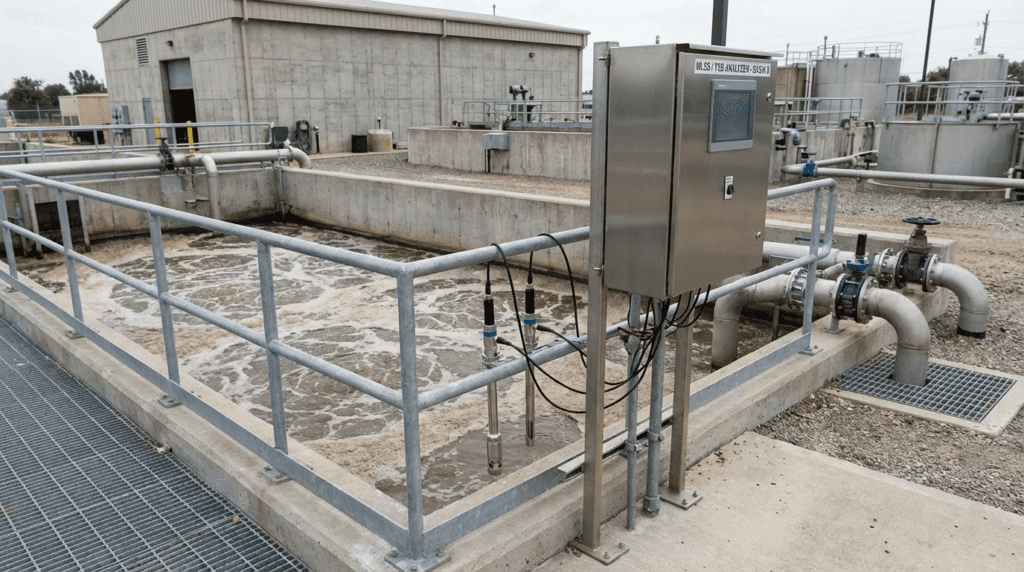
Dissolved Oxygen (DO) Concentration measures the amount of gaseous oxygen dissolved in the mixed liquor, essential for aerobic microbial respiration. Maintained typically between 1.5 and 3.0 mg/L in aeration basins, DO levels represent the largest energy expenditure in a treatment plant, often accounting for 50-60% of total electricity costs. Insufficient DO (below 0.5 mg/L) inhibits nitrification and promotes filamentous growth, while excessive DO wastes significant blower energy and can shear delicate floc particles. Automated DO control systems utilizing real-time probes and variable frequency drives (VFDs) on blowers are standard practice in modern facilities. The physical infrastructure that delivers this oxygen, including basin geometry, diffuser layout, and mixing energy, is covered under aeration basins.
pH and Alkalinity
pH and Alkalinity are chemical parameters that govern the biological viability of the treatment process. Most bacterial populations in activated sludge thrive within a narrow pH band of 6.5 to 8.5. Alkalinity, measured as mg/L of CaCO3, acts as the buffering capacity that prevents drastic pH swings. This is particularly vital in nitrifying plants, as the nitrification process consumes approximately 7.14 mg of alkalinity for every 1.0 mg of ammonia oxidized. If influent alkalinity is insufficient, the pH will crash, stalling nitrification and potentially causing a catastrophic biological die-off.
Nutrient Ratios (BOD:N:P)
Nutrient Ratios (BOD:N:P) define the balance of carbon, nitrogen, and phosphorus required for optimal microbial growth. The universally accepted ideal ratio for biological treatment is 100:5:1 (BOD:Nitrogen:Phosphorus). While domestic wastewater is typically nutrient-rich and requires no supplementation, industrial wastewaters (such as those from food processing or paper mills) are often nutrient-deficient. In these cases, engineers must specify chemical addition systems to supply urea (nitrogen) or phosphoric acid (phosphorus), as a deficiency will inhibit floc formation and encourage filamentous bulking.
Selection & Specification Framework
Selecting which parameters to prioritize and how to monitor them depends heavily on the plant’s treatment goals, discharge permit requirements, and available operational resources. A robust monitoring framework balances the cost of instrumentation against the risk of process failure.
Decision Framework for Monitoring Priorities
The primary decision driver is the treatment objective. If the facility’s permit requires only carbon removal (BOD/TSS limits), the monitoring framework can focus on Total Suspended Solids (TSS), Biochemical Oxygen Demand (BOD), and basic Mixed Liquor Suspended Solids (MLSS) tracking. Operating at a lower Solids Retention Time (SRT) is acceptable and preferred for energy savings.
However, if the permit includes strict ammonia or total nitrogen limits, the framework must expand significantly. Nitrification requires rigorous control of Solids Retention Time (SRT) to retain slow-growing bacteria, careful monitoring of Dissolved Oxygen (DO) Concentration to ensure aerobic conditions, and constant vigilance regarding pH and Alkalinity to prevent process inhibition. For industrial facilities, rapid response is paramount; therefore, Chemical Oxygen Demand (COD) should be prioritized over BOD for immediate feedback, and Nutrient Ratios (BOD:N:P) must be regularly verified to prevent deficiencies.
Lifecycle Cost Trade-offs: Online vs. Laboratory Analysis
Engineers must weigh the capital expenditure (CAPEX) of online instrumentation against the operational expenditure (OPEX) of manual laboratory testing. Online probes for Dissolved Oxygen (DO) Concentration, pH, and turbidity offer high-frequency data essential for automated control loops (e.g., blower modulation), providing rapid returns on investment through energy savings. Conversely, parameters like Biochemical Oxygen Demand (BOD) and Sludge Volume Index (SVI) require manual laboratory analysis due to their inherent methodology. While online COD and TOC analyzers exist, they carry a high CAPEX and require substantial maintenance; they are usually justified only in high-risk industrial pretreatment scenarios or where influent quality is highly variable.
Impact of Plant Size and Operator Skill
Plant capacity and staffing levels heavily dictate the practical monitoring regime. Small rural facilities (< 1 MGD) may lack certified lab technicians and dedicated maintenance staff. In these cases, robust, simple metrics like Sludge Volume Index (SVI) (which requires only a graduated cylinder) and settleometer tests provide excellent diagnostic value with minimal investment. Large regional facilities (> 50 MGD) can leverage sophisticated automation, integrating real-time Mixed Liquor Suspended Solids (MLSS) probes and ammonia-based aeration control (ABAC) systems to fine-tune Food-to-Microorganism Ratio (F/M) and DO levels dynamically, maximizing energy efficiency across the plant.
Comparison Tables
The following tables provide a consolidated reference for the critical parameters discussed in this Wastewater Treatment Process Parameters: TSS BOD MLSS Guide. Table 1 outlines the technical characteristics and utility of each parameter, while Table 2 maps these parameters to specific operational scenarios and plant types.
| Parameter | Key Characteristics & Metric | Best-Fit Application | Limitations / Constraints | Typical Monitoring Frequency |
|---|---|---|---|---|
| Total Suspended Solids (TSS) | Physical measure of particulate matter (mg/L). | Permit compliance, clarifier efficiency, filtration performance. | Does not indicate biological activity or organic strength. | Daily (Influent/Effluent) |
| Biochemical Oxygen Demand (BOD) | Biological oxygen consumption over 5 days (mg/L). | Design basis, regulatory compliance, F/M calculation. | 5-day delay makes it unusable for real-time control. | Daily to Weekly |
| Chemical Oxygen Demand (COD) | Chemical oxidation demand; results in ~2-3 hours (mg/L). | Industrial process control, rapid upset diagnostics. | Includes non-biodegradable matter; requires hazardous reagents. | Daily to Continuous (Online) |
| Mixed Liquor Suspended Solids (MLSS) | Total biomass concentration in aeration basin (mg/L). | Primary control of biological inventory and wasting rates. | Includes inert solids; MLVSS is a better measure of active biomass. | Daily |
| Solids Retention Time (SRT) | Average time solids remain in system (days). | Controlling nitrification and overall sludge stability. | Requires accurate solids inventory and wasting measurements. | Daily calculation |
| Sludge Volume Index (SVI) | Settleability measurement (mL/g). | Early detection of filamentous bulking and settling issues. | Susceptible to temperature and dilution effects. | Daily |
| Dissolved Oxygen (DO) | Available oxygen for respiration (mg/L). | Real-time aeration control and energy optimization. | Probes require frequent calibration and cleaning. | Continuous |
| Application Scenario | Critical Parameters to Monitor | Key Engineering Constraints | Operator Skill Requirement |
|---|---|---|---|
| Standard Municipal Plant (Carbon Removal Only) | TSS, BOD, MLSS, SVI | Maintaining hydraulic capacity during wet weather; minimizing aeration energy. | Basic to Intermediate |
| Nitrifying / BNR Facility | SRT, DO, pH & Alkalinity, Ammonia, Nitrate | Sustaining long sludge age; managing alkalinity depletion; seasonal temperature impacts. | Advanced |
| Industrial Pretreatment (e.g., Food/Bev) | COD, Nutrient Ratios (BOD:N:P), pH, F/M | Managing high-strength shock loads; nutrient deficiency; variable flows. | Advanced |
| Membrane Bioreactor (MBR) | MLSS, Transmembrane Pressure (TMP), Viscosity | Very high solids concentrations (8,000-12,000 mg/L); fine screening protection. | Highly Specialized |
| Small Rural Lagoon System | DO, pH, Effluent TSS/BOD | Limited process control options; heavily dependent on ambient temperature. | Basic |
Engineer & Operator Field Notes
Bridging the gap between theoretical parameter definitions and daily plant operation requires practical experience. The following notes highlight common field realities associated with monitoring and controlling these metrics.
Commissioning and Startup Considerations
During plant startup, biological parameters take significant time to stabilize. Engineers must manage the transition from seed sludge to a mature biomass. Initially, Mixed Liquor Suspended Solids (MLSS) levels will be low, and the Food-to-Microorganism Ratio (F/M) will be extremely high, often leading to turbid effluent. It is critical during this phase to minimize wasting (maximizing Solids Retention Time (SRT)) to allow the population to grow. Furthermore, new facilities often experience “new plant syndrome,” where concrete leaching or construction debris skews initial Total Suspended Solids (TSS) readings. Baseline calibration of all online instrumentation, particularly Dissolved Oxygen (DO) Concentration probes, must be performed under actual mixed liquor conditions rather than clean water.
Pro Tip: The 30-Minute Settleometer Test. Before relying on complex online analytics, utilize the low-tech settleometer test daily. Observing the settling rate, compaction level, and clarity of the supernatant provides an immediate, intuitive snapshot of your Sludge Volume Index (SVI) and overall biomass health, often predicting clarifier upsets 24-48 hours before they appear in effluent data.
Common Specification Mistakes
A prevalent error in facility design is specifying aeration systems based solely on average Biochemical Oxygen Demand (BOD) loading without accounting for the oxygen demand required for nitrification. The oxidation of ammonia requires approximately 4.6 lbs of oxygen per lb of ammonia-nitrogen, a demand often equal to or exceeding the carbonaceous demand. Failing to account for this results in chronically under-aerated basins and permit violations.
Another frequent mistake involves clarifier sizing. Engineers sometimes size secondary clarifiers strictly based on hydraulic surface overflow rates, ignoring the solids loading rate driven by high Mixed Liquor Suspended Solids (MLSS) concentrations. If the plant operates at a high MLSS to achieve a long SRT, the clarifier may become solids-limited, leading to sludge blanket rise and washout during peak flows.
A third error is writing permit-driven monitoring into a specification without also writing in the control-driven monitoring the plant will actually need. A permit may require BOD and TSS twice weekly; running a nitrifying plant requires daily SRT calculation, daily settleometer observation, and continuous DO. A monitoring plan built only around the permit leaves operators diagnosing upsets after they have already shown up in effluent data.
Operations & Maintenance Burden
The O&M burden varies drastically between parameters. Dissolved Oxygen (DO) Concentration probes, while providing critical continuous data, require rigorous maintenance schedules including weekly cleaning and monthly calibration to prevent biofouling drift. In contrast, Sludge Volume Index (SVI) testing requires minimal equipment but consumes operator labor time daily. Laboratory-based Biochemical Oxygen Demand (BOD) analysis is highly labor-intensive and requires strict quality control, seed correction, and glassware management, making it one of the most burdensome yet legally mandated tests in the plant.
Common Mistake: Chasing the MLSS Setpoint. Operators often attempt to hold a rigid Mixed Liquor Suspended Solids (MLSS) concentration year-round. This is a critical error. As water temperatures drop in winter, biological kinetics slow down, requiring a higher MLSS (and longer SRT) to maintain the same treatment efficiency. Conversely, holding high MLSS in summer wastes aeration energy and can lead to excessive oxidation. Always control by Solids Retention Time (SRT), allowing MLSS to float accordingly.
Troubleshooting Common Parameter Deviations
- Symptom: High Effluent TSS with Clear Supernatant in Settleometer. Root Cause: Hydraulic overloading of the clarifier or short-circuiting due to density currents. Fix: Verify flow splits and inspect clarifier baffling.
- Symptom: SVI exceeding 200 mL/g. Root Cause: Filamentous bulking, often caused by low Dissolved Oxygen (DO) Concentration, low Food-to-Microorganism Ratio (F/M), or nutrient deficiency. Fix: Verify DO levels above 2.0 mg/L; check Nutrient Ratios (BOD:N:P); consider selector zones.
- Symptom: Ammonia breakthrough despite adequate DO. Root Cause: Insufficient Solids Retention Time (SRT) or alkalinity depletion causing pH crash. Fix: Reduce wasting rate to increase SRT; supplement alkalinity with sodium bicarbonate or lime.
- Symptom: Rising sludge blanket with dark, septic odor. Root Cause: Sludge held too long in the clarifier, entering endogenous decay and denitrifying, with nitrogen gas bubbles lifting the blanket. Fix: Increase return activated sludge rate to reduce blanket depth, and check for mechanical failure in the collector drive.
Design Details & Standards
Adhering to standardized methodologies and design criteria ensures that parameter measurements are accurate, repeatable, and legally defensible.
Sizing Methodologies Based on Parameters
Facility sizing is driven directly by mass balance calculations utilizing these parameters. Aeration basin volume is typically determined by the required Hydraulic Retention Time (HRT) and the necessary Solids Retention Time (SRT). Engineers calculate the required MLVSS inventory using the target Food-to-Microorganism Ratio (F/M), then divide by the design Mixed Liquor Suspended Solids (MLSS) concentration to determine the tank volume. For example, a plant treating 10,000 lbs/day of BOD at an F/M of 0.25 requires an inventory of 40,000 lbs of MLVSS. Secondary clarifiers are sized simultaneously based on the solids flux resulting from that MLSS concentration and the return activated sludge (RAS) flow rate.
Key Design Parameters and Variability
Design parameters must account for significant variability. Temperature is the primary variable affecting biological kinetics; design SRT must be calculated for the minimum expected winter mixed liquor temperature, potentially doubling the required sludge age compared to summer conditions. Peaking factors are equally critical; Hydraulic Retention Time (HRT) must be evaluated at peak wet weather flow to ensure sufficient contact time remains for disinfection and settling. Similarly, industrial contributions may cause spikes in Chemical Oxygen Demand (COD) that require equalization basins to buffer, preventing shock loads to the biological system.
Applicable Standards & Compliance
Measurement methodologies are strictly governed to ensure regulatory validity:
Standard Methods for the Examination of Water and Wastewater (APHA/AWWA/WEF) — The definitive reference for laboratory procedures regarding TSS, BOD, COD, and solids analysis.
40 CFR Part 136 — EPA regulations specifying approved test procedures for the analysis of pollutants under the Clean Water Act. Compliance monitoring must utilize these approved methods.
Ten States Standards (Recommended Standards for Wastewater Facilities) — Provides recommended design loading rates for aeration basins, clarifiers, and sludge handling based on these parameters.
WEF Manual of Practice No. 8 / ASCE MOP 76 — Design of Water Resource Recovery Facilities, the standard design reference for translating parameter targets into unit process sizing.
40 CFR Part 133 — Secondary treatment regulation, establishing the 30 mg/L BOD and TSS monthly average baseline and the 85 percent removal requirement.
Specification Checklist for Monitoring Systems
When specifying instrumentation and monitoring protocols, ensure the following:
- Sampling Location: Define exact sampling points (e.g., post-grit, pre-clarifier) to ensure representative data.
- Automated Cleaning: Require air-blast or ultrasonic cleaning systems on submerged probes (DO, MLSS, Ammonia) to combat biofouling.
- Calibration Protocols: Specify vendor requirements for calibration frequency, procedures, and required standard solutions.
- Data Integration: Ensure sensors communicate via industry-standard protocols (4-20mA, Modbus, Profibus) compatible with the plant SCADA system.
- Redundancy: For critical control loops (like ABAC), specify redundant sensors to prevent process upsets during instrument failure.
- Control Monitoring vs. Permit Monitoring: State both, and confirm the plan supports daily process decisions rather than only the reporting schedule.
- Temperature Compensation: Confirm that probes and calculations account for seasonal mixed liquor temperature, since design SRT and kinetic rates both shift substantially between summer and winter.
Frequently Asked Questions
What are the most important parameters in wastewater treatment?
The most critical parameters depend on the treatment objective. For regulatory compliance, Total Suspended Solids (TSS) and Biochemical Oxygen Demand (BOD) are essential. For daily biological process control, Mixed Liquor Suspended Solids (MLSS), Solids Retention Time (SRT), and Dissolved Oxygen (DO) Concentration are the primary control levers. For diagnosing settling issues, the Sludge Volume Index (SVI) is invaluable.
How do you choose between BOD and COD testing?
Choose Biochemical Oxygen Demand (BOD) when regulatory reporting is required, as it is the standard measure of biodegradable pollution mandated by most NPDES permits. Choose Chemical Oxygen Demand (COD) for rapid operational feedback and industrial monitoring. COD results are available in hours rather than days, allowing operators to react immediately to shock loads or influent changes, though it measures total oxidizable matter rather than just biodegradable material.
What is a good MLSS level for activated sludge?
A typical conventional activated sludge plant maintains Mixed Liquor Suspended Solids (MLSS) between 2,000 and 3,500 mg/L. However, the “correct” level is determined by the required Solids Retention Time (SRT) and the settling capacity of the secondary clarifiers. Extended aeration systems may operate at 3,000-5,000 mg/L, while Membrane Bioreactors (MBRs) can operate efficiently at 8,000-12,000 mg/L.
Why is Solids Retention Time (SRT) more important than HRT?
Solids Retention Time (SRT) directly governs the type and population of microorganisms in the system. Because specific bacteria, like nitrifiers, grow slowly, they will be washed out of the system if the SRT is too short, regardless of how long the water sits in the tank. Hydraulic Retention Time (HRT) is important for contact time and sizing, but SRT dictates the biological capability of the plant.
How does temperature impact process parameters?
Temperature drastically affects biological kinetics. As mixed liquor temperatures drop (e.g., winter conditions), microbial metabolism slows. To compensate, operators must increase the Solids Retention Time (SRT) (and consequently, the Mixed Liquor Suspended Solids (MLSS) concentration) to maintain the same level of treatment. Colder water also holds more dissolved oxygen, potentially reducing blower energy demand slightly.
What causes filamentous bulking and high SVI?
High Sludge Volume Index (SVI) values, typically above 150 mL/g, indicate filamentous bulking. Common causes include persistently low Dissolved Oxygen (DO) Concentration, low Food-to-Microorganism Ratio (F/M) ratios, septic influent conditions, or deficiencies in Nutrient Ratios (BOD:N:P). Corrective actions include increasing aeration, adding nutrients, or implementing anoxic selector zones to favor floc-forming bacteria.
Why is there no MLSS article in this category?
There isn’t one yet. MLSS is covered within this guide and within the activated sludge process material, but it does not have dedicated coverage of its own despite being arguably the most-referenced control parameter in day-to-day plant operation. Readers looking for MLSS calculation worked examples, wasting rate derivation, and the relationship between MLSS, MLVSS, and SRT will find the essentials in the sections above and the process context under activated sludge.
How often should each parameter actually be measured?
Frequency should be set by how fast the parameter can change and what decision it drives, not by the permit alone. Dissolved oxygen changes minute to minute and belongs on continuous monitoring with automated control. MLSS, SVI, and SRT change day to day and warrant daily measurement, since they drive the wasting decision. TSS and COD are typically daily to several times weekly. BOD, with its five-day turnaround, is a compliance and trending parameter rather than a control parameter and is usually run two to three times weekly. Alkalinity deserves at least weekly attention in any nitrifying plant, and daily during the seasonal transitions when it is most likely to be consumed faster than it is supplied.
Conclusion
Key Takeaways: Mastering Process Parameters
- Integrate, Don’t Isolate: Never evaluate a single parameter alone. Effluent quality issues often stem from a combination of factors, such as low DO causing high SVI, which leads to high TSS.
- Control by SRT: Use Solids Retention Time (SRT) as your primary control variable, allowing Mixed Liquor Suspended Solids (MLSS) to fluctuate seasonally based on temperature and load.
- Prioritize Rapid Feedback: Utilize Chemical Oxygen Demand (COD) for real-time operational decisions and Biochemical Oxygen Demand (BOD) for compliance and design verification.
- Protect Alkalinity: In nitrifying facilities, monitor pH and Alkalinity rigorously; insufficient buffering capacity is a leading cause of catastrophic nitrification failure.
- Automate Aeration: Continuous Dissolved Oxygen (DO) Concentration monitoring paired with VFD-driven blowers offers the highest ROI for energy savings in any plant.
- Specify Control Monitoring, Not Just Permit Monitoring: The permit sets the legal minimum; running the plant well requires a shorter measurement cycle on the parameters that drive daily decisions.
Mastering the Wastewater Treatment Process Parameters: TSS BOD MLSS Guide transforms plant operation from reactive firefighting into proactive process engineering. These metrics are not isolated data points but interconnected indicators of a complex biological ecosystem. By understanding that a change in Solids Retention Time directly influences the Sludge Volume Index, or that insufficient alkalinity can halt nitrification regardless of Dissolved Oxygen levels, engineers and operators can diagnose problems with precision.
Successful facility management requires selecting a monitoring strategy that aligns with the plant’s specific permit requirements, staffing capabilities, and financial resources. Whether relying on simple settleometer tests in a small rural lagoon or sophisticated ammonia-based aeration control in a large metropolitan facility, the fundamental principles remain the same: measure accurately, interpret holistically, and adjust incrementally. By rigorously applying these parameters, treatment facilities can ensure sustained compliance, optimize operational costs, and protect receiving water quality for decades to come.