
Top OEMs for Pressure Release Valves
1. Introduction
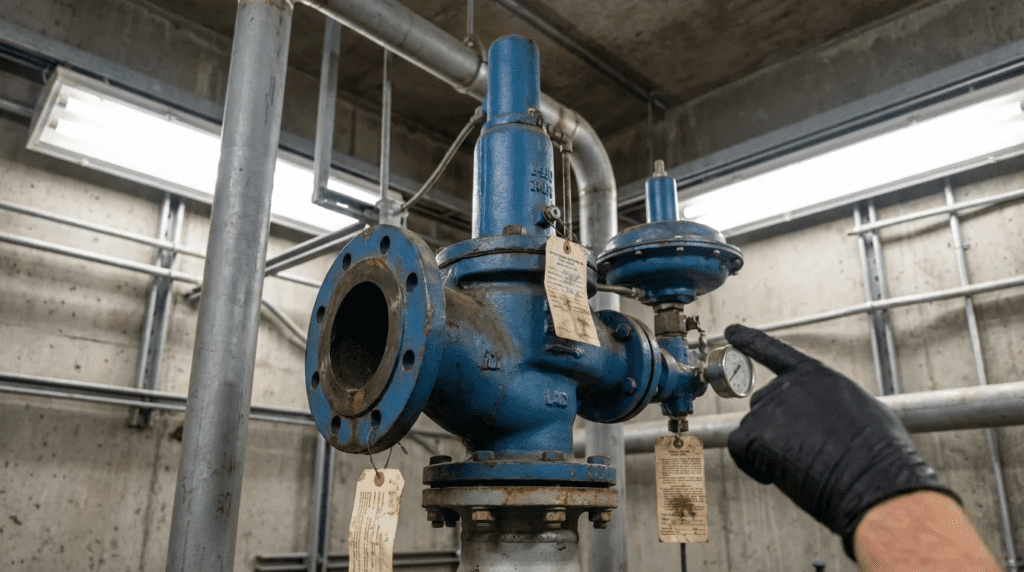
In the context of municipal and industrial water and wastewater systems, the term “Pressure Release Valve” (PRV) encompasses a critical range of safety and control devices designed to protect infrastructure from catastrophic over-pressure events. These devices function as the final line of defense against hydraulic transients (surge), pump malfunctions, thermal expansion, and process control failures. For the consulting engineer and plant superintendent, the selection of a PRV is rarely a matter of simple commodity specification; it is a risk management decision that directly impacts the safety of personnel, the longevity of piping networks, and regulatory compliance.
The scope of pressure release applications in water treatment plants (WTP) and wastewater treatment plants (WWTP) is bifurcated into two distinct engineering categories. First, Hydraulic Surge Relief involves protecting distribution networks and force mains from the destructive forces of water hammer caused by pump trips or rapid valve closures. These valves must react in milliseconds to discharge fluid and dampen pressure waves. Second, Process Safety Relief involves ASME-coded protection for pressurized vessels, chemical storage tanks, aeration blowers, and steam lines within the plant facility. Here, the focus shifts to compressibility, blowdown requirements, and material compatibility with aggressive chemicals.
Regulatory context plays a significant role in OEM selection. Applications involving pressurized vessels must adhere to ASME Boiler and Pressure Vessel Code (BPVC) Section VIII, while potable water applications often require NSF/ANSI 61 and 372 certification. Furthermore, the reliability of these valves is paramount. Unlike control valves that modulate continuously, a pressure release valve may remain static for months or years, yet must operate within strict tolerances the instant a system upset occurs. This “dormant reliability” is the primary driver for prioritizing established Original Equipment Manufacturers (OEMs) with verifiable engineering pedigrees over lower-cost alternatives.
This article provides a technical analysis of the selection criteria, failure modes, and operational characteristics of pressure release valves, followed by a detailed review of four specific OEMs: Anderson Greenwood, Crosby Valve, Penn-Troy Manufacturing, and GA Industries. The objective is to equip engineers with the data necessary to specify the correct valve for the correct application, ensuring lifecycle performance and safety.
2. How to Select This Valve Type
Selecting a pressure release valve requires a multidimensional engineering approach that moves beyond simple set-pressure parameters. Engineers must evaluate the fluid dynamics, the thermodynamic properties of the media, and the mechanical response characteristics of the valve mechanism. The following criteria represent the core considerations for specifying high-performance pressure release assemblies.
Valve Function and Duty Cycle
The first step in selection is defining the nature of the over-pressure scenario. Is the valve intended for Safety Relief (preventing a vessel from exploding) or Surge Relief (preventing a pipe from bursting due to a transient wave)?
- Direct Spring-Loaded vs. Pilot-Operated: For standard safety relief, direct spring valves offer simplicity and fail-safe operation. However, as system pressure approaches the set pressure, spring valves can “simmer” or leak. Pilot-operated relief valves (POSRVs) utilize system pressure to seal the valve tighter as pressure increases, making them superior for operating pressures close to the set limit.
- Modulating vs. Pop-Action: In liquid applications (water/wastewater), a “pop-action” valve can exacerbate water hammer by closing too instantly. Modulating pilots that open in proportion to the over-pressure are often preferred to maintain system stability.
Pressure and Flow Conditions
Accurate sizing is critical. An undersized valve cannot relieve pressure fast enough to prevent damage, while an oversized valve can lead to “chatter”—a rapid opening and closing cycle that destroys the seating surface and damages piping.
- Set Pressure and Accumulation: The engineer must define the Set Pressure (where the valve starts to open) and the allowable Accumulation (the pressure rise over the set pressure during discharge, typically 10% or 21% depending on code).
- Blowdown: This refers to the difference between the set pressure and the reseating pressure. In water systems, a long blowdown is often desirable to dissipate energy, whereas in steam or gas, short blowdown preserves process media.
- Cv/Flow Capacity: Sizing must account for the worst-case scenario (e.g., total pump runout or full thermal expansion).
Materials of Construction
Material selection dictates the lifecycle of the valve, particularly in wastewater environments where hydrogen sulfide ($H_2S$) and grit are prevalent.
- Body Materials: Ductile iron (ASTM A536) is standard for general water. Stainless steel (316 or 304) or exotic alloys (Monel, Hastelloy) are mandatory for corrosive chemical feed systems (e.g., Sodium Hypochlorite, Ferric Chloride).
- Trim and Seats: Hardened stainless steel trim is required to resist wire-drawing (erosion of the seat during initial opening). For dirty services like raw sewage, soft-seated valves (utilizing EPDM, Buna-N, or Viton) typically provide better shut-off but require more frequent maintenance.
Sealing Mechanisms and Actuation
Leakage across the seat is a common operational headache. In pilot-operated valves, the main valve relies on a sensing line. If this line becomes clogged with debris (common in wastewater), the valve may fail to open or fail to close.
- Filtration: For wastewater surge relief, non-clogging pilot designs or heavy-duty external strainers are prerequisites.
- Diaphragm vs. Piston: Diaphragm actuators generally have lower friction and better responsiveness for low-pressure variations but lower pressure ratings. Piston actuators are robust and handle higher pressures but have higher hysteresis (friction).
Installation Environment
The physical location impacts valve selection. Buried service is rare for relief valves due to maintenance requirements; they are usually housed in vaults.
- Vault Drainage: Relief valves discharge fluid. If the vault does not have adequate drainage or sump pump capacity, the valve can become submerged, potentially contaminating the potable water supply via the discharge port (cross-connection).
- Freezing: In cold climates, pilot lines containing static water are prone to freezing. Heat tracing and insulation or locating valves in climate-controlled buildings is necessary.
Maintenance and Common Failure Modes
The most common failure mode for relief valves is failure to reseat due to debris entrapment or seat erosion.
- Seat Leakage: Causes continuous water loss and seat erosion.
- Chatter: Caused by excessive inlet pressure drop (inlet piping too long or narrow) or oversizing. This causes rapid mechanical failure.
- Diaphragm Fatigue: In pilot valves, rubber components degrade over time and require a defined replacement schedule (typically every 3-5 years).
3. Comparison Table
The following table is designed to assist engineers and operators in distinguishing the primary areas of expertise for the specified OEMs. It is not a numerical ranking but rather a contextual guide to application fit. Engineers should use this to align the specific physics of their application (e.g., hydraulic surge vs. pneumatic safety) with the manufacturer’s core design philosophy.
| OEM Name | Core Technology Focus | Typical W/WW Applications | Primary Engineering Strengths | Maintenance Profile |
|---|---|---|---|---|
| Anderson Greenwood (Emerson) | Pilot-Operated Safety Relief Valves (POSRV) & High-Performance Pilots | High-pressure transmission mains, Industrial treatment processes, Compressible gas systems (Aeration/Digester Gas). | Exceptional seat tightness near set pressure; modulating action prevents water hammer; suitable for high back-pressure applications. | Specialized technical skill required for pilot calibration; intolerant of heavy solids without filtration. |
| Crosby Valve (Emerson) | Direct Spring-Loaded Safety Relief Valves | Boilers, Steam lines, Chemical feed piping, Air receiver tanks, Thermal relief. | Industry standard for ASME Section VIII compliance; robust mechanical design; wide range of chemical-compatible materials. | Simple mechanics but prone to “simmering” near set pressure; set pressure can drift over time due to spring relaxation. |
| Penn-Troy Manufacturing | Explosion Relief & Specialized Check/Relief Hybrids | Biogas engine protection (Crankcase Explosion Relief), Generator sets, Pump station air intake/relief. | World leader in Bicera valves for deflagration protection; critical for safety in cogeneration and biogas facilities. | Highly specialized; internal flame traps require periodic inspection and cleaning. |
| GA Industries | Hydraulic Surge Relief & Automatic Control Valves | Raw sewage force mains, Potable water distribution surge protection, Pump station discharge. | Specifically engineered for water hammer; surge anticipation capabilities; designs available for heavy slurry/wastewater. | Designed for field serviceability; large bodies allow access; pilots require regular cleaning in sewage service. |
4. Top OEM Manufacturers
The following analysis details the engineering specifications and operational characteristics of the four mandated OEMs. This evaluation focuses on their application within water and wastewater infrastructure.
Anderson Greenwood (Emerson)
Anderson Greenwood (AG), a brand under the Emerson umbrella, is technically distinct in the pressure relief market for its pioneering work in Pilot-Operated Safety Relief Valves (POSRVs). While traditional spring-loaded valves rely on the force of the fluid to overcome a spring, AG valves utilize system pressure to hold the seat closed. This results in sealing forces that actually increase as the system pressure approaches the set point, maintaining tightness up to 95-98% of the set pressure.
Engineering Focus:
For the municipal engineer, Anderson Greenwood is the primary choice for applications requiring high precision and maximum operating pressure efficiency. In water transmission mains where operating pressures are high and margins are thin, the “pop” action of a standard valve is undesirable. AG offers modulating pilots that open the main valve only enough to relieve the required flow, thereby preventing the secondary pressure surges often caused by the relief valve itself snapping shut.
Key Technologies:
Their Series 400 and 500 modulating pilot valves are notable. They feature non-flowing pilot designs, which is critical when the process fluid contains minor particulates (turbid water), as it prevents the pilot from clogging—a major vulnerability in pilot-operated designs. Furthermore, AG valves are excellent for applications with high variable back-pressure, as the pilot reference is isolated from the discharge header pressure.
Limitations:
The complexity of the pilot mechanism requires a higher tier of maintenance capability. Technicians must understand pilot calibration. Additionally, while the non-flowing pilot helps, they are generally not recommended for raw sewage or sludge applications where heavy solids could bridge the pilot sensing lines.
Crosby Valve (Emerson)
Crosby Valve, also an Emerson brand, represents the gold standard for Direct Spring-Loaded Pressure Relief Valves. Unlike the pilot-operated designs of Anderson Greenwood, Crosby valves are mechanical, relying on a calibrated spring to oppose the system pressure. They are ubiquitous in industrial settings and play a vital role in the auxiliary systems of water and wastewater plants.
Engineering Focus:
Crosby is the specification of choice for Process Safety rather than hydraulic surge. In a treatment plant, engineers specify Crosby valves for boiler protection (heating loops), compressed air receivers (pneumatic valve actuation systems), and chemical storage tanks. Their J-Series valves are heavily certified to ASME Boiler and Pressure Vessel Code Section VIII.
Key Technologies:
Crosby excels in material versatility. For chemical feed systems handling aggressive media like Ferric Chloride or Hydrofluorosilicic Acid, Crosby offers valves with exotic wetted parts (Hastelloy, Monel) and specialized soft seats (Kalrez, Chemraz) to ensure chemical resistance and tight shutoff. Their O-ring seat designs are particularly effective in preventing fugitive emissions and leakage in gas storage applications (e.g., Chlorine gas or Biogas).
Limitations:
Direct spring valves are susceptible to “chatter” if the inlet piping causes a pressure drop greater than 3% of the set pressure. They are also prone to “simmer” (minor leakage) as the system pressure reaches 90% of the set point. They are generally not used for hydraulic surge relief in large water mains due to their relatively slow response time compared to surge-specific hydraulic valves and their inability to anticipate surges.
Penn-Troy Manufacturing
Penn-Troy Manufacturing occupies a highly specialized niche within the pressure release landscape. While they manufacture water-specific valves, their global reputation is anchored in explosion relief. In the context of a modern Water Pollution Control Plant (WPCP), Penn-Troy is critical for the power generation and safety infrastructure.
Engineering Focus:
The primary application for Penn-Troy in this sector is the protection of large internal combustion engines and compressors. Wastewater plants frequently utilize large diesel generators for backup power or biogas-fired cogeneration engines (Combined Heat and Power – CHP). These engines require crankcase explosion relief valves to protect personnel and equipment from deflagrations. Penn-Troy’s Bicera valve is the industry standard for this application.
Key Technologies:
The Bicera valve features a flameless venting system. It includes an internal flame trap that prevents the ejection of flames into the plant environment during a crankcase explosion—a vital safety feature in enclosed plant rooms. Beyond engines, Penn-Troy also manufactures specific relief/check hybrid valves used in compressor discharge lines to prevent backflow and relieve excess pressure in air scouring systems.
Limitations:
Penn-Troy is not a generalist manufacturer for water main surge relief. Their application scope is specific to the mechanical and power generation assets of the utility. Engineers should specify Penn-Troy specifically for engine safety and specialized air handling protection, rather than general hydraulic relief.
GA Industries
GA Industries (often associated with the VAG Group) is a cornerstone name in municipal water and wastewater hydraulics. Unlike Crosby or Anderson Greenwood, which have roots in oil and gas, GA Industries creates valves specifically engineered for the hydro-dynamics of water and sewage.
Engineering Focus:
GA Industries is the primary selection for Hydraulic Surge Relief. Their valves are designed to sit dormant on a tee-connection off a main line and open instantly when a high-pressure wave (transient) is detected. They are heavily utilized in raw sewage lift stations and potable water booster stations.
Key Technologies:
Their “Surge Anticipator” valves are a distinct engineering advantage. Standard relief valves open only after pressure rises. GA’s surge anticipators can be configured to open on the down-surge (low pressure) caused by a pump trip, preparing the system to vent the returning high-pressure wave before it strikes. This predictive capability is essential for protecting long pipelines with steep profiles. Additionally, their Figure 6600 series is designed specifically for sewage, featuring bodies that resist clogging and allow for the passage of solids without hanging up the seat.
Limitations:
These valves are large, heavy, and require significant vault space. The hydraulic pilots use the process water for operation; in raw sewage applications, even with strainers, the pilots require a rigorous preventative maintenance schedule to ensure the small ports do not become occluded by grease or debris.
5. Application Fit Guidance
Successful valve performance is contingent upon matching the OEM’s specific design philosophy with the operational realities of the facility.
Municipal Water Distribution
Preferred: GA Industries.
For distribution networks, the priority is handling hydraulic transients caused by pump cycles. GA’s differential piston designs and surge anticipation logic provide the responsiveness required to dampen water hammer effectively. The ability to use potable water as a control medium simplifies the pilot system.
Municipal Wastewater (Force Mains)
Preferred: GA Industries.
Wastewater presents a unique challenge: solids. Standard relief valves will clog. GA Industries offers relief valves specifically designed with angled bodies and solids-handling capabilities. The pilot systems are often equipped with isolation membranes or oil-cushions to prevent sewage from contacting sensitive control surfaces.
Industrial Water and High-Pressure Systems
Preferred: Anderson Greenwood.
In industrial water reuse, desalination (high pressure), or transmission mains operating above 150-200 PSI, the efficiency of Anderson Greenwood’s pilot-operated valves becomes cost-effective. Their ability to operate closer to set pressure without leakage maximizes system efficiency.
Chemical Feed and Process Steam
Preferred: Crosby Valve.
For the auxiliary systems within a plant—chlorination lines, polymer feed, boiler steam, and compressed air—Crosby provides the necessary ASME code compliance and material compatibility. The direct spring design is safer for hazardous chemicals where pilot tubing failure is an unacceptable risk.
Power Generation and Safety
Preferred: Penn-Troy.
For the protection of backup generators, cogeneration engines running on digester gas, and large compressor crankcases, Penn-Troy is the specific fit. They address the explosion safety standards required by NFPA and engine manufacturers.
6. Engineer & Operator Considerations
Installation Best Practices
Inlet Piping: A critical engineering error is restricting the inlet to a relief valve. The inlet piping must be at least the same size as the valve inlet. Code generally dictates that non-recoverable pressure losses in the inlet piping should not exceed 3% of the set pressure. Exceeding this causes rapid valve chatter, destroying the seat and potentially damaging the pipe.
Discharge Piping: Discharge piping must be supported independently of the valve. The reaction force of a relieving valve is substantial; if the pipe weight or reaction load rests on the valve, it can distort the body and cause leakage or binding. Furthermore, for water applications, the discharge must be air-gapped or fitted with a backflow preventer if draining to a common sewer to prevent cross-contamination.
Maintenance and Access
Spare Parts Strategy: Operators should maintain a critical spares inventory. For GA Industries and Anderson Greenwood valves, this includes diaphragm kits, pilot stems, and soft seat goods. For Crosby valves, spare springs and lap-joint gaskets are essential.
Testing Protocols: Relief valves are often ignored until they fail. A robust maintenance plan includes “popping” the valve (if safe) or bench-testing it annually. For large surge valves, exercising the pilot manually to ensure free movement of the main piston is critical, as stagnant pistons can seize due to calcification or corrosion.
Common Specification Mistakes
Oversizing: Engineers often apply a large safety factor to relief valves, resulting in massive oversizing. A relief valve that is too large will open slightly, relieve pressure instantly, slam shut, and repeat. This chatter destroys the valve. Sizing should be based on precise hydraulic modeling of the worst-case surge or thermal expansion scenario.
Ignoring Back Pressure: In complex plant piping, multiple relief valves may vent to a common header. Engineers must calculate “built-up back pressure.” If the header pressure rises when one valve opens, it can prevent other valves from opening (in conventional spring valves). In these scenarios, balanced bellows (Crosby) or pilot-operated valves (Anderson Greenwood) are required.
7. Conclusion
The selection of Pressure Release Valves in water and wastewater applications is a bifurcation of discipline. For the protection of the hydraulic network against surge and water hammer, GA Industries stands out for their fluid-mechanics-focused design and wastewater compatibility. For the protection of pressurized process vessels, chemical systems, and steam loops, the Emerson brands (Crosby and Anderson Greenwood) offer the requisite ASME compliance and material diversity. Meanwhile, Penn-Troy remains the specialist choice for plant safety regarding power generation assets.
Engineers must resist the temptation to treat these valves as commodities. The cost of a relief valve is negligible compared to the cost of a ruptured force main or a compromised chemical storage tank. By specifying the OEM that aligns with the specific physics of the application—whether it be the modulating precision of a pilot, the ruggedness of a spring, or the anticipation logic of a hydraulic controller—utilities can ensure long-term operational safety and minimize lifecycle costs.