
Leveraging Osmosis: Engineered Membrane Processes for Sustainable Water Treatment
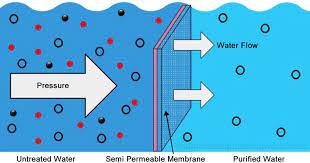
As water scarcity intensifies globally, innovative technologies are needed to ensure adequate supply and optimize treatment. Water processes based on osmosis, the natural diffusion of water across a semi-permeable membrane, have generated growing interest for their efficiency, reliability, and environmental sustainability. Engineered osmosis methods like forward osmosis (FO) and pressure-retarded osmosis (PRO) utilize optimized membranes to harvest osmotic energy and recover water, showing promise to reduce costs and energy consumption in desalination, wastewater reuse, and power generation.
Understanding Osmosis
Osmosis results when a membrane separates solutions of differing solute concentrations, with net movement of water molecules towards the more concentrated solution. This flow generates osmotic pressure, a renewable energy source extractable by engineered processes. FO and PRO apply controlled osmosis mechanisms for valuable purposes like capturing water from waste streams too contaminated for treatment by regular reverse osmosis.
Engineered FO Extracts Water from Challenging Sources
In FO, diluted feed solution flows alongside a concentrated solution called the draw solution, separated by a specialized semi-permeable membrane. Net water transport as osmosis occurs from the feed into the draw solution. Efficiencies are increased using draw solutions with higher osmotic pressures, optimized often using soluble salts. The now diluted draw solution then undergoes a separation process, typically membrane-based, to extract pure water and regenerate the draw solutes for reuse.
Draw solution recovery is where most of the energy in an FO system is actually spent. Common pairings are sodium chloride or magnesium chloride draws recovered by reverse osmosis, and thermolytic draws such as ammonia-carbon dioxide, which are separated with low-grade heat. Where waste heat or sunlight is available, thermally driven recovery is attractive; solar-driven membrane distillation is one of the approaches studied for regenerating concentrated draw solutions without grid electricity.
FO enables water recovery from impaired sources like seawater, municipal wastewater, and industrial effluent. Contaminant rejection rates are far higher than those of porous processes like microfiltration, because the FO membrane is a dense, salt-rejecting layer. FO membranes still foul from particulates, colloids, and organics, but because no hydraulic pressure compacts the foulant layer, the fouling is typically looser and more reversible by simple flushing than in pressure-driven reverse osmosis. This allows wastewater constituent preconcentration and volume reduction using far less energy input. FO thus offers an excellent pretreatment or alternative for high salinity brines and biosolids streams. It can extract water from complex sources for cooling tower operations, agriculture, or groundwater recharge.
PRO Generates Electricity from Salinity Gradients
Pressure-retarded osmosis utilizes saline and freshwater sources on each side of a semi-permeable membrane. Water permeates by osmosis from the freshwater side into the saline side, which is held at a hydraulic pressure below its osmotic pressure (roughly half the osmotic pressure difference maximizes power). The permeate adds volume to the pressurized saline stream, and that extra pressurized flow drives a hydro turbine for electrical power generation.
Rivers flowing into seas offer PRO-accessible salinity gradients. Estimates suggest osmotic power production could meet up to 13% of today’s energy needs, although published estimates of the global technical potential vary widely. Further optimization for commercial applications regarding membranes and systems engineering is ongoing. The best-known pilot, Statkraft’s prototype plant in Norway (2009 to 2013), was halted when available membranes could not reach the roughly 5 W/m² power density considered necessary for economic operation, which is why current research pairs PRO with higher-salinity streams such as desalination brine. PRO helps simultaneously address freshwater contamination and renewable energy goals by deriving sustainable energy from wastewater or seawater flows requiring disposal.
 Advanced Membranes and Module Designs Improve Engineered Osmosis
Recent advances in tailored membrane technology enable FO and PRO implementation for water treatment and energy generation, and engineered osmosis is one of the main drivers of research into novel membranes. Key membrane attributes include high water permeability, salinity rejection, and chemical tolerance to fluxes and environment. Optimized two-dimensional layer and thin film composite (TFC) architectures allow efficient osmotic flow. Promising materials include cellulose derivatives, layered nanocomposites, and graphene oxides, offering excellent flux with mitigated fouling.
Two material families stand out for osmotic processes. Aquaporin-based biomimetic membranes embed water-channel proteins in the selective layer and are among the few next-generation FO membranes already sold commercially. Two-dimensional material-based membranes, including graphene oxide and MXene laminates, offer tunable interlayer channels that could raise water flux further, although swelling and long-term stability in saline water are still being worked out.
Novel membrane module configurations also enhance performance. Hollow fiber and capillary formats offer the highest packing density, while spiral-wound and plate-and-frame modules allow channel spacers on both sides of the membrane, which improves mixing and reduces external concentration polarization. Internal concentration polarization, which occurs inside the porous support layer, is the larger limitation in FO and is addressed mainly through thinner, more open support structures rather than module design. TFCs immobilized in 3D-printed frames leverage fabrication innovations and modeling. Targeted integration within existing infrastructure provides usable, scalable osmosis-based systems.
Applications and When to Use Engineered Osmosis
Engineered osmosis is not a general replacement for reverse osmosis. For ordinary seawater desalination, the thermodynamic minimum energy is the same whichever route is taken, and an FO-RO hybrid adds a membrane stage and a draw solution loop. FO earns its place where the feed is difficult: high-fouling or high-salinity streams where RO would scale or foul quickly, and where concentration, not just clean water, is the goal.
Typical fits include concentrating landfill leachate, produced water from oil and gas operations, and RO or ion exchange brine toward zero liquid discharge; osmotic dilution, in which a municipal effluent is used to dilute seawater ahead of an RO plant; and fertilizer-drawn FO, in which a concentrated fertilizer solution serves as the draw and the diluted product is applied directly as irrigation water. PRO is best suited to sites where a concentrated brine and a low-salinity stream, such as SWRO concentrate and treated wastewater effluent, are available side by side.
Advantages and Limitations
The main advantages of FO are high rejection of a broad range of contaminants, operation at low or no applied pressure, more reversible fouling, and the ability to handle feeds that would be impractical for pressure-driven membranes. PRO’s advantage is a steady, non-intermittent renewable energy source that can also recover some of the energy embedded in desalination brine.
The limitations are equally real. FO water flux is modest, typically in the range of about 5 to 20 liters per square meter per hour for commercial membranes (typical/approximate), so membrane area is large. Reverse solute flux, in which draw solute leaks back into the feed, adds chemical makeup cost and can contaminate the concentrate. Draw recovery often dominates energy use, and the overall system is more complex than single-stage RO. For PRO, low power density, membrane compaction under pressure, and pretreatment costs for natural waters remain the main barriers.
Practical Considerations
Pilot testing on the actual feed is essential, because flux, fouling, and reverse solute flux depend strongly on feed chemistry. Draw solute selection should balance osmotic pressure, reverse flux, toxicity, cost, and ease of recovery. Membrane orientation matters as well: running with the active layer facing the feed reduces fouling, while facing the draw raises flux at the cost of more fouling in the support layer. Cleaning is usually a low-pressure flush or osmotic backwash rather than the aggressive chemical cleans used for RO, but cleaning chemicals still need to be compatible with the membrane, since cellulose triacetate membranes tolerate a narrower pH range than thin film composites.
Future Trajectory Holds Promise for Sustainable Water Solutions
Research into engineered osmosis applications continues advancing. Recent techno-economic modeling indicates that FO-desalination and FO-reverse osmosis hybrid plants could soon become cost-competitive, producing potable water while recycling complex concentrate streams. PRO pilot projects signal a closer realization of osmotic power systems extracting energy from natural water cycles. Machine learning integration may soon optimize membrane fouling, cleaning, and replacement control based on stream characteristics. Further funding and field testing will refine implementation roadmaps leveraging osmosis dynamics for water production and renewable energy generation.
Frequently Asked Questions
What is the difference between forward osmosis and reverse osmosis?
Reverse osmosis applies hydraulic pressure greater than the feed’s osmotic pressure to force water through a membrane. Forward osmosis uses no applied pressure; water moves naturally from the feed into a more concentrated draw solution, which then must be separated to recover product water.
Is forward osmosis more energy efficient than reverse osmosis?
Not for simple desalination, because the draw recovery step consumes the energy saved. FO becomes more efficient when low-grade waste heat can regenerate the draw, when the feed would badly foul an RO system, or when the draw solution is itself the useful product, as in fertilizer-drawn FO.
What draw solutions are used in engineered osmosis?
Sodium chloride and magnesium chloride are the most common draw solutes for RO-regenerated systems. Ammonia-carbon dioxide solutions are used where heat is available for thermal recovery, and fertilizer salts are used where the diluted draw is applied to crops.
Is pressure-retarded osmosis commercially available?
Not yet at commercial scale. Pilot projects have demonstrated the concept, but membrane power densities and system costs have not reached economic thresholds. Current work focuses on pairing PRO with concentrated desalination brine to raise the available osmotic pressure difference.
Conclusion
Given appropriate innovations in membrane materials and system configurations, natural osmosis mechanics can directly enable progress on integrated water and energy sustainability goals. Engineered forward osmosis reliably recovers unusable water from challenging contaminated sources. Pressure-retarded osmosis generates consistent carbon-free electricity from salt concentration differences between wastewater and seawater. With improved manufacturing and modeling techniques, engineered osmosis capacities could soon scale up to provide necessary process water reuse and clean energy. With expanded deployment, engineered osmosis technologies hold a unique promise to help secure water, food, and power access for all on local and global levels against worsening scarcity challenges.