
PFAS Removal & Treatment: Technologies, Regulations & Compliance Guide
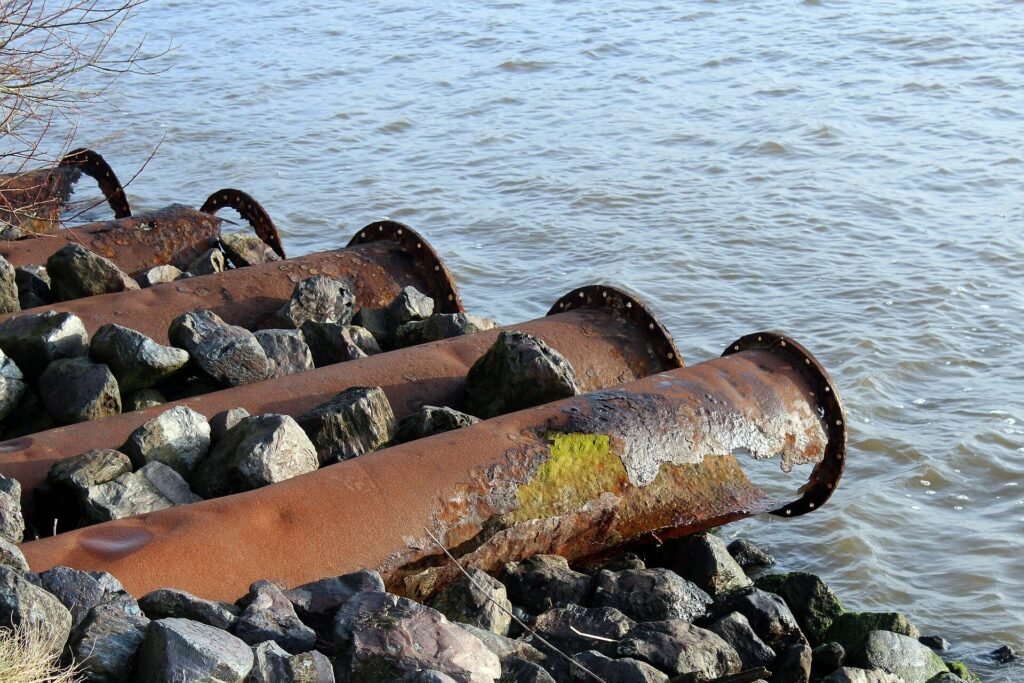
PFAS, or “forever chemicals,” pose a major challenge for water treatment facilities. These persistent compounds resist traditional cleaning methods and can harm human health. New approaches are needed to tackle this growing problem.
Scientists and engineers are developing innovative ways to remove PFAS from wastewater. Granular activated carbon filtration is emerging as a promising technique for PFAS removal. This method can effectively capture these chemicals before they enter the environment.
Other cutting-edge solutions are also showing promise. Researchers at MIT have created a new filtration material that could remove PFAS from water more efficiently. Meanwhile, scientists at Johns Hopkins are working on methods to not only capture PFAS but also destroy these stubborn molecules.
This guide serves as the master reference for PFAS practice across the site, covering the chemistry and health context, the source pathways that put PFAS into a utility’s water, the separation and destruction technologies available, and the testing, cost, residuals, and regulatory questions that surround any treatment decision. The Subcategory Overview below maps each area to its dedicated resource.
Key Takeaways
- PFAS removal requires advanced treatment methods beyond traditional water cleaning techniques.
- New filtration materials and carbon-based systems show potential for effective PFAS capture.
- Research is progressing on technologies to both remove and destroy PFAS molecules.
Subcategory Overview: The PFAS Landscape
PFAS work divides into three broad areas: understanding the contamination problem and where it originates, selecting and operating treatment technology, and managing the testing, cost, residuals, and regulatory program that surrounds it. The subsections below introduce each discipline and link to its dedicated resource.
Understanding the Problem
Before any treatment decision, a utility needs to understand what PFAS are, how they reached the water, and which exposure pathway drives the compliance obligation.
PFAS Basics
PFAS basics covers what municipalities need to understand before making any treatment or communication decision: the structural difference between long-chain compounds such as PFOA and PFOS and the short-chain replacements that have largely displaced them, why the carbon-fluorine bond makes these compounds so persistent, and how PFAS behave differently from the contaminants utilities are accustomed to managing. The distinction between chain lengths matters operationally, because short-chain compounds break through adsorptive media far faster than long-chain compounds and behave differently in every treatment process. Municipalities also face a communication challenge that has no real precedent in water treatment, since detection limits sit far below the levels most people intuitively associate with risk. Establishing a clear internal understanding before public notification is usually the difference between a manageable situation and a crisis of confidence.
PFAS Sources and Contamination
PFAS sources and contamination pathways vary widely, but a small number of point sources account for a disproportionate share of severe groundwater contamination. Aqueous film-forming foam used at airports, military installations, and fire training facilities is the most concentrated and best-documented of these, producing plumes with concentrations orders of magnitude above ambient background. Other significant sources include fluorochemical manufacturing, metal plating, textile and paper coating operations, landfill leachate, and land-applied biosolids. Source identification matters directly to treatment because it predicts the compound profile: an AFFF-impacted site presents a very different mixture from a landfill leachate stream, and that mixture determines which technology will work.
PFAS in Drinking Water
PFAS in drinking water is where regulatory attention has concentrated, because drinking water is the exposure pathway with the clearest health basis and the most direct utility responsibility. Federal maximum contaminant levels for several individual compounds, along with a hazard index approach for certain mixtures, have moved regulation from advisory guidance into enforceable limits with monitoring and public notification obligations. Detection at concentrations near or above those limits triggers a defined sequence of confirmation sampling, notification, and compliance planning that runs on a regulatory clock rather than an engineering one. Because limits and deadlines continue to evolve at both federal and state level, utilities should verify current requirements with their primary agency rather than relying on any published summary.
Treatment Technologies
No single technology addresses the full range of PFAS compounds, and most facilities end up combining a separation step with a residuals management pathway or a destruction technology.
PFAS Wastewater Treatment
PFAS wastewater treatment presents a harder problem than drinking water treatment because the matrix is dirtier, the compound mixture is broader, and conventional treatment does not remove PFAS at all. Biological processes do not degrade these compounds, and in fact precursor transformation during aerobic treatment frequently produces higher measured concentrations of terminal PFAS in the effluent than were present in the influent. That behavior surprises operators who expect treatment to reduce every measured parameter, and it complicates mass balance work considerably. Wastewater facilities also face a distinctive question that drinking water utilities do not: whether to treat the whole plant flow or to pursue source control and pretreatment at the industrial contributors responsible for the load.
PFAS Treatment and Removal
PFAS treatment and removal as a discipline spans the full technology set and, more importantly, the logic for choosing among it. The available options divide into separation technologies, which concentrate PFAS into a smaller stream without destroying it, and destruction technologies, which break the carbon-fluorine bond. Granular activated carbon, ion exchange, and reverse osmosis all fall into the first group and are the proven, widely deployed options; supercritical water oxidation, electrochemical oxidation, and plasma treatment fall into the second and remain largely at pilot and demonstration scale. Because separation always creates a concentrated residual, selecting a separation technology without simultaneously establishing its disposal pathway leaves the problem half solved.
GAC for PFAS
GAC for PFAS is the most widely deployed treatment technology and the usual benchmark against which alternatives are measured. Bituminous coal-based carbon generally outperforms coconut shell or lignite for PFAS service, and vessels are typically configured in lead-lag pairs with empty bed contact times in the 10 to 20 minute range. Bed life varies enormously by compound: long-chain PFOS may run tens of thousands of bed volumes before breakthrough, while short-chain compounds such as PFBA may break through almost immediately, which means a system designed on PFOS data will fail its short-chain limits. Spent carbon can be reactivated thermally, which distinguishes GAC economically from single-use alternatives, though reactivation capacity and transport logistics are real constraints.
Ion Exchange for PFAS
Ion exchange for PFAS uses PFAS-selective anion resins that typically achieve substantially longer run lengths than GAC on the same water, often by a factor of several, and generally handle short-chain compounds better. Empty bed contact times are correspondingly shorter, in the range of 2 to 5 minutes, which makes the vessels smaller and the footprint more compact. The trade-off is that most PFAS-selective resins are operated as single-use media rather than regenerated, because regenerant brine would concentrate PFAS into a difficult liquid stream, so spent resin must be incinerated or landfilled under applicable requirements. Resin cost per pound exceeds carbon substantially, so the economics turn on whether the longer run length compensates.
PFAS Filtration and Filters
PFAS filtration and filters extend from centralized membrane systems down to point-of-use and point-of-entry devices installed at individual taps and services. Point-of-use treatment has become an important interim measure for utilities facing an exceedance while a centralized system is designed and built, and for private well owners outside any utility’s service area. Certification under NSF/ANSI 53 and 58 provides the assurance that a device actually performs as claimed for PFAS reduction, and uncertified devices should be treated with skepticism. The persistent weakness of point-of-use programs is cartridge replacement compliance, since performance depends entirely on households changing media on schedule.
PFAS Remediation
PFAS remediation addresses contaminated sites rather than treatment plant flows, covering soil, groundwater plumes, and the source zones that continue to feed them. Pump-and-treat with GAC or ion exchange remains the workhorse for groundwater, while in-situ approaches including colloidal activated carbon injection and sorbent barriers aim to immobilize plumes without extraction. Soil presents the harder problem, with excavation and disposal, thermal treatment, and soil washing all carrying significant cost and each leaving a residual stream. Because remediation timelines run in decades rather than years, source control at the origin usually delivers more benefit per dollar than plume treatment alone.
Program Management
Treatment technology is only part of a PFAS program. Testing, residuals, cost, and regulatory tracking determine whether a project succeeds as a whole.
PFAS in Biosolids and Waste
PFAS in biosolids and waste has become the constraint that most often determines whether a treatment approach is viable at all. Because separation technologies concentrate rather than destroy, every gram removed from the water appears in spent carbon, spent resin, membrane concentrate, or biosolids, and each of those streams needs a confirmed disposal pathway. Land application of biosolids faces increasing restriction in states that have set soil or crop limits, landfill acceptance policies vary widely and are tightening, and incineration capacity qualified for PFAS-bearing waste is limited. Establishing the residuals pathway during design, in writing, is the single most reliable way to avoid a project that treats water successfully and then cannot dispose of what it captured.
PFAS Testing and Analysis
PFAS testing and analysis spans both the analytical methods used for compliance and the pilot testing that precedes any full-scale installation. Pilot work matters unusually much for PFAS because adsorptive media performance is highly matrix-specific: competing organic matter, sulfate, and the site’s particular compound distribution can shift bed life by a factor of several against vendor literature. Rapid small-scale column testing offers a faster and cheaper alternative to full pilots for comparing media, though it requires careful scaling and does not capture every field effect. On the analytical side, sample handling discipline is critical, since PFAS are present in many common laboratory and field materials and cross-contamination produces false positives that can be very costly to chase.
PFAS Treatment Costs
PFAS treatment costs are dominated by media replacement and residuals disposal rather than by capital equipment, which makes life cycle analysis essential rather than optional. A GAC system and an ion exchange system with similar installed cost can differ by a factor of two or more in annual operating cost depending on the site’s water chemistry and compound profile, and neither can be predicted reliably from literature values alone. Media consumption follows directly from bed life, which follows from pilot data, so cost estimating without testing rests on assumptions that frequently prove wrong by a wide margin. Present worth over twenty years, including media, reactivation or disposal, labor, monitoring, and residuals handling, is the only comparison basis that reflects what a utility will actually spend.
PFAS Regulations and Funding
PFAS regulations and funding operate on two tracks that utilities must follow simultaneously. Federal drinking water limits establish a floor, but many states have adopted their own standards, some more stringent, some covering additional compounds, and some extending to groundwater, surface water, soil, or biosolids where no federal limit exists. On the funding side, state revolving funds, dedicated federal appropriations for emerging contaminants, and settlement proceeds from litigation against manufacturers have all become meaningful sources, each with distinct eligibility rules and application timing. Because both tracks continue to change, utilities should confirm current requirements and available funding directly with their state agency rather than relying on any published summary.
Understanding PFAS and Its Challenges
PFAS are man-made chemicals that persist in the environment and pose risks to human health. These substances have unique properties that make them difficult to remove from water.
Chemical Properties of PFAS
PFAS, or per- and polyfluoroalkyl substances, are a group of chemicals used since the 1940s. They have strong carbon-fluorine bonds, making them resistant to breaking down. This gives PFAS their “forever chemical” nickname.
PFAS repel both water and oil. This useful property led to their wide use in products like non-stick cookware and waterproof clothing. But it also makes PFAS hard to remove from water using standard methods.
There are thousands of PFAS chemicals. Some common ones are PFOA and PFOS. New types are still being created, adding to the challenge of detection and removal.
Environmental and Health Impacts
PFAS contaminate water sources and can build up in living things. They don’t break down naturally, so they stay in the environment for a long time.
In humans, PFAS exposure is linked to health issues like:
- Cancer
- Liver damage
- Immune system problems
- Reproductive issues
PFAS also harm wildlife and ecosystems. They can travel long distances through water and air, spreading far from their source.
Removing PFAS from wastewater is crucial to protect health and the environment. But their strong chemical bonds make this a tough task. New methods are needed to break down these persistent pollutants effectively.
Overview of PFAS Wastewater Treatment
PFAS removal from wastewater poses significant challenges due to their chemical stability. Current methods have limitations in fully eliminating these persistent compounds.
Conventional Treatment Methods
Wastewater treatment plants use several techniques to tackle PFAS. Activated carbon filtration is a common approach. It works by adsorbing PFAS molecules onto carbon particles.
Another method is ion exchange. This process uses special resins to capture PFAS ions from water. Membrane filtration, like reverse osmosis, can also remove PFAS from wastewater.
Some facilities employ advanced oxidation. This method breaks down PFAS using powerful oxidants and UV light. Foam fractionation is sometimes used to concentrate PFAS in a foam layer for removal.
Limitations of Traditional Approaches
Traditional wastewater treatment methods struggle with PFAS. These chemicals resist breakdown, earning the name “forever chemicals”. Many plants aren’t designed to remove PFAS effectively.
Activated carbon and ion exchange can become saturated quickly. This requires frequent replacement, increasing costs. Membrane filtration produces concentrated PFAS waste that needs special disposal.
Advanced oxidation may not fully destroy all PFAS compounds. It can also create harmful byproducts. Foam fractionation isn’t effective for all types of PFAS.
The chemical diversity of PFAS compounds complicates removal. No single method works for all PFAS types. This makes comprehensive treatment challenging and expensive.
One behavior deserves particular emphasis because it runs counter to normal treatment expectations. Conventional biological treatment does not degrade PFAS, and precursor compounds present in the influent can transform during aerobic treatment into terminal PFAS such as PFOA and PFOS. The result is that measured concentrations in the effluent sometimes exceed those in the influent, which is not an analytical error but a real conversion of unmeasured precursors into measured end products.
Advanced PFAS Remediation Technologies
New methods are tackling PFAS contamination in water. These approaches aim to remove or destroy these harmful chemicals more effectively than traditional treatments.
Emerging Removal Technologies
Scientists are developing innovative ways to get rid of PFAS. One promising method uses specialized materials to capture PFAS. These can be added to standard filters, making them more effective.
Another exciting development is a new sensor that detects PFAS in drinking water. This tool measures PFAS levels accurately, helping track contamination.
Researchers are also exploring ways to break down PFAS molecules. A simple method discovered recently shows promise in destroying these persistent chemicals.
Advanced Oxidation Processes
Advanced oxidation processes use powerful oxidants to break down PFAS. These methods often combine UV light, ozone, or hydrogen peroxide to create highly reactive molecules.
These reactions can break the strong carbon-fluorine bonds in PFAS. This process turns the harmful chemicals into less dangerous compounds.
One benefit of advanced oxidation is its ability to treat a wide range of PFAS. It can also work quickly, making it useful for treating large volumes of water.
A qualification belongs here. Conventional hydroxyl radical oxidation, which is highly effective against most organic contaminants, works poorly on PFAS because the carbon-fluorine bond resists radical attack and the fully fluorinated chain offers no easy point of entry. Reductive processes using hydrated electrons, and oxidation systems generating sulfate radicals, have shown better results in research settings. Incomplete treatment also carries a specific risk: partial degradation of longer-chain compounds can generate shorter-chain PFAS that are themselves regulated and harder to remove.
Membrane Filtration Techniques
Membrane filtration is becoming more effective for PFAS removal. New filtration materials can trap even the smallest PFAS molecules.
These advanced membranes use tiny pores to catch PFAS while letting clean water through. Some types can remove over 99% of PFAS from water.
Membrane filtration works well for treating drinking water and industrial wastewater. It can handle high concentrations of PFAS without losing effectiveness.
Reverse osmosis and nanofiltration achieve very high rejection across the full range of chain lengths, including the short-chain compounds that defeat adsorptive media. The limitation is not performance but the concentrate stream, which typically represents 15 to 25 percent of the feed volume at elevated PFAS concentration and requires its own disposal or further treatment. That concentrate handling requirement, rather than membrane cost, usually determines whether the approach is practical at a given site.
Adsorption and Ion Exchange Methods
Adsorption and ion exchange are proven methods for PFAS removal. Activated carbon is a common adsorbent that attracts PFAS molecules to its surface.
Ion exchange resins swap PFAS ions for harmless ones. This process can remove a wide range of PFAS compounds from water.
Students at Northeastern University have developed a cost-effective PFAS removal method using these principles. Their work could help many communities access clean water.
These methods are often used together or with other treatments for better results. They work well in both small-scale and large water treatment systems.
Innovative Chemical and Biological Approaches
Scientists are developing new ways to remove PFAS from water. These methods use chemicals, living things, and eco-friendly processes to break down these tough pollutants.
PFAS Chemical Oxidation
PFAS chemical oxidation uses strong oxidants to break down PFAS molecules. Common oxidants include persulfate, hydrogen peroxide, and ozone. These react with PFAS to form less harmful products.
Heat or UV light often boost oxidation reactions. For example, researchers at MIT created a new material that removes PFAS when exposed to UV light. This method works well for shorter PFAS chains.
Electrochemical oxidation is another promising technique. It uses electricity to generate reactive species that attack PFAS. This approach can treat high PFAS concentrations in industrial wastewater.
Bioremediation Strategies
Bioremediation uses living organisms to clean up pollution. For PFAS, scientists are exploring bacteria and fungi that can break down these chemicals.
Some microbes can use PFAS as a food source. They slowly degrade the compounds over time. Researchers are working to find and improve PFAS-eating microbes.
Another approach uses enzymes from bacteria. These biological catalysts can cut PFAS molecules into smaller pieces. MIT scientists are developing enzymatic biomaterials for PFAS treatment.
Plant-based methods are also under study. Some plants can absorb PFAS from soil and water. This process, called phytoremediation, could help clean up contaminated sites.
Expectations here should be calibrated carefully. Microbial defluorination of fully fluorinated compounds has not been demonstrated at any practical rate, and most reported biological activity involves transformation of partially fluorinated precursors into terminal PFAS rather than destruction of the compounds themselves. Phytoremediation moves PFAS from soil into plant tissue, which relocates the problem into a biomass stream that then requires its own disposal. Bioremediation remains a research direction rather than a deployable technology for PFAS.
Green Chemistry Innovations
Green chemistry aims to design products and processes that reduce harmful substances. For PFAS treatment, this means finding safer, more sustainable methods.
One green approach uses natural minerals to capture PFAS. These materials, like clay and zeolites, can trap PFAS molecules without harsh chemicals.
Northeastern University students created a cost-effective PFAS removal method. Their work shows how green chemistry can lead to practical solutions.
Plasma treatment is another eco-friendly option. It uses electrically charged gas to break down PFAS. This method doesn’t need added chemicals and works quickly.
Physical and Thermal Treatment Options
New methods to break down PFAS chemicals are showing promise. These approaches use electricity or high heat to destroy the strong bonds in PFAS molecules.
Electrochemical Degradation
Electrochemical PFAS degradation uses electricity to break apart PFAS compounds. This process happens in special cells with electrodes.
The electrodes create powerful oxidants. These oxidants attack and break down PFAS molecules.
Factors that affect this method include:
- Electrode material
- Voltage applied
- Treatment time
- Water pH
Researchers are working to make this process more efficient. They aim to use less energy and treat more water.
Energy intensity is the governing constraint. Because electrochemical treatment scales with the mass of contaminant destroyed rather than with volume treated, it becomes far more economical when applied to a concentrated stream, such as membrane concentrate or regenerant, than to a dilute raw water. That pairing, separation first and destruction of the concentrate second, is the configuration most demonstration projects now pursue.
Thermal Destruction Methods
Thermal destruction of PFAS compounds uses very high temperatures. This method can fully break down PFAS.
Key points about thermal destruction:
- Temperatures over 1000°C are often needed
- Special incinerators or furnaces are used
- The process can create harmful byproducts
Scientists are exploring ways to lower the needed temperature. This could make the process safer and cheaper.
Some new methods combine heat with other treatments. These may work better than heat alone.
Two considerations bear on thermal destruction in practice. Incomplete combustion can generate products of incomplete destruction, including shorter-chain fluorinated compounds, so residence time, temperature, and turbulence all require verification rather than assumption. Hydrogen fluoride is a combustion product of fluorinated organics and demands acid gas scrubbing in the off-gas train. Supercritical water oxidation offers an alternative destruction route operating above the critical point of water at substantially lower temperature, and has shown high destruction efficiency in demonstration units, though corrosion and salt precipitation remain engineering challenges.
Selection and Specification Framework
PFAS treatment selection differs from conventional water treatment in one decisive way: the technology that removes the compound does not, in most cases, destroy it. The framework below reflects that.
Step 1: Characterize the Compound Profile, Not Just Total PFAS
A single total PFAS number is insufficient for design. What governs technology selection is the distribution across chain lengths and functional groups, because adsorptive media performance varies by more than an order of magnitude between PFOS and PFBA. A water dominated by long-chain sulfonates will run a GAC bed for a long time; the same bed on a short-chain carboxylate-dominated water may break through in weeks. Analysis should cover the full regulated list plus the compounds likely given the identified source, and it should be repeated across seasons where source water varies.
Step 2: Establish the Residuals Pathway Before Selecting Technology
This step is placed second deliberately, because it eliminates options more often than any performance criterion. Spent GAC requires reactivation capacity or landfill acceptance; spent single-use resin requires incineration or landfill; membrane concentrate requires a discharge route or further treatment. Each of these pathways is subject to acceptance policies that vary by state and by facility and that have been tightening. Obtaining written confirmation of the disposal route during design, rather than assuming it, is the difference between a functioning project and a stranded one.
Step 3: Pilot or Run Rapid Small-Scale Column Testing
Vendor literature and published isotherms are starting points, not design bases. Competing background organic matter, sulfate, and the site’s specific compound mixture shift media performance substantially, and the resulting bed life drives nearly all of the operating cost. Rapid small-scale column testing compares candidate media in weeks at modest cost and is appropriate for screening; a full pilot on the actual water gives the most reliable basis for a large capital commitment. Skipping this step is the most common cause of operating budgets that prove wrong by a factor of two.
Step 4: Work the Sizing and Cost Calculation
A worked example makes the scale of the media question clear.
Flow and bed volume: 2.0 MGD is 1,389 gpm. At 10 minutes total EBCT, required bed volume is 1,389 × 10 = 13,889 gallons, or approximately 1,857 ft³. Split across two vessels in series, each vessel holds about 928 ft³ of carbon.
Vessel geometry: At 12 ft diameter, cross-sectional area is 113 ft², giving a bed depth of 928 ÷ 113 ≈ 8.2 ft per vessel, which sits comfortably in the normal range.
Carbon mass: At an apparent density of 30 lb/ft³, each vessel contains 928 × 30 ≈ 27,850 lb, or roughly 14 tons of carbon.
Bed life: The lead vessel holds 928 × 7.48 ≈ 6,944 gallons, so daily throughput of 2,000,000 gallons equals about 288 bed volumes per day. At a breakthrough of 30,000 bed volumes, typical of long-chain PFOS on bituminous carbon, the lead vessel runs 30,000 ÷ 288 ≈ 104 days, or roughly 3.5 changeouts per year.
Annual media: 27,850 lb × 3.5 ≈ 97,600 lb per year, close to 49 tons. At an all-in delivered and reactivated cost near $2.50/lb, that is approximately $244,000 per year in carbon alone, before labor, freight, monitoring, or vessel maintenance.
The short-chain caveat: if the site’s profile includes significant PFBA or PFBS, breakthrough for those compounds may occur at 5,000 bed volumes or fewer. The same system would then require changeouts roughly every 17 days, raising annual carbon consumption by a factor of six and inverting the comparison against ion exchange entirely.
That last line is the reason compound-specific pilot data matters more for PFAS than for almost any other contaminant. The engineering is straightforward; the media assumption is where projects succeed or fail financially.
Step 5: Compare on Present Worth, Not Installed Cost
Capital equipment is a minority of lifetime spend for PFAS treatment. A twenty-year present worth comparison should include media purchase, reactivation or disposal, freight, changeout labor, vessel and pump maintenance, compliance and process monitoring, and residuals handling. Two systems with nearly identical installed cost routinely differ by well over a million dollars in present worth on the same water, driven entirely by bed life. Sensitivity analysis around the bed life assumption is more informative than precision in any other input.
PFAS Technology Comparison
| Technology | Mechanism | Long-Chain Performance | Short-Chain Performance | Residual Produced | Maturity |
|---|---|---|---|---|---|
| Granular Activated Carbon | Adsorption onto carbon surface | Strong | Weak, rapid breakthrough | Spent carbon, reactivable | Proven, widely deployed |
| Ion Exchange | Anion exchange on selective resin | Strong, longer runs than GAC | Moderate to good | Spent resin, usually single-use | Proven, widely deployed |
| Reverse Osmosis / Nanofiltration | Physical rejection by membrane | Very strong | Very strong | Concentrate, 15-25% of feed | Proven, concentrate-limited |
| Foam Fractionation | Surface-active concentration in foam | Good | Poor | Concentrated foamate | Emerging, niche applications |
| Electrochemical Oxidation | Anodic destruction of C-F bond | Destroys | Destroys | Minimal, off-gas control needed | Pilot and demonstration |
| Supercritical Water Oxidation | Destruction above water critical point | Destroys | Destroys | Mineral salts, HF scrubbing | Demonstration scale |
| Plasma Treatment | Reactive species at gas-liquid interface | Destroys | Partial | Minimal | Research to pilot |
| Thermal Incineration | High-temperature combustion | Destroys | Destroys | Off-gas requiring acid scrubbing | Used for solids, under scrutiny |
| Residual Stream | Source Technology | Typical Pathway | Governing Constraint |
|---|---|---|---|
| Spent granular carbon | GAC adsorption | Thermal reactivation or landfill | Reactivation capacity and transport logistics |
| Spent ion exchange resin | Single-use selective resin | Incineration or landfill | Acceptance policy, incineration capacity |
| Membrane concentrate | RO and nanofiltration | Discharge, deep well, or further treatment | Discharge permit limits on the concentrate |
| Foamate | Foam fractionation | Destruction technology feed | Availability of a destruction outlet |
| Biosolids | Wastewater biological treatment | Land application, landfill, or incineration | State soil and crop limits, tightening acceptance |
| Excavated soil | Site remediation | Landfill or thermal treatment | Volume, haul distance, and disposal cost |
Emerging Research and Future Directions
Scientists are exploring cutting-edge methods to tackle PFAS contamination. These approaches aim to break down these persistent chemicals more effectively and efficiently than current techniques.
Photocatalysis in PFAS Removal
Photocatalysis shows promise for PFAS removal. This process uses light to speed up chemical reactions. Researchers are testing new materials that can break down PFAS when exposed to sunlight or artificial light.
One key focus is developing more efficient photocatalysts. These materials could make PFAS removal faster and cheaper. Some new catalysts can work with visible light, not just UV rays.
Tests show that certain metal oxides perform well as photocatalysts for PFAS. Titanium dioxide is a popular choice. It’s cheap and non-toxic. Scientists are also looking at combining different materials to boost effectiveness.
Innovations in Environmental Engineering
Environmental engineers are creating new ways to clean up PFAS. They’re designing systems that can treat large volumes of water quickly and thoroughly.
One exciting area is the use of novel filtration materials. These can trap PFAS more effectively than traditional filters. Some new materials can even destroy PFAS molecules, not just remove them.
Researchers are also working on ways to treat contaminated soil. This is important because PFAS can spread from soil to water. New methods include using plants to absorb PFAS and special foams to extract the chemicals.
Another promising approach is electrochemical treatment. This uses electricity to break down PFAS. It’s showing good results in lab tests and small-scale trials.
Field Notes
The observations below recur across PFAS projects regardless of the technology selected.
Commissioning Considerations
PFAS systems require sampling discipline that most water treatment commissioning does not. Because PFAS are present in many common materials, including certain tubing, thread sealants, waterproof field clothing, and some laboratory consumables, cross-contamination during commissioning sampling is a real and expensive risk. Field blanks and equipment blanks should be collected as a matter of course rather than as an exception. Baseline sampling across the full vessel train, including the lag vessel effluent, establishes the reference against which later breakthrough is measured. On adsorptive systems, the first several months of operating data are worth more than any vendor projection, and the sampling frequency should be high enough early on to locate the actual breakthrough curve.
Common Specification Mistakes
Several errors appear repeatedly. Systems are designed on total PFAS or on PFOS and PFOA alone, then fail short-chain limits that the media was never going to meet. Media life is taken from vendor literature rather than from site-specific testing, producing operating budgets wrong by a large factor. The residuals disposal pathway is assumed rather than confirmed in writing, and becomes a crisis after commissioning. Lead-lag piping is installed without the valving needed to reverse vessel roles, forcing a full shutdown at every changeout. Sampling ports are omitted between vessels, leaving operators unable to detect lead-vessel breakthrough before it reaches the effluent.
Pro Tip
Specify sample ports at the inlet, between lead and lag vessels, and at the final effluent, and use the intermediate port from day one. Monitoring only the final effluent means the first evidence of lead-vessel exhaustion arrives when the lag vessel is already loaded, which forfeits the entire protective purpose of the lead-lag arrangement and can push the system into a compliance exceedance during a changeout. The intermediate port costs almost nothing at construction and is difficult and expensive to retrofit into a pressure vessel train. Utilities that monitor it can schedule changeouts on data rather than on a calendar assumption, which is usually the single largest available operating saving.
Operations and Maintenance Across Technologies
Maintenance demand differs in character across the technology set. GAC systems require media changeout as the dominant labor event, along with backwashing where applicable, vessel inspection, and coordination of reactivation logistics that can involve months of lead time. Ion exchange systems reduce changeout frequency but concentrate cost into a single-use media purchase and a disposal event that must be scheduled and permitted. Membrane systems add cleaning cycles, integrity verification, and continuous management of a concentrate stream that never stops requiring attention. Across all technologies, the sampling and reporting burden is heavier than utilities anticipate and should be staffed explicitly rather than absorbed into existing duties.
Troubleshooting by Symptom
Most PFAS system problems resolve to a short list. Earlier-than-projected breakthrough usually indicates either a compound profile shift in the source water or competing organic matter loading the media, and comparing the current influent speciation against the design basis distinguishes the two. Effluent detections at very low concentrations with no corresponding influent change frequently trace to sampling cross-contamination rather than to media exhaustion, and should be confirmed with field blanks before any operational response. Rising differential pressure across a vessel points to particulate loading and inadequate prefiltration rather than to adsorptive capacity. Erratic results between duplicate samples almost always indicate a handling problem in the sampling chain.
Common Mistake
Treating separation as if it were destruction. Granular activated carbon, ion exchange, and reverse osmosis do not eliminate PFAS; they move it from a large dilute stream into a small concentrated one. Every project that selects a separation technology without a confirmed, written disposal pathway for the resulting spent media or concentrate has deferred rather than solved the problem, and disposal acceptance policies have been tightening rather than loosening. Establish where the captured PFAS will go, and at what cost, before the technology decision is finalized. A treatment system that works perfectly and produces a residual nobody will accept is a failed project.
Design Details and Standards
Sizing Methodology Overview
Adsorptive system sizing proceeds from empty bed contact time and target bed life rather than from removal efficiency, because the media removes essentially completely until it does not. Establish design flow, select an EBCT appropriate to the media and compound profile, calculate required bed volume, and distribute it across vessels in a lead-lag or parallel configuration that meets both hydraulic loading and depth constraints. Bed life in bed volumes to breakthrough, obtained from site-specific testing, then converts directly into changeout frequency and annual media consumption. Membrane systems are sized instead from flux, recovery, and the concentrate volume the site can accept, with recovery frequently limited by concentrate disposal rather than by membrane capability.
Key Parameters by Technology
The governing parameters differ by technology family. Adsorptive systems are characterized by empty bed contact time, hydraulic loading rate, bed depth, apparent density, and bed volumes to breakthrough for each compound of concern. Ion exchange adds resin capacity and selectivity, with shorter EBCT than carbon. Membrane systems are characterized by flux, recovery, transmembrane pressure, and rejection by compound. Destruction technologies are characterized by destruction and removal efficiency, energy per unit mass destroyed, and the completeness of mineralization, since partial degradation that generates shorter-chain products is not a successful outcome. Applying a parameter framework from one family to another is a persistent source of specification error.
Applicable Standards and References
Compliance analysis for drinking water relies on EPA Methods 533 and 537.1, with EPA Method 1633 developed for wastewater, biosolids, soil, and other complex matrices, and the choice of method should match the matrix rather than defaulting to the most familiar one. Drinking water obligations derive from the Safe Drinking Water Act, while wastewater discharge obligations derive from the Clean Water Act through the National Pollutant Discharge Elimination System and, for indirect dischargers, the National Pretreatment Program. Point-of-use and point-of-entry devices are certified under NSF/ANSI 53 and NSF/ANSI 58, and treatment chemicals and system components fall under NSF/ANSI 60 and 61. Design guidance is developed in the Water Research Foundation and AWWA literature on adsorptive media for PFAS, and residuals disposal is governed by Resource Conservation and Recovery Act requirements together with state-specific acceptance policies that frequently exceed the federal baseline. Because federal and state requirements in this area continue to change, current limits and deadlines should be confirmed with the primary regulatory agency rather than taken from any published summary.
Specification Checklist
- Characterize the full compound profile by chain length and functional group, not total PFAS alone.
- Confirm which regulatory limits apply, federal and state, and on what compliance timeline.
- Identify the contamination source, since it predicts the compound mixture and any co-contaminants.
- Analyze background water quality including total organic carbon, sulfate, nitrate, and alkalinity, all of which compete for media capacity.
- Obtain written confirmation of the residuals disposal pathway before finalizing technology selection.
- Conduct rapid small-scale column testing or full pilot testing on the actual water.
- Establish design EBCT and bed life from test data rather than from vendor literature.
- Specify lead-lag valving that permits vessel role reversal without a system shutdown.
- Include sample ports at inlet, between vessels, and at final effluent.
- Provide prefiltration adequate to protect the media from particulate loading.
- Confirm NSF/ANSI 61 certification for all wetted components and NSF/ANSI 53 or 58 for any point-of-use devices.
- Define the sampling program, including frequency, methods, field blanks, and equipment blanks.
- Staff the monitoring and reporting burden explicitly rather than absorbing it into existing duties.
- Develop a twenty-year present worth comparison with sensitivity analysis around the bed life assumption.
Frequently Asked Questions
PFAS removal from wastewater is an active area of research and innovation. New technologies and methods are constantly emerging to tackle this challenging environmental issue.
What recent innovations have been made in PFAS removal from wastewater?
A new PFAS removal process has been developed to address pollution in the semiconductor industry. This method aims to eliminate PFAS contamination before it enters wastewater streams.
The process is timely due to expected growth in semiconductor production. It offers a proactive approach to PFAS abatement for more sustainable manufacturing practices.
What is the effectiveness of advanced oxidation processes in degrading PFAS compounds?
Advanced oxidation processes show promise in breaking down PFAS molecules. These methods use powerful oxidants like ozone or hydrogen peroxide combined with UV light or catalysts.
The effectiveness varies depending on the specific PFAS compounds present. Short-chain PFAS tend to degrade more easily than long-chain varieties.
How does ion exchange technology contribute to the reduction of PFAS in water treatment systems?
Ion exchange resins can effectively remove PFAS from water by swapping out PFAS ions for harmless ones. This technology is already used in some advanced wastewater treatment plants.
The resins can be regenerated, allowing for repeated use. However, proper disposal of the concentrated PFAS waste remains a challenge.
What role do biochar filters play in the adsorption of PFAS in contaminated water?
Biochar filters are gaining attention for PFAS removal. These carbon-rich materials are produced by heating organic matter in low-oxygen conditions.
Biochar can adsorb PFAS molecules from water, trapping them in its porous structure. The effectiveness depends on the biochar's properties and the specific PFAS compounds present.
Which membranes are most efficient for filtering PFAS during the water treatment process?
Nanofiltration and reverse osmosis membranes are highly effective at removing PFAS from water. These tight membranes can filter out even the smallest PFAS molecules.
However, membrane filtration requires significant energy and produces a concentrated waste stream that needs further treatment.
What are the limitations and challenges associated with current PFAS remediation methods in wastewater treatment?
Cost remains a major challenge for many PFAS removal technologies. Wastewater treatment is already expensive, and adding PFAS removal increases costs further.
Complete PFAS removal is difficult due to the wide variety of compounds. Some methods work well for certain PFAS but are less effective for others.
Disposal of PFAS-contaminated waste from treatment processes is also problematic. More research is needed to find safe, long-term disposal solutions.
What recent innovations have been made in PFAS removal from wastewater?
A new PFAS removal process has been developed to address pollution in the semiconductor industry. This method aims to eliminate PFAS contamination before it enters wastewater streams.
The process is timely due to expected growth in semiconductor production. It offers a proactive approach to PFAS abatement for more sustainable manufacturing practices.
What is the effectiveness of advanced oxidation processes in degrading PFAS compounds?
Advanced oxidation processes show promise in breaking down PFAS molecules. These methods use powerful oxidants like ozone or hydrogen peroxide combined with UV light or catalysts.
The effectiveness varies depending on the specific PFAS compounds present. Short-chain PFAS tend to degrade more easily than long-chain varieties.
How does ion exchange technology contribute to the reduction of PFAS in water treatment systems?
Ion exchange resins can effectively remove PFAS from water by swapping out PFAS ions for harmless ones. This technology is already used in some advanced wastewater treatment plants.
The resins can be regenerated, allowing for repeated use. However, proper disposal of the concentrated PFAS waste remains a challenge.
What role do biochar filters play in the adsorption of PFAS in contaminated water?
Biochar filters are gaining attention for PFAS removal. These carbon-rich materials are produced by heating organic matter in low-oxygen conditions.
Biochar can adsorb PFAS molecules from water, trapping them in its porous structure. The effectiveness depends on the biochar's properties and the specific PFAS compounds present.
Which membranes are most efficient for filtering PFAS during the water treatment process?
Nanofiltration and reverse osmosis membranes are highly effective at removing PFAS from water. These tight membranes can filter out even the smallest PFAS molecules.
However, membrane filtration requires significant energy and produces a concentrated waste stream that needs further treatment.
What are the limitations and challenges associated with current PFAS remediation methods in wastewater treatment?
Cost remains a major challenge for many PFAS removal technologies. Wastewater treatment is already expensive, and adding PFAS removal increases costs further.
Complete PFAS removal is difficult due to the wide variety of compounds. Some methods work well for certain PFAS but are less effective for others.
Disposal of PFAS-contaminated waste from treatment processes is also problematic. More research is needed to find safe, long-term disposal solutions.
Key Takeaways
- Separation is not destruction — GAC, ion exchange, and reverse osmosis concentrate PFAS rather than eliminate it, so the residuals pathway must be confirmed in writing before technology is selected.
- Chain length governs everything — a system designed on PFOS data can fail short-chain limits outright, because breakthrough for compounds like PFBA may occur at a fraction of the bed volumes.
- Pilot data drives the budget, not the design — the engineering is straightforward; bed life is where projects succeed or fail financially, and it cannot be taken from literature.
- Conventional treatment does not remove PFAS — and precursor transformation during biological treatment can raise measured effluent concentrations above influent, which is a real conversion rather than an analytical error.
- Hydroxyl radical oxidation works poorly here — the carbon-fluorine bond resists it, and partial degradation of long-chain compounds can generate regulated short-chain products.
- Destruction pairs best with concentration — electrochemical and supercritical routes scale with contaminant mass, so they are far more economical applied to concentrate than to raw water.
- Sample discipline is a design parameter — cross-contamination from common field and lab materials produces false positives that are expensive to chase, and intermediate sample ports are nearly impossible to retrofit.
Conclusion
PFAS treatment inverts a familiar assumption in water engineering. For most contaminants, selecting a technology that achieves the required removal is the substance of the problem. For PFAS, several technologies achieve the required removal reliably, and the real questions lie on either side of that step: what compound mixture is actually present, and where does the captured material go afterward.
That framing suggests a consistent order of work. Characterize the compound profile across chain lengths rather than reporting a total. Confirm the applicable federal and state limits and the compliance clock they start. Establish and document the residuals pathway before committing to a technology, since disposal acceptance eliminates options more often than performance does. Test on the actual water, because bed life drives the operating budget and cannot be borrowed from literature. Only then compare candidates on twenty-year present worth, with the bed life assumption stress-tested rather than treated as fixed.
The destruction technologies now moving through demonstration will eventually change this calculus, particularly when paired with a separation step that concentrates the load first. Until they are commercially mature, the practical path for most utilities remains a proven separation technology, sized on site-specific data, with a confirmed disposal route. Each subcategory linked above develops the specific design criteria, operating parameters, cost drivers, and regulatory context needed once that framing work is complete.