
Reverse Osmosis in Water Treatment: How It Works and Why It Matters
Reverse Osmosis in Water Treatment: How It Works and Why It Matters
In an age where clean and safe drinking water is more crucial than ever, reverse osmosis water treatment stands out as a powerful solution for ensuring water quality. This advanced filtration technology effectively removes contaminants, making it a popular choice for both home use and industrial applications. In this post, we’ll explore how the reverse osmosis process works, its various components, and the significant benefits it brings to municipalities and wastewater treatment facilities alike. Join us as we dive into the world of reverse osmosis and discover why it matters for our water supply.
Understanding Reverse Osmosis
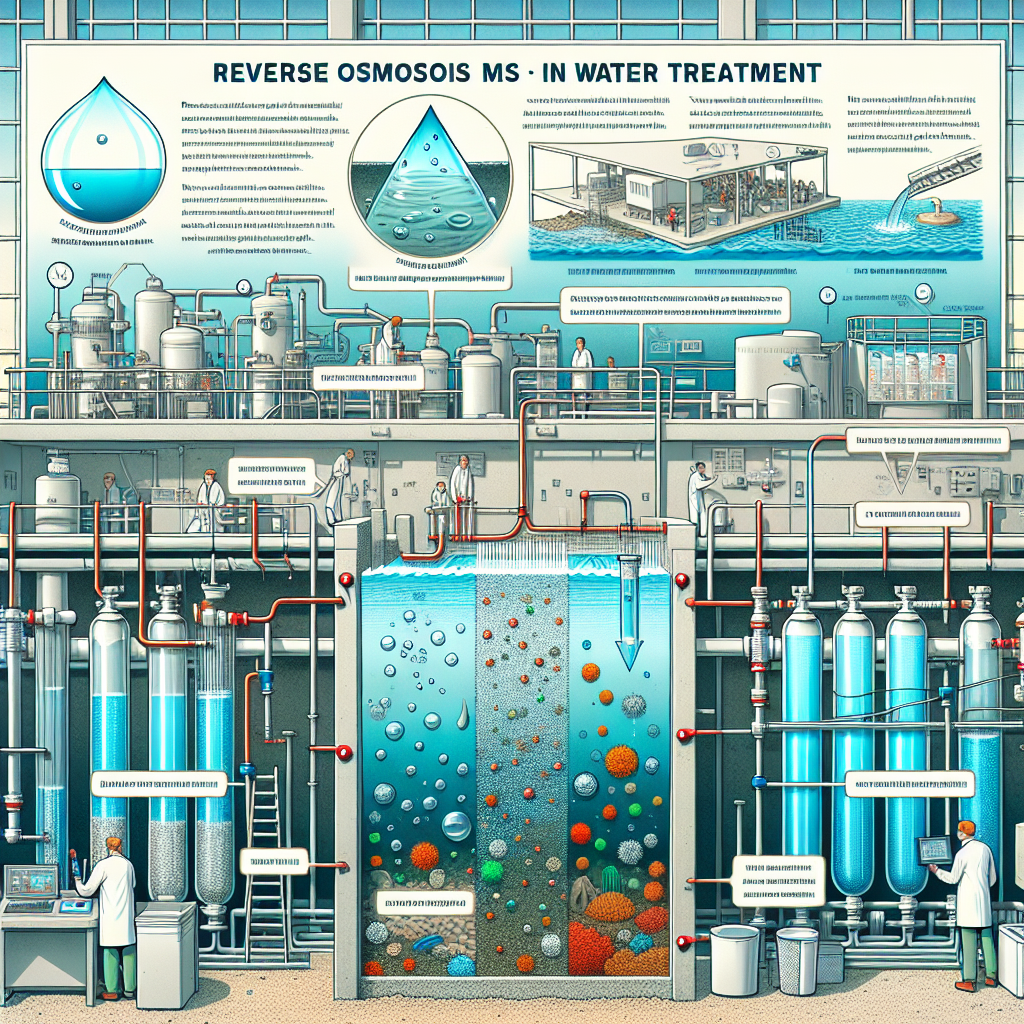
Reverse osmosis water treatment is a critical process that leverages osmotic pressure to filter out impurities from water. In this method, water is forced through a semi-permeable membrane that allows only certain molecules, primarily water, to pass while blocking contaminants such as salts, bacteria, and larger particles.
How Reverse Osmosis Differs from Other Filtration Methods
Unlike conventional filtration systems that rely on gravity or simple mechanical barriers, reverse osmosis systems actively push water through a membrane. This action results in higher efficiency in contaminant removal compared to methods like activated carbon filtration or sediment filters. For example, while activated carbon can reduce chlorine and some organic compounds, it doesn’t effectively remove dissolved salts or heavy metals.
The Science Behind Osmotic Pressure
Osmotic pressure is the driving force behind reverse osmosis. When two solutions of different concentrations are separated by a semi-permeable membrane, the solvent moves from the lower concentration side to the higher concentration side until equilibrium is reached. In reverse osmosis, pressure is applied to the more concentrated side to overcome this natural tendency, effectively reversing the osmotic flow and allowing purified water to be collected on the other side.
A practical consideration for users of reverse osmosis systems is maintenance. The membranes require regular monitoring and eventual replacement due to fouling and scaling—issues that can significantly affect performance. For instance, in a home under-sink RO system, neglecting routine maintenance could lead to reduced water quality and increased costs for repairs or replacements.
Another important aspect often overlooked is the waste generated during the reverse osmosis process. While RO systems are effective at purifying water, they also produce wastewater that typically ranges from three to five gallons for every gallon of purified water produced. This factor should be considered when evaluating the overall efficiency and environmental impact of using an RO system.
Reverse osmosis is not just about purification; it's also about managing resources efficiently.
Components of a Reverse Osmosis System
A reverse osmosis water treatment system comprises several critical components that work together to ensure effective filtration and purification. At the core is the RO membrane, which plays an essential role in separating impurities from the water. This membrane is typically made from polyamide thin-film composite material, designed to allow only water molecules to pass while blocking contaminants like salts and heavy metals.
Membrane Types Used in RO Systems
There are primarily two types of membranes used in reverse osmosis systems: spiral-wound and flat-sheet. Spiral-wound membranes are more common due to their high surface area, allowing for greater water flow and efficiency in contaminant removal. Flat-sheet membranes, while less efficient in space usage, can be beneficial for specific applications requiring lower flow rates or unique configurations.
Pre-treatment Processes for Optimal Performance
Pre-treatment is crucial for maintaining the longevity and efficiency of an RO system. This often includes sediment filters to remove larger particles that could clog the membrane and activated carbon filters to eliminate chlorine, which can damage the RO membrane. Failing to implement adequate pre-treatment can lead to premature fouling of membranes, resulting in increased maintenance costs and reduced system performance.
Post-treatment Processes to Improve Water Quality
After passing through the RO membrane, water may require additional post-treatment processes such as remineralization or UV disinfection. Remineralization adds essential minerals back into the purified water for taste and health benefits, while UV disinfection ensures any remaining microorganisms are eliminated. Without these steps, users may end up with overly acidic or microbiologically unsafe drinking water.
The effectiveness of a reverse osmosis system hinges on proper component integration.
Consider a commercial application where an industrial facility uses reverse osmosis for treating process water. They implemented a robust pre-treatment system that includes both sediment and activated carbon filters, followed by advanced monitoring of membrane performance. This proactive approach has led to significantly reduced downtime and maintenance costs while ensuring consistent water quality throughout operations.
One common misconception is that all reverse osmosis systems are created equal. In practice, variations in component quality—such as membrane type and pre/post-treatment capabilities—can dramatically affect overall performance and maintenance needs. Users must carefully evaluate these factors when selecting an RO system to ensure it meets their specific water treatment requirements.
Applications of Reverse Osmosis in Water Treatment
Reverse osmosis water treatment finds extensive applications across various sectors, significantly contributing to water quality improvement. Its versatility allows it to adapt to different contexts, from municipal water supply systems to industrial processes.
Use of RO in Municipal Water Supply Systems
Many municipalities have adopted reverse osmosis systems to enhance the safety and quality of drinking water. By removing contaminants such as heavy metals, nitrates, and pathogens, RO systems help municipalities comply with stringent regulatory standards. However, the initial investment for installation can be substantial, requiring careful budgeting and planning.
Consider a city that implemented an RO system to address high levels of lead in its drinking water supply. This decision not only improved public health outcomes but also restored community trust in local government. The long-term benefits often outweigh the upfront costs when considering potential health risks and associated liabilities.
Role of RO in Wastewater Recycling
Reverse osmosis plays a crucial role in wastewater recycling by treating effluent before it is discharged or reused. This application is particularly valuable in regions facing water scarcity, as it enables the recovery of valuable resources from wastewater streams. However, the energy requirements for operating RO systems can be high, leading to increased operational costs.
For example, a wastewater treatment facility may utilize reverse osmosis to reclaim water for irrigation purposes. This process not only conserves freshwater resources but also reduces the burden on local aquifers. Despite its advantages, facilities must balance energy consumption with the benefits of resource recovery.
Industrial Applications of Reverse Osmosis
'In industrial settings, reverse osmosis is employed for various purposes such as process water treatment and product purification. Industries like food and beverage rely on RO technology to ensure high purity levels essential for product quality. However, users must be aware that not all contaminants are effectively removed by reverse osmosis alone; additional treatment methods may be necessary depending on specific contaminants present.
'A beverage manufacturer might implement an advanced RO system followed by UV disinfection to remove any remaining microorganisms. This layered approach ensures that the final product meets safety standards while maximizing efficiency in contaminant removal.
The effectiveness of reverse osmosis varies based on application context; users should tailor systems accordingly.
Benefits of Reverse Osmosis Water Treatment
Reverse osmosis water treatment stands out primarily for its high efficiency in removing a wide range of contaminants. This method can eliminate impurities like heavy metals, salts, and microorganisms that other filtration systems often miss. For instance, an RO system can reduce lead levels in drinking water to nearly undetectable amounts, a critical factor for public health in areas with aging infrastructure.
High Efficiency in Removing Contaminants
The reverse osmosis process utilizes a semi-permeable membrane that allows only water molecules to pass while blocking larger contaminants. This efficiency is particularly beneficial in municipal water treatment facilities where compliance with health regulations is non-negotiable. However, users must consider the trade-off between high contaminant removal efficiency and the system's initial cost and ongoing maintenance requirements.
Reduction of Chemical Usage Compared to Traditional Methods
Another notable advantage of reverse osmosis is its ability to minimize the need for chemical treatments. Conventional methods often rely on chemical agents for coagulation or disinfection, which can lead to additional waste and environmental concerns. In contrast, an RO system provides a more eco-friendly alternative by reducing reliance on these chemicals while still achieving high levels of purification.
For example, an industrial facility focusing on food processing adopted reverse osmosis technology to purify its water supply without using harsh chemicals. This shift not only improved product quality but also enhanced safety standards and reduced chemical handling costs significantly.
Compliance with Regulatory Standards
'Regulatory compliance is another critical benefit of reverse osmosis systems. Many municipalities face stringent guidelines regarding safe drinking water standards set by organizations like the EPA. Reverse osmosis helps meet these requirements effectively by providing consistent removal rates for harmful substances that could otherwise compromise public health.
'However, maintaining compliance requires diligent monitoring and regular maintenance of the RO system itself. Users often overlook this aspect; neglecting routine checks can lead to compromised water quality and potential legal repercussions.
Overall, reverse osmosis offers significant advantages in contaminant removal, reduced chemical usage, and regulatory compliance, making it a vital technology in modern water treatment.
Challenges and Limitations of Reverse Osmosis
Reverse osmosis water treatment, while highly effective, faces several challenges that can impact its efficiency and practicality. One of the most significant issues is membrane fouling and scaling, which can severely reduce the system's performance. This occurs when contaminants accumulate on the membrane surface, creating a barrier that hinders water flow and increases pressure requirements.
Membrane Fouling and Scaling Issues
Fouling can be caused by organic matter, sediments, or inorganic minerals that precipitate on the membrane. For instance, in a municipal water treatment facility with high levels of calcium carbonate, scaling can occur quickly if proper pre-treatment steps are not taken. Regular maintenance is crucial; otherwise, operators may face increased operational costs due to more frequent membrane replacements.
Energy Consumption Concerns
Another drawback of reverse osmosis systems is their energy consumption. The reverse osmosis process requires significant pressure to force water through the membrane, which can result in elevated energy costs. In industrial settings or large-scale municipal applications, this energy demand must be factored into the overall operational budget.
'For example, a large desalination plant utilizing reverse osmosis technology may spend substantial amounts on electricity to maintain optimal pressure levels for efficient water purification. While advancements in energy recovery systems are helping mitigate these costs, users must remain aware of the balance between performance and energy efficiency.
Cost Considerations for Municipalities
'The initial investment for installing a reverse osmosis system can be daunting for municipalities. Beyond the capital expenditure for equipment and installation, ongoing maintenance costs—such as routine monitoring, chemical cleaning agents for fouling prevention, and periodic RO membrane replacement—must also be accounted for.
Investing in reverse osmosis requires careful financial planning; municipalities should assess both short-term costs and long-term benefits.
Recent Advancements in Reverse Osmosis Technology
Recent advancements in reverse osmosis water treatment have significantly enhanced the efficiency and sustainability of this technology. Innovations in membrane materials, energy recovery systems, and integration with renewable energy sources are transforming how we approach water purification.
Innovations in Membrane Materials
The development of new membrane materials has been a game-changer for reverse osmosis systems. For instance, researchers are now utilizing thin-film composite membranes that not only improve filtration rates but also reduce fouling tendencies. This translates to longer lifespans for membranes and less frequent replacements, ultimately lowering operational costs.
A practical example can be seen in the use of graphene oxide membranes. These membranes exhibit superior permeability and selectivity compared to traditional materials, allowing for faster water flow while effectively rejecting contaminants. As a result, facilities adopting these advanced membranes can achieve higher output with lower energy inputs.
Improved Energy Recovery Systems
Energy recovery systems have also seen significant improvements, addressing one of the major drawbacks of reverse osmosis: high energy consumption. Modern systems utilize pressure exchangers that capture energy from the pressurized wastewater stream to help power the incoming feedwater. This technology can reduce overall energy usage by up to 60%, making RO systems more cost-effective in both industrial and municipal applications.
'Take desalination plants as an example; by implementing these advanced energy recovery methods, facilities are not only cutting costs but also reducing their carbon footprint. The integration of such technologies is essential for making large-scale desalination more viable and environmentally friendly.
Integration with Renewable Energy Sources
'Another noteworthy advancement is the integration of reverse osmosis systems with renewable energy sources such as solar or wind power. By harnessing renewable energy, water treatment facilities can operate with minimal environmental impact while ensuring a stable supply of purified water.
'This shift towards sustainable practices reflects an industry trend where operators are increasingly prioritizing eco-friendly solutions alongside efficiency.
In conclusion, these advancements are not just technical upgrades; they represent a significant shift towards more sustainable practices in water treatment. Facilities that adopt these innovations can expect improved performance metrics alongside reduced environmental impacts.
Case Studies: Successful Implementation of RO Systems
The real-world applications of reverse osmosis water treatment illustrate its effectiveness across various contexts. One notable instance is the City of San Diego's desalination project, which showcases how RO technology can transform seawater into a reliable freshwater source. This facility employs advanced reverse osmosis systems to remove salts and other contaminants, providing the city with a sustainable water supply that is less dependent on traditional sources.
Example from the City of San Diego's Desalination Project
San Diego's desalination plant, operational since 2015, produces approximately 50 million gallons of drinking water each day. By utilizing a multi-stage reverse osmosis process, the facility effectively reduces salinity levels in seawater to meet drinking water standards. This implementation not only addresses local water scarcity but also serves as a model for similar projects in coastal regions facing freshwater shortages.
Case Study on Wastewater Reuse at Orange County Sanitation District
Another compelling example is the Orange County Sanitation District's (OCSD) groundwater replenishment system. This facility utilizes reverse osmosis as part of a comprehensive wastewater recycling initiative aimed at bolstering local aquifers. The OCSD processes treated wastewater through advanced filtration and purification stages, including reverse osmosis, to produce high-quality water suitable for indirect potable reuse.
The OCSD's system can produce up to 100 million gallons of purified water daily, significantly contributing to regional water supply stability.
'While the benefits are clear, challenges such as membrane fouling and energy consumption must be managed diligently. The OCSD has implemented rigorous maintenance protocols and energy recovery systems to optimize performance and minimize costs associated with their RO processes.
Implementation at a Large Industrial Facility such as Coca-Cola
'In industrial settings, companies like Coca-Cola have integrated reverse osmosis systems into their production processes for both product quality and sustainability goals. Their facilities utilize RO technology for treating process water to ensure it meets stringent safety standards required for beverage production.
- 'Coca-Cola's plants report significant reductions in chemical usage due to the high efficiency of RO systems compared to traditional methods.
- 'The implementation not only enhances product quality but also aligns with corporate sustainability initiatives by reducing overall environmental impact.
Future Trends in Reverse Osmosis Water Treatment
The landscape of reverse osmosis water treatment is evolving rapidly, driven by technological advancements and growing environmental concerns. Emerging technologies such as forward osmosis and nanofiltration are gaining traction as alternatives or enhancements to traditional reverse osmosis systems. These innovations aim to improve efficiency and reduce energy consumption, addressing some of the primary challenges associated with conventional RO systems.
Emerging Technologies Like Forward Osmosis and Nanofiltration
Forward osmosis, for example, utilizes a draw solution with a higher osmotic pressure to pull water through a semi-permeable membrane. This process can operate at lower pressures compared to reverse osmosis, potentially reducing energy costs. Nanofiltration also presents opportunities for selective contaminant removal without the extensive energy requirements of RO systems. Both methods are still in development but show promise for applications where energy efficiency is paramount.
Smart Monitoring Systems for Better Efficiency Tracking
Another significant trend is the integration of smart monitoring systems that provide real-time data on system performance. These advanced analytics tools enable operators to track efficiency metrics, detect potential fouling or scaling issues early, and optimize maintenance schedules accordingly. For instance, a municipal water treatment facility implementing IoT-based sensors can proactively address membrane fouling before it impacts water quality, thereby enhancing operational reliability.
Green Initiatives Driving New Research on Sustainable Practices
'Sustainability is becoming a focal point in reverse osmosis research. As awareness grows regarding water scarcity and environmental impact, there's an increasing push for eco-friendly practices in water treatment. This includes developing membranes made from biodegradable materials and optimizing energy recovery systems to minimize waste. For example, research into hybrid systems that combine RO with renewable energy sources like solar power could significantly reduce the carbon footprint associated with large-scale water purification.
The future of reverse osmosis lies not just in improved technology but also in sustainable practices that align with global environmental goals.