
Top 10 Pressure Relief Valves Manufacturers for Water and Wastewater
Introduction to Pressure Relief in Hydraulic Systems
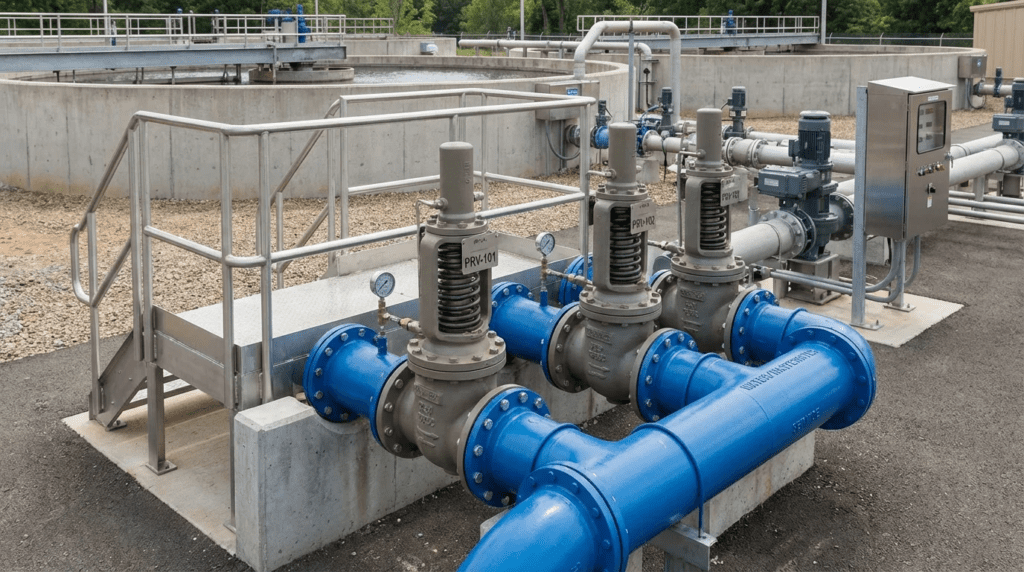
In municipal and industrial fluid handling, the difference between a reliable system and a catastrophic failure often rests on a single component: the pressure relief valve. Engineers frequently design pumping stations and transmission mains focusing heavily on pump curves and pipe schedules, yet they often treat surge protection as an afterthought. This oversight is costly. A transient pressure surge—commonly known as water hammer—can generate pressures exceeding ten times the system’s working pressure, resulting in ruptured mains, collapsed pipes, and significant environmental non-compliance fines.
Understanding the Top 10 Pressure Relief Valves Manufacturers for Water and Wastewater is not merely about brand recognition; it is about matching specific hydraulic characteristics to the unique demands of a distribution network or treatment facility. These valves serve as the critical “circuit breakers” of hydraulic systems. They remain dormant for 99% of their service life but must react within milliseconds when a pump trips or a valve slams shut downstream. If the relief valve is slow to open, the pipe bursts. If it is slow to close, the system drains, causing negative pressure and potential pathogen intrusion.
This article provides a rigorous, engineer-to-engineer analysis of the leading manufacturers and, more importantly, the technical criteria required to specify them correctly. We will examine the nuances of pilot-operated versus direct-acting designs, the impact of materials on wastewater longevity, and the operational realities faced by maintenance teams. Whether you are designing a high-lift pump station or retrofitting a sludge line, proper selection ensures infrastructure resilience and operational safety.
How to Select and Specify for the Top 10 Pressure Relief Valves Manufacturers for Water and Wastewater
Selection of relief valves goes beyond matching the flange size to the pipe diameter. In fact, “line-sizing” a relief valve is one of the most common engineering errors, often leading to oversized valves that chatter, hunt, and fail prematurely. To navigate the offerings of the Top 10 Pressure Relief Valves Manufacturers for Water and Wastewater, engineers must define the operating envelope with precision.
Duty Conditions & Operating Envelope
The first step in specification is defining the exact conditions under which the valve must operate. This involves more than just the static pressure rating.
- Flow Rates (Q): You must calculate the specific discharge required to relieve the surge. This is rarely the full pump flow; it is the flow required to keep the pressure below the system’s Maximum Allowable Operating Pressure (MAOP).
- Set Pressure vs. Surge Pressure: The set point is where the valve starts to open. The full open pressure will be higher. Engineers must analyze the system curve to ensure the valve fully opens before the pipe’s pressure rating is exceeded.
- Response Time: In surge relief applications, speed is paramount. Pilot-operated valves must sense high pressure and exhaust the control chamber rapidly. However, in wastewater applications, extremely fast opening speeds can sometimes cause secondary surges if not dampened correctly.
Materials & Compatibility
Water and wastewater present vastly different material challenges. While potable water allows for standard materials, wastewater requires robustness against hydrogen sulfide (H2S) and grit.
- Body Materials: Ductile iron (ASTM A536) is the industry standard for strength. For brackish or aggressive industrial wastewater, Duplex Stainless Steel or Ni-Aluminum Bronze may be required.
- Internal Trim: Stainless steel (303 or 316) is mandatory for seat rings and stems to prevent corrosion welding, which would render the safety device inoperable.
- Elastomers: Standard Buna-N is acceptable for water. For wastewater containing hydrocarbons or high temperatures, Viton or EPDM may be specified.
- Coatings: Fusion Bonded Epoxy (FBE) lining and coating in accordance with AWWA C550 is non-negotiable for preventing tuberculation and ensuring smooth flow.
Hydraulics & Process Performance
The hydraulic performance of a relief valve is defined by its Cv factor (flow coefficient) and its cavitation characteristics.
- Cavitation: When a relief valve discharges to the atmosphere or a low-pressure tank, the pressure drop is massive. This can cause cavitation, destroying the valve seat and body. Engineers must evaluate the Sigma factor and specify anti-cavitation trim (cages or slotted sleeves) if the pressure differential exceeds a 3:1 ratio.
- Head-Loss: Even when fully open, the valve creates head loss. Ensure the relief line sizing accounts for this loss so the valve can actually pass the required flow during a surge event.
Installation Environment & Constructability
A perfectly specified valve is useless if it cannot be maintained. The physical footprint of relief valves, especially angle-pattern bodies, can be significant.
- Clearance: Manufacturers typically require 12-24 inches of clearance above the bonnet for cover removal and diaphragm replacement.
- Drainage: Relief valves discharge water. If installed in a vault, adequate floor drains or sump pumps are critical to prevent flooding the vault and damaging electrical solenoids or limit switches.
- Orientation: Most large pilot-operated valves must be installed with the stem vertical (bonnet up) to ensure the main valve disc tracks properly and to prevent uneven wear on the guide bushings.
Reliability, Redundancy & Failure Modes
Reliability in relief valves implies predictable failure modes. The device must be fail-safe.
- Pilot Systems: The pilot system is the brain of the valve. In wastewater, pilots are prone to clogging. Engineers should specify external strainers or sediment separators to protect the pilot lines.
- Redundancy: For critical transmission mains, a “1 duty + 1 standby” configuration is recommended. If one valve is being serviced, the pipeline remains protected.
- Diaphragm vs. Piston: Diaphragm valves are generally more responsive and have less friction (no hysteresis). Piston valves are more rugged and better suited for extremely high pressures but can suffer from seal friction and sticking after long periods of inactivity.
Controls & Automation Interfaces
Modern relief valves are no longer purely mechanical islands. They integrate into the wider SCADA ecosystem.
- Limit Switches: A mechanical limit switch (visual or proximity) should be installed to signal the SCADA system when the relief valve opens. This alerts operators to a surge event or a valve stuck in the open position.
- Position Transmitters: For large valves, a 4-20mA position transmitter helps operators analyze the magnitude of the surge event and the valve’s response behavior.
Maintainability, Safety & Access
Maintenance teams need safe access to these devices, which are often under high pressure.
- Isolation Valves: Isolation valves (gate or butterfly) must be installed upstream and downstream (if discharging to a pressurized line) to facilitate maintenance without draining the main.
- Lockout/Tagout: Isolation valves should be lockable.
- Lifting Lugs: Valves larger than 6 inches should have integral lifting lugs to assist in bonnet removal during rebuilds.
Lifecycle Cost Drivers
The initial purchase price of a relief valve is often less than 10% of its lifecycle cost.
- Maintenance Labor: A valve that requires monthly cleaning of pilot strainers will cost significantly more in labor than a slightly more expensive valve with a self-flushing filter system.
- Spare Parts availability: Proprietary parts that must be shipped from overseas can lead to extended downtime. Local availability of diaphragms and pilot kits is a key selection factor.
Comparison of Top 10 Pressure Relief Valves Manufacturers for Water and Wastewater
The following tables provide an engineering comparison of the leading manufacturers in the global market. These assessments are based on typical application fits in municipal water and wastewater sectors, distinct from industrial process or oil/gas applications.
Table 1: Manufacturer Capabilities & Engineering Focus
| Manufacturer | Primary Engineering Strengths | Typical Applications | Limitations / Considerations | Maintenance Profile |
|---|---|---|---|---|
| Cla-Val | Extensive pilot variety; modular design; high installed base (North America); robust 316SS pilots. | Municipal distribution; Pump stations; Surge anticipation; Altitude control. | Premium pricing; Pilot complexity can be high for inexperienced technicians. | Low (if pilot strainers are maintained). |
| Singer (Mueller) | Anti-cavitation trim technology; accurate low-flow stability; Single Rolling Diaphragm technology. | High pressure drop applications; PRV stations; Surge relief. | Limited availability of older legacy parts in some regions. | Moderate; Rolling diaphragm extends life. |
| Bermad | Double-chamber designs (faster response/positive closing); Composite material options; Agricultural crossover. | Irrigation; Water treatment plants; Quick pressure relief. | Double chamber design requires different maintenance approach than standard single chamber. | Low; Simple internal geometry. |
| GA Industries (VAG) | Heavy-duty wastewater valves; Cushion swing check integration; Surge relief specifically for sewage. | Raw sewage pump stations; Sludge lines; Stormwater. | Heavier physical weight; Large footprint for wastewater variations. | Moderate; Designed for dirty fluids. |
| Ross Valve | Piston-style construction; Extremely rugged; Custom manufacturing/retrofits. | Aging infrastructure retrofits; High-pressure transmission; Hydroelectric. | Piston seals require different lubrication/care than diaphragms; Higher friction. | High durability; Infrequent but intensive rebuilds. |
| OCV Control Valves | Simplicity of design; Quick delivery times; focus on fueling/water markets. | Standard municipal water systems; Fire protection systems. | Less proprietary anti-cavitation technology compared to others. | Standard; Interchangeable parts common. |
| Watts (Ames) | Commercial/Industrial focus; Strong distribution network; Fused epoxy coatings. | Commercial buildings; Smaller municipal boosters; Fire protection. | Focus is often on smaller diameters (< 12"); Less custom engineering. | Standard diaphragm maintenance. |
| AVK | Global compliance (BS/DIN/AWWA); Complete valve package provider; Robust coatings. | International projects; District Metered Areas (DMA); Distribution. | Control valves are part of a broader portfolio, sometimes re-branded depending on region. | Low; Designed for buried service mentality. |
| CSA | Modern hydraulic design; Sonic nozzle technology for air valves; Fast-acting relief. | Surge protection vessels; Transmission mains; Air management. | Newer to North American market compared to legacy brands. | Low maintenance. |
| Golden Anderson | Specialized wastewater surge relief; Angle body designs for slurry. | Wastewater lift stations; Industrial effluent. | Niche focus; often over-engineered for simple water applications. | High tolerance for solids. |
Table 2: Application Fit Matrix
This matrix assists engineers in selecting the correct valve technology based on the service type and fluid characteristics.
| Application Scenario | Preferred Valve Type | Key Constraints | Critical Specification Parameter |
|---|---|---|---|
| Potable Water Surge Relief | Pilot-Operated Globe/Angle (Diaphragm) | Must open fast (< 100ms) to intercept surge. | Opening speed control; Nitrogen charged pilots for ultra-fast response. |
| Raw Sewage / Wastewater | Spring-Loaded Angle or Pilot-Operated with External Source | Solids clogging pilot lines; Ragging on valve seat. | Separation of process fluid from control pilot (use clean water or oil for pilot). |
| High Pressure Drop (Cavitation) | Control Valve with Anti-Cavitation Cage | Seat erosion; Noise; Vibration. | Cavitation Index (Sigma) calculation required. |
| Thermal Expansion Relief | Direct-Acting Spring Loaded (Small Diameter) | Low flow rates; Gradual pressure build. | Set pressure accuracy; Reseating capability. |
| Pump Discharge Control | Active Check Valve (Pump Control Valve) | Reverse flow prevention; Controlled opening/closing. | Interlock with pump motor starter. |
Engineer & Operator Field Notes
Experience in the field often contradicts the clean lines of CAD drawings. The following notes are compiled from commissioning reports and operational logs involving the Top 10 Pressure Relief Valves Manufacturers for Water and Wastewater.
Commissioning & Acceptance Testing
Commissioning a pressure relief valve is high-stakes work. The valve is tested by inducing the very pressure surge it is designed to mitigate.
- The “Dead Head” Test: Do not rely solely on factory settings. Site conditions (backpressure, elevation) affect the set point. Carefully throttle downstream valves to simulate high pressure—slowly—to verify the pilot opens at the correct set point.
- Opening Speed Adjustment: Most pilots have needle valves to control opening speed. For surge relief, this needle valve should usually be wide open or removed entirely to ensure instantaneous response. Conversely, closing speed must be dialed down to prevent the relief valve itself from creating a secondary “slam.”
- Documentation: Record the “Crack Open” pressure (when it starts to drip) and the “Full Open” pressure. Ensure these align with the hydraulic model.
Common Specification Mistakes
Errors in the Request for Proposal (RFP) stage lead to operational headaches.
- Oversizing: Engineers often match the relief valve size to the pipe size (e.g., 12″ pipe = 12″ valve). However, a relief valve usually only needs to pass 20-40% of the line flow to relieve pressure. An oversized valve will barely crack open, causing wire-drawing (seat damage) and instability. Always calculate the Cv.
- Ignoring Backpressure: If the relief valve discharges into a header that is already pressurized, a standard pilot may not function correctly. A balanced pilot or differential pilot is required to sense the net driving pressure accurately.
- Missing Air Release: High points in the piping near the relief valve can accumulate air. Air is compressible; if a surge hits an air pocket, the dynamics change unpredictably. Install air release valves upstream of the relief valve.
O&M Burden & Strategy
Maintenance strategies for relief valves are often “out of sight, out of mind,” which is dangerous.
- Strainer Maintenance: The #1 cause of failure is a clogged pilot strainer. In water systems, check annually. In wastewater systems using non-potable water for pilots, check monthly.
- Diaphragm Exercising: A relief valve may sit closed for 5 years. The rubber diaphragm can take a “set” or adhere to the metal body. Operators should manually bleed the cover once every 6 months to stroke the valve fully open and closed, ensuring it moves freely.
- Spare Parts: Keep a “Rubber Kit” (Diaphragm and Seals) and a spare Pilot Assembly on the shelf. Rebuilding a pilot in the field during a storm is difficult; swapping the assembly is faster.
Troubleshooting Guide
- Valve won’t open: Clogged supply line to the pilot (no pressure sensing), or the isolation valve on the pilot line was left closed after maintenance.
- Valve won’t close: Debris caught between the disc and seat (common after pipe repairs), or the diaphragm has ruptured (water flowing from the bonnet vent).
- Valve hunts/chatters: Valve is likely oversized, or the closing speed control is set too fast.
Design Details and Calculations
Specifying products from the Top 10 Pressure Relief Valves Manufacturers for Water and Wastewater requires adherence to physics and industry standards.
Sizing Logic & Methodology
Do not use “Rules of Thumb” for surge relief. Use the following logic:
- Determine Relief Flow (Q_relief): From transient analysis (e.g., KYPipe, AFT Impulse), determine the flow rate required to be ejected to keep line pressure below 1.1x MAOP.
- Calculate Required Cv: Use the formula:
Cv = Q_relief / sqrt(P_inlet - P_outlet)
Where P is in psi and Q is in GPM (for US units). - Select Valve Size: Look at manufacturer tables. Select a valve where the calculated Cv is roughly 70-80% of the valve’s maximum Cv. This ensures the valve has capacity but isn’t grossly oversized.
- Velocity Check: Ensure the nozzle velocity through the valve does not exceed 45 ft/s for intermittent duty (relief) or 20 ft/s for continuous duty. High velocities cause noise and vibration.
Specification Checklist
When writing the spec, ensure these elements are present:
- Reference Standard: AWWA C530 (Pilot-Operated Control Valves).
- Body Marking: Must show flow arrow, size, and pressure class (Class 150/300).
- Testing: Require a hydrostatic shell test (1.5x rated pressure) and a seat leakage test per AWWA standards.
- Pilot System: Specify material (Bronze or 316SS). For wastewater, specify “External Independent Supply” capability if potable water is available for the pilot.
- Tubing: Specify Stainless Steel or Copper tubing. Do not accept nylon/plastic tubing for permanent municipal installations as it becomes brittle with UV and age.
Standards & Compliance
- AWWA C530: The primary standard for pilot-operated control valves.
- NSF/ANSI 61 & 372: Mandatory for any valve in contact with potable water (Lead-Free compliance).
- AIS (American Iron and Steel): For federally funded US projects, ensure the casting/manufacturing meets domestic preference requirements if applicable.
Frequently Asked Questions (FAQ)
What is the difference between a Pressure Relief Valve and a Surge Anticipator Valve?
A standard Pressure Relief Valve (PRV) opens only when the system pressure exceeds a set pilot spring setting. It is reactive. A Surge Anticipator Valve (SAV) is equipped with two pilots: a high-pressure pilot (reactive) and a low-pressure pilot (predictive). When a pump trips, pressure initially drops; the SAV senses this drop and pre-opens the valve before the returning high-pressure wave arrives. This is critical for long transmission mains where the returning wave is too fast for a standard relief valve to catch.
How do you size a relief valve for wastewater applications?
Sizing for wastewater follows the same Cv logic as water, but with added constraints. You must account for potential reduction in effective diameter due to grease buildup over time. Furthermore, “Top 10 Pressure Relief Valves Manufacturers for Water and Wastewater” often offer specific “slurry” or “sewage” bodies (like angle bodies) that minimize flow direction changes to prevent clogging. Always verify the valve is rated for fluids with suspended solids.
How often should pressure relief valves be tested?
In critical municipal applications, pressure relief valves should be visually inspected quarterly and operationally tested (exercised) semi-annually. A full calibration test (verifying the pressure set point) should occur annually. If the valve is a “safety” valve that rarely operates, it is more prone to seizing than a control valve that modulates daily. Therefore, forced exercising is vital for reliability.
Why is my pressure relief valve chattering?
Chattering is rapid opening and closing of the valve, which causes water hammer and seat damage. This is usually caused by the valve being significantly oversized for the flow requirements. It can also be caused by the closing speed control being set too fast (trapping pressure too quickly) or air trapped in the pilot control chamber. To fix, first try slowing the closing speed, then bleed air from the bonnet. If it persists, the valve trim may need to be reduced (e.g., installing a smaller seat ring).
What is the typical cost of a 6-inch municipal relief valve?
While prices vary by manufacturer and material specs, a standard 6-inch pilot-operated relief valve (Class 150, Ductile Iron, Epoxy Coated) typically ranges from $4,000 to $7,000 USD. Adding stainless steel pilots, position transmitters, or surge anticipation features can push the cost to $10,000 – $15,000. While cheaper options exist, the lifecycle cost of a failed valve (pipe burst) far outweighs the initial CAPEX premium for a reputable brand.
Can I use a pressure relief valve as a pressure reducing valve?
Technically, the main valve body is often identical, but the pilot system is completely different. A Pressure Relief Valve (normally closed) opens when upstream pressure rises. A Pressure Reducing Valve (normally open) closes when downstream pressure rises. You cannot simply swap them without changing the entire pilot control system and plumbing logic. It is generally more cost-effective to buy the correct valve for the specific application.
Conclusion
KEY TAKEAWAYS
- Don’t Line Size: Never default to matching pipe size. Calculate Cv based on required relief flow.
- Speed Kills (or Saves): Opening speed must be fast for surge relief; closing speed must be slow to prevent secondary hammer.
- Wastewater is Different: Use separation diaphragms, external clean water sources for pilots, or spring-loaded angle valves to avoid clogging.
- Exercise Regularly: A safety valve that hasn’t moved in 5 years is likely a seized valve. Program routine exercising into O&M schedules.
- Pilot Selection: The main valve body is standard; the engineering value lies in the pilot system (materials, stability, and control range).
- Integration: Use limit switches to inform SCADA of relief events—this provides critical data on system instability.
Selecting from the Top 10 Pressure Relief Valves Manufacturers for Water and Wastewater is a decision that impacts the safety and longevity of hydraulic infrastructure for decades. While manufacturers like Cla-Val, Singer, and Bermad offer robust, time-tested solutions, the success of the installation depends less on the brand name and more on the engineering specification.
Engineers must move beyond simple pressure ratings and consider the dynamic response of the valve, the aggressive nature of the fluid, and the realistic maintenance capabilities of the operator staff. A properly sized, correctly installed, and regularly maintained relief valve is the cheapest insurance policy a utility can buy. Whether protecting a small booster station or a massive sewage force main, the principles of hydraulic stewardship remain the same: calculate carefully, specify materials for the worst-case environment, and design for maintainability.