
Top OEMs for Air Valves
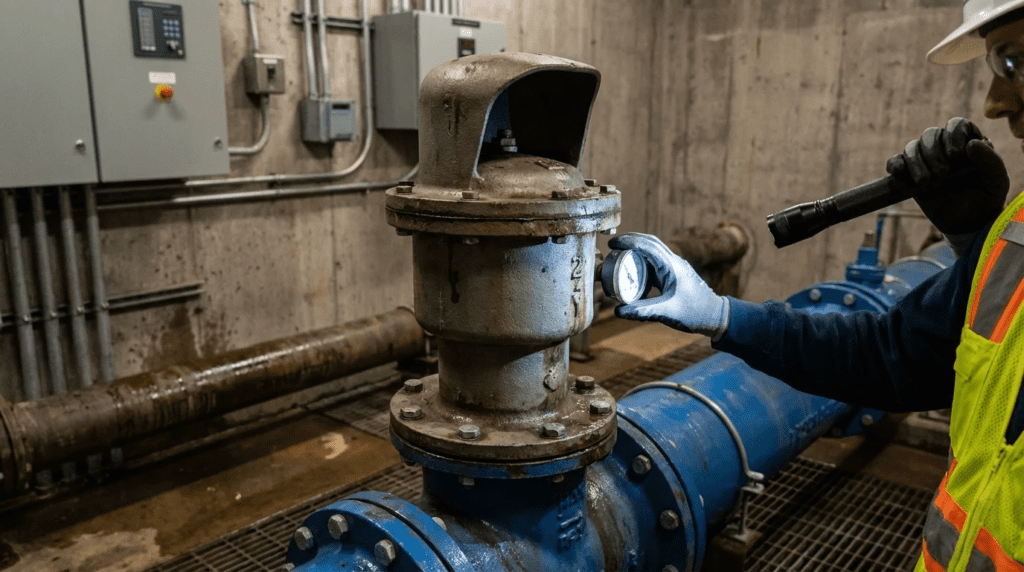
Top OEMs for Air Valves
1. Introduction
In the hydraulic architecture of municipal and industrial water systems, air valves are often the most undervalued yet critical components for maintaining system efficiency and pipeline integrity. While pumps provide the energy and pipes provide the conduit, air valves manage the gaseous phase within liquid systems, a factor that, if uncontrolled, leads to catastrophic surges, reduced flow capacity, and accelerated corrosion.
The presence of air in pressurized pipelines is inevitable. It enters through pump suctions, leaking joints, and famously via Henry’s Law, where dissolved air comes out of solution as pressure decreases or temperature increases. In wastewater applications, the generation of gases from biological decomposition adds another layer of complexity. Without proper air management, pockets of air accumulate at system high points. These pockets reduce the effective cross-sectional area of the pipe, creating artificial throttling known as “air binding,” which significantly increases head loss and energy consumption. Conversely, during pump shutdowns or line draining, the absence of air admission can create vacuum conditions strong enough to collapse thinner-walled steel or plastic pipes and suck in contaminants through loose gaskets.
For consulting engineers and plant operators, the selection of the Original Equipment Manufacturer (OEM) for air valves is not a commodity decision. The difference between a generic air valve and a high-performance engineered unit lies in the aerodynamic design of the float, the reliability of the sealing mechanism under low-pressure conditions, and the materials selected to withstand the corrosive environment of the fluid media.
Air valves also do not operate in isolation. They are one element in the broader family of valves used in water treatment plants and distribution systems, and their behavior is coupled to the check valves, relief devices, and control valves installed around them. A valve selection that is correct in isolation can still produce a surge event when the interaction with adjacent equipment has not been analyzed.
This article provides a comprehensive technical evaluation of the leading OEMs in the air valve market. It moves beyond marketing claims to focus on the engineering attributes, maintenance profiles, and application suitability of the primary manufacturers specified in North American and international water infrastructure. The focus is strictly on the hardware capabilities, lifecycle performance, and engineering merit of these established brands.
2. How to Select This Valve Type
Selecting the correct air valve requires a granular understanding of fluid dynamics and the specific operational envelope of the pipeline. Engineers must move beyond simply sizing a valve based on pipe diameter and instead analyze the air intake and discharge requirements under various transient scenarios. The following criteria represent the core engineering considerations for specifying air valves.
Valve Function and Classification
Air valves are categorized by function, defined extensively in AWWA C512 standards. Engineers must specify the correct type for the location:
- Air Release Valves (ARV): Designed to release small pockets of accumulated air while the system is pressurized and operating. These typically use a compound lever mechanism to open a small orifice against internal pressure.
- Air/Vacuum Valves (AVV): Designed to exhaust large volumes of air during filling and admit large volumes of air during draining to prevent vacuum formation. They generally have a single large orifice and do not release air once the system is pressurized.
- Combination Air Valves (CAV): These integrate the functions of both ARVs and AVVs, either in a single body or dual body configuration. This is the most common specification for system high points.
- Vacuum Breakers: Specialized valves strictly for admitting air to prevent vacuum collapse, often used on penstocks or thin-walled gravity lines.
Wastewater vs. Potable Water Design
The distinction between potable water and wastewater air valves is critical. Potable water valves often have shorter bodies and internal mechanisms exposed to the fluid. Wastewater valves must employ an elongated body design (often conical) to keep the float and sealing mechanism elevated above the fluid line. This prevents grease, solids, and ragging from fouling the linkage.
For wastewater applications, engineers should look for “non-clog” designs where the linkage is isolated, or the bottom entry is sloped to prevent sludge accumulation. Using a potable water air valve in a sewage application is a primary cause of premature failure and leakage.
Sealing Mechanisms and Pressure Ratings
The sealing mechanism is the frequent point of failure. Traditional designs use a needle and seat or a flat gasket. Modern engineered valves may use rolling seals or self-adjusting floats.
- Low Pressure Sealing: A common failure mode is “spitting” or leaking when the system pressure is low (e.g., below approximately 5 psi). The weight of the float must be sufficient to create a seal, or the seal design must be flexible enough to close without high hydraulic assistance.
- High Pressure Operation: The linkage mechanism must provide sufficient mechanical advantage to open the orifice against the system’s maximum operating pressure. If the leverage is insufficient, the valve will “lock shut” and fail to release air until pressure drops.
Surge and Water Hammer Control
Standard air valves can inadvertently exacerbate water hammer. When a column of water returns after a separation event, it travels at high velocity. If the air valve exhausts the air cushion too rapidly, the water column slams into the valve, creating a high-pressure spike.
Engineers should consider “Anti-Slam” or “Slow-Closing” devices. These are throttling disks or secondary mechanisms on the air/vacuum outlet that restrict air discharge velocity, creating an air cushion that decelerates the returning water column gently. This feature is mandatory for long transmission mains with high surge potential.
Air valves are only one component of a transient protection strategy. On a typical pump station discharge, the air valve interacts directly with the discharge check valve and with any surge relief device, and the three must be analyzed together. Rapid closure of a check valve can initiate the very column separation the air valve is then asked to manage, while a pressure relief valve sized for the same event provides an alternative path for the energy that would otherwise arrive at the air valve seat. Specifying any one of the three without a transient analysis covering all of them is how well-chosen individual components produce a poorly behaved system.
Materials of Construction
Material selection dictates the lifecycle cost.
- Body Materials: Ductile iron (ASTM A536) is standard for general service. For corrosive environments or desalination, Super Duplex Stainless Steel or reinforced Nylon/Composite materials are increasingly specified.
- Float and Internal Trim: Stainless steel (316) is the baseline standard for floats. However, in aggressive wastewater (high H2S), even 316SS can degrade. High-performance polymers and composites are gaining traction for floats due to their inertness and inability to corrode.
- Coatings: For ferrous valves, fusion-bonded epoxy (FBE) interior and exterior coating is a mandatory specification to prevent tuberculation and corrosion.
Maintenance and Serviceability
Air valves are high-maintenance items relative to other valves because they are constantly cycling.
- Backflushing: In wastewater applications, the ability to backflush the valve without dismantling it is a significant operational advantage. Valves equipped with flush ports allow operators to clear sludge from the lower body.
- Weight and Access: Large iron valves can weigh hundreds of pounds, requiring cranes for removal. Lightweight composite valves or modular designs allow for single-operator maintenance, reducing O&M costs.
3. Subcategory Overview
Beneath the general question of which air valve to specify sits a narrower and more practical question: which supplier to write into the specification, and on what basis. That subject has its own detailed coverage within this pillar.
Top Air Valve Manufacturers
The top air valve manufacturers material covers supplier-level evaluation in more depth than a single roundup allows, including direct head-to-head comparisons between specific vendors on the criteria that decide a specification. The useful comparisons are always anchored to a duty rather than to general capability claims, since a manufacturer that is the clear answer for a 36-inch raw water transmission main may be the wrong answer for a 2-inch force main air release in a flood-prone vault. The recurring evaluation criteria across any vendor pairing are consistent: conformance to AWWA C512, documented installations at comparable diameter and service, body and trim material options, availability of anti-slam or regulated exhaust accessories, seal kit and float lead times, and whether proprietary components commit the utility to a single source for the life of the asset. Utilities that standardize on one or two suppliers, as discussed later in this article, are usually making that decision on the strength of the last two criteria rather than on hydraulic performance.
4. Comparison Table
The following table is intended to help consulting engineers and utility decision-makers evaluate the five locked OEMs based on their technical focus, primary design philosophies, and application strengths. This is not a numerical ranking; rather, it serves as a guide to matching specific hydraulic challenges (such as surge control, corrosion, or wastewater solids) with the manufacturer best suited to address them.
| OEM Name | Primary Engineering Strength | Key Technologies | Best-Fit Application | Maintenance & Lifecycle Notes |
|---|---|---|---|---|
| A.R.I. Flow Control | Aerodynamics & Composite Materials | Rolling Seal Mechanism, D-060 Composite Bodies | Corrosive environments, Desalination, Leak-free low pressure sealing | Lightweight design reduces need for lifting equipment; composite materials eliminate corrosion. |
| Val-Matic Valve & Mfg | Comprehensive Municipal Specs | Cam-Centric (Plug), Dual Body Wastewater, FloodSafe® | Municipal wastewater collection, Flood-prone vaults | Stainless steel trim standard; FloodSafe prevents contamination during vault flooding. |
| APCO Valves (DeZURIK) | Heavy Duty / Large Diameter | Slow Closing Air Valves, Surge Check Valves | Large transmission mains, High-pressure pumping stations | Rugged, heavy cast iron/ductile designs; historically the standard for large infrastructure. |
| Crispin Valve | Legacy & Customization | K-Flo Series, X-Series, Universal Design | General municipal water, Retrofit projects | Broadest range of legacy interfaces; highly serviceable simple lever mechanisms. |
| Singer Valve | Integration with Control Systems | Anti-Slam capabilities, High-quality Stainless internals | Systems requiring precise surge management and control | Often specified in conjunction with Singer control valves for total station protection. |
5. Top OEM Manufacturers
The following analysis details the specific engineering attributes of the top five OEMs for air valves. These manufacturers are evaluated based on their product architecture, reliability in critical service, and contribution to hydraulic management.
Crispin Valve
As one of the oldest valve manufacturers in the sector, Crispin Valve is deeply entrenched in the history of municipal waterworks. Their engineering approach is characterized by robust, traditional mechanical designs that prioritize longevity and serviceability. Crispin is often the “basis of design” for many older municipal specifications.
Technical Strengths: Crispin offers an exceptionally wide range of configurations. Their “X-Series” for wastewater applications utilizes a long body design to separate the mechanism from the sewage, reducing fouling. They are particularly noted for their K-Flo series and their ability to manufacture valves in a variety of exotic alloys for industrial applications. Their Deep Well air valves are engineered specifically to handle the high-velocity air discharge associated with vertical turbine pump start-ups.
Engineering Considerations: Crispin designs generally utilize a lever-and-linkage mechanism. While reliable, these mechanisms have moving parts that require periodic inspection for wear, particularly the pivot pins. Engineers should specify stainless steel linkage upgrades for harsh environments.
Val-Matic Valve & Manufacturing
Val-Matic is a dominant force in the North American municipal market, known for a rigorous adherence to AWWA standards and continuous product innovation. Their engineering philosophy centers on solving specific operational headaches, such as vault flooding and grease accumulation in sewage lines.
Technical Strengths: Val-Matic’s wastewater air valves are industry benchmarks. They offer both single-body and dual-body combination valves. A standout innovation is the FloodSafe® Inflow Preventer, a device added to the air valve discharge that prevents contaminated floodwater from entering the potable water distribution system during a vacuum event in a flooded vault. Additionally, their “Cam-Centric” plug valve heritage influences their manufacturing quality, ensuring tight tolerances. Their wastewater valves feature a steeply sloped bottom to prevent the accumulation of grit and solids.
Engineering Considerations: Val-Matic valves are typically constructed of ductile iron with 316SS trim. For severe surge applications, they offer regulated exhaust devices that can be mounted on the outlet to prevent shock. They are a “safe” specification for almost any municipal application due to their broad acceptance and support network.
Singer Valve
While globally renowned for their pilot-operated control valves, Singer Valve (now a brand under Mueller Water Products) manufactures a high-quality line of air valves designed to complement their hydraulic control solutions. Singer’s approach to air valves is inextricably linked to surge control and system stability.
Technical Strengths: Singer air valves are engineered with a focus on anti-slam characteristics. Their designs often incorporate kinetic shields and throttling mechanisms that manage the transition between air expulsion and water closure. Because Singer focuses heavily on pressure management, their air valves are often built to withstand higher pressure ratings and dynamic stress than standard commodity valves. They excel in applications where the air valve is part of a holistic surge protection strategy alongside relief valves.
Engineering Considerations: Singer is an excellent choice when the air valve is being specified as part of a larger pressure management zone (PMZ) or pump station package. The integration of their air valves with their control valve stations ensures consistent material quality and engineering support for the entire hydraulic control node.
A.R.I. Flow Control
A.R.I. Flow Control has revolutionized the air valve market by challenging the traditional reliance on heavy metal bodies and mechanical linkages. Originating from Israel with a strong background in irrigation and water scarcity management, A.R.I. introduced aerodynamic float designs and composite materials to the municipal sector.
Technical Strengths: The core differentiator for A.R.I. is the Rolling Seal Mechanism. Unlike traditional needle-and-seat designs which can leak at low pressures or get stuck, the rolling seal provides a self-cleaning, reliable seal even at near-zero pressure. Furthermore, their D-060 and D-020 series utilize reinforced nylon and composite bodies. This makes them immune to corrosion, chemically resistant, and incredibly lightweight. A single operator can carry a 2-inch combination valve up a ladder, eliminating the need for hoists.
Engineering Considerations: Engineers sometimes hesitate to specify composites in high-fire-risk industrial zones or extremely high-pressure transmission lines, although A.R.I. offers metal-bodied versions for these scenarios. However, for the vast majority of municipal distribution and wastewater collection systems, A.R.I. offers the lowest lifecycle cost due to the elimination of corrosion and linkage maintenance.
APCO Valves
APCO, now a brand under DeZURIK, is synonymous with heavy-duty air valve applications. APCO has a long history of installation in major infrastructure projects, including power plants and large-diameter raw water transmission lines. Their design philosophy favors mass, durability, and customization for large orifices.
Technical Strengths: APCO excels in the large-diameter sector (valves larger than 4 inches). Their Slow Closing Air Valve technology is a critical tool for fighting water hammer. By utilizing a distinct air check mechanism, they allow air to enter freely to prevent vacuum but throttle the air discharge to cushion the rejoining water column. APCO also offers extensive customizability in materials, including diverse stainless steels and exotic alloys for industrial wastewater.
Engineering Considerations: These are often the heaviest valves in the class. Structural support within the valve vault must be calculated to handle the weight of large APCO combination valves. They are the preferred specification for high-consequence infrastructure where the cost of failure is extreme, and rugged physical robustness is prioritized over lightweight convenience.
6. Application Fit Guidance
Matching the OEM to the application is critical for system optimization. While all five manufacturers produce valves that can theoretically function in multiple domains, their specific engineering strengths make them preferable for certain environments.
Municipal Water Distribution
For standard potable water distribution networks (pressures 40 to 150 psi):
- A.R.I. Flow Control: Preferred for distribution lines due to the leak-free rolling seal capability and lightweight composite construction, which simplifies maintenance for municipal crews.
- Val-Matic: An excellent fit for urban environments where vault flooding is a concern, specifically utilizing the FloodSafe technology.
Municipal Wastewater (Force Mains)
For sewage and raw wastewater containing solids and grease:
- Val-Matic: The preferred choice for many US municipalities due to the proven non-clog dual body design and sloped bottoms.
- Crispin & APCO: Both offer robust, elongated body designs that effectively separate the mechanism from the media. APCO is favored for larger diameter force mains (for example, above 24 inch).
High-Pressure Transmission & Industrial
For high-head pump stations, raw water transmission, and industrial cooling loops:
- APCO (DeZURIK): The leader for high-pressure applications where water hammer is a primary risk. Their surge check and slow-closing designs are critical here.
- Singer Valve: Best fit when integrated into complex pump control stations requiring high-level surge analysis and protection.
Corrosive Environments (Desalination / Chemical)
- A.R.I. Flow Control: The composite material construction makes them the automatic choice for seawater, brackish water, or aggressive industrial effluents where coated iron would fail prematurely.
Storage and Reservoir Sites
Air valves at tank and reservoir sites deserve separate consideration because the hydraulic environment differs from an in-line pipeline location. Filling and drawdown cycles are slower but more frequent, pressures at the valve are often low, and the low-pressure sealing performance discussed earlier becomes the governing selection criterion rather than surge behavior. These sites are also where the air valve most often shares a vault with level control equipment such as altitude valves, and coordinating the two is worthwhile: an altitude valve closing on a full tank changes the hydraulic condition the air valve sees, and vault layout should account for the service access both devices require rather than only the larger one.
7. Engineer & Operator Considerations
Beyond selecting the manufacturer, the success of an air valve installation depends on system design and operational practices.
Installation Best Practices
Location is Key: Air valves must be located at all high points, but also at significant changes in slope and at regular intervals (every 1,500 to 2,500 feet) on long horizontal runs to manage entrained air.
Isolation Valves: Every air valve must be installed with an isolation valve (ball or gate) beneath it. This allows the air valve to be removed for service without shutting down the main line. For wastewater, full-port plug or ball valves are required to prevent clogging the inlet.
Pro Tip: Walk the pipeline profile drawing with a straightedge before finalizing air valve locations. High points on a plan and profile sheet are obvious; the ones that cause trouble are the subtle grade breaks where the pipeline flattens without reaching a true local maximum. Air accumulates at those points as reliably as at a peak, and they are routinely missed because nobody looks for them.
Common Specification Mistakes
Oversizing: Contrary to popular belief, “bigger is not always better.” Oversizing an air release valve (the small orifice function) serves no benefit and increases cost. However, oversizing the Air/Vacuum orifice can be dangerous if it allows air to discharge so fast that it induces water hammer (check valve slam).
Ignoring Vacuum Conditions: Engineers often focus on releasing air but fail to calculate the required air intake during a line break or draining event. If the valve cannot admit air fast enough, the pipe may collapse.
Common Mistake: Sizing the air valve to the pipe diameter. There is no fixed ratio between line size and air valve size, and the rules of thumb in circulation produce both undersized and oversized valves depending on the profile. Air release orifice size follows from the expected dissolved air release rate; air/vacuum orifice size follows from the filling rate on one side and the gravity drain rate on the other, and those two rarely give the same answer. Two identical 24-inch mains with different profiles can require different air valves at the same nominal location.
Maintenance Access and Spare Parts
Operators frequently neglect air valves because they are often located in remote vaults.
Venting: Air valves in vaults must be piped to vent to the atmosphere. Venting directly into a closed vault creates a confined space hazard (if wastewater gases are present) and can submerge the valve if the vault floods.
Standardization: Utilities should strive to standardize on one or two OEMs to minimize spare parts inventory. Maintaining seal kits and floats for five different brands is logistically inefficient.
Reliability in Freezing Conditions
Air valves contain water. In cold climates, valves located in above-ground enclosures or shallow vaults are prone to freezing.
Mitigation: Specify insulated jackets or heat tracing. Some OEMs offer “non-freezing” designs, but these are rarely fail-safe in extreme cold without auxiliary heat or proper burial depth.
Troubleshooting in Service
Continuous leakage or spitting at an air release valve almost always indicates either debris on the seat or a low-pressure sealing limitation rather than a failed float, and the first diagnostic step is backflushing rather than disassembly. A valve that never discharges may be locked shut against system pressure, meaning the lever mechanism lacks the mechanical advantage for the actual operating pressure, a specification error rather than a maintenance one. Repeated float damage on wastewater installations usually points to a potable-service valve in a sewage application, or to an inlet isolation valve that is not full port and is throttling solids into the body.
8. Design Details & Standards
Sizing Methodology
Air valve sizing follows from flow rates, not from pipe diameter. Three calculations govern.
Air exhaust during filling. The valve must expel air at the same volumetric rate the pipeline is being filled. Consider a 24-inch main filled at a controlled velocity of 1 ft/s, a common limit to avoid entrained air problems during commissioning. The pipe area is π × (1 ft)² = 3.14 ft², so the fill rate is 3.14 ft³/s, equal to approximately 1,410 gpm. The air/vacuum valve must therefore pass roughly 3.14 × 60 = 188 cfm of air at a low differential, commonly taken as about 2 psi to avoid pressurizing the air pocket ahead of the fill.
Air admission during draining or line break. This is the case that protects the pipe from collapse and is usually the governing one. Required intake is set by the maximum gravity drain rate, which on a steep profile can substantially exceed the controlled fill rate, and the valve must admit that volume at a differential small enough to stay above the pipe’s collapse pressure.
Air release during operation. The small orifice is sized on the rate at which dissolved air comes out of solution, a function of flow, temperature, and pressure profile rather than of pipe size. This is the calculation most often skipped, and it is why oversized air release orifices are so common.
Applicable Standards
Air release, air/vacuum, and combination air valves for waterworks service are specified against AWWA C512, which covers design, materials, testing, and marking. Wetted materials in potable service should additionally be certified to NSF/ANSI/CAN 61. Ductile iron bodies are typically specified to ASTM A536, with fusion-bonded epoxy coating applied per the applicable AWWA coating standard. Where the valve is part of a transient protection strategy, the design should be supported by a surge analysis rather than by rules of thumb, and state or owner design criteria may impose additional spacing, venting, and vault access requirements.
Specification Checklist
- Service defined: potable, raw water, or wastewater, with body style matched accordingly.
- Valve function specified by type at each location: air release, air/vacuum, combination, or vacuum breaker.
- Air exhaust requirement calculated from the controlled fill rate.
- Air intake requirement calculated from the maximum gravity drain or line break rate.
- Air release orifice sized from dissolved air release rate, not from pipe diameter.
- Maximum and minimum operating pressures stated, with low-pressure sealing performance confirmed.
- Anti-slam, regulated exhaust, or slow-closing accessories specified where surge analysis indicates.
- Body, float, and trim materials selected for the fluid, with coating specified for ferrous components.
- Conformance to AWWA C512 and, for potable service, NSF/ANSI/CAN 61 certification required.
- Full-port isolation valve beneath every air valve, plug or ball type for wastewater.
- Vault venting to atmosphere, with confined space and flooding provisions addressed.
- Backflush ports specified for wastewater service, and lifting provisions confirmed against valve weight.
- Freeze protection specified where enclosures are above grade or vaults are shallow.
9. Frequently Asked Questions
What is the difference between an air release valve and an air/vacuum valve?
An air release valve has a small orifice and vents accumulated air while the line is pressurized and running. An air/vacuum valve has a large orifice, exhausts large volumes during filling and admits large volumes during draining, and stays closed once the line is pressurized. They solve different problems, which is why most high points get a combination valve carrying both functions rather than one or the other.
How do you size an air valve?
Not from pipe diameter. The air/vacuum orifice is sized from the controlled fill rate on the exhaust side and from the maximum gravity drain or line break rate on the intake side, with the intake case usually governing because it is what protects the pipe from collapse. The air release orifice is sized from the rate at which dissolved air comes out of solution. Two mains of the same diameter with different profiles can legitimately require different valves.
How far apart should air valves be placed?
At every high point without exception, at significant changes in grade, and at intervals of roughly 1,500 to 2,500 feet along long horizontal runs. The locations most often missed are subtle grade breaks where the profile flattens without forming a true local maximum, since air accumulates there just as it does at a peak.
Can a potable water air valve be used on a force main?
No. Potable valves have short bodies with the float and linkage close to the fluid, and grease, rag, and solids will foul the mechanism quickly. Wastewater service requires an elongated or conical body that keeps the mechanism above the fluid line, ideally with a sloped bottom and a backflush port. Using a potable valve in sewage service is a leading cause of premature failure.
Why does an air valve leak at low pressure?
Most traditional sealing designs need hydraulic assistance to close tightly, so at low system pressure, generally below roughly 5 psi, the float weight alone may not seat the seal. The result is spitting or continuous weeping. Options are a design with a rolling or flexible seal that closes without hydraulic assistance, or accepting the behavior at locations where low pressure is transient. Debris on the seat produces the same symptom and should be ruled out by backflushing first.
Can an air valve cause water hammer?
Yes, and this surprises people. When a separated water column rejoins, the air valve is the thing standing between the two columns. If it exhausts the remaining air cushion too quickly, the columns meet at full velocity and generate a pressure spike. Anti-slam, regulated exhaust, or slow-closing devices throttle the discharge to preserve a decelerating cushion. On long transmission mains with surge potential, this feature is not optional.
Should a utility standardize on one air valve manufacturer?
Generally yes, on one or two. Air valves cycle constantly and consume seal kits and floats, and stocking consumables for five brands multiplies inventory without improving hydraulic performance. The practical approach is to standardize for routine distribution and collection service while allowing a second source for the specialized cases, typically large-diameter transmission and severely corrosive duty, where the standard supplier does not have the right product.
10. Conclusion
Key Takeaways
- Air valves are sized from flow rates, not pipe diameter — fill rate governs exhaust, gravity drain rate governs intake, and dissolved air release governs the small orifice.
- Vacuum protection is the case most often skipped — engineers focus on releasing air and forget that insufficient intake during a line break collapses the pipe.
- Wastewater and potable valves are not interchangeable — a short-body potable valve in a force main will foul on grease and rag, and this is a leading cause of premature failure.
- An air valve can create the surge it was installed to prevent — exhausting the air cushion too quickly lets a rejoining water column arrive at full velocity, which is why anti-slam devices are mandatory on long transmission mains.
- Low-pressure sealing is where designs genuinely differ — traditional needle-and-seat mechanisms need hydraulic assistance to close, while rolling and flexible seals do not, and this distinction decides many specifications.
- Standardize on one or two suppliers — the constant cycling makes seal kits and floats a real inventory burden, and supplier consolidation usually saves more than any hydraulic advantage gains.
- Choose the OEM against the duty — the manufacturer comparison above is a matching exercise, not a ranking, and the right answer for a corrosive 2-inch distribution location differs from the right answer for a 36-inch transmission main.
The selection of air valves is a decision that disproportionately impacts the hydraulic efficiency and safety of water and wastewater systems. While the fundamental physics of air release and vacuum relief remain constant, the engineering approaches of the top OEMs vary significantly.
Val-Matic and Crispin represent the stalwarts of the North American municipal industry, offering robust iron-bodied valves with proven longevity and extensive support networks. APCO (DeZURIK) remains the heavyweight champion for large-scale infrastructure and critical surge control applications. Singer Valve offers a precision-engineered solution ideal for integration with sophisticated control systems. Meanwhile, A.R.I. Flow Control drives the market toward modern materials and aerodynamic efficiency, challenging the industry to address corrosion and low-pressure leakage through innovation.
For the consulting engineer and the utility operator, the goal is not merely to buy a valve, but to purchase air management. This requires a holistic view of the pipeline profile, fluid characteristics, and maintenance capabilities. By aligning the specific strengths of these OEMs with the unique demands of the project, utilities can ensure decades of efficient operation, free from the destructive forces of trapped air and vacuum collapse.