
Top OEMs for Ball Valves
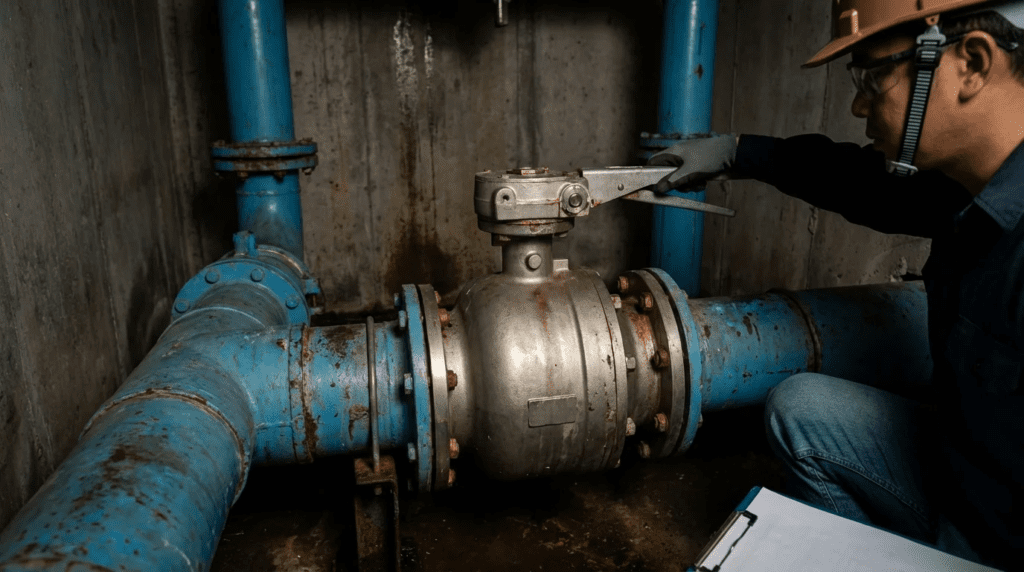
Introduction
In the hierarchy of municipal and industrial fluid control, the ball valve occupies a critical position defined by its low head loss characteristics, tight shutoff capabilities, and versatility across a wide range of diameters. For consulting engineers, plant superintendents, and utility decision-makers, the selection of Original Equipment Manufacturers (OEMs) for ball valves is not merely a procurement exercise but a fundamental engineering decision that impacts the hydraulic efficiency, safety, and lifecycle costs of water and wastewater systems.
Ball valves in this sector generally fall into two distinct engineering categories: small-diameter instrumentation and service isolation valves (typically under 2 inches), and large-diameter, double-seated valves designed for pump control and transmission mains (typically adhering to AWWA C507 standards). The former are ubiquitous in chemical feed systems, sampling lines, and service connections, while the latter are capital-intensive assets used for high-energy pump discharge and surge control applications.
The operational context for these valves is demanding. In pump stations, large ball valves must withstand the hydraulic shock of pump starts and stops while providing full-port flow to minimize energy consumption. In distribution networks, buried service valves must endure decades of soil stress, groundwater corrosion, and infrequent operation without seizing. In wastewater treatment plants (WWTPs), valves handling chemical injection (such as Sodium Hypochlorite or Ferric Chloride) must resist aggressive corrosion that attacks standard materials.
OEM selection matters profoundly because the internal geometry, seat material formulation, and trunnion design nuances vary significantly between manufacturers. A specification that ignores these differences risks premature seat failure, stem leakage, or the inability to actuate after long periods of dormancy. This article provides a technical evaluation of the leading OEMs in this space, focusing on their engineering merits, application suitability, and long-term reliability without reliance on marketing claims. Manufacturer capability becomes especially consequential in high-specification service such as double block and bleed ball valves, where the seat and cavity arrangement must be verified rather than assumed, and where the differences between OEM designs translate directly into whether an operator can safely prove isolation before entering a line.
How to Select This Valve Type
Selecting a ball valve requires a rigorous analysis of the hydraulic profile, the physical properties of the fluid, and the mechanical requirements of the actuation system. Engineers must move beyond simple pressure ratings (ANSI/ASME classes) to consider the tribology of the seating surfaces and the hydrodynamic behavior of the valve during the closing cycle.
1. Valve Function and Duty Cycle
The primary distinction in selection is between isolation (on-off) and control (throttling). While ball valves are primarily designed for isolation due to their high recovery factor, specific designs (such as V-port balls) are engineered for throttling.
- Isolation Service: The valve must provide bubble-tight shutoff. For large diameter water mains, the focus is on “Full Port” designs where the internal diameter of the ball matches the pipe, resulting in negligible head loss. This is critical for pump discharge to minimize pumping energy costs over the facility’s life.
- Pump Control Service: In pump stations, ball valves often function as check valves (via hydraulic actuation) to prevent reverse flow upon pump shutdown. The valve must be selected based on its ability to close at a controlled rate to mitigate water hammer. The OEM’s ability to characterize the valve’s torque curve against the actuator’s output is vital here.
2. Pressure and Flow Conditions
Engineers must evaluate the Cavitation Index. Although full-port ball valves have high flow coefficients (Cv), they can experience cavitation during the opening and closing phases if high differential pressures exist.
- Flow Coefficient (Cv): A higher Cv means less pressure drop. AWWA C507 ball valves typically offer the highest Cv of any isolation valve type, superior to butterfly or plug valves.
- Velocity Limits: While ball valves handle high velocities well, exceeding 35 ft/s can lead to erosion of soft seats or liner separation in lined valves.
3. Materials of Construction
Material compatibility dictates the valve’s lifespan.
- Body Materials: Ductile Iron (ASTM A536) is standard for municipal water. For industrial wastewater or corrosive environments, Stainless Steel (316 or 316L) or exotic alloys (Duplex, Super Duplex) may be required.
- Ball and Stem: These components see the highest stress. Stainless steel is preferred to prevent corrosion-induced binding. In large valves, the ball is often cast iron with a stainless steel overlay or mating surface.
- Seats: This is the primary failure point.
- Resilient Seats (EPDM/Buna-N): Standard for water. Verify chloramine resistance if applicable.
- PTFE/RTFE: Common in chemical feed and industrial applications for chemical resistance.
- Metal Seats: Required for abrasive slurries or extreme temperatures, though less common in standard municipal water applications due to cost and leakage class limitations.
4. Trunnion vs. Floating Ball Design
For small diameters (under 2-4 inches), a floating ball design is common, where the pressure pushes the ball into the downstream seat to seal. For large municipal valves (6 inches to 60+ inches), a trunnion-mounted design is mandatory. In a trunnion design, the ball is mechanically anchored at the top and bottom, and the seats are spring-loaded against the ball. This reduces operating torque significantly and allows the valve to seal at both low and high differential pressures.
5. Sealing Mechanisms
Double Block and Bleed (DBB): High-specification ball valves often feature DBB capability, allowing the operator to bleed the body cavity pressure while the valve is under pressure from both sides. This is a critical safety feature for maintenance verification.
6. Actuation and Torque
Ball valves are quarter-turn devices. However, “breakaway torque” (to open) and “reseat torque” (to close) can be substantial, particularly after long periods of inactivity.
- Safety Factor: Engineers should specify a minimum safety factor (typically 1.25x to 1.5x) between the valve’s maximum torque requirement and the actuator’s output.
- Actuator Type: For pump control, hydraulic or pneumatic cylinder actuators are preferred for their fail-safe capabilities and speed control. For isolation, electric multi-turn actuators with worm gearboxes are standard.
7. Lifecycle Cost Considerations
The purchase price of a large ball valve is often dwarfed by the energy savings from low head loss. A lifecycle cost analysis (LCCA) should compare the Net Present Value (NPV) of energy costs associated with a ball valve versus a butterfly or plug valve. Typically, the ball valve yields lower TCO in high-flow, continuous-duty pump stations.
Comparison Table
The following table provides a technical comparison of the specified OEMs. This is not a ranking but a guide to understanding where each manufacturer’s engineering strengths lie within the water and wastewater ecosystem. Engineers should use this to align project requirements—such as severe service, distribution isolation, or chemical handling—with the manufacturer’s core competencies.
| OEM Name | Primary W/WW Applications | Key Engineering Strengths | Limitations / Considerations |
|---|---|---|---|
| Val-Matic Valve & Mfg. | Large Diameter Pump Stations, Surge Control, Transmission Mains | AWWA C507 compliance; Ener-G® Ball Valve design focuses on energy efficiency; Tri-Loc seat retention system prevents seat washout; Fusion Bonded Epoxy internals standard. | Primarily focused on large municipal infrastructure; less presence in small-bore commodity or chemical feed valves. |
| Henry Pratt | Water Distribution, Pump Discharge, Power Plant Cooling Water | Extensive history in large-scale flow control; Rubber Seated Ball Valves designed for tight shutoff and longevity; strong integration with varied actuation systems. | Product portfolio is massive; engineers must specifically specify the ball valve line to avoid confusion with their dominant butterfly valve offerings. |
| Ross Valve Mfg. | High-End Pressure Control, Energy Dissipation, Specialized Isolation | Custom engineering and fabrication capabilities; heavy-duty construction; integration of isolation with complex hydraulic control pilots; extreme durability. | Known primarily for piston/control valves; their ball valve offering is typically a specialized, heavy-duty solution rather than a catalog commodity item. |
| Mueller | Municipal Service Lines, Water Distribution Networks, Metering | Industry standard for service brass (Corporation/Curb stops); massive installed base; 300 Series Ball Valves are ubiquitous in North American municipal water distribution. | “Mueller” brand is synonymous with distribution/service brass; large diameter specs often overlap with their subsidiary (Pratt) lines. |
| Apollo Valves | Chemical Feed, Plant Air, Auxiliary Systems, Backflow Prevention | Comprehensive range of materials (Bronze, SS, Carbon Steel, Alloys); domestic (USA) manufacturing for smaller diameters; varying seat materials for chemical resistance. | Best suited for plant piping (< 4-6 inches) and auxiliary systems rather than large diameter transmission main isolation. |
Top OEM Manufacturers
The following analysis details the specific capabilities of the mandated OEMs. This evaluation focuses on their technical adherence to standards such as AWWA C507, material quality, and suitability for critical infrastructure.
Val-Matic Valve & Manufacturing
Val-Matic is a dominant player in the municipal water sector, particularly regarding high-efficiency valves for pump stations. Their flagship product in this category is the Ener-G® Ball Valve. This valve is specifically engineered to meet and exceed AWWA C507 standards. The design philosophy centers on energy conservation; the valve features a full-port waterway providing a flow path equivalent to the pipe itself, resulting in virtually zero head loss when fully open.
From a maintenance perspective, Val-Matic utilizes a double-seated design. This allows for sealing in both directions, which is critical for loop systems or situations where backpressure varies. A key engineering feature is the Tri-Loc seat retention system. In many ball valves, high-velocity flow can dislodge or “wash out” the resilient seat. Val-Matic’s design mechanically retains the seat on three sides, ensuring integrity even under throttling or high-velocity conditions. Their valves typically feature Fusion Bonded Epoxy (FBE) coatings inside and out, providing superior corrosion resistance against aggressive water chemistries.
Henry Pratt
Henry Pratt, a brand synonymous with fluid control in North America, offers robust solutions for large-scale isolation. While historically famous for inventing the rubber-seated butterfly valve, their Rubber Seated Ball Valve is a staple in critical pump discharge applications. Pratt’s design utilizes a trunnion-mounted construction, which is essential for managing the high thrust loads found in large diameter pipes (up to 60 inches and larger).
The Pratt design often incorporates an E-Lok seat retention system (or similar proprietary mechanism depending on the specific model generation) which allows for seat adjustment or replacement without full valve disassembly in some configurations. Their ball valves are heavily used in power generation and large municipal water plants where reliability is paramount. The rotors are typically cast iron with stainless steel or nickel edges to ensure a corrosion-resistant sealing surface that does not degrade over thousands of cycles.
Ross Valve Manufacturing
Ross Valve Manufacturing occupies a unique niche. While the industry largely associates Ross with automatic control valves (piston-style altitude and pressure reducing valves), they maintain a reputation for heavy-duty, custom-engineered manufacturing. In the context of ball and isolation valves, Ross represents the “engineered solution” end of the spectrum rather than the “commodity” end.
When Ross supplies isolation technology, it is typically for severe service applications where standard catalog valves may fail. Their manufacturing process involves heavy cast iron or ductile iron bodies with robust internal mechanics designed to withstand extreme hydraulic shock. Engineers often look to Ross when integrating isolation valves into complex pressure management stations, where the durability of the valve must match the longevity of their pilot-controlled piston valves. Their focus is less on mass-producing distribution valves and more on ensuring the integrity of critical control nodes in the network.
Mueller
Mueller is the pervasive standard for the “last mile” of water distribution. In the context of ball valves, Mueller is the definitive leader in Corporation Stops and Curb Valves. These are the small-diameter (typically 3/4″ to 2″) ball valves that connect the water main to the service line and the meter. The Mueller 300 Ball Valve series represents the industry benchmark for these applications.
Engineers specifying residential and commercial service connections prioritize Mueller for their 360-degree rotation capability and robust brass construction (now compliant with no-lead regulations). These valves are designed to be buried and operated via a curb key after years of inactivity. Unlike industrial ball valves, these do not require maintenance; they are designed for a “install and forget” lifecycle (20-50 years). On the larger side, Mueller Co. encompasses the Pratt line (discussed above), but the Mueller brand itself is the primary spec for the millions of service connection points in a municipal network.
Apollo Valves
Apollo Valves (manufactured by Conbraco Industries) is the go-to OEM for the “plant” side of water and wastewater facilities. While they are not the primary supplier for 48-inch transmission mains, they are arguably the most important supplier for the auxiliary piping within a treatment plant. This includes chemical feed systems, sampling lines, pneumatic air lines for actuator control, and instrument isolation.
Apollo’s strength lies in their material diversity. They manufacture ball valves in Bronze, Carbon Steel, Stainless Steel, and exotic alloys. For wastewater engineers dealing with corrosive polymers or ferric chloride, Apollo’s Stainless Steel top-entry or three-piece ball valves offer necessary chemical resistance. Their valves often feature mounting pads (ISO 5211) that make automation with pneumatic or electric actuators straightforward. Being U.S.-based, their supply chain and availability of spare parts (seats, seals, stems) make them a favorite for plant maintenance supervisors who cannot afford downtime on a chemical skid.
Application Fit Guidance
Matching the OEM to the specific hydraulic territory is the most effective way to ensure system reliability.
Municipal Water Distribution (Service Lines)
Preferred OEM: Mueller.
For curb stops, meter valves, and corporation stops, Mueller’s product line defines the standard. Their valves are designed specifically for the torque applied by T-handle keys from street level and are rugged enough to withstand soil loads.
Pump Station Discharge & Surge Control
Preferred OEMs: Val-Matic, Henry Pratt.
For high-consequence pump stations where energy efficiency (head loss) and surge control are paramount, these two manufacturers provide the heavy-duty, AWWA C507 trunnion-mounted ball valves required. Val-Matic’s Ener-G is particularly noted for its flow efficiency.
Wastewater Treatment (Sludge & Grit)
Considerations: While plug valves are often preferred for raw sludge, ball valves are used in treated effluent and specific process lines.
Preferred OEMs: Val-Matic, Pratt.
When ball valves are used here, they must be full port to prevent clogging. Val-Matic’s designs with fusion bonded epoxy are critical to resist hydrogen sulfide corrosion.
Chemical Feed & Plant Auxiliary
Preferred OEM: Apollo Valves.
For sodium hypochlorite, alum, or polymer feed systems (typically small diameter piping), Apollo provides the necessary material gradients (316SS, Alloy 20, or Hastelloy options) and seat materials (PTFE, RPTFE) to resist chemical attack.
Severe Service / Custom Control Isolation
Preferred OEM: Ross Valve Mfg.
In scenarios requiring unique fabrication or integration into a complex pressure reducing station where off-the-shelf dimensions are unsuitable, Ross offers the engineering flexibility required.
Engineer & Operator Considerations
Beyond selecting the manufacturer, the long-term success of a ball valve installation depends on installation details and operational protocols.
Installation Best Practices
- Orientation: For wastewater applications, ball valves should ideally be installed with the stem horizontal (if permitted by the manufacturer). This prevents solids from settling into the stem packing area. However, heavy large-diameter valves often require vertical stems to support the actuator weight. Consult the OEM manual.
- Upstream Piping: To ensure accurate sealing and minimize turbulence-induced vibration, maintain straight pipe runs (typically 3D to 5D) upstream of the valve, although ball valves are generally more forgiving than butterfly valves.
- Support: AWWA ball valves are heavy. Direct burial requires concrete thrust blocking or restrained joints, but inside vaults, dedicated pipe stands or concrete plinths under the valve body are mandatory to prevent flange stress.
Common Specification Mistakes
- Undersizing Actuators: “Breakaway torque” increases over time as seats set and scale builds up. Engineers often use “new valve” torque data. It is imperative to apply a 1.25 to 1.5 safety factor when sizing actuators for valves that will remain static for months.
- Ignoring Cavitation: Specifying a ball valve for a throttling application without calculating the cavitation index is a recipe for seat destruction. If throttling is required, ensure the valve trim is designed for it, or switch to a control-specific valve type.
Maintenance and Spare Parts
Operators should exercise isolation valves at least once annually. This prevents the ball from seizing to the seats and clears sediment from the body cavity. For trunnion valves, check if the OEM provides grease fittings for the trunnion bearings. Accessibility is key; specifying a valve in a vault with no clearance for removing the actuator or pulling the side cover for seat replacement will result in higher maintenance costs later.
OEM Head-to-Head Comparisons
The profiles above establish where each manufacturer concentrates its engineering effort, but most specification decisions come down to a direct choice between two candidates that both clear the technical threshold. The comparisons below address the pairings that recur most often in municipal and industrial bid evaluations, each covering a different segment of the ball valve market.
Heavy-Duty Municipal Isolation: Engineered Versus Catalog Solutions
The choice between a custom-engineered isolation valve and a standardized AWWA C507 catalog product is one of the more consequential decisions in pump station and pressure management design. Engineered valves accommodate non-standard face-to-face dimensions, unusual pressure classes, and integration with existing pilot-controlled equipment, but they carry longer lead times and a smaller pool of technicians familiar with their internals. Catalog valves ship faster, cost less, and are supported by a wide service network, at the price of forcing the piping design to accommodate the valve rather than the reverse. The detailed comparison of Ross Valve vs Val-Matic ball valves works through this trade-off using the two manufacturers profiled earlier, examining where custom fabrication genuinely earns its premium and where a standard product performs equally well at lower cost and shorter schedule.
As a practical screening rule, engineered solutions justify themselves when the installation is a retrofit into a constrained vault, when the valve must integrate mechanically with existing control equipment, or when the service conditions fall outside published catalog ratings. Greenfield pump stations designed around standard products rarely benefit from custom fabrication and frequently pay for it twice, once in capital cost and again in extended commissioning.
Elastomer and Resilient-Seated Alternatives
Not every isolation duty is best served by a metal-bodied trunnion valve. In wastewater, stormwater, and slurry service, elastomer-based and resilient-seated designs frequently outperform conventional ball valves on solids passage and on tolerance to grit-laden flow that erodes rigid seats. The engineering comparison shifts accordingly: instead of torque curves and seat retention, the governing questions become sleeve or liner compound compatibility, cracking pressure, and whether the valve can close drop-tight around entrapped debris. The evaluation of Proco vs Bray ball valves addresses this segment, covering the differences between elastomer-focused and resilient-seated approaches to the same service conditions.
Specification points that matter most here are elastomer compound selection against the actual constituents present, not against a generic wastewater designation, and confirmation of how the valve behaves when solids are trapped at the seat. A valve that jams partially open on a rag is worse than one that closes on it, and manufacturers differ materially in how their designs handle that condition.
Distribution-Scale Isolation and Control Integration
A third pairing arises where isolation valves must coexist with pressure management equipment across a distribution network. Here the evaluation extends beyond the valve itself to the manufacturer’s broader ecosystem: whether the same supplier can furnish the control valves, the actuators, and the monitoring interface, and whether standardizing on one vendor simplifies operator training and spare parts inventory enough to outweigh a better technical fit elsewhere. The comparison of Singer Valve vs AVK ball valves examines this segment, where distribution-network scale and vendor ecosystem depth often matter as much as the valve’s individual specification.
The recurring error in this category is evaluating the valve in isolation from the network it will serve. A utility already standardized on one manufacturer’s pressure management platform frequently finds that the marginal technical advantage of a competing isolation valve is outweighed by the operational cost of maintaining two parts inventories and two sets of adjustment procedures.
Selection & Specification Framework
With the manufacturers and the head-to-head trade-offs established, the framework below sequences the decision in the order it normally resolves during design.
Step 1: Confirm the Valve Configuration the Service Actually Requires
Before evaluating manufacturers, confirm that a standard two-way ball valve is the correct configuration. Diverting, mixing, and multi-port duties frequently arise in chemical feed skids, sampling manifolds, and filter backwash arrangements, and specifying two separate two-way valves where a single multi-port unit belongs adds cost, leak paths, and actuator count. Reviewing the available configurations, including 3-way ball valves and their port arrangements, is worth completing before the manufacturer shortlist is drawn, because not every OEM offers the full configuration range in every material and size.
Step 2: Fix the Actuation Method Alongside the Valve
Actuation is not a downstream procurement detail. As noted in the torque discussion above, breakaway torque after a long dormant period drives actuator sizing, and the actuator type determines stroke speed, fail position, and whether surge mitigation is achievable. The choice among manual, electric, hydraulic, and pneumatic ball valves should be settled during design rather than left to the supplier, since the mounting interface, torque margin, and control signal requirements all flow from it. Specifying the valve first and the actuator later routinely produces a mismatch that surfaces during commissioning.
Step 3: Evaluate on Lifecycle Cost, Not Bid Price
The lifecycle cost analysis described earlier in this article should be completed before the bid evaluation, not after. Build a twenty-year model including pumping energy attributable to head loss at the actual duty point, seat and seal replacement at the manufacturer’s stated interval, actuator service, and the cost of an unplanned outage on a non-redundant isolation point. On a continuously operating pump discharge, the energy term normally dominates by a wide margin, which is why full-port designs justify their capital premium even where the bid comparison appears unfavorable.
Step 4: Verify Serviceability in the Actual Installation
The best valve on paper is a poor selection if it cannot be serviced where it will be installed. Confirm that the vault or gallery provides clearance to remove the actuator, pull the side cover, and extract the ball if required, and that the access hatch is sized for the largest component that must come out. Verify these dimensions against the manufacturer’s stated service requirements rather than assuming standard clearances. This check takes minutes during design and prevents a category of problem that is effectively uncorrectable afterward.
Field Notes
Commissioning Considerations
Large trunnion-mounted ball valves should be cycled through their full travel under line pressure during commissioning, with torque and stroke time recorded as a baseline. Later comparisons against that baseline are the most reliable early indicator of seat degradation or trunnion bearing wear, and a plant without the baseline has no reference point. Verify seat leakage against the specified leakage class after the line has been flushed, since construction debris trapped at the seat during initial filling will produce a failing test that has nothing to do with valve quality. For hydraulically actuated pump control valves, closing speed must be set against the actual surge analysis, not to the fastest setting the actuator permits.
Pro Tip
Record breakaway torque at commissioning and again at each annual exercise, and keep the numbers in the asset record rather than in a technician’s notebook. A rising trend is the earliest available warning that seats are setting, scale is accumulating, or the trunnion bearings are degrading, and it typically appears years before the valve fails to operate. Utilities that track this data schedule seat replacement during planned outages; those that do not discover the problem during an emergency isolation attempt, which is the worst possible moment.
Additional Specification Pitfalls
Beyond actuator undersizing and cavitation, several errors recur across projects. Specifying a full-port valve without confirming the face-to-face dimension against the available piping space produces a valve that cannot be installed without pipe modification. Omitting a position indicator on a buried or vault-mounted valve leaves operators unable to confirm state without cycling it. Failing to state the required leakage class allows a supplier to furnish a valve that meets a less stringent standard than the application assumes. And specifying an ISO 5211 mounting pad without confirming the specific pad size and stem interface leads to adapter kits fabricated in the field.
Common Mistake
Assuming double block and bleed capability is present because the valve is double-seated. A double-seated valve seals in both directions, but true double block and bleed requires that the body cavity can be vented and proven at atmospheric pressure while both seats hold against line pressure. These are different capabilities, and the distinction matters precisely when it is most critical: during lockout verification before someone enters a line. Where isolation must be provable, specify the capability explicitly and require the manufacturer to confirm the cavity vent arrangement in the submittal.
Operations and Maintenance Comparison
Maintenance burden varies sharply across the ball valve categories covered here. Small-diameter brass service valves are effectively maintenance-free by design and are replaced rather than repaired. Large trunnion-mounted AWWA valves require annual exercise, periodic trunnion bearing lubrication where fittings are provided, and eventual seat replacement, all of which demand planned outages and lifting equipment. Chemical service valves in plant piping need seat and seal replacement on a shorter interval driven by chemical attack rather than mechanical wear, and their three-piece or top-entry construction is specified precisely to make that replacement practical without removing the valve from the line.
Design Details & Standards
Applicable Standards
Ball valve specifications should reference recognized standards rather than manufacturer literature. Large-diameter municipal ball valves are specified to AWWA C507, with ductile iron castings to ASTM A536 and fusion-bonded epoxy coatings to AWWA C550. Industrial and plant piping ball valves commonly reference MSS SP-72 and MSS SP-110, or API 608 for metal-seated designs. Wetted components in potable service must meet NSF/ANSI 61 and NSF/ANSI 372 for lead content. Flange dimensions follow ASME B16.1 or B16.42. Actuator mounting interfaces follow ISO 5211, electric valve actuators are commonly specified to AWWA C542, and seat leakage classes are defined by ANSI/FCI 70-2.
Key Parameters That Differ by Valve Class
A small set of parameters carries most of the consequence. Flow coefficient governs head loss and, on a continuously operating pump discharge, dominates lifecycle cost. Breakaway and reseat torque govern actuator sizing and, as noted above, drift upward over service life rather than remaining at the published new-valve figure. Seat retention method determines whether the seat survives high-velocity flow or partial-open operation. Leakage class defines what shutoff performance the utility is actually entitled to. Face-to-face dimension governs whether the valve fits the piping as designed. Each of these should appear as a stated requirement in the specification with a defined test or verification method.
Specification Checklist
- Service defined explicitly as isolation, pump control, or throttling, with duty cycle stated
- Full-port versus reduced-port requirement stated and justified against head loss analysis
- Trunnion-mounted construction required for all sizes where differential pressure warrants it
- Cavitation index evaluated at worst-case differential, including partial-open transient conditions
- Body, ball, stem, and seat materials specified against actual fluid, with coating standard cited
- Seat retention method specified, not left to manufacturer standard
- Required leakage class stated per ANSI/FCI 70-2 with acceptance test defined
- Double block and bleed capability specified explicitly where isolation must be provable
- Breakaway torque data required from the manufacturer, with 1.25–1.5 actuator safety factor applied
- Actuator type, fail position, and stroke time specified; stroke time verified against surge analysis
- ISO 5211 pad size and stem interface confirmed, not merely referenced
- Face-to-face dimension verified against available piping space before bid
- Position indication specified for all buried and vault-mounted valves
- Vault clearance, hatch opening, and lifting provisions verified against service requirements
- Baseline torque and stroke time recorded at commissioning and retained in the asset record
Frequently Asked Questions
When is a ball valve the wrong choice for a water or wastewater application?
Ball valves are poorly suited to sustained throttling duty. Their high recovery factor means pressure drops sharply and recovers sharply across the ball, which drives cavitation at partial openings and destroys resilient seats. They are also a questionable choice for raw sludge and grit-heavy service, where plug valves and elastomer-based designs handle solids more reliably. Where throttling is genuinely required, a V-port ball or a purpose-built control valve is the correct answer rather than a standard isolation ball valve operated partially open.
Why does breakaway torque increase over a valve’s service life?
Resilient seats take a compression set against the ball during long dormant periods, scale and mineral deposits accumulate at the seat interface, and stem packing consolidates. Each effect adds friction that was not present when the manufacturer’s torque data was generated on a new valve. This is the reason for the 1.25 to 1.5 safety factor on actuator sizing and the reason annual exercise matters: a valve cycled once a year rarely develops the set that a valve untouched for a decade does.
How much does full-port design actually save in pumping energy?
The saving is proportional to the head loss eliminated multiplied by the flow and the operating hours, so it scales with duty. On a continuously operating pump discharge, the difference between a full-port ball valve and a reduced-port or butterfly alternative typically produces a lifecycle energy saving that substantially exceeds the capital difference. On an infrequently operated isolation point, the same comparison rarely justifies the premium. The analysis is straightforward and should be performed rather than assumed in either direction.
What is the difference between a double-seated valve and true double block and bleed?
A double-seated valve seals against pressure from either direction. True double block and bleed additionally allows the body cavity between the two seats to be vented to atmosphere and verified at zero pressure while both seats hold. The second capability is what permits an operator to prove isolation before line entry. Many double-seated valves do not include a cavity vent arrangement, so the capability must be specified explicitly and confirmed in the submittal rather than inferred from the seat count.
How often should isolation ball valves be exercised?
At least annually for valves that otherwise remain static, and more frequently for critical isolation points where a failure to operate would have significant consequence. Exercise prevents seat set, clears sediment from the body cavity, and provides the opportunity to record torque and stroke time against the commissioning baseline. The exercise program is only useful if the data is captured; cycling a valve without recording how hard it was to move discards most of the diagnostic value of the activity.
Key Takeaways
- Head loss drives lifecycle cost on continuous duty — full-port designs routinely justify their capital premium on pump discharge, and rarely do on infrequently operated isolation points.
- Breakaway torque rises over service life — size actuators against a 1.25 to 1.5 safety factor on new-valve data, and exercise valves annually to limit seat set.
- Ball valves are isolation devices, not throttling devices — sustained partial-open operation destroys resilient seats through cavitation and high-velocity erosion.
- Double-seated is not the same as double block and bleed — provable isolation requires a cavity vent arrangement that must be specified and confirmed, not assumed.
- Match the OEM to the segment — the manufacturers strongest in large-diameter AWWA service are not the same as those strongest in service brass or chemical feed piping.
- Settle actuation during design — mounting interface, torque margin, fail position, and stroke time all flow from the actuator decision and cannot be deferred to procurement.
- Verify serviceability in the actual vault — clearance to pull the cover and remove the actuator is a design-stage check and effectively uncorrectable afterward.
Conclusion
The selection of a ball valve OEM for municipal and industrial water systems is a balance between hydraulic efficiency, mechanical durability, and application specificity. For large-scale transmission and pump station efficiency, Val-Matic and Henry Pratt offer the heavy-duty, AWWA C507 solutions necessary to minimize lifecycle energy costs. For the millions of service connections that form the capillary system of a water utility, Mueller remains the industry standard. Inside the treatment plant, where chemical handling and auxiliary systems are critical, Apollo Valves provides the material versatility required. Finally, Ross Valve Mfg. stands as a resource for specialized, heavy-duty engineering needs.
Engineers must look past the initial purchase price. A ball valve’s true cost is measured in its head loss (pumping energy), its resistance to corrosion (replacement frequency), and its reliability during emergency isolation events. By aligning the specific hydraulic and environmental constraints of the project with the proven engineering strengths of these OEMs, utilities can ensure resilient and cost-effective operation for decades.