
Water Treatment Equipment: Essential Guide for Plant Operations
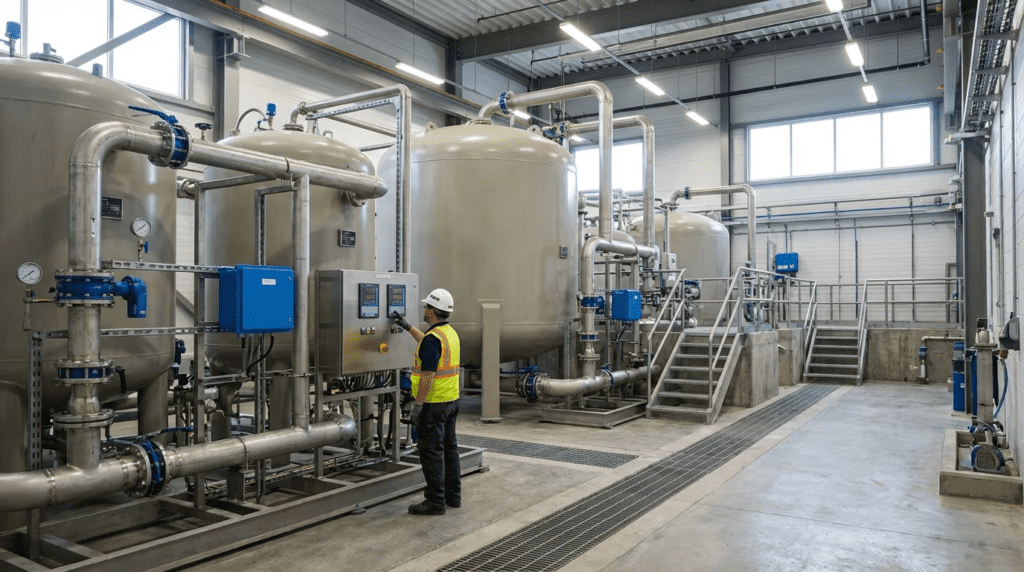
Introduction to Plant-Wide Equipment Integration
In municipal and industrial facilities, a poorly specified unit process can cascade into massive downstream failures, driving up chemical costs, increasing energy consumption, and risking environmental compliance. Navigating these interconnected systems requires a foundational understanding of Water Treatment Equipment: Essential Guide for Plant Operations. A modern treatment facility operates as a complex hydraulic and biological machine, relying on precision-engineered components ranging from raw water intakes to final effluent discharge and sludge handling. Selecting the right equipment requires balancing capital expenditures (CAPEX) with long-term operational expenditures (OPEX) while accounting for specific duty conditions, varying flow rates, and influent water quality.
Equipment and control are inseparable in a modern plant, which is why this guide sits within the broader instrumentation and controls discipline rather than alongside it. Every unit process described below reports a state, accepts a command, and depends on a measurement made somewhere upstream. A clarifier drive is a mechanical asset until its torque signal becomes the early warning for a rising sludge blanket; a chemical pump is a mechanical asset until its stroke is paced against a streaming current reading. The equipment decision and the instrumentation decision are made together or they are made badly.
This comprehensive guide addresses the full landscape of water and wastewater treatment technologies. Whether designing a new 50 MGD municipal surface water plant, upgrading an industrial biological nutrient removal (BNR) facility, or troubleshooting an existing membrane bioreactor (MBR), engineers and operators must understand the fundamental mechanics, advantages, and limitations of each equipment class. By exploring the core subcategories of treatment equipment, this guide provides the necessary technical framework for specifying, operating, and maintaining robust and efficient plant infrastructure.
Subcategory Landscape — Types, Technologies & Approaches
The equipment utilized in modern water and wastewater treatment facilities is typically categorized by its position in the process train and its fundamental physical, chemical, or biological function. Navigating this landscape requires an understanding of how these subcategories interact. For instance, the efficiency of your upstream physical separation directly impacts the lifecycle and maintenance burden of downstream advanced filtration and disinfection units. Below is a detailed breakdown of the critical subcategories that form the backbone of any treatment plant.
Screening and Headworks Equipment
Screening and Headworks Equipment represents the first line of defense in both water intake and wastewater treatment facilities. This category includes coarse bar screens (typically 12–50 mm openings), fine screens (1–6 mm), micro-screens, and grit removal systems (vortex or aerated grit chambers). These systems physically remove rags, large debris, sand, and inorganic solids that would otherwise damage downstream pumps or settle in aeration basins. Fine screens are highly recommended ahead of sensitive processes like Membrane Bioreactors (MBRs), typically requiring an opening size of 2 mm or less. When specifying, engineers must consider the peak hourly flow approach velocity (ideally maintained between 1.5 and 3.0 ft/s) to prevent debris from being forced through the screen or settling prematurely in the channel. Headloss calculations and automated raking/cleaning mechanisms are critical for preventing channel overflows during storm events.
Coagulation and Flocculation Equipment
Coagulation and Flocculation Equipment is essential for preparing colloidal particles and dissolved organics for physical separation. This subcategory encompasses rapid/flash mixers (using mechanical impellers or static inline mixers) to disperse coagulants (like alum or ferric chloride) instantly, followed by multi-stage flocculators (vertical or horizontal shaft paddle mixers) to agglomerate destabilized particles into settleable “floc.” Flash mixers are designed for high energy dissipation, typically operating with a velocity gradient (G-value) of 300 to 1,000 s-1, whereas flocculators operate at gently tapering G-values from 80 down to 10 s-1 to prevent shearing the delicate floc. Selection factors include the required detention time (typically 20-45 minutes for flocculation), basin geometry to prevent short-circuiting, and the availability of variable frequency drives (VFDs) to adjust mixing intensity based on seasonal water temperature changes.
Clarification and Sedimentation Systems
Once floc is formed, Clarification and Sedimentation Systems rely on gravity to separate solids from the liquid phase. This equipment family includes conventional circular clarifiers with scraper or suction header mechanisms, rectangular sedimentation basins with chain-and-flight collectors, high-rate tube and plate settlers, and Dissolved Air Flotation (DAF) systems. Circular clarifiers are the municipal standard, sized based on the Surface Overflow Rate (SOR), which typically ranges from 500 to 1,200 gpd/sq ft depending on the application (primary vs. secondary clarification). Tube settlers can upgrade existing basins by increasing the effective settling area, thus reducing the footprint required. Alternatively, DAF is strictly preferred for light, buoyant particles (such as algae in surface water or fats, oils, and grease in industrial wastewater), where micro-bubbles attach to floc and float them to the surface for mechanical skimming.
Aeration and Mixing Equipment
In biological wastewater treatment, Aeration and Mixing Equipment sustains the aerobic microorganisms required for biochemical oxygen demand (BOD) reduction and nitrification. This category includes fine bubble diffused aeration systems (membrane or ceramic discs/tubes), mechanical surface aerators, and submersible mixers for anoxic/anaerobic zones. Fine bubble diffusers provide the highest Standard Oxygen Transfer Efficiency (SOTE), typically 2% per foot of submergence, making them highly energy-efficient for deep tanks. However, surface aerators provide excellent simultaneous mixing and aeration for shallow lagoons or oxidation ditches and are generally easier to maintain since they do not require tank draining. Engineers must specify based on the required Alpha factor (clean water vs. wastewater transfer efficiency), total oxygen demand, and mixing energy thresholds (typically 0.1 to 0.2 HP per 1,000 gallons) to keep mixed liquor suspended solids (MLSS) in suspension. Mixer selection in particular carries a large vendor component, and engineers scoping a basin should review the mixing equipment category alongside the process calculation, since impeller geometry and drive configuration vary considerably between suppliers for the same nominal duty.
Media Filtration Equipment
Media Filtration Equipment physically strains suspended solids and remaining floc passing through clarification. Technologies include rapid gravity sand filters, pressure vessels, and multimedia filters (using anthracite, sand, and garnet). Gravity filters are standard in large municipal drinking water plants, typically operating at filtration rates of 2 to 5 gpm/sq ft. Pressure filters are more common in industrial settings or smaller groundwater plants for iron and manganese removal, capable of higher loading rates but requiring robust pump pressure. Critical specification considerations include the Uniformity Coefficient (UC) and Effective Size (ES) of the media, the backwash sequence (air scour followed by water wash is the modern standard), and underdrain design to ensure even flow distribution and prevent media loss.
Membrane Filtration Systems
For applications requiring absolute physical barriers against pathogens or dissolved solids removal, Membrane Filtration Systems are utilized. This broad class spans Microfiltration (MF) and Ultrafiltration (UF) for suspended solids, bacteria, and virus removal; and Nanofiltration (NF) and Reverse Osmosis (RO) for softening, organics removal, and desalination. MF/UF typically operate at low transmembrane pressures (15–45 psi) with hollow-fiber configurations, achieving turbidity below 0.1 NTU. RO systems require high-pressure centrifugal pumps (200–1,200+ psi depending on feed salinity) pushing water through spiral-wound membranes. Designing membrane systems requires meticulous attention to flux rates (measured in liters per square meter per hour, or LMH), temperature-corrected permeability, crossflow velocities, and comprehensive pre-treatment to prevent rapid irreversible fouling. Because performance is governed by differential pressure across the element, the pressure control strategy deserves as much design attention as the membrane selection itself, including transmembrane pressure limits, feed pump turndown, and the sequencing logic that protects elements during startup and shutdown transients.
Disinfection Equipment
Before water is discharged to the environment or distributed for consumption, Disinfection Equipment neutralizes pathogenic microorganisms. This category encompasses gas chlorination systems, on-site sodium hypochlorite generators (OSHG), ultraviolet (UV) disinfection reactors, and ozone generation systems. UV systems are highly favored in wastewater to eliminate chemical residuals, requiring specification of the target UV dose (typically 30–40 mJ/cm² for secondary effluent) based on UV transmittance (UVT) and quartz sleeve fouling factors. Chlorine systems remain the standard for municipal drinking water to maintain a distribution residual. Engineers must evaluate chemical storage safety codes, Contact Time (CT) requirements based on EPA tables, and the potential for disinfection byproduct (DBP) formation when selecting the appropriate technology. Where on-site generation or electrochemical treatment is under consideration, the design of electrolytic oxidation reactors becomes the governing engineering question, since cell configuration, current density, and electrode life determine both output and operating cost.
Chemical Feed and Dosing Systems
Reliable Chemical Feed and Dosing Systems are critical for coagulation, pH adjustment, and disinfection. This equipment includes positive displacement metering pumps (diaphragm, peristaltic, or progressive cavity), dry chemical volumetric and gravimetric feeders, day tanks, and static mixers. Peristaltic pumps are often specified for off-gassing chemicals like sodium hypochlorite to prevent vapor lock, whereas diaphragm pumps are standard for high-pressure injection. A critical design factor is ensuring a turndown ratio that matches the plant’s minimum and maximum flow conditions. Systems must be specified with pressure relief valves, backpressure valves, pulsation dampeners, and calibration columns to ensure precise dosage, as overdosing can cause severe process upsets and waste budget.
Sludge Dewatering Equipment
Managing the biosolids generated during treatment is handled by Sludge Dewatering Equipment. Technologies include belt filter presses, decanter centrifuges, screw presses, and plate-and-frame filter presses. Centrifuges offer high throughput and excellent dry cake solids (typically 20–30%) in a compact footprint but require significant power and sophisticated maintenance. Belt presses are highly visual, operator-friendly, and consume less power but yield lower dry solids and require substantial wash-water. The rotary screw press is increasingly popular due to its low speed, very low energy consumption, and minimal operator attention. Equipment selection hinges heavily on the nature of the sludge (primary vs. secondary biological), required polymer dosing rates, and the ultimate disposal method (landfill, land application, or incineration).
Dewatering performance is also set upstream. Feeding a press or centrifuge at two percent solids rather than five doubles the hydraulic load for the same dry tonnage, which is why the gravity thickener ahead of the dewatering building deserves scrutiny during any solids handling upgrade. Thickening is cheap volume reduction; dewatering is expensive volume reduction, and every point of solids concentration gained upstream reduces the size and operating cost of everything downstream.
Pumping and Fluid Handling Equipment
The cardiovascular system of any facility is its Pumping and Fluid Handling Equipment. This encompasses horizontal centrifugal pumps for clean water distribution, submersible non-clog pumps for lift stations, vertical turbine pumps for intakes, and positive displacement pumps (like rotary lobe or progressive cavity) for viscous sludge. Proper specification requires rigorous hydraulic modeling to develop system curve matching, ensuring the pump operates near its Best Efficiency Point (BEP). Engineers must calculate Net Positive Suction Head Available (NPSHa) to prevent cavitation, specify appropriate seal types (mechanical seals vs. packing), and select metallurgies (e.g., Duplex stainless steel, high-chrome iron) suitable for the corrosivity and abrasiveness of the pumped fluid.
Process Control and Instrumentation Equipment
Modern plants rely on Process Control and Instrumentation Equipment to automate operations, optimize chemical use, and ensure compliance. This includes inline water quality sensors (pH, ORP, turbidity, dissolved oxygen, free chlorine), magnetic flow meters, ultrasonic level sensors, Programmable Logic Controllers (PLCs), and Supervisory Control and Data Acquisition (SCADA) systems. Reliable instrumentation allows for advanced control strategies, such as ammonia-based aeration control (ABAC) or automated coagulant dosing based on streaming current detectors. Specification pitfalls often involve ignoring the sensor’s cleaning requirements; optical DO sensors with integrated air-blasts or wipers are preferred over traditional galvanic probes to reduce maintenance in heavily fouling environments. The supervisory layer that consolidates all of this is covered in depth under SCADA systems, including the architecture decisions that determine which loops stay local and which are managed centrally.
Two supporting categories are frequently scoped separately and then discovered to be on the critical path. The first is power distribution: every motor described in this guide is fed from a lineup of motor control centers, and MCC arc-flash rating, bucket availability, and spare space are the constraints that most often delay a plant expansion. The second is wide-area monitoring. Satellite and aerial remote sensing has moved from research into practical utility use for reservoir level and algal bloom tracking, watershed land-use change, and thermal or multispectral survey of buried infrastructure, extending the instrumentation picture beyond the plant fence to the source water and the collection system.
Selection & Specification Framework
Choosing the correct equipment involves balancing specific application requirements with capital budgets, operating costs, and the capability of the local operations team. A systematic decision framework ensures that Water Treatment Equipment: Essential Guide for Plant Operations is applied correctly.
Decision Framework and Duty Conditions
The starting point for equipment selection is characterizing the influent water quality and the required effluent targets. A simple decision tree dictates that if influent turbidity is highly variable with heavy organic loading, conventional Clarification and Sedimentation Systems followed by Media Filtration Equipment offer higher resilience than direct Membrane Filtration Systems, which may suffer from catastrophic fouling under shock loads.
Conversely, for tight footprint constraints and strict regulatory limits on effluent suspended solids (e.g., Title 22 reuse requirements), membranes become the necessary choice despite higher initial costs. Always evaluate the peak instantaneous flows versus average daily flows; processes like biological aeration require sizing based on total mass loading, whereas hydraulic structures like clarifiers and screens must be sized for peak hydraulic flow.
Vendor Evaluation and Head-to-Head Comparison
Once the technology is settled, the remaining work is supplier selection, and that is a different exercise from process design. Head-to-head comparisons between named manufacturers surface the differences that catalog specifications hide: drive arrangements, seal designs, wear part pricing, and service network reach. Coverage of mixer equipment manufacturers illustrates the pattern, comparing suppliers directly on the criteria that determine twenty-year cost rather than on nameplate performance. On public bid work this matters twice over, since the specification must name enough qualified suppliers to satisfy competitive procurement without admitting equipment that cannot meet the duty.
Lifecycle Cost Comparison (CAPEX vs OPEX)
Engineers often make the critical mistake of specifying based on lowest initial capital cost (CAPEX), ignoring the 20-year operational expenditure (OPEX). For example, Sludge Dewatering Equipment like a high-speed centrifuge has a high CAPEX and high energy OPEX but may drastically reduce hauling costs by achieving a 25% dry cake compared to an 18% cake from a cheaper belt press. Over a decade, the savings in truck hauling fees typically dwarf the energy and capital premiums. Similarly, specifying high-efficiency fine bubble Aeration and Mixing Equipment costs more upfront than coarse bubble diffusers but yields massive reductions in blower electrical usage, which typically accounts for 50-60% of a wastewater plant’s total power bill.
Impact of Plant Size and Operator Skill
Equipment complexity must match the skill level and availability of the operations staff. Small, rural facilities without 24/7 staffing should gravitate toward robust, low-maintenance subcategories. A small plant is better served by passive Media Filtration Equipment and simple lagoon surface aerators, whereas a large regional facility with dedicated instrumentation technicians can leverage the high efficiency of Membrane Filtration Systems and complex SCADA-driven Process Control and Instrumentation Equipment. Specifying complex mechanical systems for under-resourced plants frequently leads to bypass events, equipment neglect, and premature failure.
Comparison Tables
The following tables provide an engineer-level quick reference for evaluating the broad spectrum of plant equipment. Table 1 outlines the technical and operational profiles of the major equipment families, while Table 2 maps these technologies against specific application scenarios.
| Equipment Subcategory | Key Features / Parameters | Best-Fit Applications | Primary Limitations | Relative Maintenance Profile |
|---|---|---|---|---|
| Screening and Headworks Equipment | Physical barrier; 1-50mm openings; velocity 1.5-3 ft/s. | Raw WW intakes, pump protection, MBR pre-treatment. | Requires robust odor control; prone to blinding during peak storm flows. | Moderate (daily visual checks, regular greasing, wear part replacement). |
| Clarification and Sedimentation Systems | Gravity separation; SOR 500-1,200 gpd/sq ft. | Primary/secondary WW; conventional drinking water treatment. | Large spatial footprint required; susceptible to wind/temperature currents. | Low (drive mechanism lubrication, seasonal weir cleaning). |
| Membrane Filtration Systems | Absolute barrier; measured by Flux (LMH) and TMP. | Desalination, strict reuse standards, high-purity industrial. | High energy use (RO); sensitive to fouling; strict pre-treatment needs. | High (chemical CIPs, integrity testing, eventual module replacement). |
| Disinfection Equipment | Pathogen inactivation; UV dose (mJ/cm²) or CT values. | Final effluent before discharge; potable water distribution. | UV needs clear water (high UVT); Chlorine forms DBPs. | Moderate (bulb replacement, quartz sleeve wiping, gas handling safety). |
| Sludge Dewatering Equipment | Volume reduction; 15-30% dry solids yield. | Biosolids management before hauling or incineration. | High polymer consumption; sensitive to sludge feed variations. | High (belt washing, bearing maintenance, auger/scroll rebuilding). |
| Application Scenario | Ideal Technology Subcategories | Key Engineering Constraints | Operator Skill Impact |
|---|---|---|---|
| Small/Rural Municipal WW (< 1 MGD) | Coarse Screens, Surface Aerators, Chlorine Disinfection Equipment, Drying Beds. | Keep OPEX low; minimize automation dependency; tolerate flow spikes. | Requires minimal daily intervention. |
| Large Urban Potable Water (> 50 MGD) | Flocculators, Circular Clarifiers, Deep Bed Media Filtration Equipment, Gas Chlorine. | Large footprint required; hydraulic distribution balance is critical. | Moderate-to-High; relies heavily on continuous SCADA monitoring. |
| Industrial Effluent / Water Reuse | DAF Systems, Fine Screens, Membrane Filtration Systems (UF/RO), UV Disinfection. | Manage organic shock loads; strict pre-treatment required for RO. | High; requires strict chemical management and membrane CIP expertise. |
| High-Solids/Biosolids Handling | Progressive Cavity Pumps, Centrifuges or Screw Press Sludge Dewatering Equipment. | High abrasion resistance needed; precise polymer dosing integration. | High; operators must visually and mechanically tune cake parameters. |
Engineer & Operator Field Notes
Implementing Water Treatment Equipment: Essential Guide for Plant Operations successfully requires bridging the gap between design theory and real-world field conditions. Equipment operates in harsh, corrosive, and biologically active environments where theoretical performance often diverges from operational reality.
Cross-Subcategory Commissioning Considerations
Commissioning is the most vulnerable phase of a plant’s lifecycle. While testing a clean-water system is straightforward, biological and solids-handling equipment requires staged wet-testing and biological seeding. For Clarification and Sedimentation Systems, drive torque load testing must be performed dry, then under full hydrostatic load, simulating heavy sludge blankets. For Aeration and Mixing Equipment, clean water oxygen transfer testing (ASCE/EWRI standard) should be validated before the introduction of mixed liquor. Membrane Filtration Systems require baseline permeability testing and pressure-decay integrity testing before any raw water is processed, establishing the benchmark for future fouling assessments.
Startup rarely goes entirely to plan, and the availability of in-field troubleshooting, installation, and startup assistance from the manufacturer is worth specifying explicitly rather than assuming. The clause to write names the number of on-site days included, the response time for a callout during the warranty period, and whether those days can be banked for use during the first seasonal transition rather than consumed entirely in the first week.
Common Specification Mistakes
Engineers often generate conflicting specifications by cutting and pasting requirements from different equipment classes. A frequent error occurs in Chemical Feed and Dosing Systems, where engineers fail to specify positive-suction head for highly viscous polymers, resulting in pump cavitation. Another major pitfall is under-sizing the wash-water troughs and waste-handling infrastructure for Media Filtration Equipment; if the backwash water cannot be cleared fast enough, the media expands into the troughs and is washed out of the filter.
A third recurring error is treating the connection hardware as a commodity afterthought. Where an actuator meets a valve, a drive meets a gearbox, or a replacement unit meets a legacy mounting, the interface is a specified component with its own tolerances. Sourcing the correct adapter and adaptation kits is what makes a like-for-like replacement actually fit, and discovering the mismatch at installation turns a planned outage into an extended one.
Pro Tip: Pump Hydraulics and Cavitation. When specifying Pumping and Fluid Handling Equipment, always calculate the NPSHa (Available) at the lowest possible tank level and highest operating temperature, and ensure it exceeds the pump manufacturer’s NPSHr (Required) by at least 3 to 5 feet. Failing to provide this safety margin is the leading cause of premature impeller destruction due to cavitation, especially in high-elevation plants.
Operations and Maintenance Comparison
The maintenance burden shifts dramatically depending on the subcategory. Passive hydraulic structures, such as concrete Clarification and Sedimentation Systems, require minimal daily maintenance, mostly checking drive unit oil and cleaning weirs. In contrast, Sludge Dewatering Equipment is labor-intensive, demanding daily washdowns to prevent odor and corrosion, frequent greasing of large bearings, and continuous tuning of polymer doses. Similarly, Process Control and Instrumentation Equipment requires rigorous adherence to a calibration schedule; a pH sensor out of calibration will command the chemical feed pumps to dose incorrectly, wasting thousands of dollars in caustic or acid while threatening process stability.
Troubleshooting Overview: Root Causes and Symptoms
Rapid diagnosis of equipment failure requires observing symptoms that span multiple systems. For example:
- Symptom: Rapid rise in Transmembrane Pressure (TMP). Root Cause: In Membrane Filtration Systems, this usually indicates failure of upstream Screening and Headworks Equipment (allowing debris or hair to bypass) or an under-dosed coagulant that fails to bind foulants.
- Symptom: Pin-floc carryover in the clarifier. Root Cause: This often traces back to Coagulation and Flocculation Equipment operating at too high a G-value (shearing the floc) or a failure in the chemical feed metering pump.
- Symptom: Vapor lock and loss of prime. Root Cause: In Chemical Feed and Dosing Systems, dosing sodium hypochlorite with standard diaphragm pumps without continuous off-gassing valves leads to trapped gas expanding in the pump head.
- Symptom: Nuisance motor trips with no mechanical fault found. Root Cause: Frequently electrical rather than process: a VFD reacting to line voltage disturbance, an overload relay sized for the wrong service factor, or a harmonic condition on a shared MCC bus. Check the drive fault log and the incoming power quality before disassembling the driven equipment.
Common Mistake: Ignoring Sensor Placement. Placing Process Control and Instrumentation Equipment (like an ORP or pH probe) too close to the injection point of Chemical Feed and Dosing Systems prevents adequate mixing time. This causes the controller to read artificial spikes, leading to rapid cycling (hunting) of the feed pumps and ultimate process instability.
Design Details & Standards
Specifying water and wastewater infrastructure requires adherence to strict engineering parameters, standardized codes, and robust sizing methodologies to ensure safety, efficiency, and regulatory compliance.
Applicable Sizing Methodologies
Sizing methodologies vary significantly across treatment technologies. Volumetric processes like Aeration and Mixing Equipment are sized based on solids retention time (SRT) and hydraulic retention time (HRT), with aeration basin volumes calculated to maintain required F/M (Food to Microorganism) ratios. Surface-area-dependent processes like Clarification and Sedimentation Systems and Media Filtration Equipment are governed by hydraulic loading rates (gallons per day per square foot). Advanced systems like Membrane Filtration Systems are sized based on critical flux constraints, factoring in expected temperature minimums, as water viscosity increases in winter, drastically reducing membrane permeability.
Key Design Parameters by Subcategory
Understanding exactly how variables dictate physical size is critical for layout planning:
- Screening: Sizing changes exponentially with the screen opening size. Dropping from a 6mm to a 2mm fine screen can double the required channel width to maintain the same approach velocity and acceptable headloss.
- Disinfection: For Disinfection Equipment using UV, the sizing is heavily dependent on Water Transmittance (UVT). Dropping from 65% UVT to 55% UVT may require adding an entirely new bank of lamps to achieve the same lethality.
- Pumping: For Pumping and Fluid Handling Equipment, sizing changes based on fluid viscosity. Standard water pumps derate significantly when pushing sludge at 2-4% solids, requiring corrections to head and efficiency curves using HI (Hydraulic Institute) viscosity correction factors.
Materials of Construction in Corrosive Service
Metallurgy is not always the answer in a treatment plant. Headworks channels, chemical containment areas, digester walkways, and any structure in a chronic hydrogen sulfide atmosphere frequently outlast their steel equivalents when built from structural fiberglass and composite equipment, which does not corrode, requires no coating maintenance, and creates no galvanic couple with adjacent materials. The trade-offs are lower stiffness for a given section depth, the need to seal cut ends to protect exposed fibers, and fire rating requirements in enclosed spaces. The same logic applies to covers, gratings, handrail, and support structures across the plant, and specifying by service environment rather than by default material is usually where the lifecycle saving is found.
The same material reasoning governs the containment side of the plant. Chemical storage vessels, basin and channel covers, and walkway decking all sit in the most aggressive environments on site, and the tanks and covers selection is where resin chemistry, coating systems, and dissimilar-metal isolation details get decided. Those decisions interact directly with the equipment specified here, since a cover determines access for maintenance, a tank determines the suction condition for a chemical feed pump, and both determine whether the space beneath them becomes a permit-required confined entry.
Applicable Standards & Compliance
Engineers must incorporate appropriate regulatory and industry standards into equipment specifications:
AWWA (American Water Works Association): Governs municipal drinking water equipment. Standards like AWWA B-series dictate chemical purity and handling for Chemical Feed and Dosing Systems.
Ten States Standards (Recommended Standards for Water/Wastewater Facilities): Provides baseline hydraulic and loading design criteria used broadly across North America for clarifiers, filters, and aeration basins.
NSF/ANSI 61: Mandatory for any component contacting potable water, strictly regulating leaching of contaminants from coatings, seals, and Pumping and Fluid Handling Equipment components.
ANSI/HI (Hydraulic Institute): Establishes pump testing, intake design, and vibration standards crucial for lift stations and pump rooms.
NFPA 820: Fire Protection in Wastewater Treatment and Collection Facilities, determining electrical area classification for equipment installed in headworks, wet wells, and digester areas.
UL 508A and NFPA 70 (NEC): Industrial control panel construction and electrical installation requirements governing MCCs, VFD enclosures, and local control stations.
General Equipment Specification Checklist
When finalizing a specification package for any treatment subcategory, ensure the following are clearly defined:
- Duty Conditions: Minimum, average, and peak flows; temperature ranges; fluid specific gravity and viscosity.
- Materials of Construction: Wetted parts (e.g., 316SS, CPVC) vs. non-wetted parts; protective coatings for H2S environments.
- Motor Specifications: NEMA enclosure types (e.g., TEFC, Submersible IP68), efficiency ratings, and VFD compatibility.
- Performance Guarantees: Specific criteria the manufacturer must meet during acceptance testing (e.g., maximum power draw, target effluent turbidity, guaranteed dry cake solids).
- O&M Requirements: Mandate submission of comprehensive O&M manuals, warranty durations, and required hours of vendor-supplied on-site training for operators.
- Electrical Interface: Feeder source and MCC bucket assignment, available fault current, arc-flash labeling responsibility, and whether the drive is supplied loose or integral to the equipment package.
- Mechanical Interface: Mounting dimensions, coupling and adapter requirements for replacement units, and confirmation that the new equipment fits the existing anchor pattern and clearances.
- Field Service Scope: Number of on-site startup days included, warranty callout response time, and whether unused days carry into the first year of operation.
Frequently Asked Questions
What are the different types of water and wastewater treatment equipment?
The equipment spans several key subcategories based on functionality. Primary physical separation utilizes Screening and Headworks Equipment and Clarification and Sedimentation Systems. Chemical conditioning involves Coagulation and Flocculation Equipment as well as Chemical Feed and Dosing Systems. Biological treatment relies on Aeration and Mixing Equipment. Advanced polishing and pathogen removal are handled by Media Filtration Equipment, Membrane Filtration Systems, and Disinfection Equipment. Finally, residuals and fluids are managed by Sludge Dewatering Equipment and Pumping and Fluid Handling Equipment, all integrated via Process Control and Instrumentation Equipment.
How do you choose between membrane filtration and media filtration?
Choosing between Membrane Filtration Systems and Media Filtration Equipment depends on effluent requirements, footprint, and budget. Media filters are highly resilient, cost-effective (low CAPEX/OPEX), and easy to operate, typically producing water around 0.1–0.5 NTU. They are ideal for conventional municipal plants. Membranes provide an absolute physical barrier to pathogens and can treat to near zero NTU, necessary for direct potable reuse or high-purity industrial feeds. However, membranes require a smaller footprint but incur significantly higher OPEX, requiring rigorous pre-treatment and complex chemical cleaning regimens.
What is the most cost-effective equipment approach for small municipal plants?
For small, remote facilities (under 1 MGD), minimizing complex automation and moving parts is critical. A highly cost-effective setup utilizes robust Screening and Headworks Equipment (like static or mechanically simple screens), surface Aeration and Mixing Equipment in a lagoon or oxidation ditch, and simple gravity clarifiers. For solids, utilizing passive drying beds or bags rather than mechanical Sludge Dewatering Equipment eliminates high energy and polymer costs, provided land is available.
Why do centrifugal pumps fail prematurely in sludge applications?
Standard Pumping and Fluid Handling Equipment designed for clean water operates at high speeds with tight impeller clearances. When applied to abrasive or viscous sludge, these pumps suffer from rapid impeller wear, seal failure, and vibration. For sludge thicker than 1-2% solids, engineers should specify positive displacement pumps (such as rotary lobe or progressive cavity) or heavily modified non-clog centrifugal pumps with hardened metallurgy and recessed impellers designed specifically to handle grit and stringy solids.
How does chemical dosing impact downstream equipment maintenance?
Poorly optimized Chemical Feed and Dosing Systems cascade into major maintenance issues. Overdosing polymer coats Media Filtration Equipment, causing mud-balling and media loss during backwash. Overdosing coagulants like ferric chloride can depress pH, increasing the corrosivity of the water and damaging downstream concrete and Pumping and Fluid Handling Equipment. Relying on accurate Process Control and Instrumentation Equipment (like streaming current sensors) is vital to pace chemical feed proportionally to the process demand.
How much of an equipment project is actually electrical?
More than most process-focused specifications anticipate. Every driven asset needs a feeder, a starter or drive, an enclosure rated for its environment, and space in a motor control center that may already be full. On plant expansions, the electrical room is frequently the binding constraint rather than the process area, and arc-flash studies, available fault current, and spare bucket capacity all have to be checked before the equipment package is finalized. Budgeting an equipment project on mechanical cost alone routinely understates it by a substantial margin.
When should a plant replace equipment versus rebuild it?
The decision usually turns on three things: whether the manufacturer still supports the unit with parts, whether the duty point has moved since the original selection, and whether the rebuild restores efficiency or merely restores function. A pump operating well off its best efficiency point because the system curve changed will keep failing regardless of how well it is rebuilt. Where the original duty still applies and parts remain available, rebuilding is generally the better value, provided the mounting, coupling, and electrical interfaces are confirmed before the outage rather than during it.
Conclusion
Key Takeaways: Specifying Water Treatment Equipment
- Match Technology to Operations: Do not specify highly complex Membrane Filtration Systems or high-speed centrifuges for facilities that lack the technical staff to maintain them.
- Evaluate the Full Lifecycle: The true cost of Sludge Dewatering Equipment or Aeration and Mixing Equipment is found in the 20-year energy and disposal OPEX, not the initial bid price.
- Design for Extremes: Hydraulic structures (like Clarification and Sedimentation Systems) must be sized for peak wet weather flows, while biological processes must be sized for maximum mass loading and minimum winter temperatures.
- Prioritize Pre-Treatment: Robust Screening and Headworks Equipment is the cheapest insurance policy against catastrophic damage to downstream pumps, diffusers, and membranes.
- Instrumentation is Critical: High-performance processes require precise, reliable Process Control and Instrumentation Equipment; schedule rigorous calibration, or the automation will fail.
- Do Not Underestimate the Electrical Scope: MCC capacity, fault current, and drive selection are routinely the constraint that determines whether an equipment upgrade is feasible in the intended outage window.
- Specify the Interfaces: Adapters, couplings, mounting patterns, and field service days are where replacement projects overrun, not in the equipment itself.
Mastering Water Treatment Equipment: Essential Guide for Plant Operations requires adopting a holistic, plant-wide perspective. No single piece of equipment operates in isolation; the performance of an upstream clarifier directly dictates the backwash frequency of a downstream filter, just as the reliability of an automated chemical dosing pump dictates the stability of the final effluent disinfection. Engineers and operations directors must move beyond treating process units as black boxes, diving deep into the hydraulic constraints, chemical interactions, and mechanical limitations of each technology.
By thoroughly evaluating duty conditions, applying robust lifecycle cost analyses, and acknowledging the operational realities of the end-user, engineers can design and specify facilities that are not only compliant with strict environmental standards but are also resilient, energy-efficient, and maintainable for decades to come. When navigating complex upgrades or facing unique industrial effluents, involving process specialists and equipment manufacturers early in the design phase ensures that the specified subcategories align perfectly with the plant’s ultimate operational goals.